
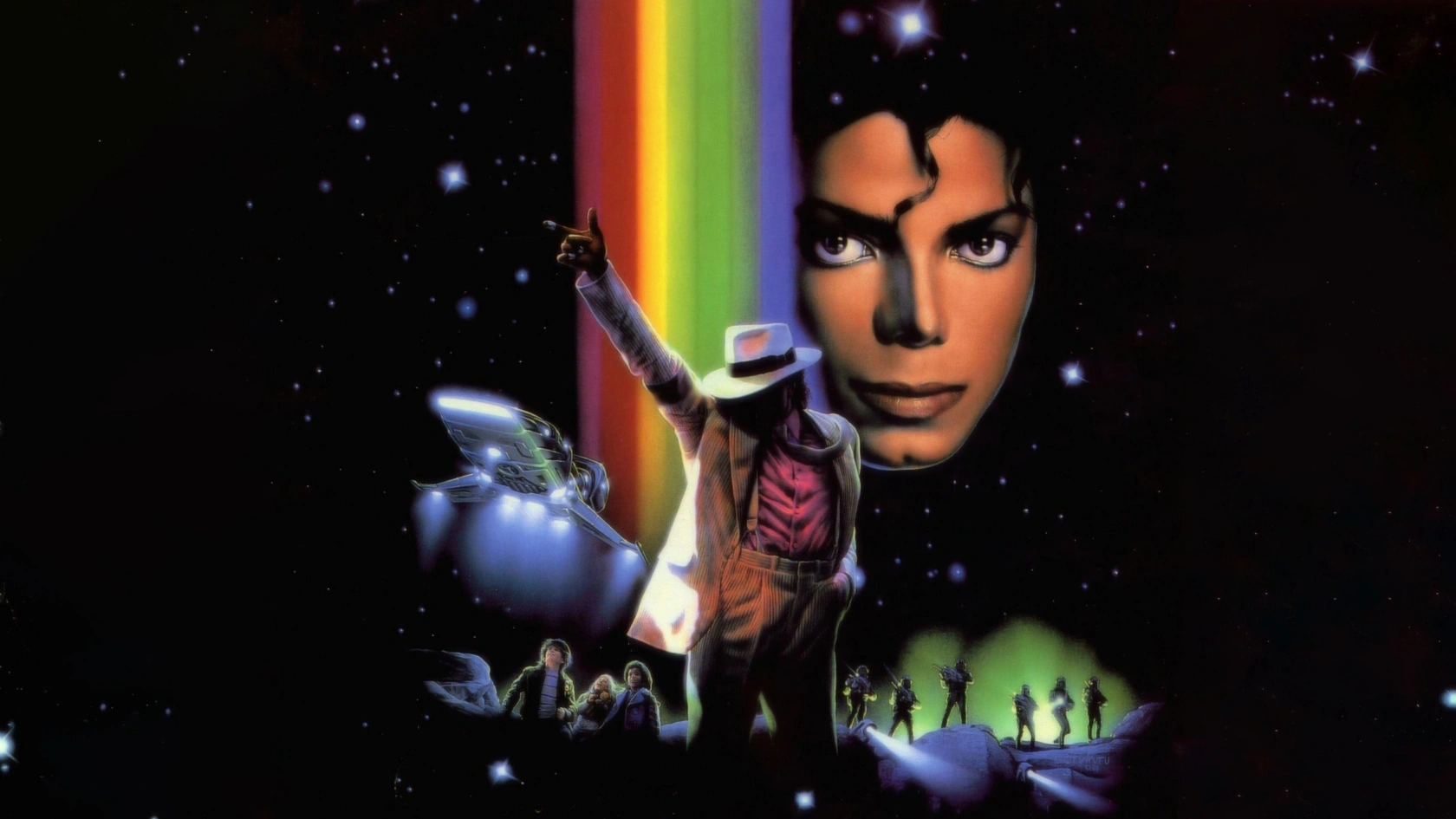
With Michael hitting screens this weekend, Michael Jackson fans will likely be consuming all they can find about the legendary King of Pop. Different eras of his music defined and continue to define generations of fans, but his Bad era, released in 1987, sees an entertainer at the height of his powers. Thriller might be the best-selling album of all-time on a worldwide scale, but Bad helped Michael maintain a chokehold on music in the ’80s and allowed him to do whatever he wanted to do within the industry. It produced a record five number one singles on the Billboard Hot 100 and, in its own right, became one of the best-selling albums, with over 35 million copies sold worldwide.
There was a huge media and promotional blitz that took place during the Bad era that lasted well into 1989, and one of the unique releases was the 1988 anthology music film Moonwalker. While the film was released theatrically in Europe and South America, Warner Bros. opted to scrap plans for a Christmas theatrical release for the project in 1988 in the U.S., but that didn’t stop the VHS launch from becoming a hit in the States, where it spent 22 weeks at number one on Billboard’s Video Chart and 14 weeks at number one on Billboard’s Top Video-Cassette sales chart. While Moonwalker can be viewed as a bizarre vanity project that morphs into a series of short films, it also represents an entertainer that no one could touch at the time, and a testament to a one-of-a-kind talent whose ambition was one of his greatest attributes.
Moonwalker Is Not Your Normal Musical Movie
Moonwalker isn’t a feature film in the traditional sense. There isn’t one continuous narrative that runs throughout, with director Jim Blashfield connecting the movie’s segments through short films that represented Michael’s fandom and its influence across his career up to that point. The title comes from the iconic dance technique that he made popular during his Motown 25 performance of Billie Jean, called the moonwalk, a move that quickly became one of his signatures.
In many ways, Moonwalker is a comment on Michael’s view of his fans and their interpretation of his career and music across his career, showcasing how they perceived it and how it may have been different from the message he was trying to convey. That being said, on top of being a career retrospective, it also features a fantasy narrative conceived by someone who had a deep love for film and a deeper need for the entertainer in question to fight against the industry binds that controlled him and the increased media scrutiny that was beginning to become just as prominent as his music.
In true Michael fashion, this is eventually metaphorically showcased through the King of Pop using magical powers and turning into a robot to save a trio of children (one of them being played by John Lennon’s son, Sean) from an evil drug kingpin named Mr. Big, portrayed by Joe Pesci. Hey, it was the ’80s.
Moonwalker begins with a performance from Michael’s first solo tour. Despite Thriller breaking records left and right when it was released, Michael didn’t embark on a world tour for the project because his father, Joe Jackson, pushed him to go on a tour with his brothers called the Victory Tour because his father, a much-publicized domineering presence, wanted to use the success of Thriller to promote the remaining brothers that made up the Jacksons, a group that he still managed after Michael went off to greener pastures and success of producer Quincy Jones.
Bad Takes Center Stage
The Bad World Tour, which began in September 1987 and concluded in January 1989, was Michael front and center, and it would go on to gross $125 million, making it the second-highest-grossing concert tour of the ’80s after the Momentary Lapse of Reason Tour put on by Pink Floyd. Given its place in the Guinness World Records as the tour with the largest attended audience, it’s only fitting that Moonwalker begins with a live performance of his number one hit from Bad, Man in the Mirror, pulled from various stops on the Bad World Tour in Europe and North America.
The segment is cut in a way that showcases the absolute pandemonium that surrounded Michael during this tour, as fans passed out due to his mere presence, but also shone a light on his humanitarian efforts as clips of starving children in Africa are spliced in between video of historical figures such as Martin Luther King Jr., Mother Teresa, and Mahatma Gandhi, to name a few. Some might say that Michael’s ego is suggesting he’s on the level of these historical personas, but it feels more like he’s inspired by their concentrated efforts to make the world a better place. Throughout his career, Michael constantly gave to help others, with some of the earnings from his lucrative Bad World Tour going to charity, most notably a $600,000 check from his Madison Square Garden show going to the United Negro College Fund (UNCF).
Following the Man in the Mirror opening, Moonwalker turns into a ten-minute career retrospective of sorts that covers Michael’s career, beginning with his early years in the Jackson 5 with such hits as I Want You Back, ABC, and Who’s Lovin’ You, and ending with his current run of the Bad era with number one hits The Way You Make Me Feel and Dirty Diana. It’s all done through a collection of live performances and music videos of his various hits, and it represents his growth as an artist.
From a kid at the center of one of the most talented pop bands of all time, to a solo artist in complete control of his own narrative. Again, it can be viewed as an ego trip, but through the lens of Moonwalker, it really feels like a personal view from the artist himself of his need and desire to take ownership of his career by highlighting his beginnings under creative control to a solo star who was the one calling the shots.
Badder Than Bad
The next segment is known as Badder, a parody of the music video for the Bad title song, featuring children portraying people from the original video directed by Martin Scorsese. Brandon Quintin Adams, who shows up later in the Smooth Criminal segment, portrays a young Michael, and the parody itself is pretty funny and spot-on in its interpretation of the original video, but it speaks to something more than that. During this period of his career, Michael was idolized by young people who wanted to be like him, and the Badder segment certainly drives that home. From his style to his dance moves, trying to imitate the King of Pop was at its peak during this period and continues to be years after his passing.
Things become even more creative as the Badder segment morphs into the second short film for the song Speed Demon, a fan-favorite album track on Bad, whose video speaks to Michael’s artistic innovation and love for film. Animatronic properties come to life using Claymation as Michael is chased by overzealous fans and paparazzi through a studio backlot that also sees the King of Pop running into a director resembling Steven Spielberg, who is also presented in Claymation form. To avoid detection, Michael disguises himself as a rabbit named Spike by using one of the costumes he stumbled upon on one of the film sets.
It becomes one of Jackson’s most underrated short-form music videos that ultimately sees him, disguised as Spike, speeding away from those pursuing him on a motorcycle as the pulse-pounding album track serves as the soundtrack. It all leads to Jackson coming out of the costume and the costume coming to life for a quick and innovative dance off. It’s all cheeky and fun, but it also says a lot about Jackson’s complicated relationship with his fans and the media. When dressed as Spike, he taunts them to chase him, almost suggesting that a part of his personality enjoyed a bit of the chase between himself, his fans, and the paparazzi that was incessantly following him. In disguise, Jackson could have more fun toying with this dilemma but the man himself seemed to be at a point when he was beginning to reject it.
This becomes abundantly clear with the fifth segment, featuring the groundbreaking music video for Leave Me Alone, a song that was only included as a bonus track on CD editions of the Bad album at the time of its release and eventually on digital editions. It’s a surreal music video that speaks to the increased media attention that Jackson was receiving at the time and his desire to keep the media out of his personal life if they were going to engage in.
For more on Movies, make sure to check back to That Hollywood Show.









Reviews