
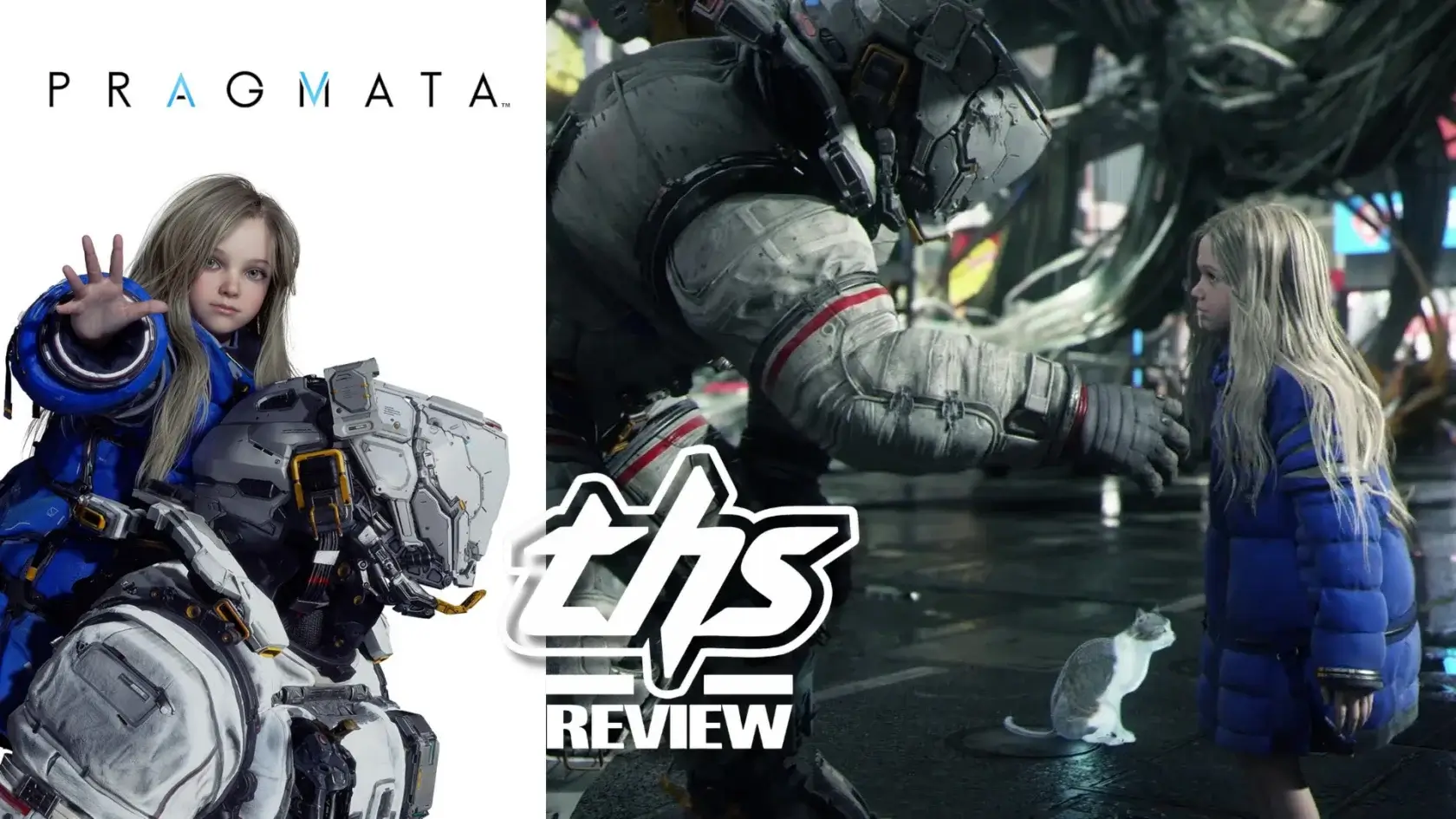
Pragmata feels like something of a throwback in the best way possible. In an era where so many games aim to be sprawling open worlds packed with lore and dozens of systems, Pragmata instead delivers something tighter and more focused. In many ways, it feels like an elevated version of the kind of AA titles we used to get regularly during the Xbox 360 era.
That isn’t meant as a knock. If anything, it’s refreshing. Playing Pragmata is a bit like getting a dressed-up version of a McDonald’s Big Mac. It’s familiar, it’s comforting, and while it largely resembles something you’ve had before, there’s just enough refinement to make it feel slightly elevated. The result is a game that isn’t trying to overwhelm players with scale, but instead focuses on delivering a fun gameplay loop that consistently keeps things engaging.
Pragmata: Shooting And Hacking In Harmony

The core gameplay loop in Pragmata revolves around a blend of third-person shooting and hacking mechanics. Prior to release, this combination sounded like it might be cumbersome. The idea of navigating a hacking interface while also trying to fend off enemies seemed like it could easily become chaotic or overly complicated.
Thankfully, that concern disappears once you actually start playing. Movement and shooting function exactly as you’d expect from a modern third-person shooter, while hacking is handled through the face buttons. It takes a short amount of time to get comfortable with juggling both systems, but once it clicks, the mechanics flow surprisingly well.
The game also does a great job pacing its difficulty curve. Just as you begin to feel confident with the hacking mechanics, the game introduces new elements that force you to rethink how you approach encounters. That steady ramp-up keeps things fresh, and it pairs nicely with the steady drip of upgrades you earn throughout the campaign.
Weapons can be upgraded and paired with different hacking mods, which opens up interesting tactical choices. For example, if you’re using a longer-range weapon, pairing it with a hacking module that stuns enemies can give you the extra time needed to line up a precise shot. That interplay between tools and abilities adds a layer of strategy without overwhelming the player.
A Simpler Story That Gets The Job Done

Story-wise, Pragmata keeps things fairly straightforward. This isn’t a lore-heavy franchise, and since this is the first entry in the series, the narrative leans more heavily on the dynamic between its two main leads.
Their camaraderie works well enough to carry the story forward, even if they never quite reach the level of charisma seen in other Capcom titles. Compared to the chemistry between characters like Grace and Leon in Resident Evil Requiem, the interactions here feel a bit more subdued. That said, the relationship serves its purpose and lays the groundwork for potential development in future entries.
Ultimately, Pragmata doesn’t live or die on its narrative. The game is clearly more interested in letting its mechanics and moment-to-moment gameplay do the heavy lifting, and for the most part, that approach works.
A Visually Distinct World
Visually, Pragmata looks quite good, particularly on PC. With path tracing enabled, the lighting really helps bring the game’s environments to life. The world has a somewhat synthetic, almost 3D-printed aesthetic that gives the environments a unique visual identity.
Performance on PC is also solid. In my time with the game, I didn’t run into any major issues, and the overall experience was smooth throughout the campaign.
The only real technical annoyance came from the settings menu. Navigating some of the options felt a bit clunky, and a few settings were harder to locate than they probably should be. Thankfully, this is mostly a one-time hurdle during the initial setup before diving into the game, so it ends up being more of a minor frustration than a serious problem.
Should You Play Pragmata?
Pragmata probably isn’t going to blow anyone’s mind, and some players may find its simplicity a little too straightforward. But that same simplicity is also part of its charm. It’s a focused, mid-tier experience that prioritizes fun mechanics over overwhelming scope.
If you’re looking for a game that delivers a satisfying gameplay loop without demanding dozens of hours of your time, Pragmata fits that niche nicely. It offers just enough depth to keep things interesting while maintaining a pace that never feels bloated.
In short, Pragmata is a good time. It may not redefine the genre, but it’s a polished and enjoyable reminder that not every game needs to be massive to be worthwhile.
For all things Video Games keep it tuned to That Hollywood Show.

!['Crisol: Theater Of Idols' Wears Influences On Its Sleeve With Horror Gameplay [Preview]](https://thathollywoodshow.com/wp-content/uploads/2026/01/Crisol-Key-Art-960x540.webp "Crisol Key Art")










Reviews