
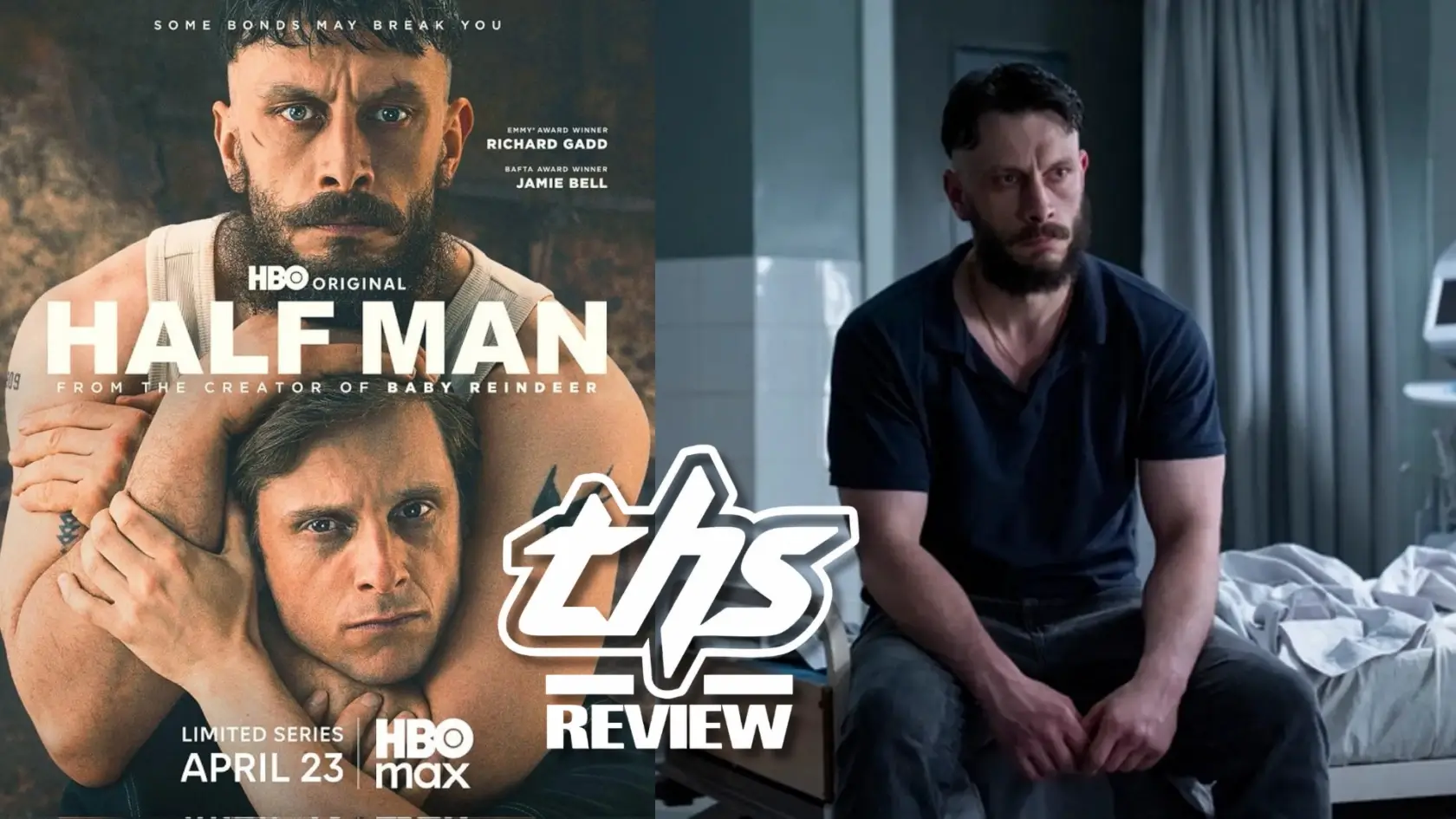
About Half Man
Richard Gadd’s Baby Reindeer was an extraordinary exploration of masculinity, sexual abuse, and trauma. He follows this award-winning drama with HBO drama Half Man, an uncomfortably feral tale of two pseudo-brothers and their toxic relationship.
Half Man follows two “brothers,” the meek Niall (Jamie Bell) and the aggressive Ruben (Gadd). The pair enter each other’s lives as teenagers when Niall’s widowed mum starts a relationship with Ruben’s divorced mother. We meet Niall in the 1980s, as a youngster (played by Mitchell Robertson), unable to make friends in school and struggling with his sexuality.
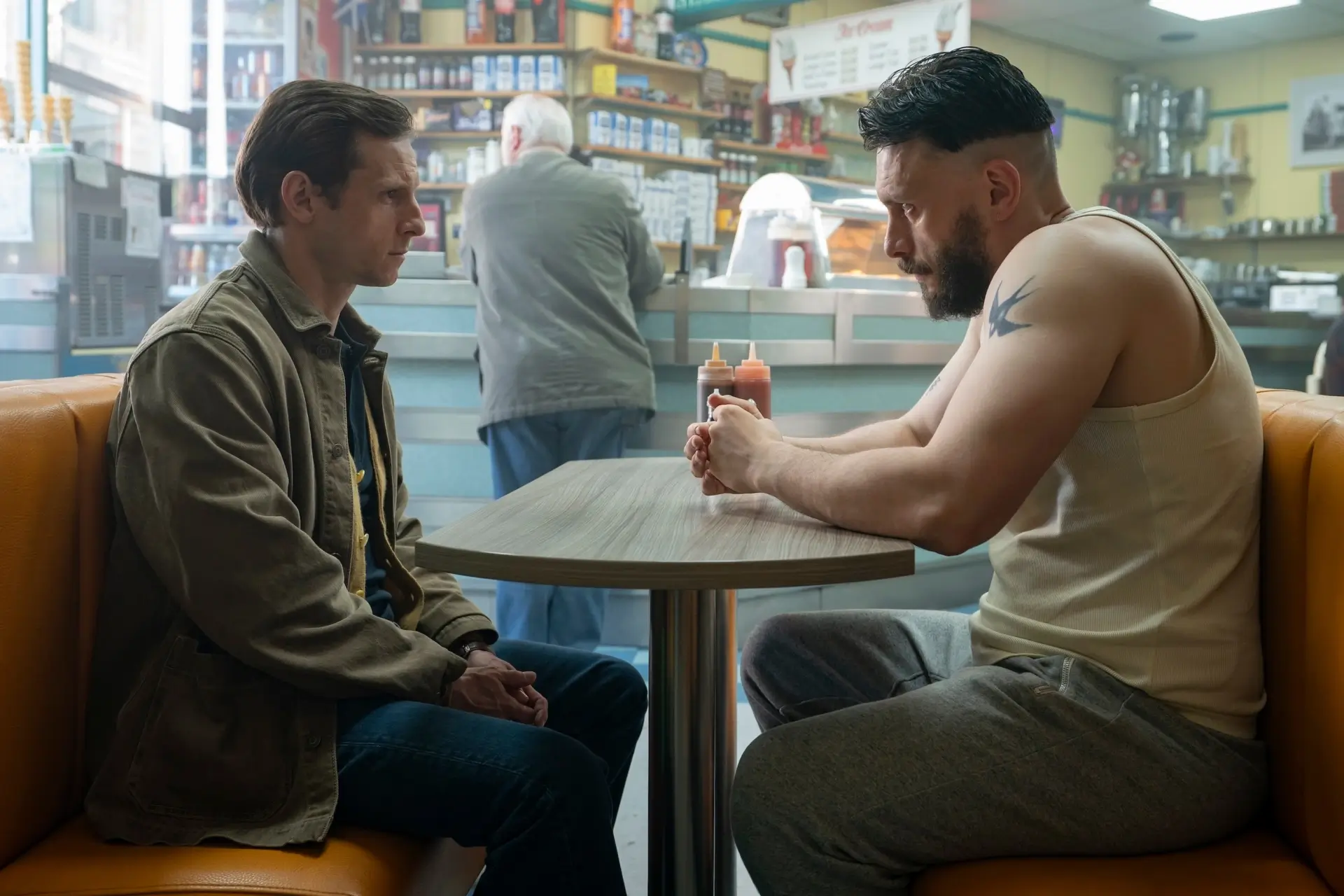
Suddenly, Ruben (Stuart Campbell) is sharing a room with him, having recently left a young offenders institute. The two embark on an uncomfortable relationship that is steeped in erotic undertones. Ruben deals with the boys who bully Niall, and in return, Niall helps him cheat on his exam. There is an uncomfortable tension between the two that isn’t quite sexual but isn’t quite brothely either.
Niall is unable to tell hypermacho Ruben that he is attracted to men, his repression forming his meek and awkward personality. Ruben’s repression of his feelings leads to him lashing out in horrific acts of violence. On paper, one solution seems better than the other, but as time passes, it becomes less so. “It’s like one needs a head and the other needs a body,” someone observes, the perfect description of their dynamic.
There is no nuance to Ruben’s behaviour in the scenes of violence; he is a psychopath. Gadd’s writing in Half Man, much like in Baby Reindeer, challenges audiences to keep watching no matter how uncomfortable it gets. This series has much less violence and gore than most shows, but the way Ruben’s behaviour is presented is more chilling than any blood splatter.
Half Man Explores Shame and Jealousy
Three of the six episodes follow the pair from adolescence through Niall’s college years to adulthood. Niall is smart but struggles to socialize, hiding his sexuality and masking most of who he really is. Ruben makes no apologies and inserts himself into all aspects of Niall’s life. Quickly earning friends and making enemies with his larger-than-life personality.
The other episodes follow the duo as adults (played by Bell and Gadd), after Ruben once again does time for his unbridled anger and feral vengeance. The theme across all timelines is shame, whether it is in Niall’s bathroom hookups with men or Ruben’s angry jealousy over his wife getting a job.
The Story Of Half Man
The story is told through Niall’s eyes, who often hero-worships Ruben. He is terrified of his brother, especially after a particularly vicious attack on one of his university friends, but is entranced by him. Despite his issues, he moves through the world with the confidence that Niall wants. He appears happier, more successful, and richer than Niall despite seemingly doing nothing to earn it. Niall finds that he can’t exist without his pseudo-brother, all his writing inspired by their relationship, his family haunted by him, his life seemingly owned by the man. This jealousy eats away at Niall, causing him to make some poor decisions.
Throughout the series, there are flashes forward to the boys at a wedding, facing off against each other alone in a barn. Often, the trope of starting with the ending spoils the suspense of the series, but the use here only adds to it. Slowly, the timelines begin to collide, forcing the audience to unpiece the boy’s history and how they have gotten to this point.
The ending is perhaps the most disappointing part of Half Man. It’s an emotional ride that is hard to watch but even harder to look away from. It’s storytelling in its bravest form, which is why the abrupt and unending ending falls flat. The trip there is, luckily, memorable enough that the weak ending doesn’t affect the intended message.
Gadd and Bell Are Extraordinary
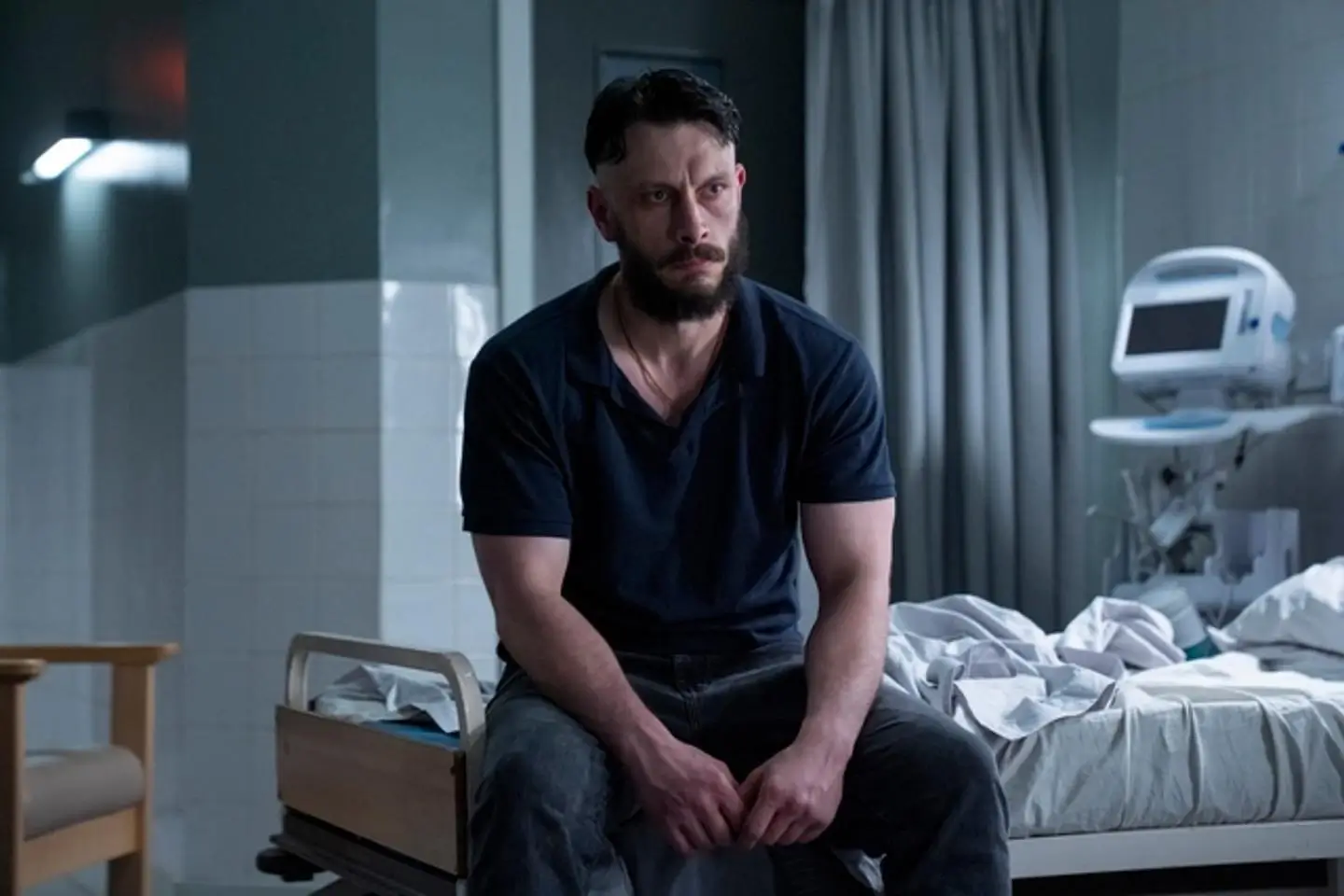
Richard Gadd could have played Niall, but his choice to play Rubens proves how excellent an actor he is. He is physically and emotionally dominant on screen. His muscles tensing like a wild cat about to pounce at all times. It’s the type of unfiltered, uncareful performances that don’t come around too often these days.
Half Man would be nothing without Jamie Bell, as good as Gadd is in the show. Bell is a once-in-a-generational talent who has been mostly overlooked in comparison to many of his peers. He permanently wears a haunted look on his face as he tries to maneuver through life. He perfectly encapsulates the unique anger that comes from masking so much of your life, and the way jealousy eats away at all the good things in your life.
Toxic Masculinity Comes In Many Forms
Half Man is a sometimes difficult-to-watch portrayal of broken masculinity. Once again, Gadd explores whether past trauma can excuse destructive behaviour. Also, whether the cycle of trauma that is passed between family members can truly ever be broken. The show expertly creates characters whom you presume to know, only to turn them on their heads because people are more complicated than they seem to the eye. It’s not always clear cut who is the good guy and who is the bad guy.
On paper, the story of competitive, toxic love between two brothers has been done before. Yet, there is something in the way Gadd writes characters, slowly unpeeling them, that feels special. These characters and their actions will stick with you long after, and it’s hard to pinpoint exactly how he does it.
Unlike Baby Reindeer, Half Man is purely a work of fiction. Though it still tackles sexuality, love, addiction, creativity, and violence. It’s less comic this time and more disturbing, not hiding its violence behind dark humor. Despite repeating the themes, they are in no way the same show. Toxic masculinity and all its subgenres come in many forms, and this series explores a sector that feels different enough.
Perhaps Gadd’s next series should veer into new territories, but nothing in Half Man feels like treading on well-worn ground. In fact, the themes at play here feel very necessary. Aren’t we all treading through life repressing and carrying our trauma until it finds its own unique way of escaping?
Final Thoughts
Half Man’s depiction of toxic masculine relationships and rage is one of the most horrifying things you’ll see all year. The six episodes of simmering rage are often difficult to watch but very necessary. Well-acted, well-written and bold in its choice, Richard Gadd proves he’s not a one-hit wonder.
For more Reviews, make sure to check back to That Hollywood Show.
-
 Score: 7.8
‘Michael’ Review – A Flawed But Electric Look At The King Of Pop
The story of Michael Jackson is fascinating, and it’s easy to see how they would make a movie out of it. From his childhood to the making of Thriller to his later career albums like Bad, and then all of the turmoil and controversy in his later life. Even his final days were littered with moments to
-
!['The Pitt' S2 Episode 12 Recap: As Day Turns to Night, Things Take a Quick Breather [RECAP/REVIEW]](data:image/svg+xml,%3Csvg%20xmlns='http://www.w3.org/2000/svg'%20viewBox='0%200%20960%20640'%3E%3C/svg%3E "noah-wyle-the-pitt-012226-tout-0ab010a4820448dd8819f98986aa3355")
‘The Pitt’ S2 Episode 12 Recap: As Day Turns to Night, Things Take a Quick Breather [RECAP/REVIEW]
The last few episodes of HBO’s The Pitt have been a whirlwind of activity. Though not covered here, the show ran the gamut from staff assaults to ICE’s appearance. The latter was a prescient addition to the storyline given the current climate in America, and something the show portrayed correctly.


!['The Pitt' S2 Episode 12 Recap: As Day Turns to Night, Things Take a Quick Breather [RECAP/REVIEW]](https://thathollywoodshow.com/wp-content/uploads/2026/01/noah-wyle-the-pitt-012226-tout-0ab010a4820448dd8819f98986aa3355-960x640.webp "noah-wyle-the-pitt-012226-tout-0ab010a4820448dd8819f98986aa3355")




!['The Pitt' S2 Episode 9 Recap: Mistakes and Regrets [RECAP/REVIEW]](https://thathollywoodshow.com/wp-content/uploads/2026/03/The-PItt-Review-3-960x540.webp "The PItt Review (3)")
!['The Pitt' S2 Episode 8 Recap: The ER Switches Over to Analog In An Old-School Twist [RECAP/REVIEW]](https://thathollywoodshow.com/wp-content/uploads/2026/02/The-PItt-Review-2-960x540.webp "The PItt Review (2)")

!['The Pitt' Season 2 Ep 6: [Recap/Review]](https://thathollywoodshow.com/wp-content/uploads/2026/02/The-Pitt-Review-1-960x540.webp "The Pitt Review")
Reviews