

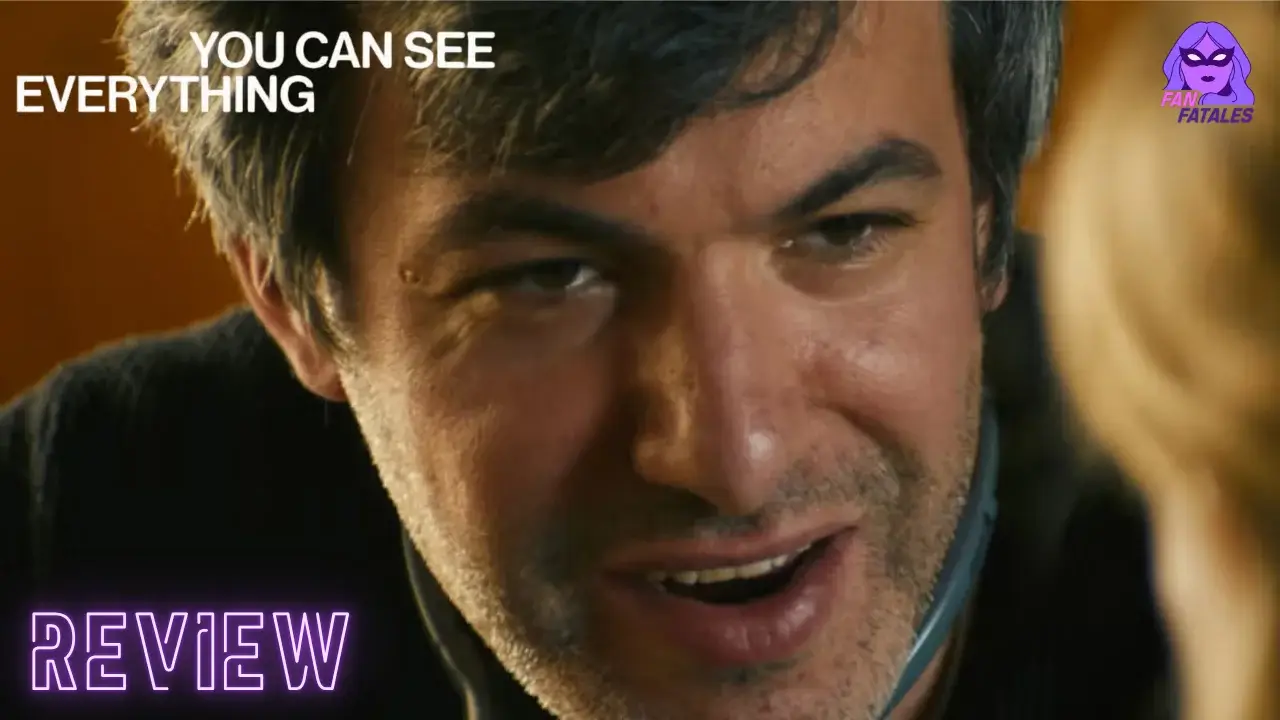
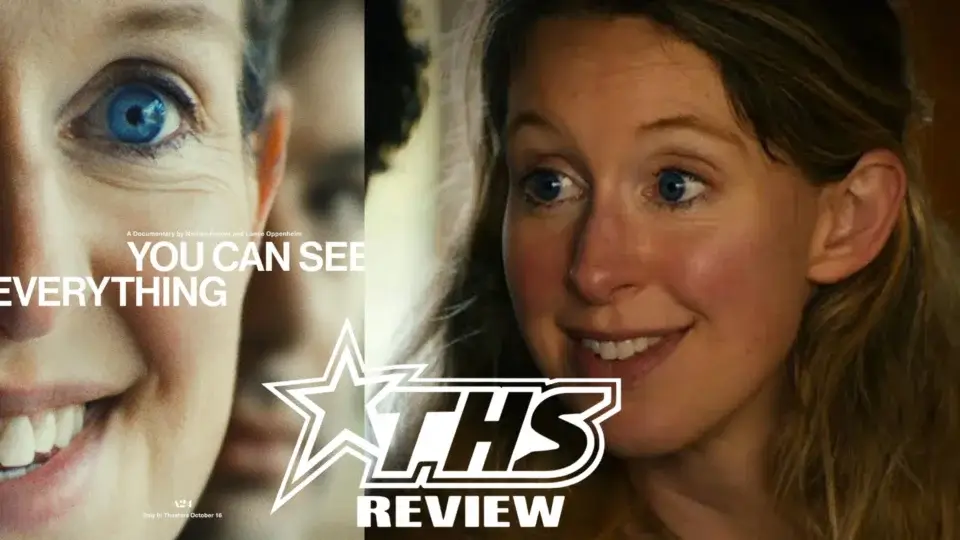
If ever there was a mind to study, it would be Nathan Fielder’s. The man behind shows like Nathan For You and The Rehearsal teamed up with Primetime director Lance Oppenheim for a documentary that feels to unreal to have actually happened. But, much like Fielder’s other work, there is something spectacular about the way Fielder gets his subjects to engage with his level of filmmaking. Especially when that subject is Elizabeth Holmes. You Can See Everything challenged now only Fielder but also challenges the audience to question exactly what they know about Holmes.
The former CEO of Theranos and her husband, Billy Evans, asked Fielder to come and film a documentary of Holmes in the lead up to her 11 year prison sentence. Holmes was found guilty of three counts of wire fraud and one count of conspiracy to commit wire fraud for lying to investors about her invention that was meant to run “any” test with just a drop of blood. As Fielder explains in his own way in the documentary, that seemingly boiled down to Holmes either being a master manipulator or not understanding that while theoretically true, her telling investors the machine “can” do it is not the same thing as it having the “capability” to do so.
A good portion of this nearly 3 hour documentary is spent with Fielder in Evans and Holmes’ rental cottage on the beach. They invite him in, tell him that he can “see everything” and then very much keep things from him. Or more accurately, Evans “protects” Holmes by dictating what should and should not be included in the documentary.
It is the first time since season 1 of The Rehearsal that I recall watching Fielder get visibly angry with someone during one of his investigations.
Elizabeth Holmes Is No Match for Nathan Fielder

A huge part of why this pairing works is because Fielder is just the right amount of unhinged to take on someone who is either too science brained to understand how a regular human conversation works or he’s pushy enough to prove that maybe she is this master manipulator people have labeled her to be. Whatever the verdict is is still out by the end of the film, it just simply gives you more insight into Holmes and who she is at home with cameras pinned on her.
Unlike the humor of The Rehearsal, though the film still does have that humor mixed in because it is Fielder, You Can See Everything is a lot more of Fielder searching for answers with a subject who is seemingly putting up a facade. Holmes is either aggressively controlling every interaction she has with Fielder on camera or she really is just an almost oblivious bystander to things. Either way, not a great look into a woman who was (for a portion of this documentary) staring down the barrel of 11 years in prison.
But Oppenheim and Fielder don’t make an exact decision on Holmes. Instead, the provide the audience all the information to do that for themselves. If anything, they provide opposing viewpoints with scenes between Fielder and a fantastic addition to the film (that is a major spoiler). All that leads to those is an even more complicated view of who Holmes truly is.
A Family of Lies or a Real Thing?
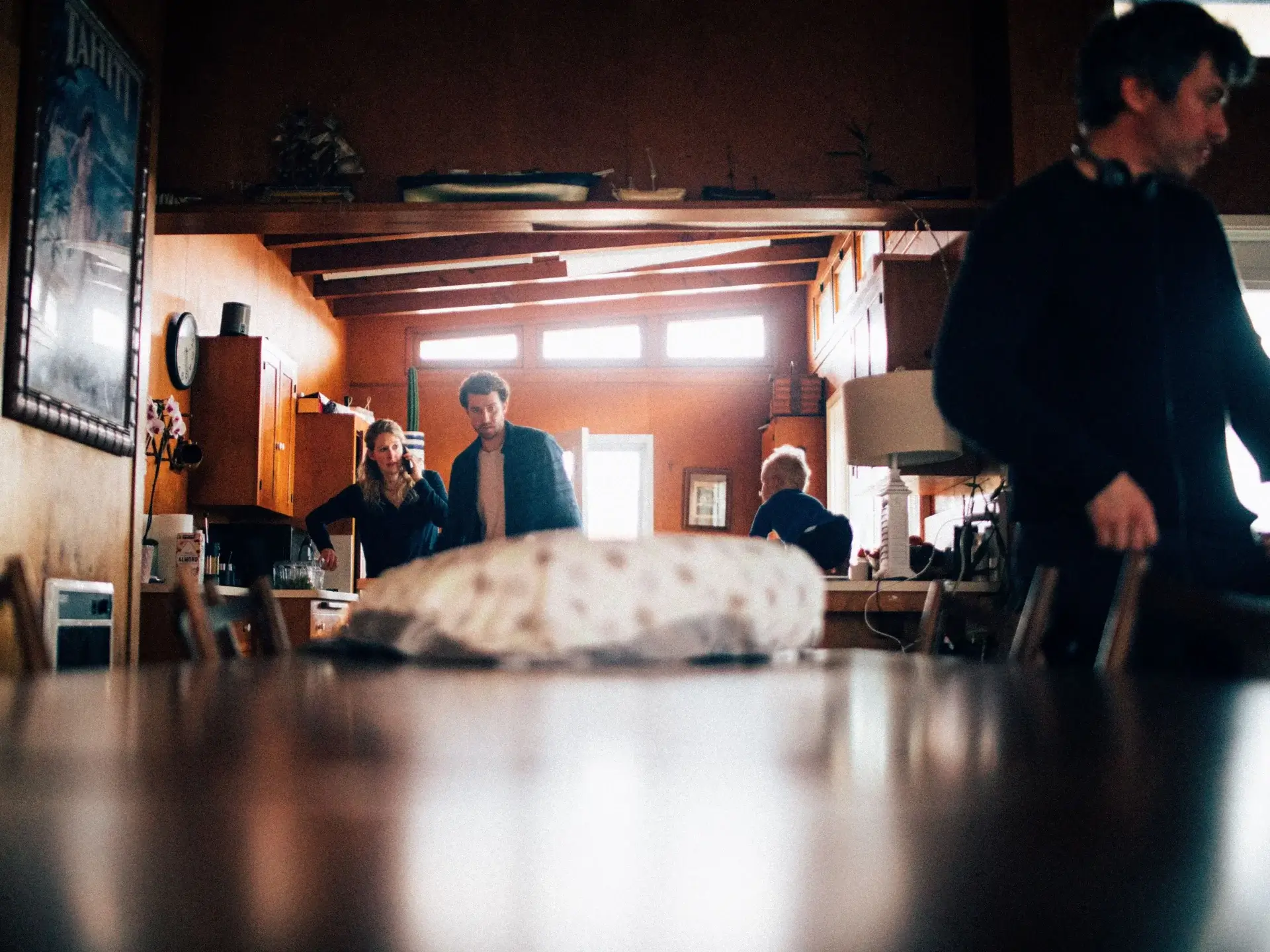
There are moments throughout You Can See Everything where we see cracks in the facade of Holmes and Evans relationship. Evans comes into the kitchen when Holmes’ father, Christian Holmes IV, is trying to honestly answer the questions Fielder is asking him. As Evans tends to do, when things don’t go his way, he comes into the room ready to tell them to move on. At many points, Evans sees this production as his to dictate and Fielder has to tell him at one point that it is a documentary.
The butting of heads between Fielder and Evans is constant throughout the film and it is posed as an idea to the audience that that was by Holmes’ design. Fielder and Oppenheim don’t say this outright but there are signs that point to the idea that Evans was speaking as a conduit between Holmes and production so that she looks innocent in it all.
And that’s what makes You Can See Everything such a fascinating watch. You don’t quite know what to believe in the end, you wonder if you (or Fielder) say everything as Holmes promised. And It leaves you just as confounded by the situation as it left Fielder and that’s why he continues to be one of the best working in this field.
There are no words to truly express how absolutely bonkers and brilliant You Can See Everything is and it is one you will want to see in theaters as soon as possible.






![‘Helluva Boss’ Season 3 Part 1 Lands Emotional Highs and Lows [REVIEW]](https://thathollywoodshow.com/wp-content/uploads/2026/10/FAN-FATALES-REVIEWS-3-960x540.webp "FAN FATALES REVIEWS (3)")


Reviews