
Video game adaptations have had a long reputation of not receiving the best responses from critics or moviegoers. Back in 1993, Super Mario Bros. was a critical and box office failure of epic proportions, and just a year later, 1994’s Street Fighter, while more financially successful, still didn’t make a strong case that video games deserved a place on the big screen.
That all changed in 1995 with the release of Mortal Kombat, a film that still didn’t entice critics but managed to break the video game movie curse by being embraced by fans, which led to the film being a box office hit and earning the distinction of being the best video game movie adaptation for many years after its release. With Mortal Kombat II releasing this weekend and expected to rule the box office with a franchise-best opening, it’s time to look back at how 1995’s Mortal Kombat avoided being video game movie kryptonite.
Directed by Paul W.S. Anderson from a screenplay by Kevin Droney, Mortal Kombat is based on the video game franchise of the same name created by Ed Boon and John Tobias for Midway Games in 1992. The arcade game earned its fair share of controversies when released due to its graphic violence, most notably the game’s signature fatalities that eventually led to the game playing a huge role in the creation of the Entertainment Software Rating Board (ESRB) video game rating system.
However, despite the uproar that the game created with parents who wanted to guard their children from its brutality, Mortal Kombat ultimately spawned a franchise that helped turn it into the best-selling fighting game franchise globally, with sales of over 100 million copies sold. A part of that legacy, which also includes a comic book series, an animated TV series, a card game, and a live-action tour, would be the film adaptation, and it would take Anderson, a true fan of the game, to get it to the big screen.
The film’s story mostly adapts the 1992 video game while also drawing inspiration from 1993’s Mortal Kombat II. The movie follows a group of gifted fighters who take part in a tournament hosted by sorcerer Shang Tsung (Cary-Hiroyuki Tagawa) to protect Earth from being conquered by the Outworld dimension. In addition to Tagawa, the film would also go on to star Christopher Lambert, Robin Shou, Linden Ashby, Bridgette Wilson, Talisa Soto, and Trevor Goddard.
An honor to the source material
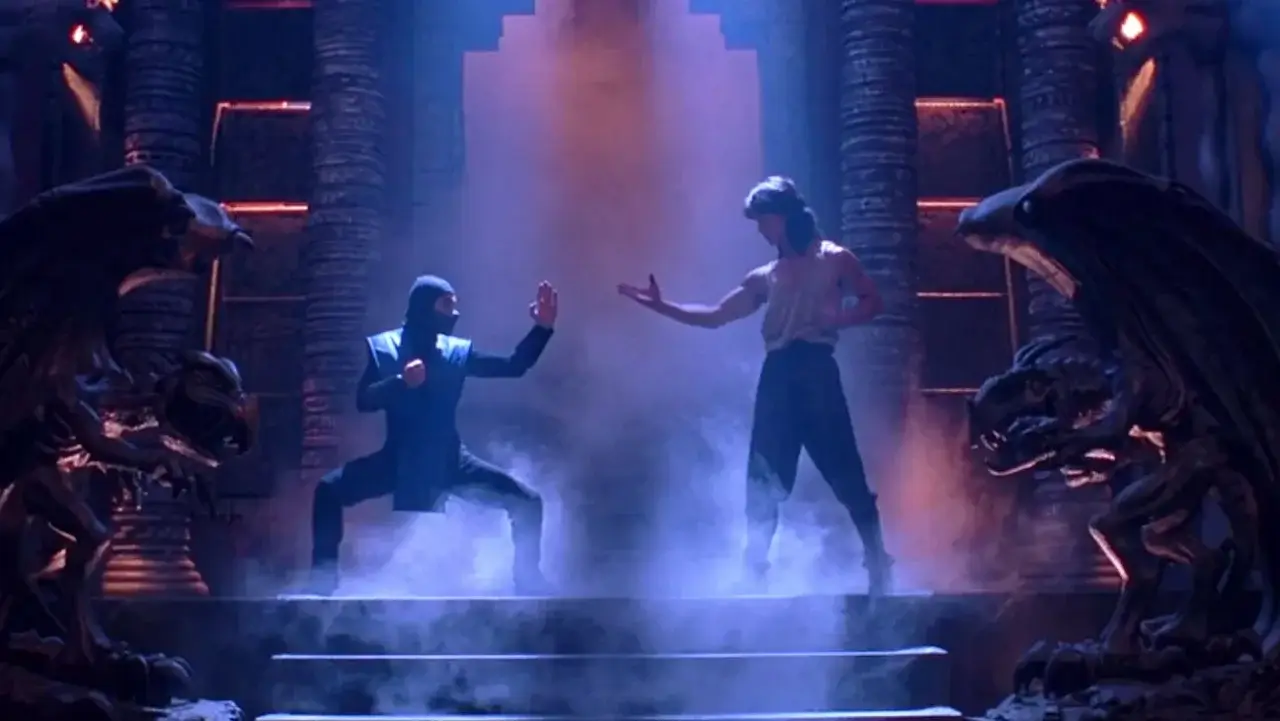
Despite being PG-13, Mortal Kombat has the overall feel of the game that inspired it because Anderson, as a devotee, was able to accomplish that, realizing that New Line Cinema, at least back then, knew that an R-rating would alienate some of the film’s audience and could diminish some of its box office returns. Several top-notch directors reportedly pitched various ideas that impressed the studio, but producer Lawrence Kasanoff was impressed by Anderson’s 1994 debut film, Shopping, believing that he had the vision to bring the project to life. This would prove to be right because, even though Anderson had zero experience with visual effects, his affinity for the game proved to be more important and showcases once again that fans of the source material, without much studio interference, are the best choices for these projects.
One of the best choices made by the production, which helped keep costs low for the film at $20 million, was casting relative unknowns for the major roles. Names such as Jason Scott Lee, Ernie Reyes Jr., Dustin Nguyen, and Russell Wong were considered for the role of Liu Kang, but it would be the relatively unknown Robin Shou who would score the film’s lead despite only having one American credit (the made-for-TV film, Forbidden Nights). Shou had recently quit the Hong Kong film industry prior to his return to the U.S. and originally turned the part down, but had a change of heart once he realized he would be portraying the film’s hero.
For Johnny Cage, the studio almost went with a man who was already testing the video game movie waters. Jean-Claude Van Damme was offered the role because his performance in Bloodsport served as an inspiration for the video game character, but he had to turn it down because he was filming Street Fighter, oddly enough, in Thailand, where Mortal Kombat would also go on to be shot. Other bigger names that were considered, and this was a damn ambitious wish list, were Tom Cruise and Johnny Depp, but it would be Linden Ashby, who had past martial arts experience, that would land the coveted role.
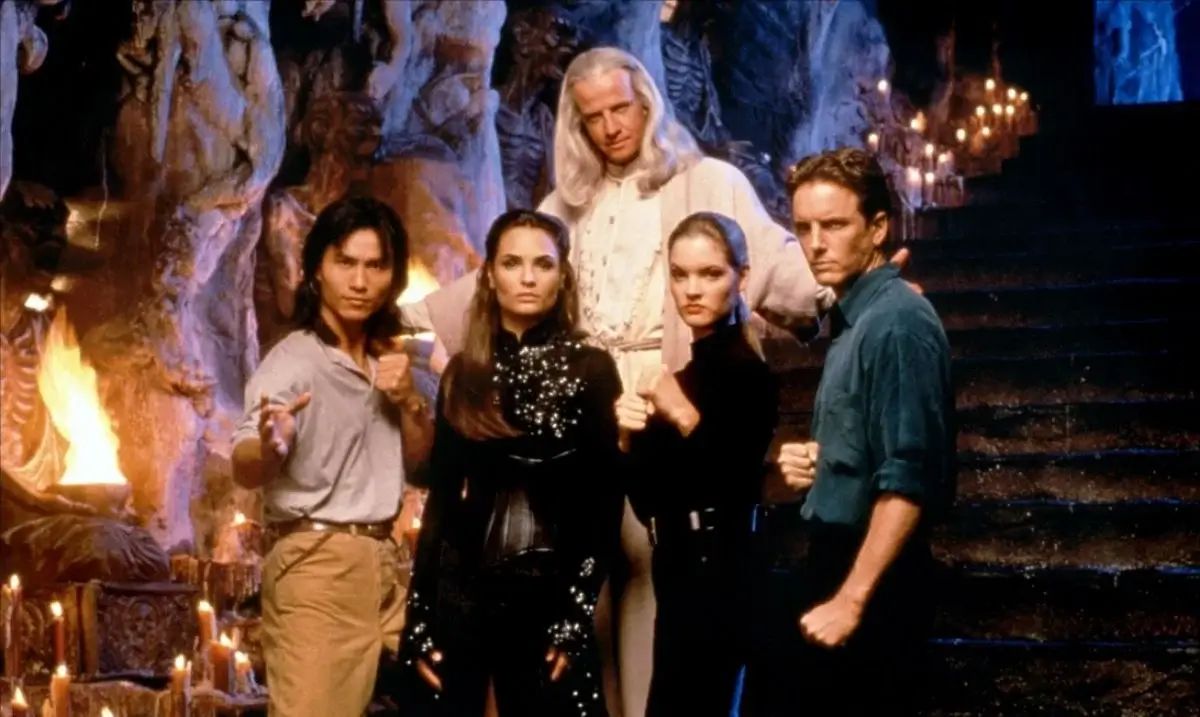
Sonya Blade also had bigger names considered to bring the special forces characters to life, such as Sharon Stone, Dina Meyer, and Christina Applegate. However, it was Cameron Diaz, fresh off the box-office success of 1994’s The Mask, who was cast, though her time with the film would be short-lived. Diaz had to depart the project because of a wrist injury and was ultimately replaced by Bridgette Wilson. As it turns out, Wilson had already auditioned for the role but was passed over for Diaz, leading to Wilson accepting the role of Veronica Vaughn in 1993’s Billy Madison. In the end, Wilson got to bring to life two roles in signature films of the ’90s, with the actress flying out to Thailand to film Mortal Kombat the morning after wrapping on Billy Madison.
For Shang Tsung and Rayden, Tagawa was the first and only choice to portray the villainous sorcerer that steal souls, but it was Sean Connery who was first offered the role of the god of thunder, but he turned the role down, believing the role to be too physically demanding. Oddly enough, it would be Connery’s Highlander co-star, Christopher Lambert, that landed the part. The key to casting the primary lead roles is that they were able to disappear into their roles, allowing fans to see them only as the video-game-inspired characters, with the distraction of high-profile names that could kill the illusion.
For the film’s fight scenes, stunt coordinator and martial artist Pat E. Johnson was hired to bring them to life. His previous experience included Enter the Dragon, The Karate Kid, and Teenage Mutant Ninja Turtles, and while Mortal Kombat may show some of its age in terms of fight choreography today, his resume, coupled with the dedication and experience of some of the film’s stars, made many of the movie’s fight scenes stand out. Shou’s previous work as a Hong Kong stuntman made him a perfect partner for Johnson because he could include some of his ideas into the fight choreography, including wirework, which made Mortal Kombat one of the first Hollywood movies to use it ( and also led to him being credited as a fight coordinator for additional scenes).
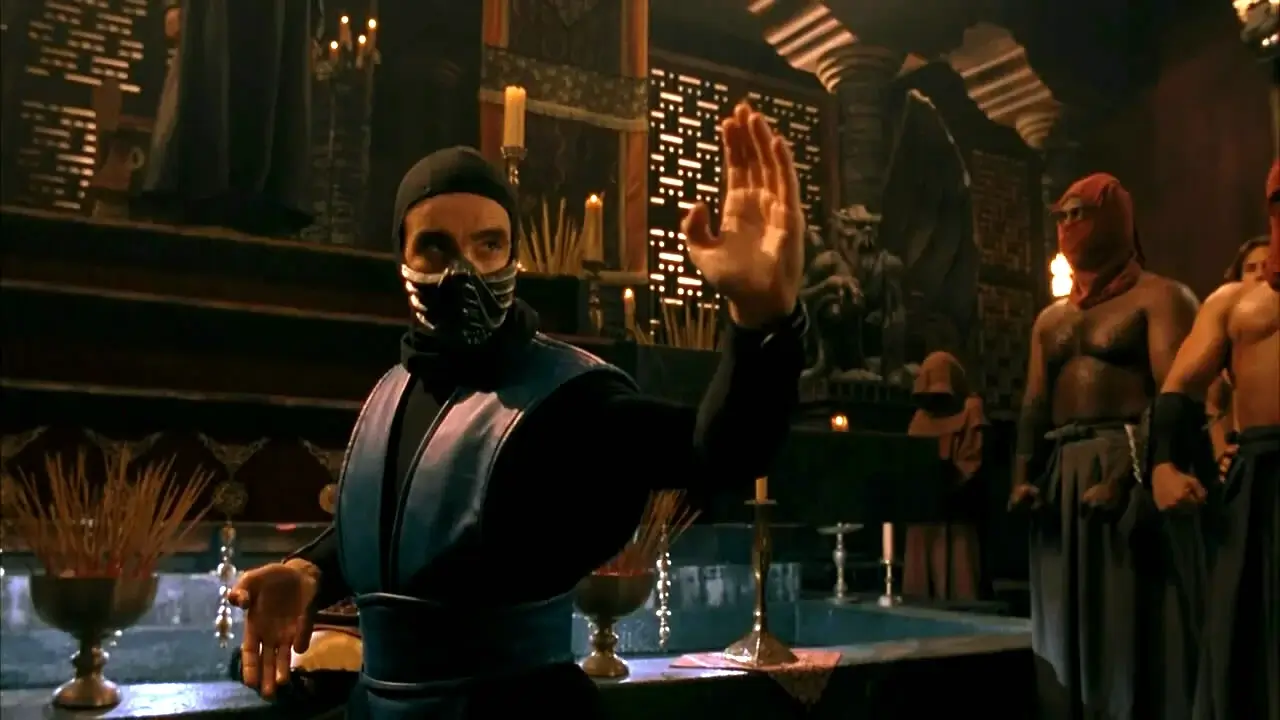
The majority of the cast had weeks of fight training to prepare for their roles, but because Wilson was brought in at the last minute after Diaz’s injury, all of her training was done on set during filming. Due to this, her one-on-one against Kano (Trevor Goddard) was one of the last things to be shot so that she would have enough time to train for the scene and make it convincing. The actors performed most of their stunts, which likely saved money for better or worse, and would lead to some on-set injuries, although no one reportedly fell out of favor with production over it. Ashby suffered a bruised kidney during his iconic fight with Scorpion (Chris Casamassa), and Shou fractured two ribswhile filming his fight with Reptile (Keith Cooke), although he kept it under wraps, fearing it would shut down production. In true Liu Kang fashion, he told Cooke to avoid hitting him on the right side of his rib cage, finished the scene, and then went to the hospital. Not to be outdone by the men, Wilson dislocated her shoulder during production but carried on after it was popped back into place.
Beyond any of this, Mortal Kombat isn’t known for major production problems, except for the Goro animatronic continuously breaking down on set. The $1 million creation, attributed to Tom Woodruff Jr. and Alec Gillis, was elaborate but wasn’t suited for the number of scenes that included the character in the film’s screenplay. The person operating Goro from inside could only do so for two minutes at a time before suffering from a lack of oxygen, which led to the character’s screen time being reduced because it was difficult for Anderson to shoot around the limitations of the animatronic.
Released on August 18, 1995, Mortal Kombat was a hit out of the gate with an opening of $23.2 million. At the time of its release, it was the second-highest August opening at the box office, after 1993’s The Fugitive, and it managed to stay number one at the box office for three straight weeks. By the end of its run, the film grossed $73 million domestically and $124.7 million worldwide on a $20 million budget. Mortal Kombat became the highest-grossing video game adaptation until the release of Pokémon: The First Movie in 1998, making it a clear hit with fans, but critics were a bit more mixed.
Still beloved by fans
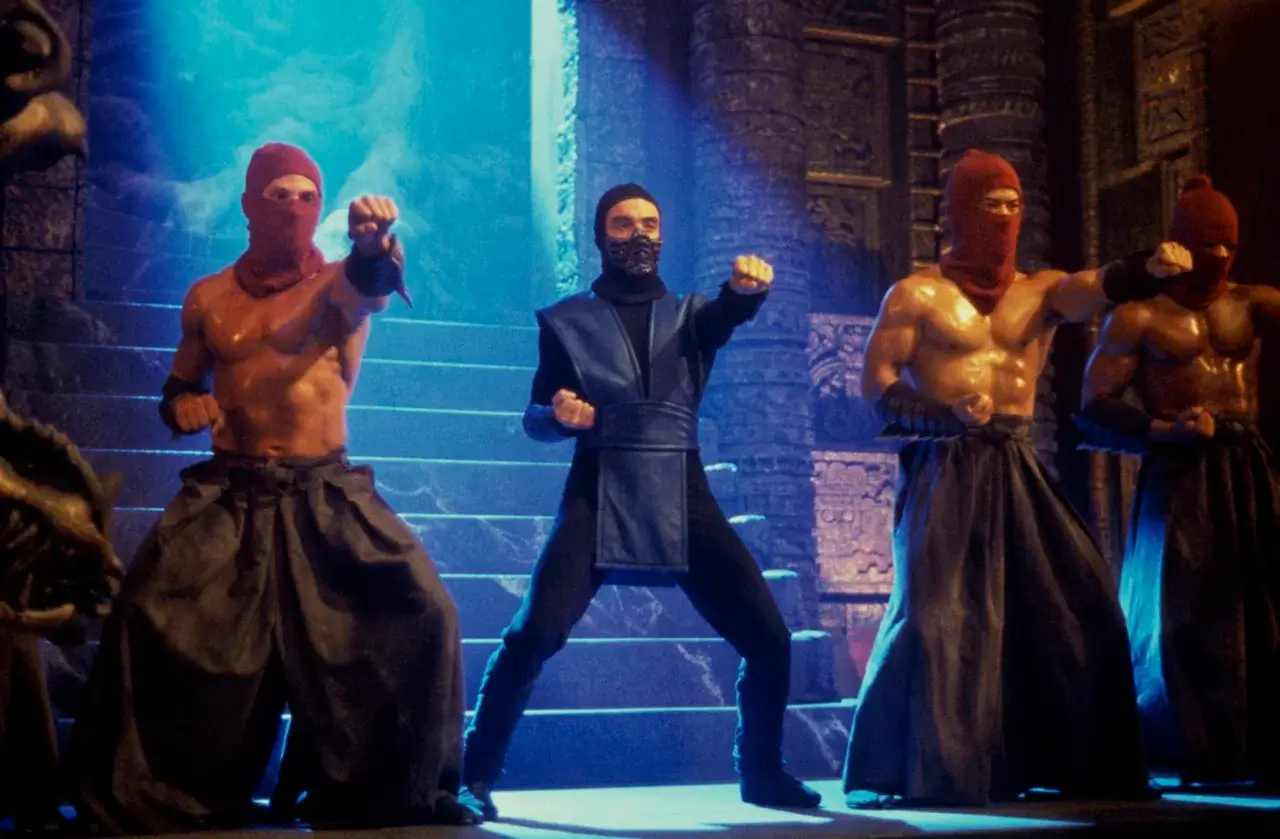
Mortal Kombat registered a 43 percent on Rotten Tomatoes with a consensus that reads, “Despite an effective otherworldly atmosphere and appropriately cheesy visuals, Mortal Kombat suffers from its poorly constructed plot, laughable dialogue, and subpar acting.” Most publications, such as Entertainment Weekly and The New York Times, were negative, essentially calling the film empty, while critics like Roger Ebert and Marc Savlov of The Austin Chronicle were more middle-of-the-road with their reviews but acknowledged that it would be a hit with the younger fanbase. Others, like Gene Siskel, thought the film was a decent video game adaptation while calling it a fun time, and Laura Evenson from the San Francisco Chronicle said the film would go on to become a cult classic, something she was 100 percent correct about.
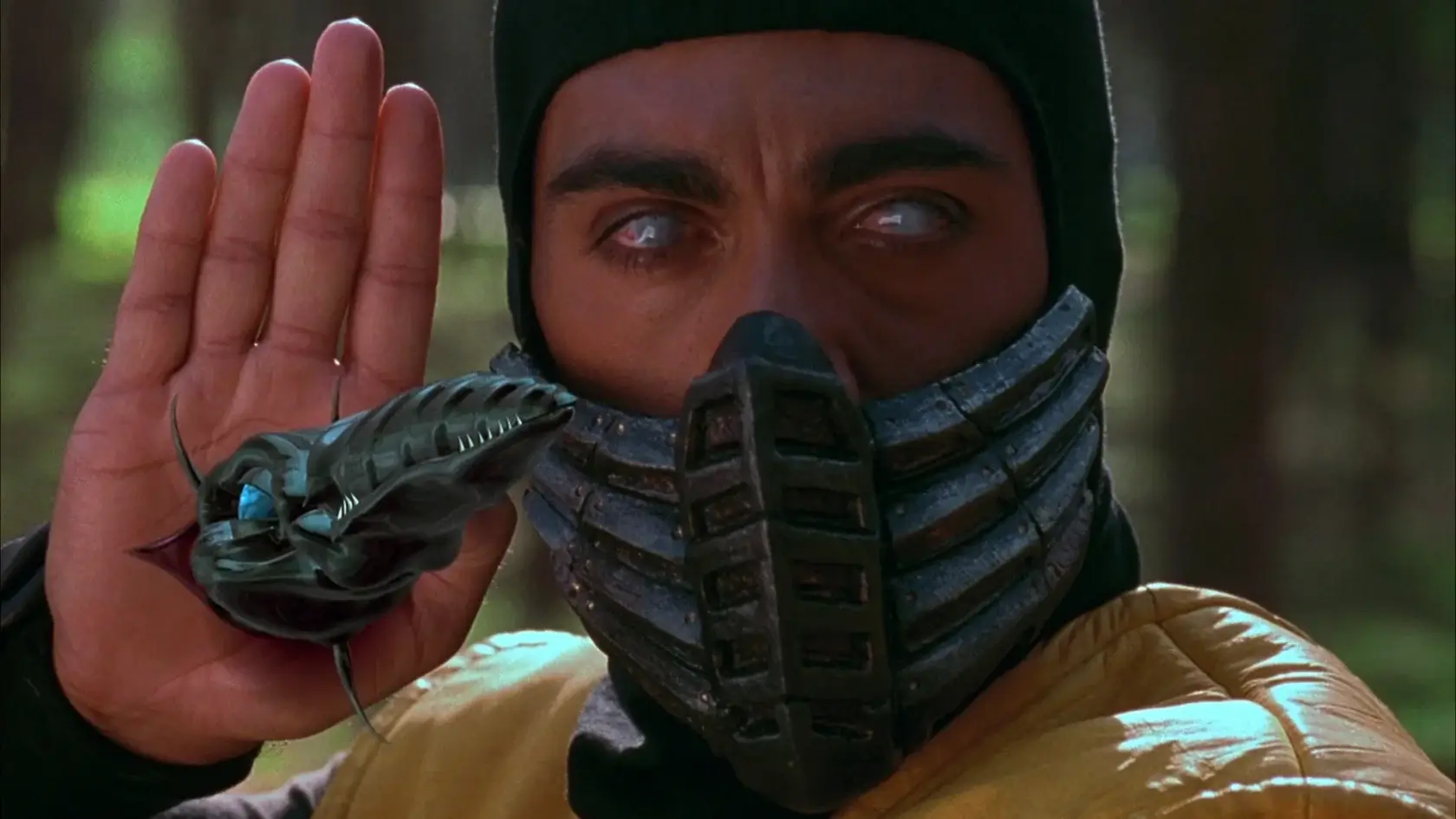
Mortal Kombat worked because it leaned into what fans of the games really loved. From the big entrance of Scorpion and Sub-Zero to the former’s iconic use of “Get Over Here” to seeing Sonya’s signature leg grab, Mortal Kombat embraced little Easter Egg moments that may not have meant much to critics, but certainly meant a lot to the fans, seeing some of their favorite characters from the game come to life. Even when things were changed from the game, like Scorpion’s rope dart being rendered differently with CGI, it was still in the spirit of the game and maintained the source material’s overall aesthetic.
The film was also a product of the time it was released in the best way. Everything about Mortal Kombat feels appropriately mid ’90s, and that isn’t more true than when discussing the film’s soundtrack, particularly the title track “Mortal Kombat (Techno-Syndrome), ” written by The Immortals. The bombastic tune, which has cemented itself as THE Mortal Kombat theme, helped the soundtrack achieve platinum status less than a year after hitting No. 10 on the Billboard 200.
In many ways, Mortal Kombat knew exactly what it was and was created earnestly with the best of intentions by the creative team. It found the right balance between respecting the source material and embracing its sense of campiness, which also showcased that it wasn’t taking itself too seriously. Through paying tribute to the game that inspired it by not insulting the fanbase and pivoting completely away from what made the game such a hit, Mortal Kombat turned into a fun experience that still stands as one of the most rewatchable video game movies. As the IP continues to run with Mortal Kombat II days from release, remember that this new iteration, along with several other video game movies, likely wouldn’t exist without this film’s success.
Mortal Kombat II hits screens nationwide this Friday.





Reviews