The season finale of Demon Slayer: Kimetsu no Yaiba – Swordsmith Village Arc is finally upon us in the form of Ep. 11 "A Connected Bond: Daybreak and First Light". And boy, is it quite the finale. Not the least because a main character we've been waiting to hear for several arcs now can finally
Demon Slayer: Kimetsu No Yaiba – Swordsmith Village Arc Ep. 10 "Love Hashira Mitsuri Kanroji" really has the titular Hashira be the star of the show, to no surprise. Who then proceeds to show us just how much steel a sakura (cherry blossom) can hide. Considering that Mitsuri Kanroji is using an
Demon Slayer: Kimetsu no Yaiba – Swordsmith Village Arc Ep. 9 "Mist Hashira Muichiro Tokito" reveals that the titular Hashira is quite the burn artist. It's also pretty fitting, considering who he's fighting against. After all, Gyokko considers himself to be an artist. Thus, someone who's capable
Muichirō Tokitō is truly the star of Demon Slayer: Kimetsu no Yaiba – Swordsmith Village Arc Ep. 8 "The Mu in Muichiro". In fact, he's such a star in this episode that Tanjiro is nowhere to be seen at all. Which makes sense since this is the episode where we finally find out Muichirō's
Demon Slayer: Kimetsu no Yaiba – Swordsmith Village Arc Ep. 7 "Awful Villain" gives us a pretty rare thing in anime. Heck, it's pretty rare in fiction in general. This whole episode is basically a deconstruction of the Protagonist-Centric Morality trope. as demonstrated by the newest Hantengu's
Demon Slayer: Kimetsu no Yaiba – Swordsmith Village Arc Ep. 6 "Aren't You Going to Become a Hashira?" finally turns the story's spotlight on Genya Shinazugawa. Specifically: it gives us a look into Genya's past/backstory for the first time in the anime. And oh boy, not only is he just as
"The Debut" turns a comedy that pokes fun at the sincerity of the local stage and elevates it to a fascinating character study of a woman on the edge. While still being hilarious.
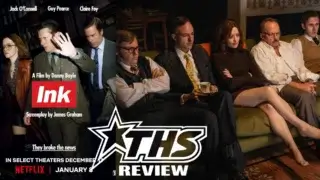
In Ink, Danny Boyle explores the launch of the British newspaper The Sun. The tabloid was created as a paper full of things people want to read but feel they shouldn't. It broke ground in 1960 in London for speaking openly about sex, putting sport on the front pages and embracing the working man.
Few studios have set such a precedent within their own genre quite like Laika Studios. With each painstakingly crafted story, they consistently find new ways to level up stop motion animation and push the limits of what can be accomplished. Stop motion is already a marvelous feat of patience and