
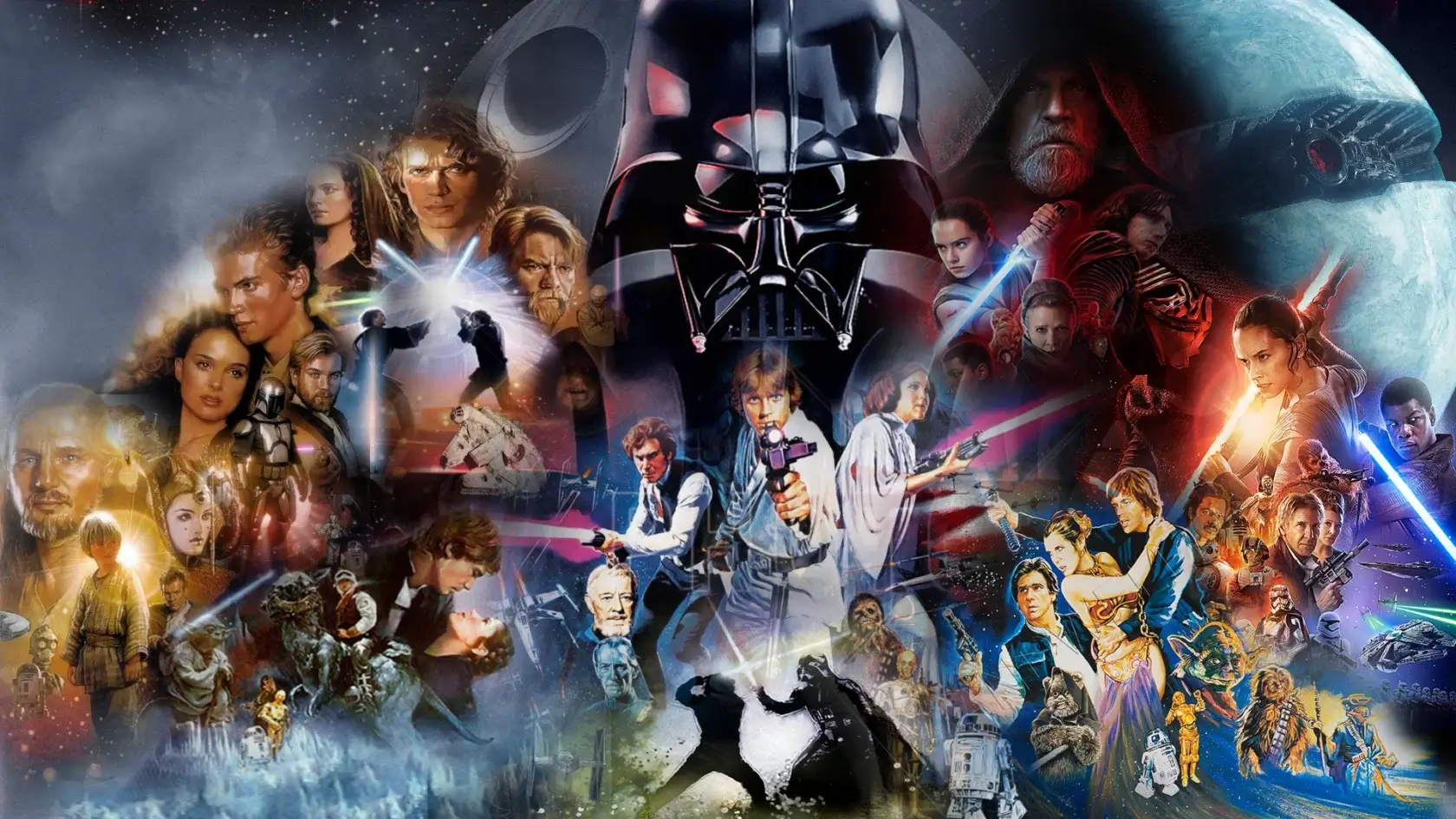
After a long seven-year wait, a new Star Wars film hits the big screen this weekend with the release of The Mandalorian and Grogu. While its presence of Disney+ has been significant in the meantime, fans are likely more than excited to see this IP back in its rightful place with a big theatrical release that is expected to dominate the box office this weekend. In true Star Wars fashion, The Mandalorian and Grogu is sure to be the topic of debate, so to go along with what’s sure to be some strong opinions, this felt like the right time to rank the Star Wars movies from worst to best. May the force be with us because any Star Wars ranking is bound to be looked at under the finest microscope.
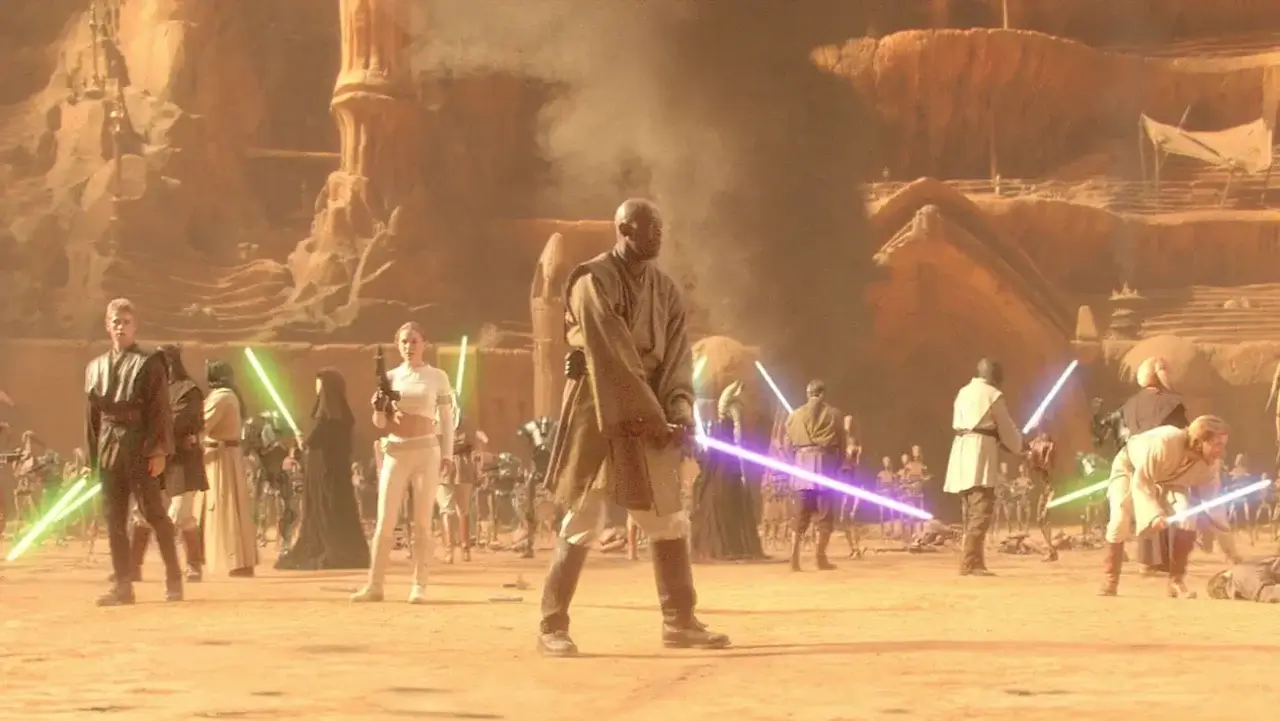
11. Star Wars: Episode II – Attack of the Clones (2002)
Star Wars: Episode II – Attack of the Clones is the second chapter of the prequel trilogy and arrived after the mixed response received by 1999’s The Phantom Menace, and, unfortunately, the second entry proved to be an even bigger misstep for writer and director George Lucas. Set ten years after the events of The Phantom Menace, thousands of planetary systems are seceding from the Galactic Republic and are joining the Confederacy of Independent Systems run by former Jedi Master Count Dooku (Christopher Lee).
As civil war is bound to break out in the galaxy, Obi-Wan Kenobi (Ewan McGregor) is on a mission to investigate the assassination attempt on Padme Amidala (Natalie Portman), leading to the discovery of the clone army, while his apprentice Anakin Skywalker (Hayden Christensen) is tasked with protecting Amidala in the midst of beginning a secret romance with her. Of all the Star Wars films, Attack of the Clones suffers the most from immense pacing issues as it has difficulty with balancing political exposition, the mystery that Obi-Wan is tasked with solving, and the film’s romantic subplot, which is dead on arrival.
The latter proves to be the most problematic because the growing love story between Anakin and Padme should drive a lot of the story as the audience knows its eventual downfall plays a big role in Anakin’s turn to the dark side, but instead Christensen and Portman are saddled with stiff dialogue that feels unnatural and downright awkward (Anakin’s monologue about sand is funny for all the wrong reasons). Then there’s the characterization of Anakin as a whole, which for years had been blamed on Christensen and his abilities as an actor but, given his improvement in the next film and some of his other work, it really comes down to Lucas’ screenplay and direction which makes him come off as an entitled child rather than someone we can root for in this film and even harder to believe that this is the man who will eventually become Darth Vader.
In The Phantom Menace, at least some big action set pieces gave that film a burst of energy, butAttack of the Clones lacks that, with action scenes that should be memorable, like Yoda vs. Count Dooku, coming off as more silly than thrilling. In addition, thanks to this film emerging as digital filmmaking and entire computer-generated environments, which was something Lucas was very interested in, Attack of the Clones feels more like a video game rather than something with a heartbeat. Of all theStar Wars movies, Attack of the Clones remains the biggest disappointment.
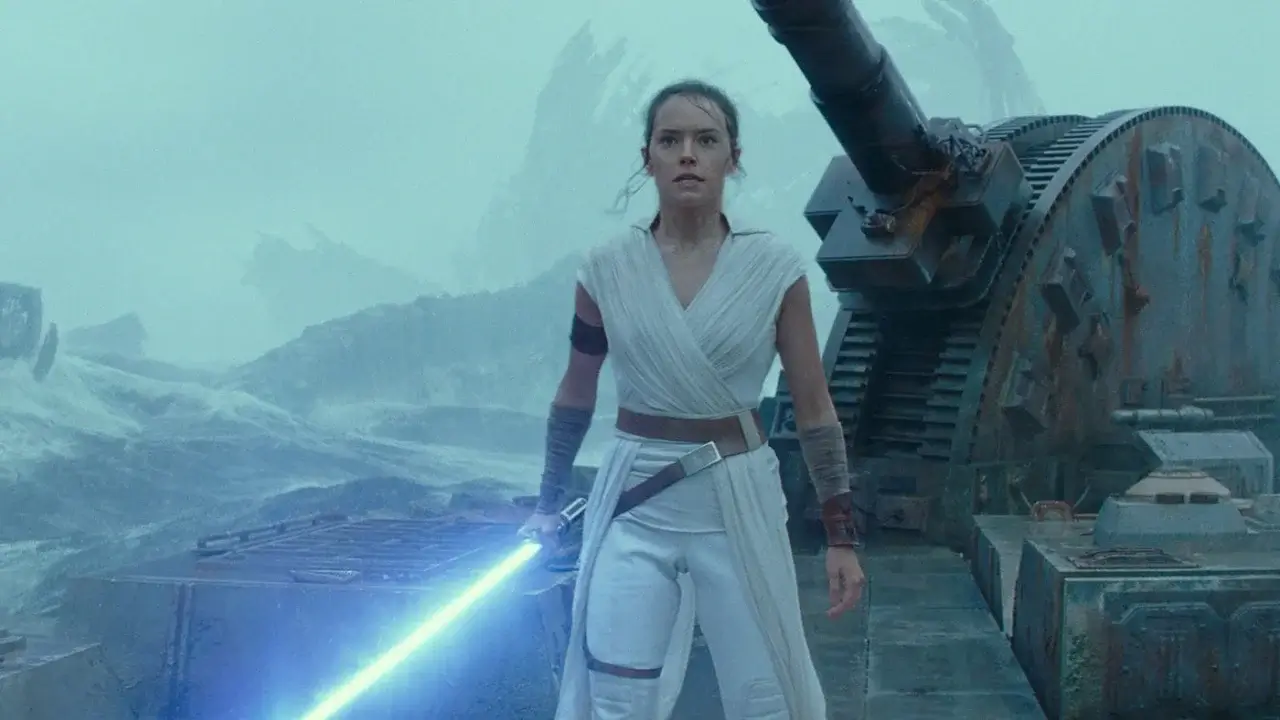
10. Star Wars: Episode IX – The Rise of Skywalker (2019)
Star Wars: Episode IX – The Rise of Skywalker’s biggest fault was trying to please the fandom by course-correcting elements from the previous film that were poorly received, despite that film garnering some of the franchise’s best reviews. Even if you don’t agree with everything that The Last Jedi did, The Rise of Skywalker’s attempts to “fix” all of that lead to lazy retcons and a conclusion of the sequel trilogy that doesn’t entirely satisfy.
Directed by J.J. Abrams from a screenplay he co-wrote with Chris Terrio, The Rise of Skywalker follows Rey (Daisy Ridley), Finn (John Boyega), and Poe Dameron (Oscar Isaac) as they lead what’s left of the Resistance against Supreme Leader Kylo Ren (Adam Driver) and the First Order, who now has the assistance of the recently resurrected Sith Lord, Emperor Palpatine (Ian McDiarmid). Most of the problems with The Rise of Skywalker come down to execution and perhaps too many cooks in the kitchen. Yes, there is one director and two screenwriters, but Lucasfilm as a whole likely had a big say in where this film was headed following The Last Jedi, and the solution appeared to be easy fan service.
Sure, with Snoke executed in the previous film, the movie needed another Big Bad. Still, Palpatine comes off as a very easy and lazy choice that’s meant to simply call back to the previous films rather than letting the sequel trilogy create something more original. Palpatine’s actual role in the First Order and how that jives with his Final Order is also up for debate and raises questions that The Rise of Skywalker doesn’t quite answer.
Then there is the big reveal that Palpatine is Rey’s granddaughter, which probably sounded epic on paper but feels like an immediate retcon of the previous film and Rey’s role as a whole in the sequel trilogy before this entry. If anything, it feels like a cheap nod to Luke’s (Mark Hamill) discovery about his parentage that played a big role in The Empire Strikes Back and through Return of the Jedi. It’s also a shame how certain characters are used. Kylo Ren is easily one of the best creations of the sequel trilogy, but his arc seems to land with a thud this time around, despite what seemed to be an interesting direction with him and Rey in The Last Jedi. The same goes for Finn, who seemed to be positioned to be much more important in The Force Awakens, only to be sidelined in the next two films.
There are some things to like, however. Carrie Fisher’s death put a dark cloud over the franchise, but Abrams and his team figured out the best way to utilize her with the help of a Harrison Ford cameo that proves to be one of the few scenes in the film that lands with emotional resonance. Ford’s Han is also used in a profound way to redeem Ben Solo in a sense that doesn’t feel at all forced. Then there is the clash between Rey and Kylo Ren, which is expertly constructed and ends up being a fun showdown.The Rise of Skywalker could’ve been a satisfying conclusion to this saga, but it ends up being an example of what happens when the overall direction of a story isn’t clear and the powers that be feel the need to please everyone but end up not pleasing many people at all.
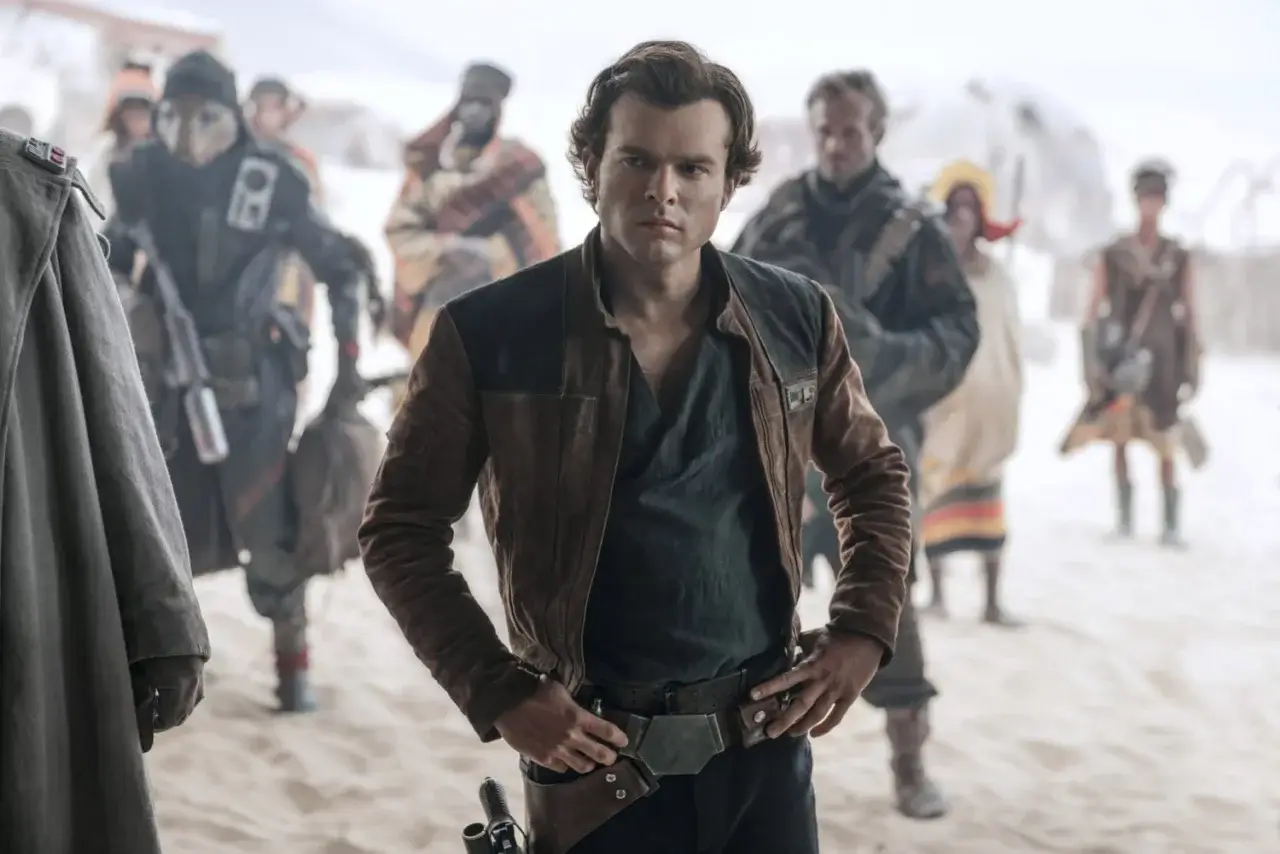
9. Solo: A Star Wars Story (2018)
It’s not so much that Solo: A Star Wars Story is bad, but more like it feels unnecessary. The stakes don’t feel high enough, which makes this entry lack some of the monumental storytelling that has been one of the best aspects of the better entries of the franchise. Directed by Ron Howard from a screenplay by Jonathan and Lawrence Kasdan, the film dives into the origin story of Han Solo (Alden Ehrenreich) and Chewbaca as they join a heist in the criminal underworld ten years before the events of Star Wars: Episode IV – A New Hope. It should be noted that this film had a lot of behind-the-scenes upheaval.
Phil Lord and Christopher Miller were hired to helm the film with principal photography beginning in January 2017, but the pair were fired in June of that year amid creative differences with Lucasfilm. This led to the safer choice of Howard taking over, as they probably felt he wouldn’t make too many creative waves that they would have to question. Given all of that, Solo: A Star Wars Story emerges as competently made and mostly entertaining, considering all the changes that took place, but with the safer option comes a Star Wars film that is remarkably ordinary, from some of the direction to the ho-hum cinematography from Bradford Young.
The resulting film is the epitome of fan service that just checks off a list that needs to be done to satisfy fans of his lore. Show the audience how he met Chewie. Show the origins of his iconic blaster. Show his connection to Lando Calrissian (Donald Glover). Show how he got his last name and the Kessel Run. Granted, all of these things should be explored as an origin film, but it’s done so in such a robotic way that each of these landmark events of the character doesn’t feel as profound as they should be. The one criticism that should be defended in the years since its release is Ehrenreich’s portrayal of Han, which was never going to be as iconic as Harrison Ford’s portrayal but is much better than it’s given credit for, as he makes the character his own.
He’s especially good with Glover, with the new Lando also holding his own by exuding the same charm that Billy Dee Williams showcased during his time with the character.Solo: A Star Wars Story is entertaining and mostly harmless, but it does make the audience wonder what could’ve been had Lucasfilm allowed for more creative storytelling to prevail.
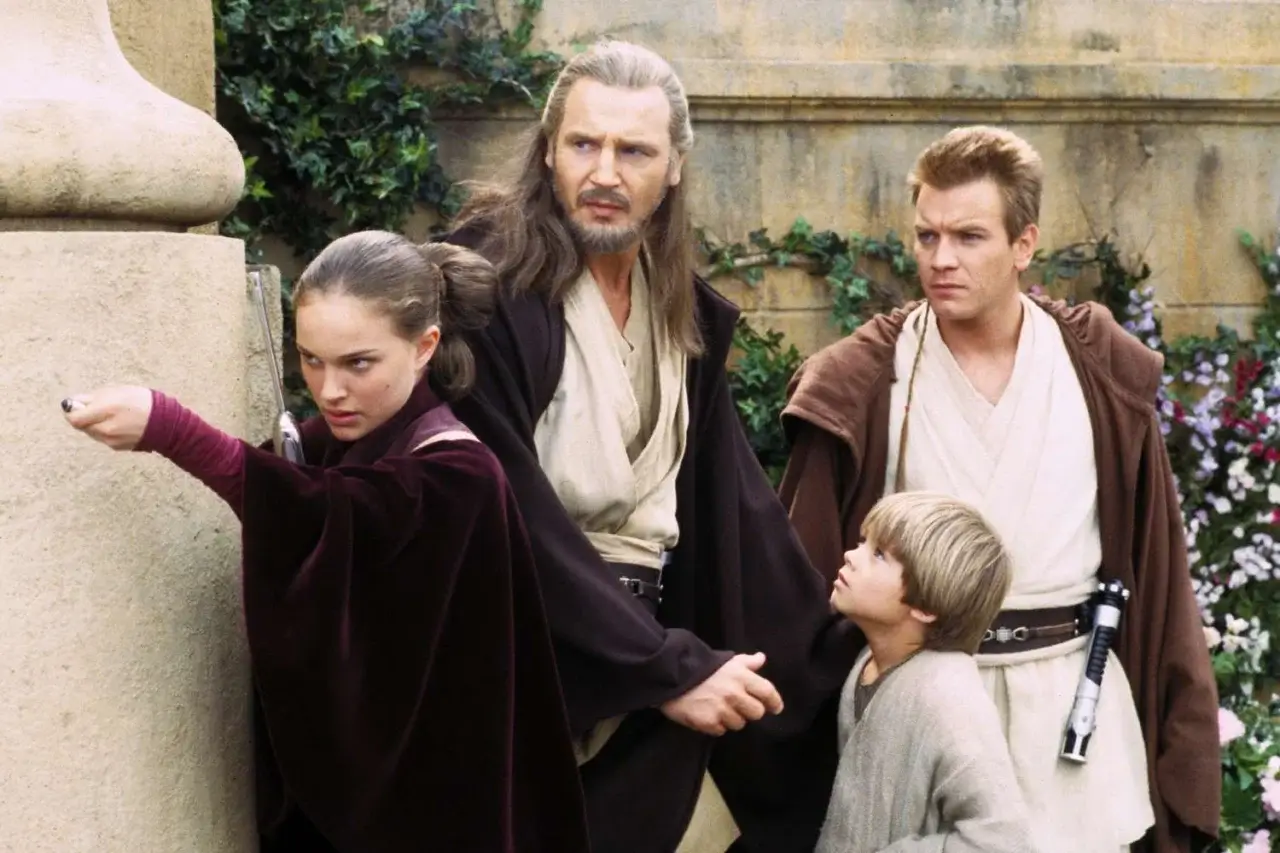
8. Star Wars: Episode I – The Phantom Menace (1999)
Time has been much kinder to Star Wars: Episode I – The Phantom Menace. Removed from all the hype that surrounded the movie when it was released, the film manages to be entertaining and contains some of the best moments of the franchise, but that doesn’t mean that with the benefit of time, its flaws still aren’t apparent.
Written and directed by George Lucas, The Phantom Menace is the first film of the prequel trilogy and follows Jedi Master Qui-Gon Jinn (Liam Neeson) and his apprentice Obi-Wan Kenobi (Ewan McGregor) as they try to protect Queen Amidala (Natalie Portman) during her mission to resolve a trade dispute. Meanwhile, they also have to deal with the return of the Sith along with a young slave named Anakin Skywalker (Jake Lloyd), who is Force-sensitive and destined for great or dark things. What bogs the film down, which would prove to be an even bigger chore in Attack of the Clones, is its dense political exposition, something that is more talky than interesting, that also takes up a big chunk of the film’s 134-minute runtime.
It’s interesting because so much of the film feels aimed at a younger audience, which makes its focus on trade disputes and Senate meetings seem baffling, given the fact that this would most likely put them (and some adults) to sleep. This is bolstered by some truly cringe-inducing dialogue that comes off very wooden and proves that Lucas is great at world-building and not writing dialogue or directing actors. His most controversial character choices continue to be Jar Jar Binks, intended to be comic relief for children, who became an instantly hated figure, although Ahmed Best is innocent because he did as instructed by Lucas and brought the character to life based on his direction.
Then there is young Anakin, the boy who will eventually become Darth Vader. Again, none of this falls on Lloyd as he also did as instructed, but much of what Anakin does as a young kid here comes off as fun and accidental, which does strip Darth Vader’s origins of some of its power, as it’s hard to imagine he’ll grow into one of cinema’s most iconic villains. That being said, The Phantom Menace gets a jolt of much-needed energy during the “Duel of the Fates” sequence, which features the iconic lightsaber battle between Qui-Gon, Obi-Wan, and Darth Maul (Ray Park), which stands as an all-timer Star Wars moment.
Also, even though there is an overuse of CGI to the point that the film almost feels like a video game, the pod race scene still electrifies and showcases how Lucas was willing to push the boundaries of special effects. In addition, some of the characters do work well, with Neeson and McGregor emerging as the perfect pair to lead the film, with the former evoking some of the sage wisdom of Alec Guinness’ Obi-Wan portrayal, while the latter represents spot-on casting as the young Obi-Wan who will continue to evolve the best across the prequel trilogy. A lot of The Phantom Menace feels juvenile while featuring plotting that grows overly tiresome, but it’s still an entertaining piece of work that has gotten better with time.
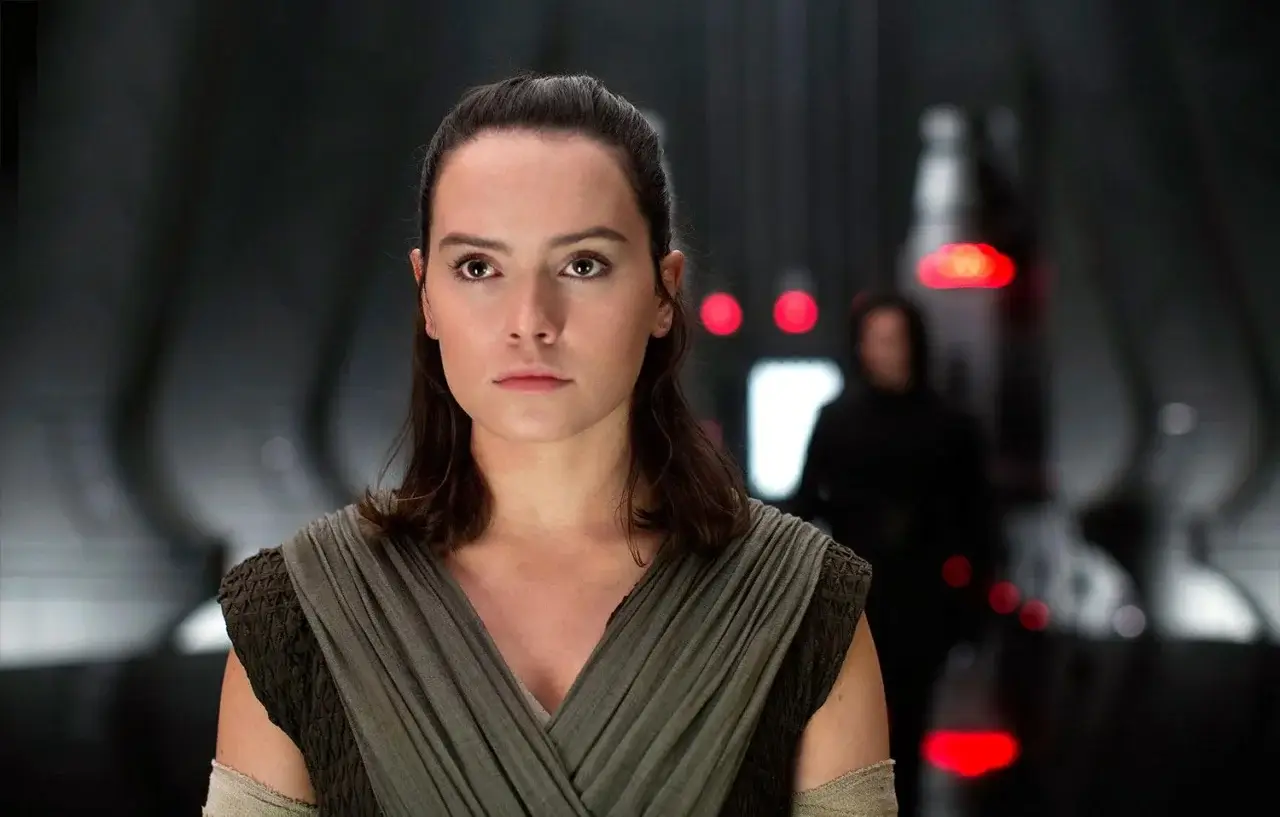
7. Star Wars: Episode VIII – The Last Jedi (2017)
Getting this out of the way at the start with The Last Jedi, a Star Wars film that likely set a new and unhealthy tone of fan discourse. My personal issues with this film come down to pacing (at 152 minutes, it runs too long and drags in spots), and it’s disappointing to see how Finn (John Boyega), who seemed built up for something more profound in The Force Awakens, is virtually sidelined in the biggest way in this film. Also of note is the treatment of Luke Skywalker (Mark Hamill), which, admittedly, was disappointing to see portrayed as someone bitter and broken rather than the epic Jedi Master he was meant to be.
Beyond that, what writer and director Rian Johnson does with the lore, which seemed to anger most Star Wars fans, at least made this second entry in the sequel trilogy an interesting endeavor. The film once again follows Rey (Daisy Ridley) as she seeks out the aid of Luke Skywalker (Hamill) in her fight against Kylo Ren (Adam Driver) and the First Order. The Last Jedi was brave enough to do something that the franchise had long been afraid to do, and that was to subvert franchise expectations. While this led to pitchforks and daggers from most fans, it did make for more interesting storytelling, something this entry benefits from.
This leads to much better character development for some of the primary players, most notably Kylo Ren and Rey, as their moral divide results in some rich moments to be played by Ridley and Driver, who deliver their best performances of the trilogy in this film. Their Force connection and how light and dark are actually more gray than it appears, make their interactions more palpable than any lightsaber fight, and only makes it more disappointing that the complexities of this aren’t followed through with the same finesse in The Rise of Skywalker. Johnson wanted to do more interesting things with the lore and wasn’t entirely concerned with paying off aspects of The Force Awakens that had been highly theorized by fans, likely because he was told to do his own thing (this is what happens when an entity like Lucasfilm doesn’t have an overarching plan for their new trilogy).
This leads to characters like Supreme Leader Snoke being snuffed out, despite appearing to be the trilogy’s new big bad, which may have made the previous things set up in The Force Awakens feel unimportant, but at least it made this entry make moves that feel surprising and caught the audience off guard. It’s also the best looking of the sequel trilogy from a visual standpoint, from the red backdrop of Snoke’s throne room to the salt plain of Crait, Steve Yedlin’s cinemaography truly pops throughout. The film’s pacing proves to be its Achilles heel.
Everything on the casino planet Canto Bright with Finn (Boyega) and Rose (Kelly Marie Tran) grinds the film to a halt and feels largely unnecessary compared to the more significant aspects of the story, and the insistence of adding humor that feels forced, something that takes place in just about all of the entries, becomes a bit of a nuisance. However, had The Last Jedi been a better-paced film, it would have stood as one of the best because it had no fear in disrupting the balance of the Force.
The Mandalorian and Grogu opens in theaters nationwide this Friday, and look out for Part Two of this Star Wars ranking tomorrow.
For more on Movies, make sure to check back to That Hollywood Show.



Reviews