
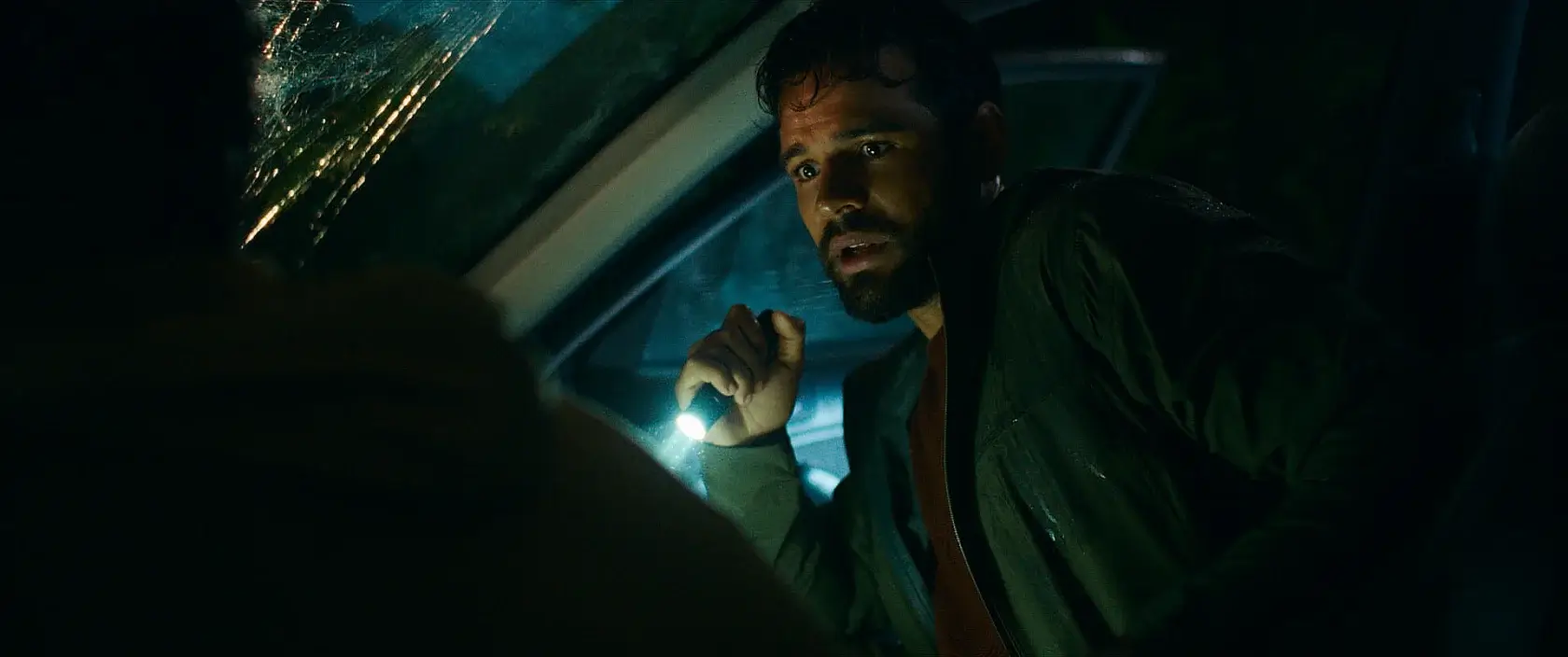
Hitting the road with family and friends to paths unknown can be a rite of passage, but in a horror movie, it can lead to deadly consequences. This weekend sees the release of Passenger, a supernatural horror film where a couple, three weeks into their cross-country van life road trip, find themselves in a scary situation when it’s derailed by a catastrophic crash and the presence of a demonic entity.
They’re not the first couple to find terror on the road, and if you came out of Passenger wanting some more horror on a desolate road, here are some essential road trip horror movies to check out that might make you question that next excursion.
Honorable Mention: Jeepers Creepers (2001)
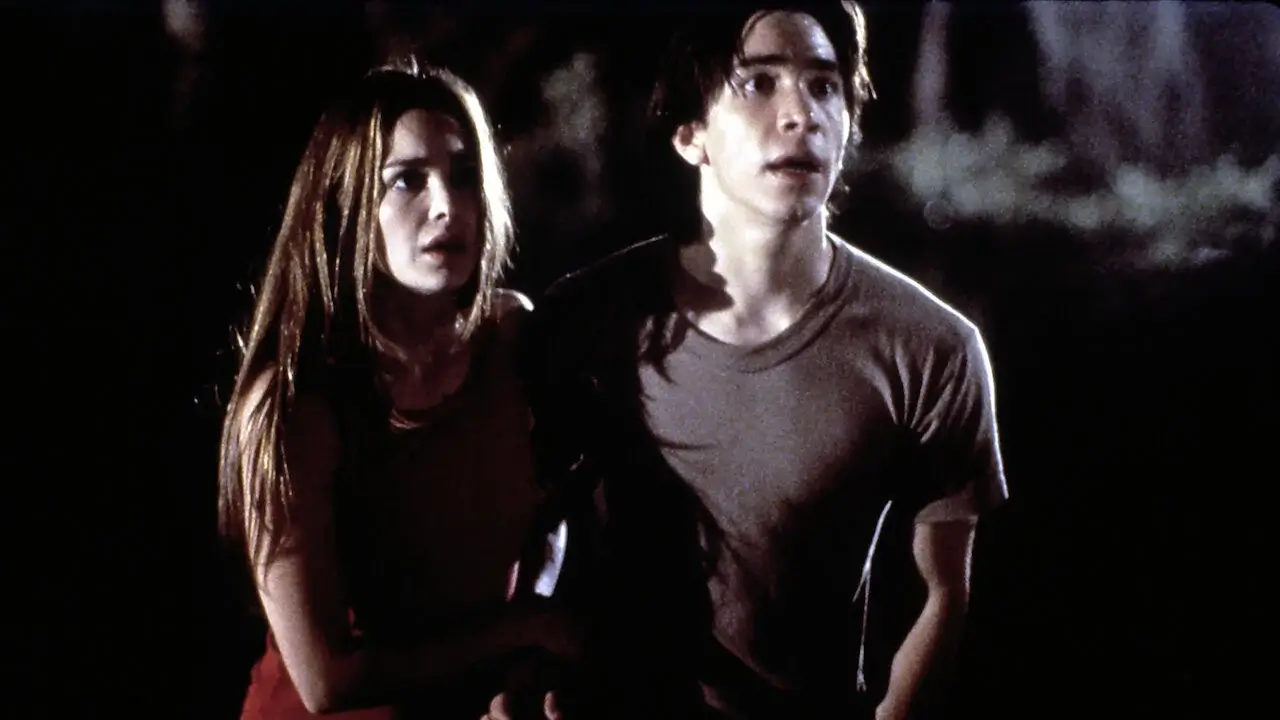
Relentless suspense comes in the form of a brand new and original monster in Jeepers Creepers, a film that will show you to always just mind your business when you’re on the road. Written and directed by Victor Salva, Jeepers Creepers, taking its name from the catchy 1938 song, follows siblings Trish (Gina Philips) and Darry (Justin Long) as they return home for spring break. While on the road, they witness a truck driver who appears to throw a body down a hole, and when they decide to investigate, they become embroiled in a deadly and ongoing encounter with a trucker on a particular diet because he awakens every 23rd spring for 23 days to feed on human body parts.
Jeeper Creepers works because the tension gradually escalates, and it keeps its major secret about its antagonist until late in the film, not showing its hand that their pursuer is less than human. At the start, the film wastes no time by engaging in a high-tension chase on the road between the Creeper (Jonathan Breck) and the siblings, which honestly proves to be even more interesting than when this monster eventually shows his true nature. As the sibling pair, Philips and Long give off the real impression of being related with relatable and humorous dialogue, while also finding humanity in their roles to make the audience care about them. At just 91 minutes, Jeepers Creepers is expertly paced, going from a psychological mystery to a nail-biting thrill ride with one hell of an ending you certainly won’t forget.
5. Wrong Turn (2003)
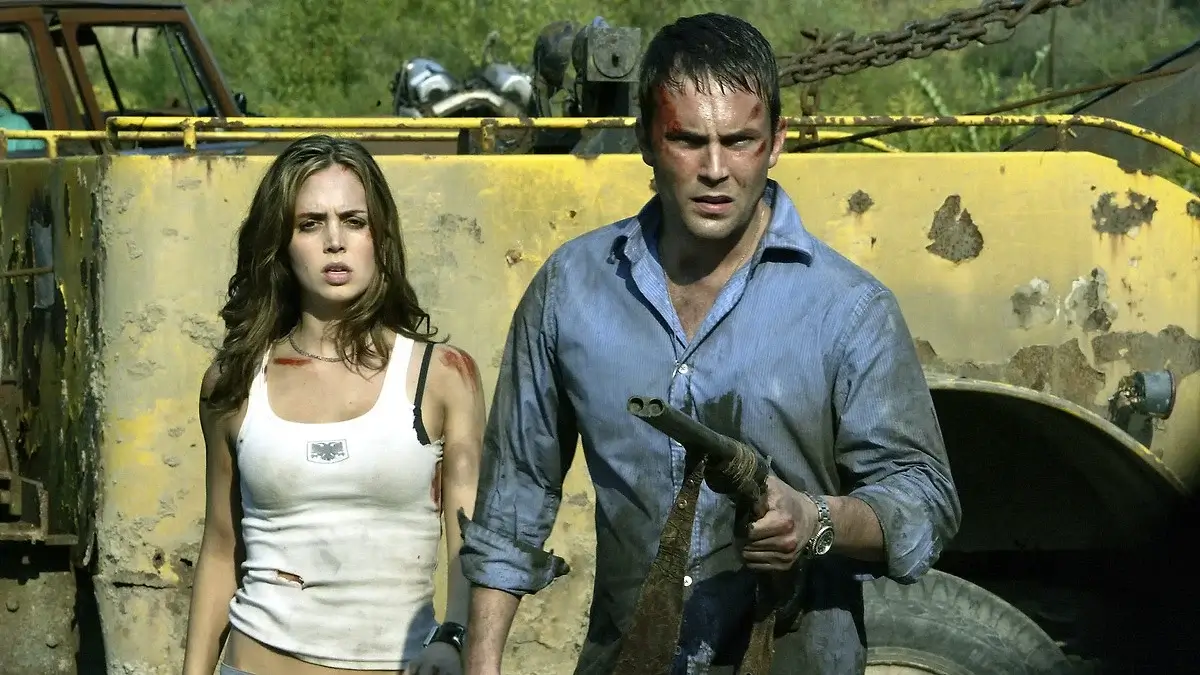
The B-movie slasher gets a fun modern-day update in 2003’s Wrong Turn, a film that feels like a homage to films such as The Hills Have Eyes and The Texas Chainsaw Massacre. Directed by Rob Schmidt from a screenplay by Alan B. McElroy, Wrong Turn follows a group of six individuals looking every bit of the early 2000s in their style as inbred, cannibalistic monsters stalk them after a fender bender on the road in the woods of West Virginia.
Wrong Turn is a brisk 84 minutes, so it wastes no time throwing the audience into a very tense situation that is bolstered by the film’s relentless atmosphere, with the isolation of the West Virginia woods serving as the perfect location to set up some thrilling chase sequences and nasty displays of gore. There isn’t time wasted on character arcs as the six people that we meet are more types rather than fleshed out personalities, but they all serve their roles well. Whether it’s Eliza Dushku’s resourceful and tough-as-nails Jessie, or Desmond Harrington’s ruggedly efficient Chris, or Emmanuelle Chriqui’s typical girl-in-danger Carly, every horror trope is served to the highest order, and Wrong Turn shows no shame in exploiting all of them for an entertaining ride from start to finish.
The inbred monsters end up being particularly memorable because they’re brought to life with practical effects, courtesy of the iconic Stan Winston, who also served as the film’s producer. Wrong Turn doesn’t try to be more than what it is, and that ends up being its greatest attribute.
4. Joy Ride (2001)
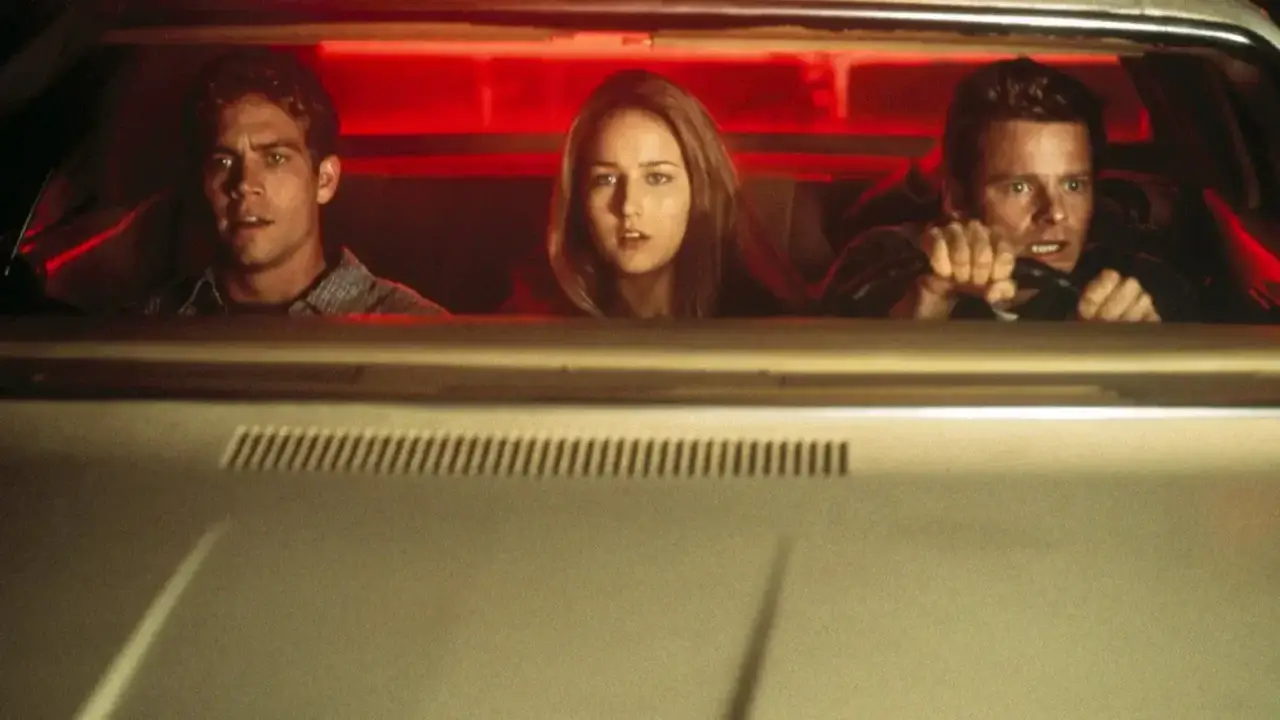
Dark human, genuine thrills, and one hell of a movie villain collide in 2001’s Joy Ride, a psychological horror thriller that remains an underrated gem. Directed by John Dahl from a screenplay by Clay Tarver and J.J. Abrams (yep, that J.J. Abrams), Joy Ride follows brothers Lewis (Paul Walker) and Fuller (Steve Zahn) and Lewis’ would-be-crush (Leelee Sobieski) who find themselves pursued by a psychopathic killer following a prank gone wrong on their CB radio while on a road trip.
As voiced by Ted “Buffalo Bill” Levine, Rusty Nail (Matthew Kimbrough in body form late in the film) turns into a mostly unseen menacing presence that gives Joy Ride a bulk of its unrelenting terror as what began as a fun prank becomes a nightmarish pursuit on the open road. Like Steven Spielberg’s TV film Duel before it, Joy Ride is a tightly paced game of cat-and-mouse, aided by the film’s isolated atmosphere, where escape from Rusty Nail appears seemingly hopeless.
Then there is Rusty Nail’s Peterbilt 359 semi-truck, which becomes a character itself, especially when it becomes a towering beast in the darkness closing in on its potential victims. Dahl and cinematographer Jeffrey Jur prioritize atmosphere over cheap thrills, and they have a great sense of the space they’re using, turning the world into a desolate hunting ground for Rusty Nail to hunt the sibling pair and the female companion down. None of this would really matter without characters we care about, and Walker, playing the more straight-as-an-arrow younger brother, and Zahn, portraying the screw-up older brother, form a believable dynamic and play off of each other well. Sobieski gets involved later in the game, but her damsel-in-distress trope leads to a particularly thrilling climax. Joy Ride is a well-written exercise in escalating dread that only gets better with age.
3. The Hitcher (1986)
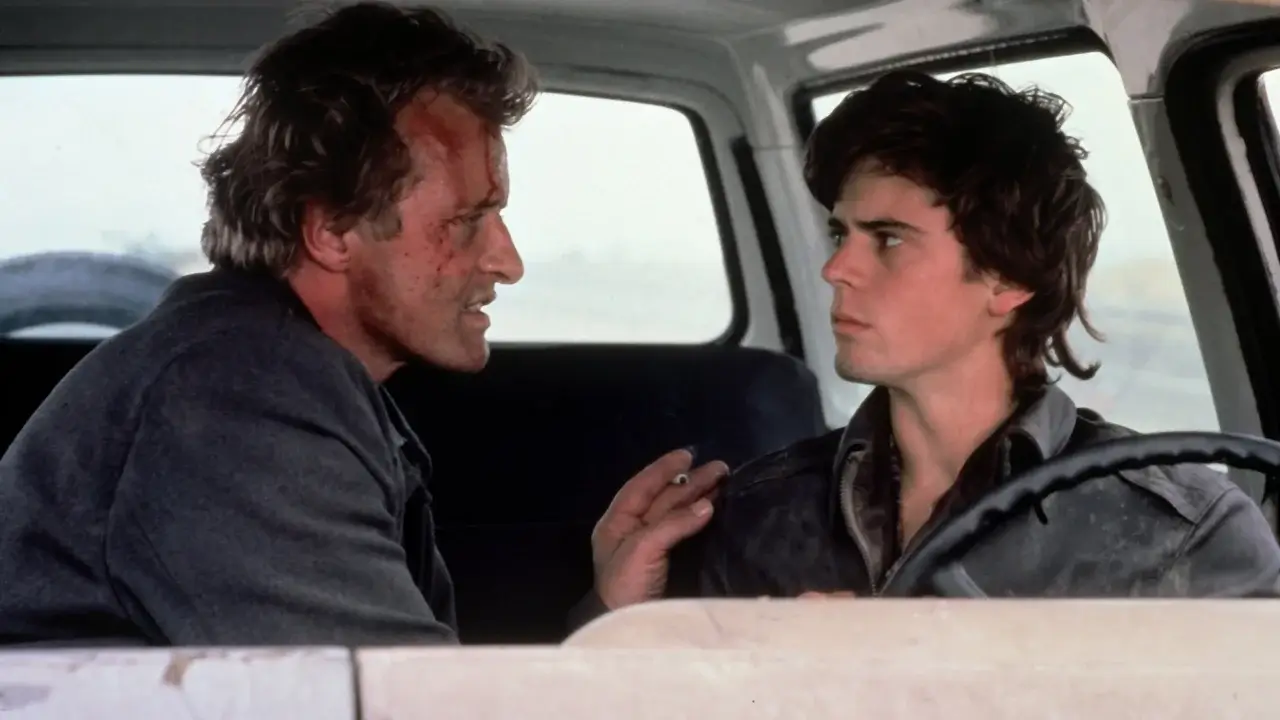
If you need a cautionary tale to never pick up hitchhikers, 1986’s The Hitcher is one to check out, which engages in chilling psychological warfare that becomes a thrilling two-hander and a battle of wits between a young motorist and a hitchhiker with murder on his mind. Directed by Robert Harmon from a screenplay by Eric Red, The Hitcher follows Jim Halsey (C. Thomas Howell), who is delivering a car from Chicago to San Diego when he encounters a hitchhiker named John Ryder (Rutger Hauer) who quickly makes it obvious it was a deadly mistake to pick him up. The most frightening thing about The Hitcher is that there is no rhyme or reason to what John Ryder is doing.
The audience doesn’t get a motive for his murderous rampage, and that is more terrifying than any kind of reasoning could convey. Like Jim, we’re thrown in the middle of an impossible situation with John deciding that Jim is the prey that he wants to pursue until one of them dies. Some have picked into the character dynamics between the pair, with some even hinting that there is a homoerotic element to John’s attraction to terrorizing Jim, and that only adds fuel to the psychological nightmare that The Hitcher creates. The film is tightly paced, with each scene becoming more harrowing than the next, and it’s all drenched in dread that’s beautifully shot by cinematographer John Seale, whose shots of the American Southwest only convey how isolated Jim is on the open road. Adding to the atmosphere is Mark Isham’s synthesizer-driven score, which almost feels like the mind of John Ryder echoing throughout the film as it progresses.
At the heart of the film are the performances, with Howell portraying a believable victim who grows stronger as the film moves along and Hauer, crafting a signature horror movie villain that makes him an almost mythical force. He’s the embodiment of evil, made more chilling because he never goes over the top. His brand of terror is cool, calm, and collected. The Hitcher ends up being a twisted coming-of-age story where Jim has to succumb to his inner killer instincts to survive the unending and deadly pursuit of a man who is having sadistic fun with this horrific chase.
2. The Hills Have Eyes (1977 or 2006)

Wes Craven’s 1977 horror classic The Hills Have Eyes is good in its own right because of its biting social commentary and what he was able to do on a very slim budget (a reported $700,000 at most) and the 2006 remake, with its increased $15 million production cost, intensified its brutality with improved practical effects that goes along with much deeper character development that makes the audience care about their outcome.
Either way, you can’t go wrong with either Tales of Road Trip Terror because both hit the spot and complement each other well. Written and directed by Craven, 1977’s The Hills Have Eyes follows the Carter family as they are targeted by cannibals when they become stranded in the Nevada desert. The 2006 remake, directed by Alexandre Aja from a screenplay he co-wrote with Gregory Levasseur, follows the original’s general plot trajectory by focusing on a family who are targeted and attacked by a group of cannibalistic mutants after their car breaks down in the middle of nowhere. Both films utilize the isolation of their space well, with the attackers being in the power position as the victims are lost in their territory, where escape doesn’t seem to be an option. The original film’s chills come from the guerrilla-style filmmaking that Craven utilizes, mostly due to the limitations of the budget, but it’s something that becomes an asset as it makes the film feel all the more real and gritty.
As for the remake, some have criticized the film’s brutality and violence, but it makes for a more visceral experience that lingers with the viewer, particularly during the signature trailer attack, which proves to be even better than the one presented in the original. The larger budget also leads to bigger creature designs for the antagonists, which are shown here not just as random savages, but as individuals who were once people before they were ravaged by nuclear testing. This gives the remake its own sense of social commentary since the mistakes of man turned these people into what they are, and makes the audience ponder who the real monsters are in the film.
Additionally, even though most will be watching the remake for the horror and brutality, The Hills Have Eyes remake has better character development for the central family, allowing the audience to get to know them before all hell truly breaks loose. The Hills Have Eyes isn’t always an easy watch, but the key players involved did a superb job of enhancing what Craven established in 1977 while also paying proper respect to it. They’re both essential horror films representing what can go very wrong when you become a target in the middle of nowhere.
1. The Texas Chain Saw Massacre (1974)
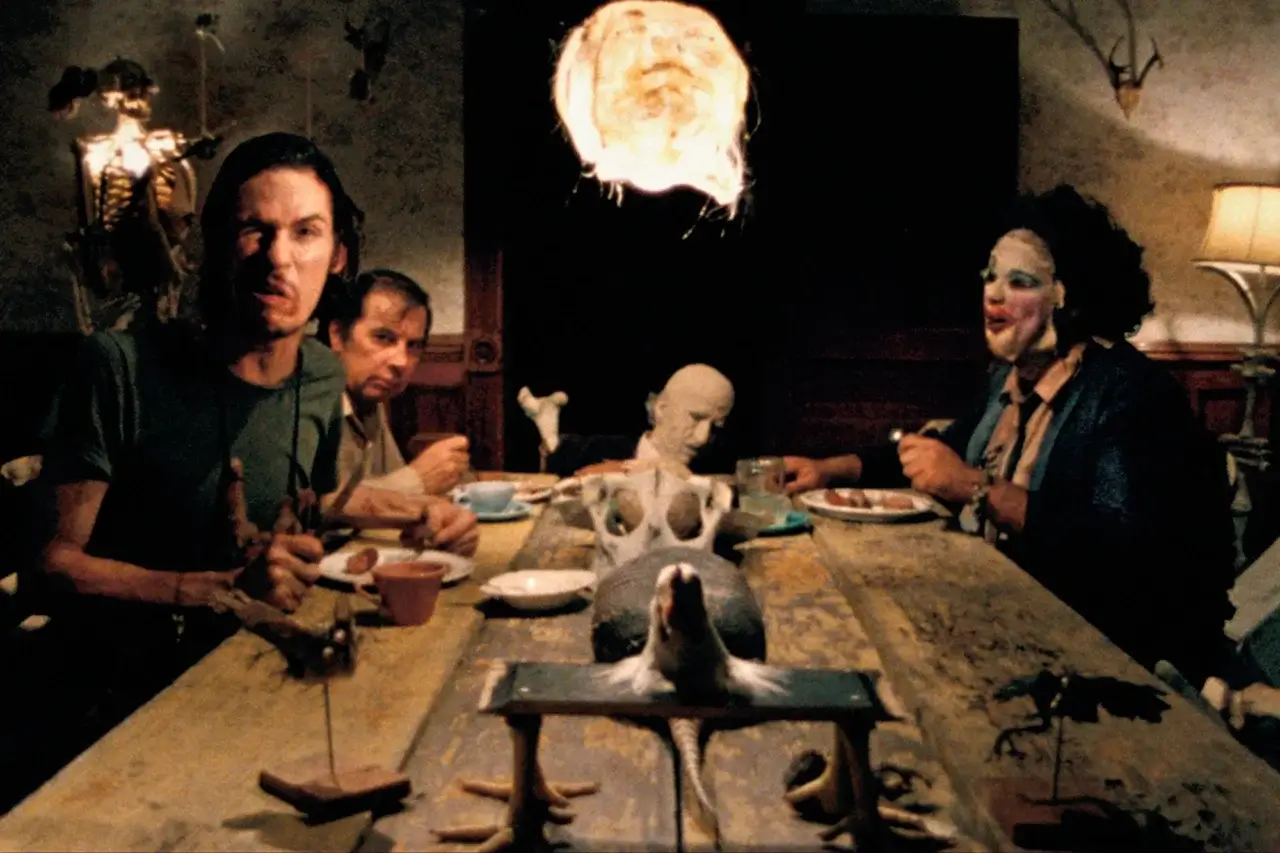
The Texas Chain Saw Massacre likely represents the worst-case scenario of a road trip gone wrong, in which the film’s victims fall prey to a family of cannibals led by a sadistic cook (Jim Siedow) and a burly killer named Leatherface (Gunnar Hansen), who wears the skin of his victims as a mask. Directed by Tobe Hooper from a screenplay he co-wrote with Kim Henkel, The Texas Chain Saw Massacre follows five teenagers on a road trip through Texas to visit the grave of Sally (Marilyn Burns) and Franklin’s (Paul A. Partain) grandfather following news of grave robberies in the area.
Although they find his grave undisturbed, they find themselves in a more horrific situation after picking up a hitchhiker (Edwin Neal), who puts them in the sights of a family of cannibals. The Texas Chain Saw Massacre’s most thrilling trick is its power to make the audience believe they are seeing something more grisly than what’s being shown on screen. Thanks to Daniel Pearl’s cinematography and Hooper’s direction, the movie almost feels like a snuff film where the violence feels more unrelenting, and yet we’re only getting the illusion of gore.
For a film called The Texas Chain Saw Massacre, there is very little blood on display, but the power of suggestion engages the imagination of the viewer to create something truly horrific. Through editing and the all-too-believable performances of the actors, The Texas Chain Saw Massacre feels like an unstoppable force of terror that takes the audience to a place of pure exhaustion that doesn’t let up until the film cuts to black after its final scene. The realism of the film is what makes it terrifying, and its style, which feels consistently oppressive and claustrophobic, consumes you almost to the point of suffocation. It’s a horror film that’s in a league of its own, and at a slim 83 minutes, the feeling of horror it delivers is quick and relentless, sticking to you like the sweaty Texas heat that won’t soon be washed off.
Passenger is now playing in theaters nationwide.





Reviews