


What idea can connect across multiple generations? What flicker of a flame can unite a downtrodden, fractured community? Perhaps the concept of losing everything when you can’t pay a bill or get laid off from a job, the concept of paying thousands to live somewhere you’ll never own, the concept of corporate greed infecting our lives to the point where grandmothers are DoorDashing.
“How to Rob a Bank” holds up a mirror to the rage inside of all of us that we’re unable to direct somewhere else, because the perpetrators are too big to fight. It’s a film that provides a lengthy, hilarious and thoughtful answer, or at the very least, some advice to this festering anger.
Potential spoilers ahead!
Radicalism Turned to Action
Nothing about this film is subtle, it tackles radical progressivism, socialism, and the real-life violent incident that may have inspired this whole thing. “How to Rob a Bank” did something that’s hard to do: it has appeal for Millennials, Gen Z and Gen Alpha, while also directly addressing the perils of late-stage capitalism. It doesn’t linger on the misery of humans being automated out of existence or exploited to literal death, it puts us right into the established solution our protagonists have gone with.
Written by Mark Bianculli and directed by David Leitch (“The Fall Guy”), this film is hilarious. Full stop. But there are times when it forces you to stop laughing and look soberly at the trauma the characters have been through. Sure, the story is described simply as bank robbers posting their crimes on social media, but it’s more than that. It’s not just recruitment and it’s not about greed, the crew are modern-day Robin Hoods, fighting back against an unbeatable machine.
There was a crowd scene in the third act that reminded me so much of why audiences connected with “Joker” and “Cruella.” The movie is filled with catharsis for the lost, for people who just want to hold someone’s hand, and it should be commended for that. It takes itself seriously enough because the message is meaningful, but kudos to the creative team for balancing it out with laughs.
A Well-Connected Cast
The cast has their work cut out for them for most of the movie, because they have to make the audience love them, while mostly being underneath masks. This is especially true for Nicholas Hoult as Ryan, who does the bulk of the speaking, narrating, and monologuing in a Big Bad Wolf mask, while occasionally flipping around (perhaps the flipping was the stunt team, but I digress). At first, it is hard to empathize or connect with Ryan, because when he’s not masked up, he’s mostly scowling or looking pensively past the camera. There’s a pivotal moment in the film where this shifts and he becomes someone to actively root for, rather than the moody guy trope.

Ryan’s sweet, quiet relationship with Emi (Anna Sawai) and the awful tragedy that defines their relationship lends the sharp story a softness it needs. The bittersweet romance of their story centers around a loss no parent should suffer that drives so much of their actions. Other parts that make up the story’s soul are Pete Davidson’s Vince DeLuca and Rhenzy Feliz’s Hugo and the love they have for their own families putting them on this path. It’s this heart that the F.B.I. zeroes in on to break the group apart, to prevent their movement from growing any further.
This F.B.I. consisting mostly of outsmarted chuds and two people who might actually be trying to do the right thing, even if they don’t know what that is anymore. The unexpected pairing of John C. Reilly as Agent West and Zoë Kravitz’s Reagan gives the audience a look at the “good guys” and how they navigate their morals with their duty.
Reagan is a pothead who created a piece of surveillance so astonishingly fascist in nature, of course the government found a way to use it. It felt like the story wanted to do more with Reagan, but couldn’t with everything else going on. She gets relegated to a sidekick role that feels beneath her character. However, Reilly anchors every scene he’s in, even if something goofy was going on, Agent West took everything so seriously. It was a refreshing balance to the colorful, manic social media sections of the movie.
Creative Choices That Bring Everything Together
Within minutes of the film kicking off, I was thoroughly impressed with the camera work and editing of the social media footage and the effects laid over in “real time.” The quick cuts, added graphic effects, and sounds were all beautifully edited to show the frenzy of trying to grow a social media account quickly. None of it was cringe or contrived either, it honestly felt, at times, like we were looking at an amateur production team trying to get a review show off the ground. Feliz played his part perfectly as the social media manager, director, and sometimes actor in the videos.
The insanity of the robbery how-to videos were perfectly paralleled with the quiet moments. When the camera slows down and focuses on each member of the gang outside of their animal masks, that’s when we can fall in love with them. We get locked in with the camera moving right alongside Ryan during the chaos of the crowd, focusing in on Vince’s face through the review mirror, highlighting the single tear moving down Emi’s cheek, and even Hugo being the camera itself at times. It was all very affecting, every piece brought the story to a poignant ending that didn’t villainize any of its main characters. While some of the song choices took me out at times, it was compelling enough to ride it out.
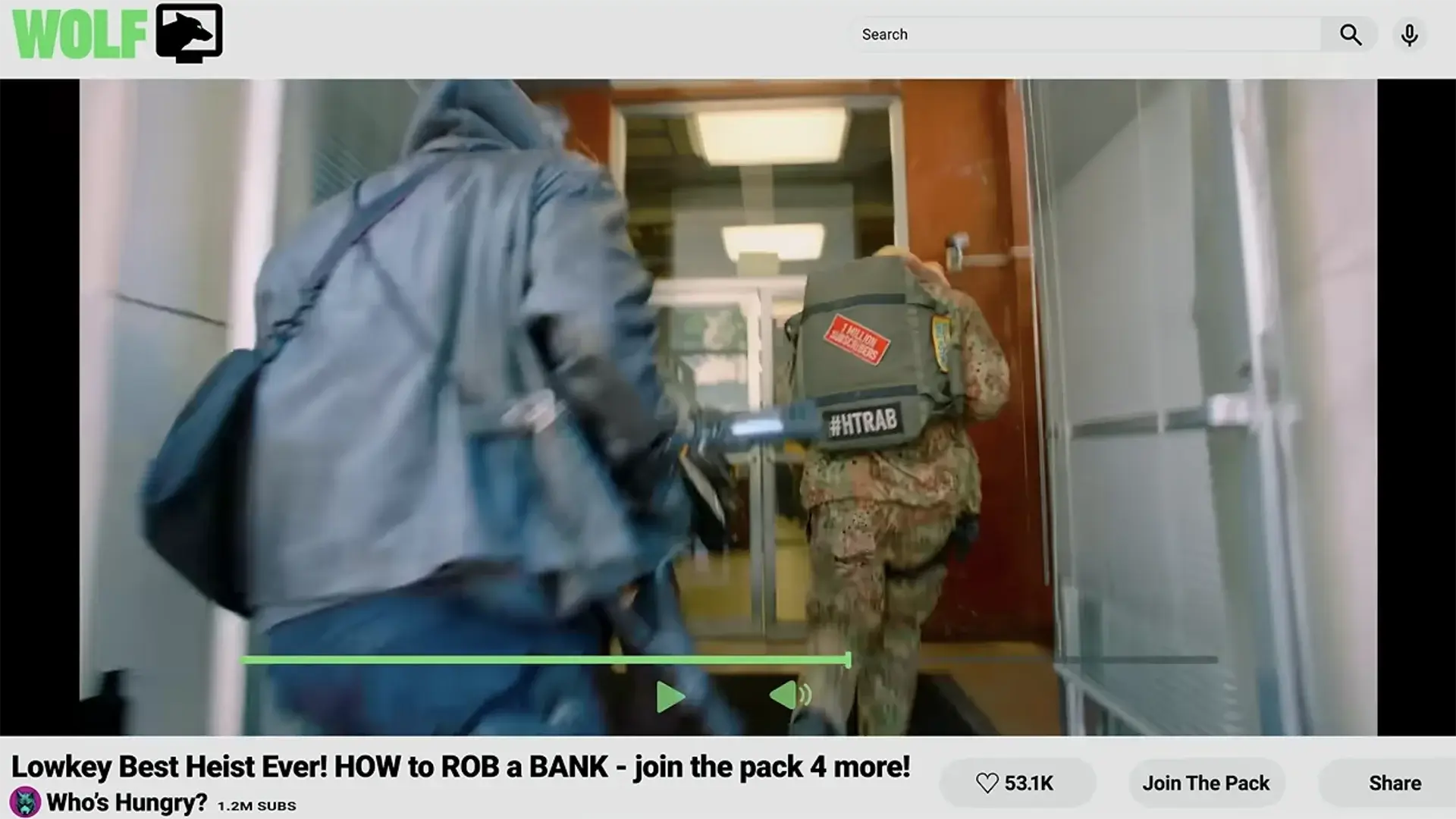
It’s rare for me to be giddy about a film’s editing but this one really shows the true weight and power of what it means to cut and piece parts together to make something cohesive, yes, but that engages all five senses. So a special shout-out to Elísabet Ronaldsdóttir (“Deadpool 2,” “Shang-Chi and the Legend of the Ten Rings”) for her visceral, seamless work on this.
Final Thoughts
I could write a whole thesis paper on how “How to Rob a Bank” tackles the perils of capitalism and the lengths desperate, angry people will go to right a wrong or take back what they feel is theirs. Bianculli’s script excels the most when it’s not bogged down by trying to overly explain everyone’s motives, we get it, we know; the audience is treated with more respect than that.
But a story like this is only as strong as the cast that drives it and this one lives up to the challenge. Davidson’s surprisingly moving performance will have audiences in shambles and he should really look into doing more roles that challenge him like this. From top to bottom, a strong cast, an uncomfortably funny story, and stellar editing make “How to Rob a Bank” worth a watch in theaters. It’s a reminder that we’re all connected, we’re all just walking each other home.






Reviews