


Back in the universe of Panem and it’s as brutal as ever, with a closer look at the behind-the-scenes of how to sell such a violent event.
“The Hunger Games: Sunrise on the Reaping” is an exciting return to a world we’ve come to know and love through Katniss Everdeen (Jennifer Lawrence); now explored through her mentor, Haymitch Abernathy (Joseph Zada, with a special appearance by Woody Harrelson).
Spoilers ahead.
Bringing Suzanne Collins’ World to Life
Director Francis Lawrence, once again, guides the audience through a world where children are killed for sport and celebrated with parades and fireworks. “Sunrise on the Reaping” brings us a little something new, but, more importantly, it gives us lots of color, texture, and context to the Capitol, its citizens, and how the Games are mass marketed to the people. It also doesn’t sympathize with the Capitol citizens in the way that its predecessor, “The Ballad of Songbirds & Snakes” did.

Because of how embedded author Suzanne Collins is with Lionsgate, her book-to-film adaptations have been almost seamless every single project. That didn’t change much here, although, it wasn’t the most perfect adaptation, as there were a flaw or two. The ending, starting with the victory celebration show, felt too rushed, while in the book, it was more of a slow, horrifying collapse. There were also certain casting decisions that highlighted uncomfortable racial implications (within the story), but the first “Hunger Games” also played with that a little (Rue and her district). I just wish it was touched on more with Panache Barker (brilliantly played by Jhaleil Swaby) and how his aggressive behavior was latched onto for TV ratings. The Capitol uncomfortably marketing children as products gets even more unsettling when you think about the racial history of selling Black children.
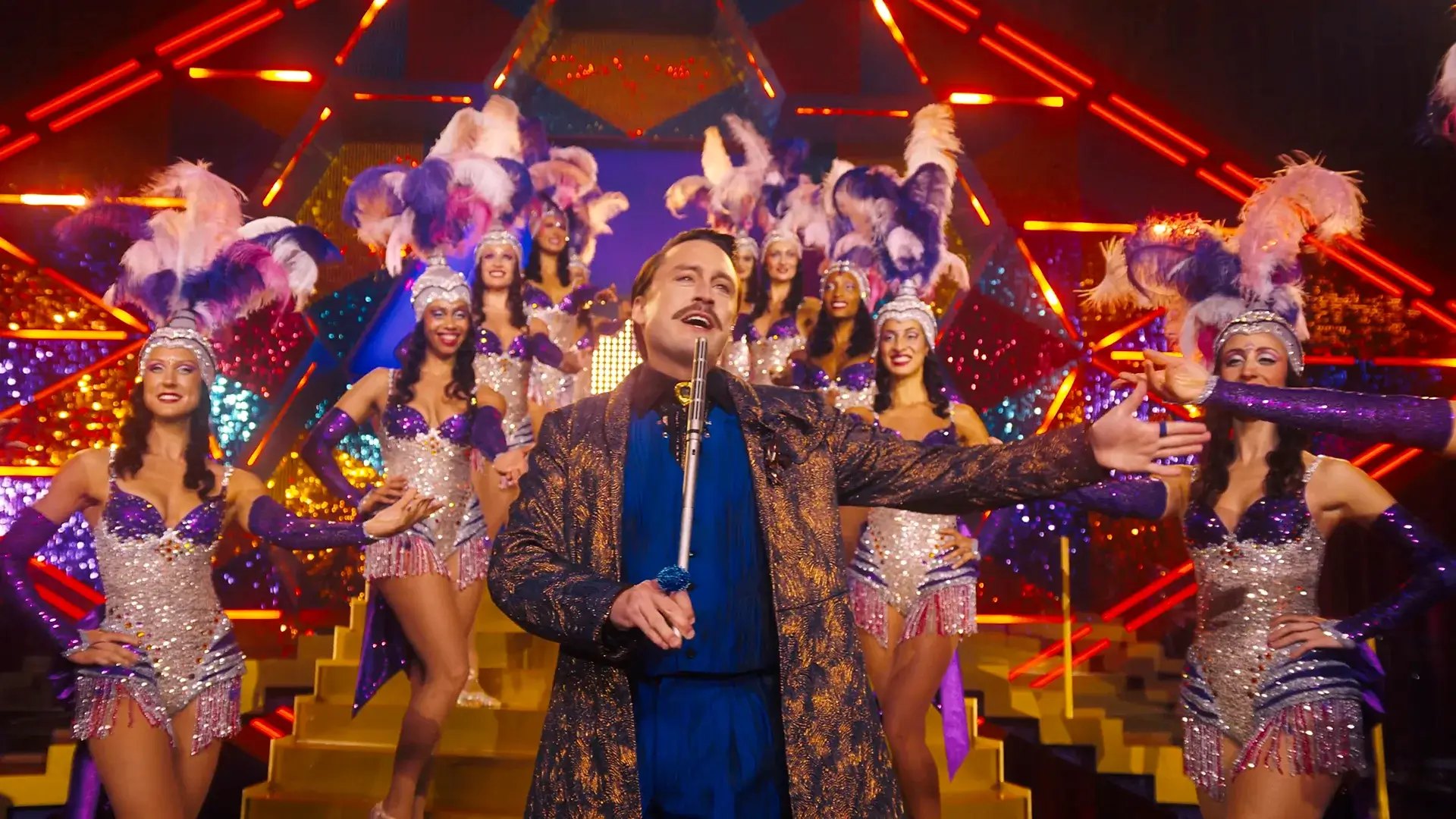
The most brilliant thing about “Sunrise on the Reaping” is that about half of the movie is exploring how the Capitol is able to manipulate and lie to its citizens in order to stoke their bloodlust and keep the Games going. Exploring the propaganda of it all is such an inspired choice, because as much as we love seeing the arena and all its hidden evils, it can get repetitive. We see just as much outside the arena, as we do inside. This structure allows us to see the talk show aspect, where Kieran Culkin absolutely stole the show as Caesar Flickerman (previously portrayed by Stanley Tucci).
Picking Up Where Others Left Off
The newcomers of the cast had to pull double duty, they had to convince “Hunger Games” fans they are Effie Trinket, Haymitch, Caesar, President Snow, Plutarch Heavensbee, and all the other iconic characters already established by a previous cast. When Zada really relaxed into his role as Haymitch, the terrified but resourceful teen really shines through. His chemistry with Whitney Peak as Lenore Dove Baird has the right amount of youthful awkwardness that young love tends to have.

But the star of the, for lack of a better term, re-casts was Culkin as the smarmy talk show host. He truly ate up every scene he was in, chewed every bit of scenery, and didn’t leave anything on the plate. It is really hard to one up Stanley Tucci, and Culkin did his big one with this role. Right from his introduction, you already can’t stand Flickerman’s younger self, but there’s no taking your eyes off him. He is the moment.
Another big highlight from the new cast was Mckenna Grace as Maysilee Donner. Like myself, audiences are going to absolutely adore this blonde spitfire, who was defiant and questioning up until the end. To say Grace did Maysilee (and her twin, Merrilee) justice, would be underselling it. Maysilee’s prickly nature hides a soft center that Grace embodied beautifully and she played off of Zada well. The shippers will surely go nuts for some of their paired scenes, but I appreciate that the actors (and story) kept it familial between them.

Along with Elle Fanning as the younger Effie Trinket (previously played by Elizabeth Banks), the new cast really stepped into their predecessor’s shoes impressively, leaving no question as to who they are.
Dangerously Beautiful Sights and Sounds
In contrast to the last pair of “Hunger Games” movies and the prequel, “Sunrise on the Reaping” is a cacophony of oversaturated colors, overlapping commotion, and a very gripping score from James Newton Howard. As soon as the kids get to the Capitol, they (and us in the audience) are slapped in the face with parades, ridiculous outfits, animals for earrings, smoke shows, and, above all, ridicule and laughter. The younger cast members, like Molly McCann (Louella McCoy), did great work in small moments reacting to organized chaos they had never seen before.
The sound team has to be commended for every bit of mixing magic that was conjured up. Moments like the horses getting spooked at the parade and the arena going briefly silent are when excitement disappears and dread pours in. It’s so effective emotionally and the score, especially with each subsequent death, only amplifies the tragedy of it all.
Final Thoughts
“The Hunger Games: Sunrise on the Reaping” is a deceptively beautiful and dangerous movie. While a lot of the third act was rushed to give the first part some breathing room, it still successfully told Haymitch’s story while also ending on a sorrowful, but hopeful note. Zada really did his best portraying the rascal we’ve come to know and love, but performances from Culkin and Grace genuinely stole the show. It’s a long movie, but “Hunger Games” fans will not mind; in fact, they’d like more.










Reviews