
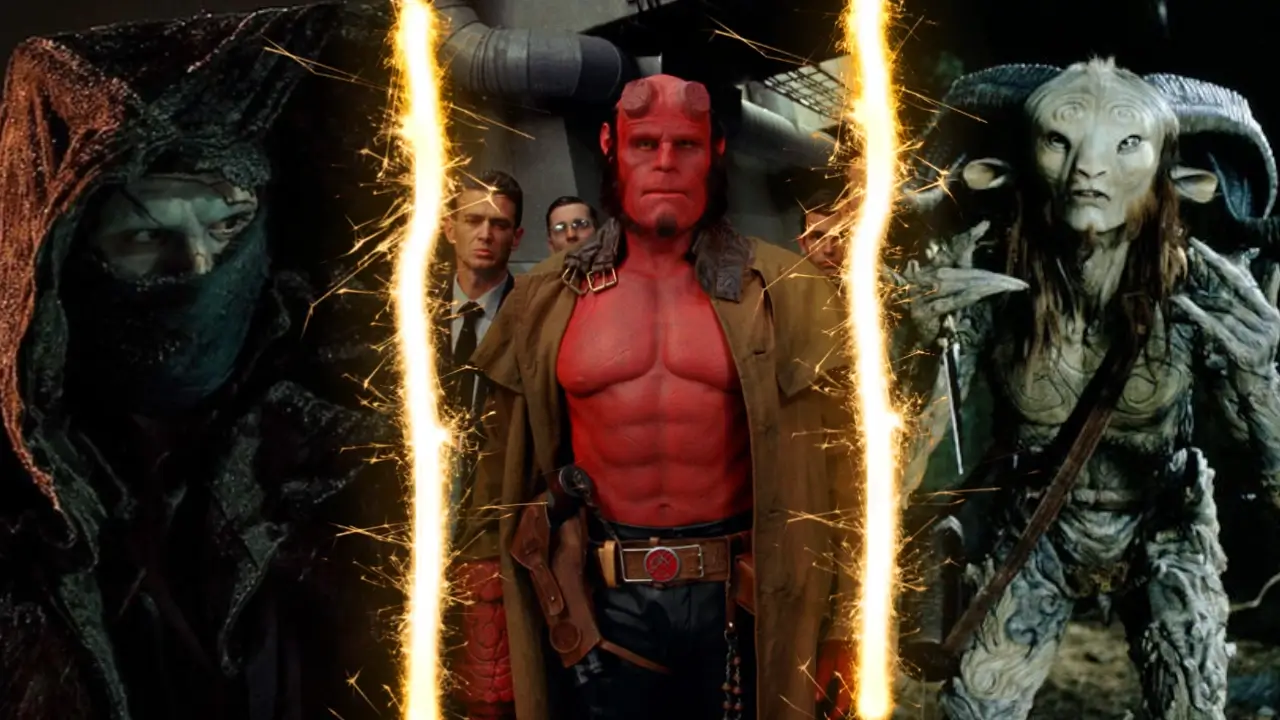
On the heels of a fantastic LA retrospective covering the whole of his filmography, and his next film, Frankenstein, on the horizon, it’s the perfect time to celebrate the masterful works of Guillermo del Toro. The auteur filmmaker has carved out a unique, instantly identifiable territory in the filmmaking landscape, thanks to an original confluence of distinct elements. At their best, which is often, del Toro’s films feel magical, delivering something beyond and outside typical experience to explore topics that are often deeply human. His frequent use of monsters and related supernatural elements aren’t just excuses to frighten audiences, they’re well-used as opportunities to explore what it is to be an outsider, to be oppressed and cast aside, to be human.
Del Toro’s riff on Pinocchio, the story of Gepetto’s construction of a wooden boy-turned-sentient-wood-being (with real boy hopes) was a magnificent turn for the director. His first foray into feature animation (an art form he’s increasingly championed), Pinocchio rightfully won del Toro his second Oscar. This time for Best Animated Feature. The stop-motion animation is wonderfully detailed and immaculate, utilizing innovative stop-motion techniques that create an otherworldly and immersive feeling throughout. The vocal performances are on point, and it capably captures del Toro’s explorations of the humanity of society’s ‘monstrous Others’ in a novel way. The artistry of the animation alone would merit a higher ranking. But the film has one flaw: it’s a musical whose songs arguably detract from, rather than enhance, the success of its scenes. It’s nonetheless a testament to del Toro’s boundless capacity for creation.
4. The Devil’s Backbone (2001)
While Cronos makes a strong statement as del Toro’s first feature, The Devil’s Backbone is his first film to scream his filmmaking skill from the rooftops. It’s centered in a remote Spanish orphanage during the Spanish Civil War.The film follows orphan and new resident Carlos (Fernando Tielve). He comes to have experiences seeing a ghastly apparition, Santi (Junio Valverde), the ghost of a child who mysteriously died at the orphanage.
The Devil’s Backbone feels like the lovechild of a fairy tale and a nightmare. A beautifully mournful, eerie supernatural yarn that stays with the viewer long after it’s over. It’s a grounded historical tale that, only a few films into his career, brings out every aspect of what makes del Toro such a special filmmaker. His filmmaking prowess, production design, and technical skill grow as his career progresses. But The Devil’s Backbone is nonetheless an incredible film that’s too regularly overlooked.
3. Frankenstein (2025)
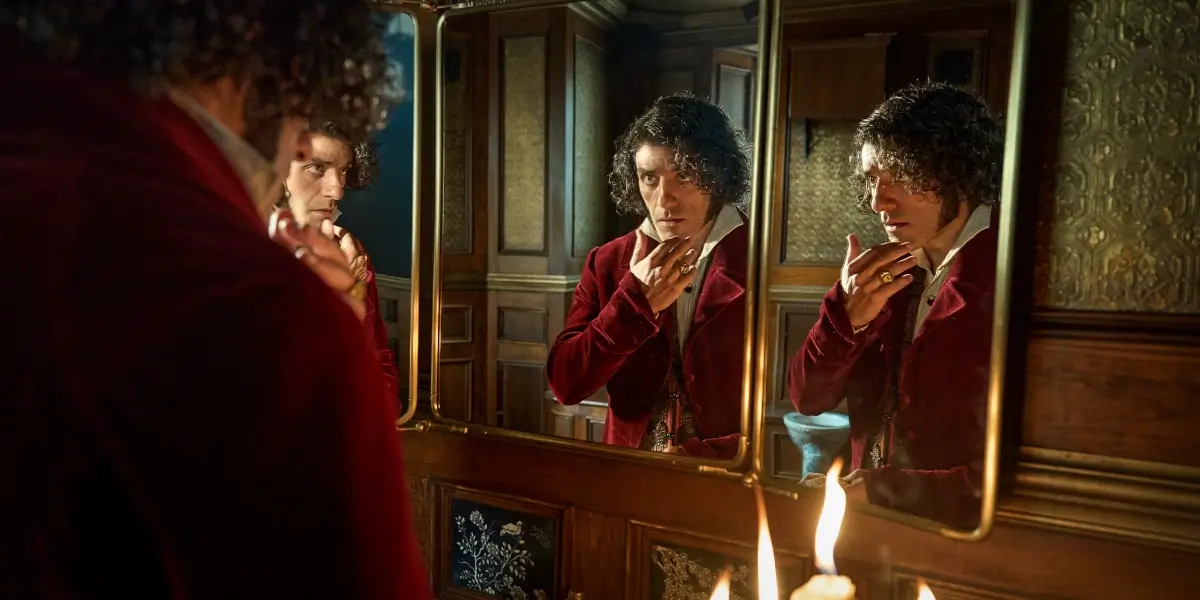
Frankenstein is, in so many ways, the culmination of the director’s lifelong fascination with both Frankenstein and a whole host of themes around monstrosity and what it means to be human. Oscar Isaac is an exceptional Victor Frankenstein. While Jacob Elordi gives the best performance of his career as the sympathetic Creature. His story is sympathetic and complex. His relationship to Victor layered and nuanced, and Elordi masters a character that evolves as the film progresses. These elements envelop the viewer further thanks to incredible production design, costumes, and makeup. Creating a thoroughly immersive take on the iconic sci-fi horror novel. It takes a few liberties with the property, and various plot threads find slightly different degrees of success. But it’s an incredible success that’s one of the year’s best films.
2. The Shape of Water (2017)
The Shape of Water earned del Toro his first Best Picture nomination. He walked away with both Best Picture and Best Director for good reason. This was a romantic, magical outing taking heavily-libertied inspiration from Creature from the Black Lagoon. The film features Sally Hawkins as Elisa Esposito, a mute janitor in a government facility in the 1960s. A top secret new find comes through–a discovered amphibious humanoid (that may be a god) discovered in South America and wanted by both top U.S. brass and the Soviet Union. Gradually building a relationship with the entity after its discovery, Esposito and the entity increasingly fall for each other. This film captures the folklore energy of his earlier masterpiece, Pan’s Labyrinth.
Every aspect of The Shape of Water lands. From its beautiful set design to its dreamlike evocation of the 1960s, to its exploration of monstrosity and human villainy. Beyond the moving romance, triumphant creature design, and flowing camera work, it’s a top-shelf tale of a rag-tag band of Cold War American society’s most overlooked individuals. Banding together to rescue a god from Uncle Sam. What else can anyone ask for?
1. Pan’s Labyrinth (2006)
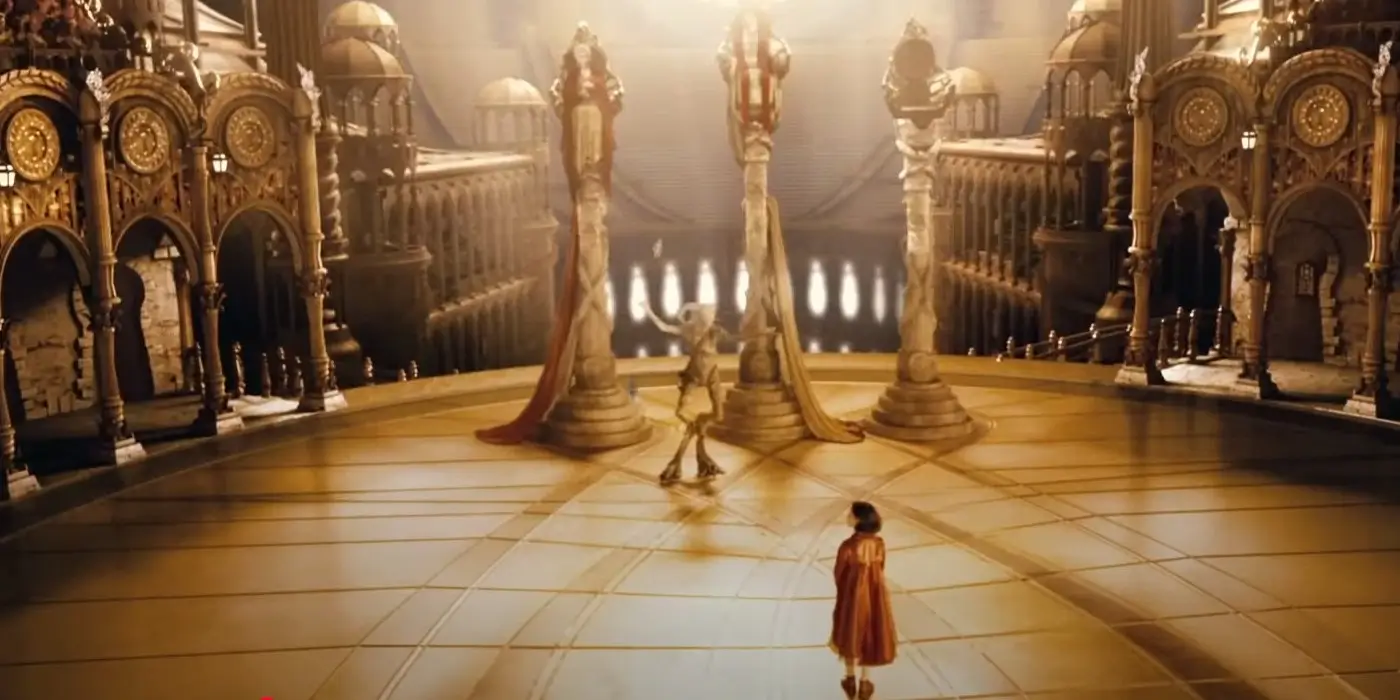
Sure, we’re in an era where the term is often overused, but Pan’s Labyrinth is a masterpiece. An antifascist dark fantasy fairy tale, the film follows Ofelia (Ivana Baquero), the daughter of a woman who married the vicious Captain Vidal (Sergi Lopez) in 1944 Francoist Spain. Through a series of fantasy-drenched adventures and meeting with supernatural creatures, she comes to believe she’s the reincarnation of the underworld’s Princess Moana.
Everything about Pan’s Labyrinth works. The creatures are diverse and adeptly executed. The settings are beautifully constructed and shot. The human story is a harrowing antifascist tale, and the careful threading of the mundane real-world story against the ambiguously supernatural one is skilled. Ivana Baquero is exceptional as Ofelia, and all these technical successes create an atmosphere that best exemplifies del Toro’s ability to translate a magical tone to the screen. It’s a wild success, hands down, and the maestro’s greatest work thus far.
Many of these films were screened as part of the series Está Vivo: The Gods and Monsters of Guillermo del Toro, courtesy of Beyond Fest at American Cinematheque.
Frankenstein hits select theaters today, October 17, 2025, before its debut on Netflix on November 7, 2025.













Reviews