
Post Summary
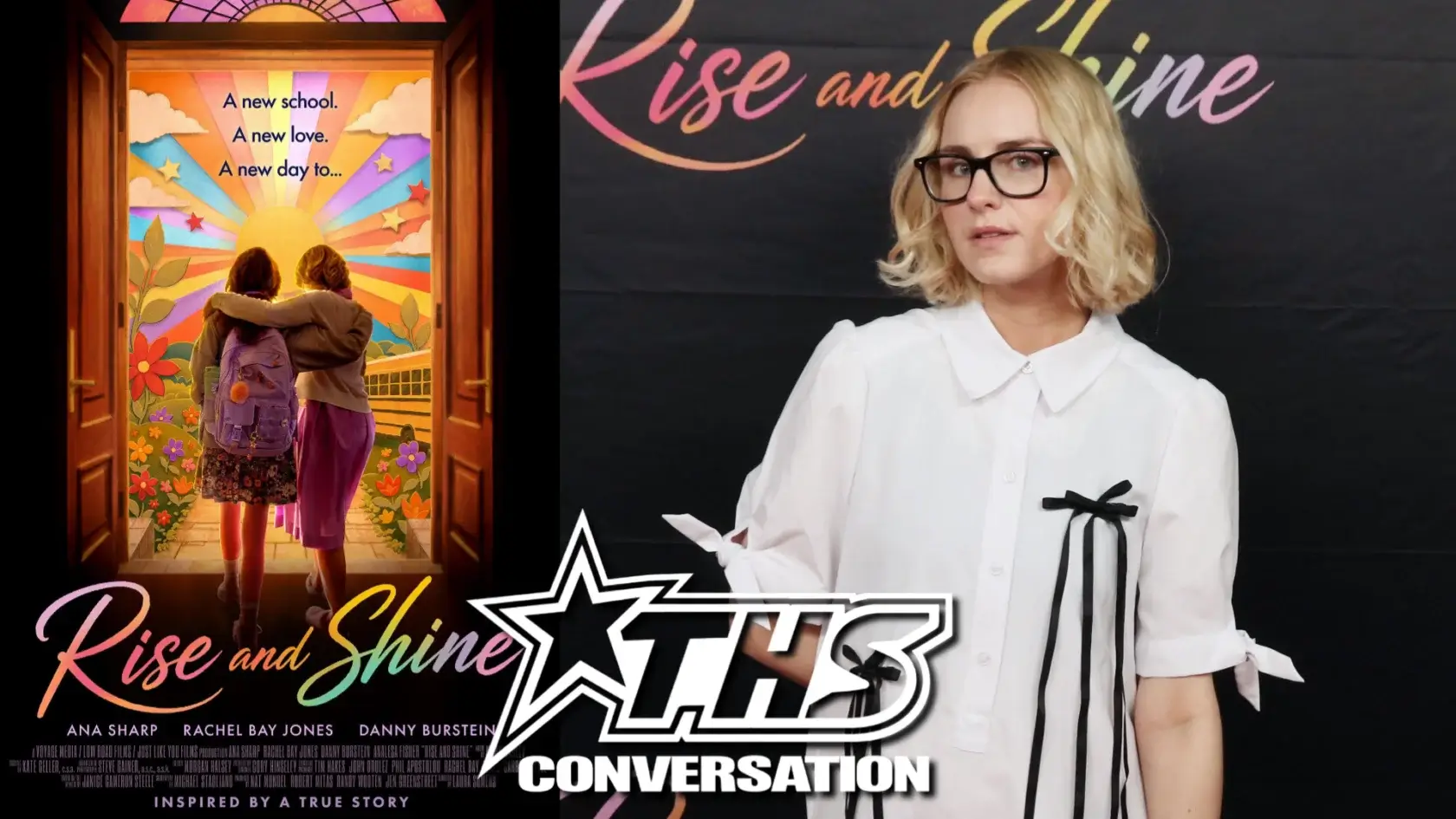
I had the opportunity to speak with actress and disability advocate Analesa Fisher about their new coming-of-age film, Rise and Shine. Of course, I jumped at the chance.
Disability representation is part of a much larger conversation happening in Hollywood, and the disability community is working to challenge longstanding misconceptions about accessibility, inclusion, and what it means to live with a disability.
‘Rise and Shine’ Is a Coming-of-Age Story About Belonging
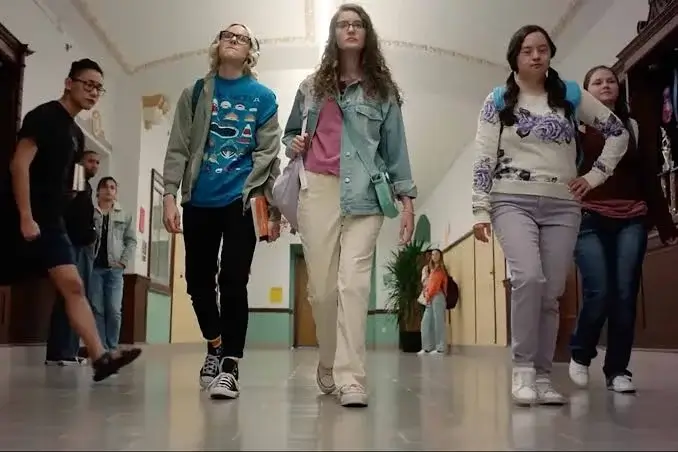
Inspired by a true story, Rise and Shine follows Terri (Ana Sharp), a teenager with cerebral palsy who dreams of attending high school, making friends, gaining independence, and going to prom.
Directed by Laura Somers, the film also stars Rachel Bay Jones, Danny Burstein, Jordan Walker Ross, and Analesa Fisher as Amanda, Terri’s best friend.
What makes Rise and Shine particularly refreshing is that it doesn’t center its story on disability as a tragedy to be overcome. Instead, it’s about a teenage girl who wants the same experiences as everyone else. As Fisher pointed out during our conversation, Terri wants friends, wants to sit with the popular kids, and wants someone to take her to prom.
“It’s not the trauma dump of it all where it’s like, look at this poor sap getting over something,” Fisher explained. “It’s like, no, it’s just a girl going to school and wanting to go to prom and wanting a best friend.”
Rise and Shine opened in AMC Theatres on October 23, 2026, with a streaming release planned through Angel Studios.
The Best Friend Who Tells You Your Outfit Is Ugly
Beyond its broader message about inclusion, Rise and Shine is a coming-of-age movie, and that means navigating one of the most complicated parts of adolescence: friendship.
Fisher plays Amanda, Terri’s best friend. During our chat, they share that the relationship mirrors their own high school friendship experiences. “My best friend in high school was very blunt with me, and I was very blunt with her,” Fisher laughed.
For Fisher, real friendship means being willing to tell someone what they need to hear, even when it isn’t necessarily what they want to hear.
“If you really love someone, then you will hold them to a high standard.” Of course, Fisher admitted that growing up also means learning the difference between being honest and being hurtful. Sometimes, being the blunt friend means getting called out yourself.
‘I Just Felt Like an Actor on a Set’
One of the most eye-opening parts of our conversation was learning just how much thought went into creating an accessible environment on the set of Rise and Shine. Fisher credited director Laura Somers with prioritizing authenticity and ensuring that disabled performers had a voice in the creative process.
“She wanted this to be so authentic that she created an environment on set,” Fisher shared. The production employed multiple disability coordinators who worked with the cast to address individual needs. See how easy that is?
Fisher shares an important, impactful moment from filming a Halloween scene while wearing a onesie that made them overheat. Before they even realized they were feeling lightheaded, a disability coordinator noticed something was wrong and stepped in to help. For Fisher, having someone who understood their disability and could advocate for them was invaluable.
“I never felt like, oh, I’m a disabled actor on the set. I just felt like an actor on a set.”
However, the film’s commitment to accessibility extended beyond the coordinators. In the weeks before filming, the costume department reached out to Fisher to discuss sensory preferences. What does that mean? The costumer asked about which fabrics and clothing they felt comfortable wearing. Even the script was open to feedback. Fisher recalled approaching Somers about a line they felt might be infantilizing toward autistic people.
“Oh, let’s just change it. What would you like to say?” Fisher remembered Somers responding. There was no argument or defensiveness. The production simply listened. How is this any different than stories you hear about A-List Actors not liking their wardrobe or needing a line change? It’s not. So why is it treated differently?
Inclusion doesn’t need to be an extraordinary achievement. It can simply be how productions already operate.
Disability Representation and Hollywood’s “Limitations”
Recently, I attended the inaugural All Abilities Conference at the Segerstrom Center for the Arts in Costa Mesa. One of my biggest takeaways was that the disability community deserves to be part of the conversation from the very beginning, rather than treated as an afterthought or something productions must accommodate simply to comply with the Americans with Disabilities Act (ADA).
According to the CDC, more than one in four adults in the United States lives with a disability. Isn’t that shockingly high? The disabled community is one that anyone can join at any point in life. Yet many people still associate disability exclusively with visible physical conditions, overlooking the broad spectrum of disabilities and the accommodations people use every day.
One example that hit me the hardest is wearing glasses. While needing glasses doesn’t automatically qualify someone as disabled under the ADA, we as a society readily accept corrective lenses as an everyday accommodation. How many of us check the box at the DMV acknowledging our vision requirements when applying for a driver’s license? So why are other accommodations still treated as unusual, inconvenient, or a burden?
That question is especially relevant in Hollywood, where disabled performers continue advocating for opportunities to tell stories without being reduced to their disabilities. Background actors are told they can’t work because they can’t hike a hill on a backlot or be offered a chair in between takes. Some are even afraid to disclose their disabilities out of fear they won’t find work.
Fisher even revealed that they spent years concealing their own disability because they feared how it might affect their career.
“That was me. I was lying about it for so many years cuz I didn’t want to be a liability. So, don’t make us do that.” This is a conversation worth having, and an industry stigma worth changing.
Hollywood Needs to Stop Treating Disabled Actors as Liabilities
While Hollywood has made progress toward more inclusive storytelling, Fisher believes the industry still has a long way to go on hiring disabled performers. They explained that previous conversations about accessibility on film sets often centered on what a production couldn’t do, rather than finding solutions.
“I’m so used to having the conversation around disability on set being like, ‘Well, how are we going to do that?'” Fisher hopes the film, alongside the upcoming AppleTV+ project Being Human, demonstrates that disabled actors are more than capable of doing their jobs when given the opportunity.
“If you send out auditions and we audition for the movie and we get a callback and we get hired and we show up to set to work, we are showing up because we want to work and we want to be there. So, let us be there.” Fisher also referenced their experience working on Netflix’s Metal Lords, which featured an actor with Down syndrome who arrived prepared, knew his lines, understood blocking, and could take direction.
“If you’re an actor, you’re an actor.” It’s a straightforward statement, but one that challenges an industry where disability is still too often viewed as an obstacle.
The message is clear: disabled actors shouldn’t have to hide who they are just to be considered employable.
Disability Representation Shouldn’t Be Limited to Stories About Disability
When I asked them where they hoped to see more disabled performers, they reminded me that we already do – in science fiction, especially in roles where disability isn’t the defining characteristic. Fisher excitedly brought up Marvel’s Loki, praising the inclusion of disabled performers working within the Time Variance Authority (TVA).
“I remember just screaming at my TV being like, ‘Yes,'” Fisher shared, explaining how refreshing it was to see disabled performers cast in roles that didn’t seem written specifically around a disability. And when you think about it, science fiction has featured characters with disabilities for decades.
Some of the genre’s most recognizable heroes, villains, and leaders would potentially qualify for protections under the Americans with Disabilities Act (ADA) if they existed in the real world.
Take Geordi La Forge from Star Trek: The Next Generation. Born blind, Geordi uses assistive technology to navigate the world while serving as the Enterprise’s chief engineer. His blindness is part of his character, but it doesn’t define his intelligence, leadership, or contributions to the crew.
We can’t forget X-Men leader Professor Charles Xavier. You know, the powerful telepath who uses a wheelchair while leading an entire team of superheroes. What about Darth Vader from Star Wars, who relies on prosthetic limbs and life-support technology following his catastrophic injuries? That breathing apparatus noise is part of his signature design.
Meanwhile, Marvel’s Echo centers on Maya Lopez, a deaf character with a prosthetic leg, portrayed by Alaqua Cox, an actress who actually shares those disabilities. Of course, there’s an important difference between writing disabled characters and hiring disabled performers.
While science fiction has long imagined worlds filled with advanced technology, extraordinary abilities, and different forms of physical existence, the entertainment industry hasn’t always extended that same imagination to its casting practices.
And that’s precisely what Fisher hopes to change.
“Really more than anything, I would just love to see it reflect our world.” Disabled characters don’t always need stories about overcoming their disabilities. They can be engineers, warriors, villains, superheroes, best friends, or simply people going about their lives.
Likewise, disabled actors shouldn’t be limited to auditioning for characters specifically written with disabilities. As Fisher explained, the goal isn’t necessarily to create more stories about disability. It’s to open the door for disabled performers to participate in the stories Hollywood is already telling. After all, if we can imagine galaxies filled with aliens, superheroes, and time travel, surely we can imagine a future where disabled actors are simply actors.
Rise and Shine opened in AMC Theatres on October 23, 2026, with a streaming release on Angel expected in November.






Reviews