
The Side of D-Day You Didn’t Know
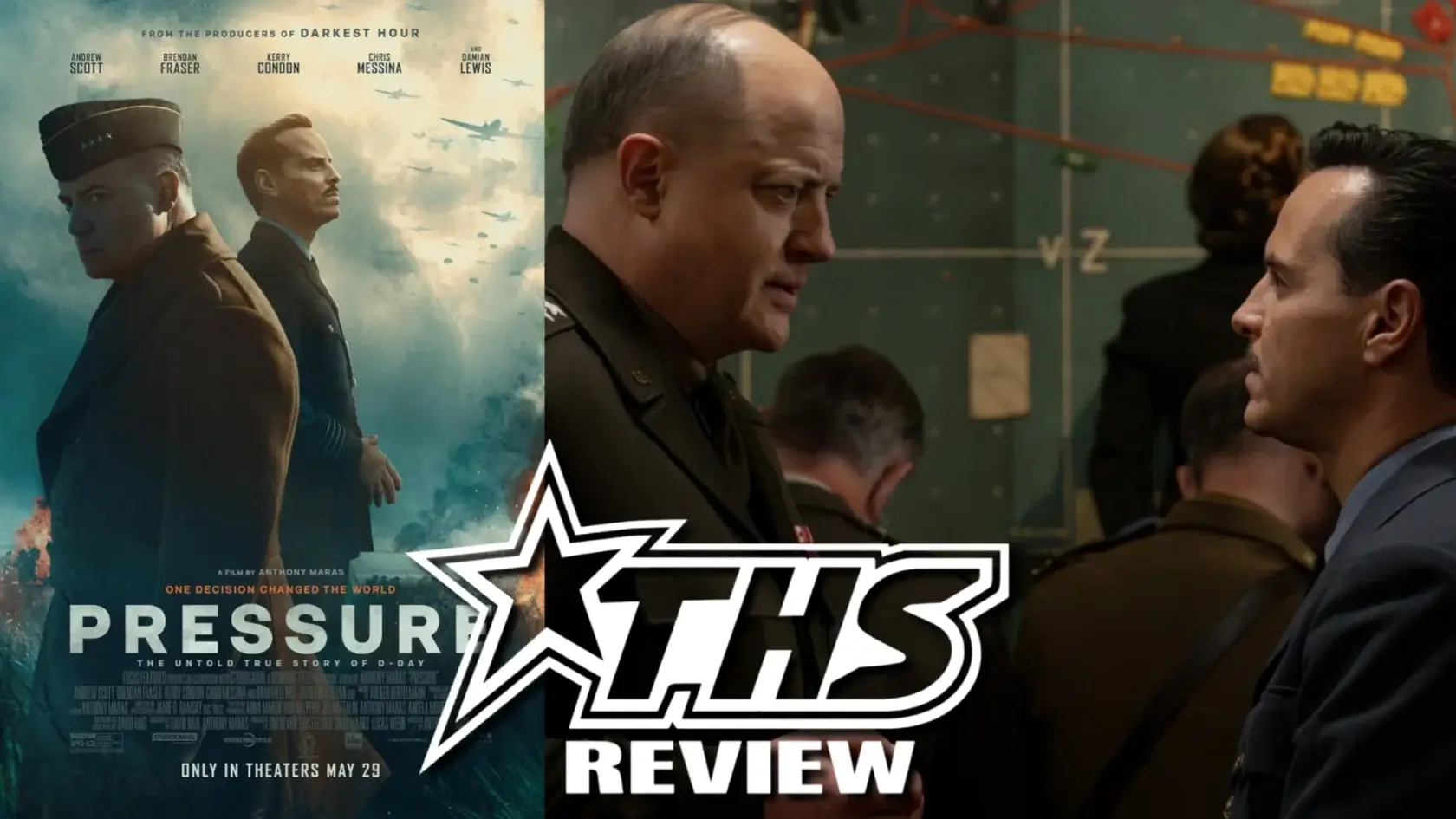
D-Day has been experienced on-screen countless times, perhaps most influentially in Steven Spielberg’s gory and visceral opening to the 1997 film Saving Private Ryan. It’s hard not to start there when it comes to Pressure, which takes on the fateful day, albeit from a very different angle. The decision to go rested rather famously with General and eventually President Dwight Eisenhower (Brendan Fraser), but what many people don’t know is how hard the call was to make, what (and who) informed and influenced it most, and how much was at stake for Eisenhower and the rest of the team. These are the things Pressure explores, specifically through the life and experience of Meteorologist James Stagg, a lesser-known but critical figure in the decision to go.
Andrew Scott plays Stagg, a character defined by that cinematically familiar recalcitrant genius that needs everything to be just so. When asked to leave the comfort of his home and his very pregnant wife to help with this mission, Stagg seems deeply inconvenienced. He arrives on the base, forced to work alongside a team of weather people who seem to be more into goofing around than scientifically predicting the weather for the fateful day. This group is headlined by Irving P. Krick (Chris Messina), a favorite of Eisenhower’s, full of piano solos, Clark Gable stories, and confident answers for exactly how the weather will be on the proposed D-day.
Stagg and Krick clash instantly, with Kay Summersby (Kerry Condon) acting as their liaison to Eisenhower as they clash over methods and forecasts. Eisenhower is under his own ‘pressure’ from his entire staff, who seem not to believe in him, best characterized by Bernard Montgomery (Damian Lewis).
Things continue to build to a crescendo as the day approaches, the weather predictions polarize, and the fate of the free world hangs in the balance. The tension of the story is constructed around the personal stakes, and the particulars on who will be right, and whose ego will be crushed by being wrong. The question of what happens is, obviously, never in doubt. D-Day happened, it went well, and to one degree or another, every person watching this film knows that much.
Pressure endeavors to offer a perspective behind the perspective, shedding light on the shadowy corners of history’s great moments, allowing us to better understand lesser-known yet key figures like Stagg, and also to appreciate a version of Eisenhower now long forgotten to history.
Brendan Fraser’s Eisenhower
Casting Brendan Fraser as Dwight Eisenhower is the film’s biggest swing. Literally. Fraser stands 6’2 or 6’3, well over 200 pounds, and an imposing figure on screen to be sure. The real Ike was 5’10, 175, a slight and slender man by comparison. There are other ways that Fraser doesn’t quite connote a man born in 1890. Though he is older now than Eisenhower was on D-Day, and the particulars of Eisenhower’s body type and persona may be less familiar to audiences today, he is still an iconic figure of American history, and Fraser is a Gen-X cinema icon in his own right. The casting is bold, and can easily become a stumbling block to anyone familiar with who Eisenhower was.
It’s no fault of Fraser’s, who does a fine job portraying the character in the story, but he simply cannot transform into this figure; he has so little in common with that audiences are likely at least somewhat aware of.
Stagg, Summersby, and Krick are certainly easier to slip into for the ensemble since those figures, while historic, are far less familiar. There is an under-explored romantic theme that may or may not have existed between Ike and Summersby, replaced by a gentle affection between her and Stagg, particularly as the tension of the film heightens when his wife’s hospital is bombed as we close in on the denouement.
A Taut Human Drama About Male Ego
Ultimately, Pressure delivers a compelling yarn in its 100-minute runtime that shows audiences a true and lesser-told series of facts behind one of history’s most fateful days. It is hard not to watch it and wonder if the film’s subtext is touching on notions of male ego, credit, the importance of being right, and how those things all play into armed conflict, where countless lives are risked.
In a critical moment of the plot, Stagg and Krick come together despite all their differences and become a team. This is the film’s major flaw because it’s unclear why this happens, or why either becomes more tolerant of the other. It just happens. It makes sense from an emotional standpoint, but within the logic of the plot, it’s hard to see why they do it except that we’ve reached the time of the movie where they really should.
All in all, history buffs will enjoy another look at D-Day, and audiences at large will certainly be entertained by the uncertainty surrounding not the who, what, or how of D-Day, but the when.












Reviews