
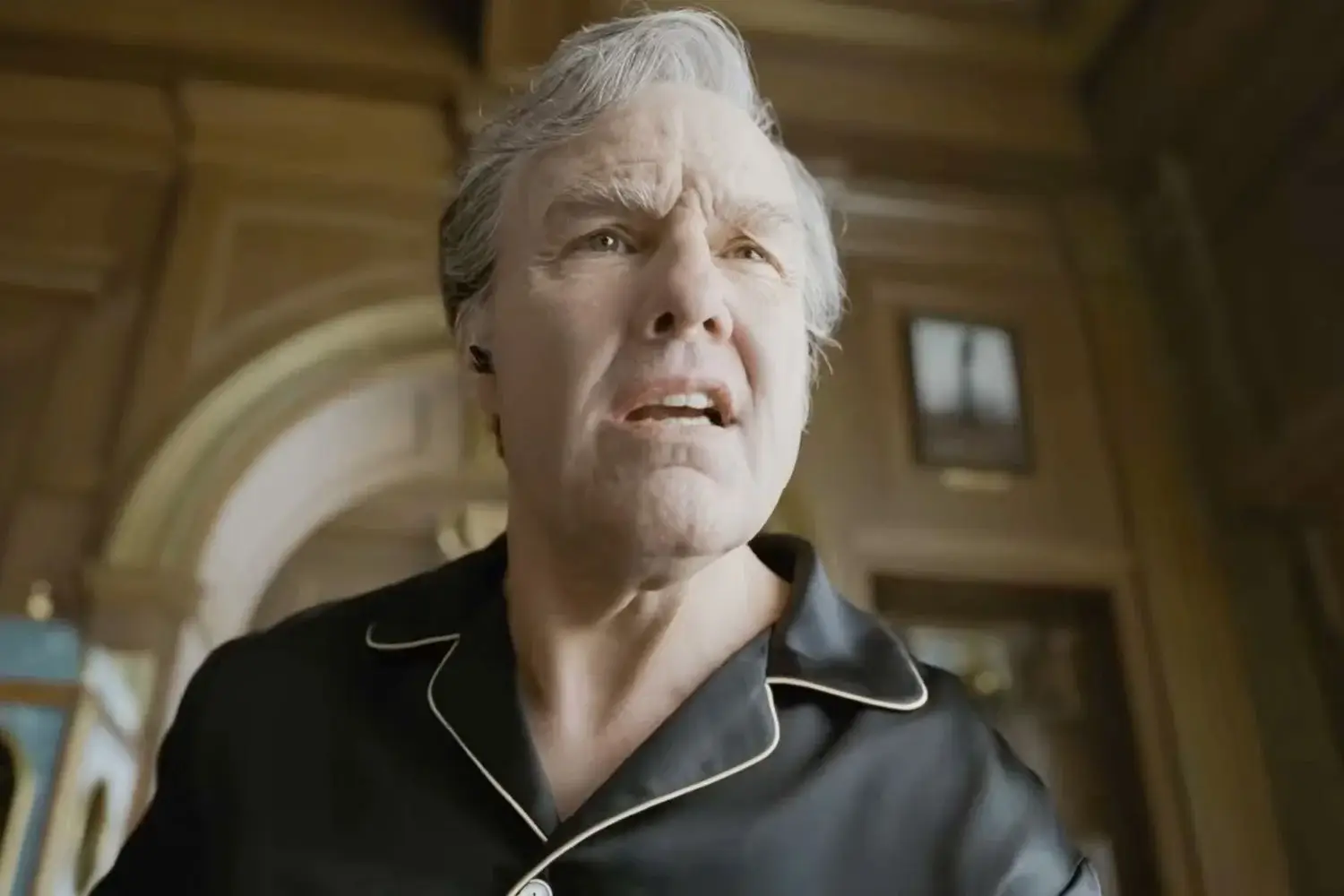
The moviegoing climate can be hard to predict sometimes. We often crave original ideas and big swings to avoid the predictability of big IPs, sequels, and spinoffs, but sometimes those big swings miss, and those original ideas get ignored. This isn’t meant to blame the moviegoer. As we’ve seen just this year, original ideas can strike a chord and achieve a windfall (look no further than Obsession), but sometimes the big swing needs more clarity and proper marketing, even when it features arguably the biggest movie star working today.
Then there’s the case of the big swing maybe not being understood until down the line. Maybe its box office run isn’t its moment. Maybe it’s destined for cult status as it becomes a misunderstood masterpiece. Whatever the case may be for Digger, the latest from writer and director Alejandro G. Iñárritu and starring Tom Cruise playing deliciously against type, the current moment sees it as a financial disaster of epic proportions. Instead of likely becoming an offbeat awards season player that could’ve done at least moderate business, it has become another cautionary tale of bloated movie budgets, movie stars playing outside their comfort zone, and marketing strategies that don’t play things straight because they’re trying to be unique. Hollywood can still have big swings. They just have to be smart about them.
Digger is a satirical black comedy from the mind of Iñárritu, with screenwriting and story help coming from Alexander Dinelaris Jr., Nicolas Giacobone, Sabina Berman, and Jez Butterworth. On the surface, the film follows Digger Rockwell (Cruise), an aging oil tycoon whose drilling in Greenland sets off an ecological disaster. In real life, the disaster came as Digger’s opening weekend unfolded, and the reported $160-180 million film debuted to a mere $8 million at the domestic box office and a $20 million global start. Because of the film’s bloated budget (which reportedly doesn’t include a marketing spend that exceeds $100 million), Digger is said to lose $150 million when it’s all said and done (and that’s if it hits an estimated $50 million worldwide by the end of its run).
For Cruise, this is his lowest domestic opening since the $6.7 million launch of 2007’s war drama Lions for Lambs. For Warner Bros., it’s the final nail in the coffin of a spectacularly awful year for the studio, where none of their releases cleared $90 million domestically following their epic 2025, when their global grosses hit $4.3 billion and they picked up eleven Oscar wins. It is also the end of an era for the studio, as the Paramount Pictures merger is now a reality and Skydance is born under co-CEO David Ellison. For his part, Ellison decided not to honor the contracts for Warner Bros. Motion Picture Chiefs Michael De Luca and Pamela Abdy by not bringing them on board the newly merged company. Could it be because they greenlit the expensive Digger? That’s unknown, but aesthetically, it doesn’t look great that their era ends on the back of what is being heralded as one of the biggest financial misfires in years for a studio.
Was It Necessary For Digger To Have A Bloated Price Tag?

One of the biggest takeaways about Digger’s performance comes down to its budget. The reported $160-180 million price tag for a film like this seems highly unnecessary, even with a star like Cruise and a unique creative mind like Iñárritu. Studios haven’t seemed to learn that budgets like this need to be kept in check, no matter what talent is involved in front of or behind the camera.
Oddly enough, Iñárritu first developed the film that would ultimately become Digger at Netflix, and it’s more than likely that if it had remained a streaming film, there would be no discussion about its production costs in terms of extreme losses after its debut. At the time, Leonardo DiCaprio had its sights on the project, but after Netflix made the similarly themed environmental satire Don’t Look Up with director Adam McKay (and starring DiCaprio among others), Iñárritu took the project to Legendary where it was then developed with Cruise as the lead.
In 2024, Cruise was signed to a non-exclusive originals and franchise deal under Warner Bros. Discovery CEO David Zaslav, and that was initiated by Abdy and DeLuca. The first project under the deal would be Digger, as Abdy had worked with Iñárritu on the $135 million-budgeted The Revenant (a film that grossed $533.6 million globally and received 12 Oscar nominations), and De Luca had worked with Cruise during the Magnolia era, a film that earned him his third Academy Award nomination. Together, they believed that the auteur and the movie star justified a $125 million spend (which ballooned to upwards of $160-180 million due to an extended shooting schedule).
Maybe a studio and its team don’t want to say “no” to a big movie star or a director with a vision for the star in question, but we’ve seen countless examples where those stars in question and other creatives should work together to try and keep these budgets down. Warner Bros. themselves have seen insane budgets lead to returns that didn’t justify the costs. From Joker: Folie à Deux ($190-200 million budget, $208 million global finish) to Mickey 17 ($118 million budget, $133.3 million worldwide gross) to The Bride! ($90 million budget, $24 million global take), it should be a listen to them and other studios that, alright, if we want to take chances on out-of-the-box ideas, let’s make sure that we keep costs reasonable because these ideas aren’t guarantees. This isn’t meant to say don’t bank on originality. This is meant to say be smart about how you do it.
Tom Cruise Needed To Change His Marketing Strategy
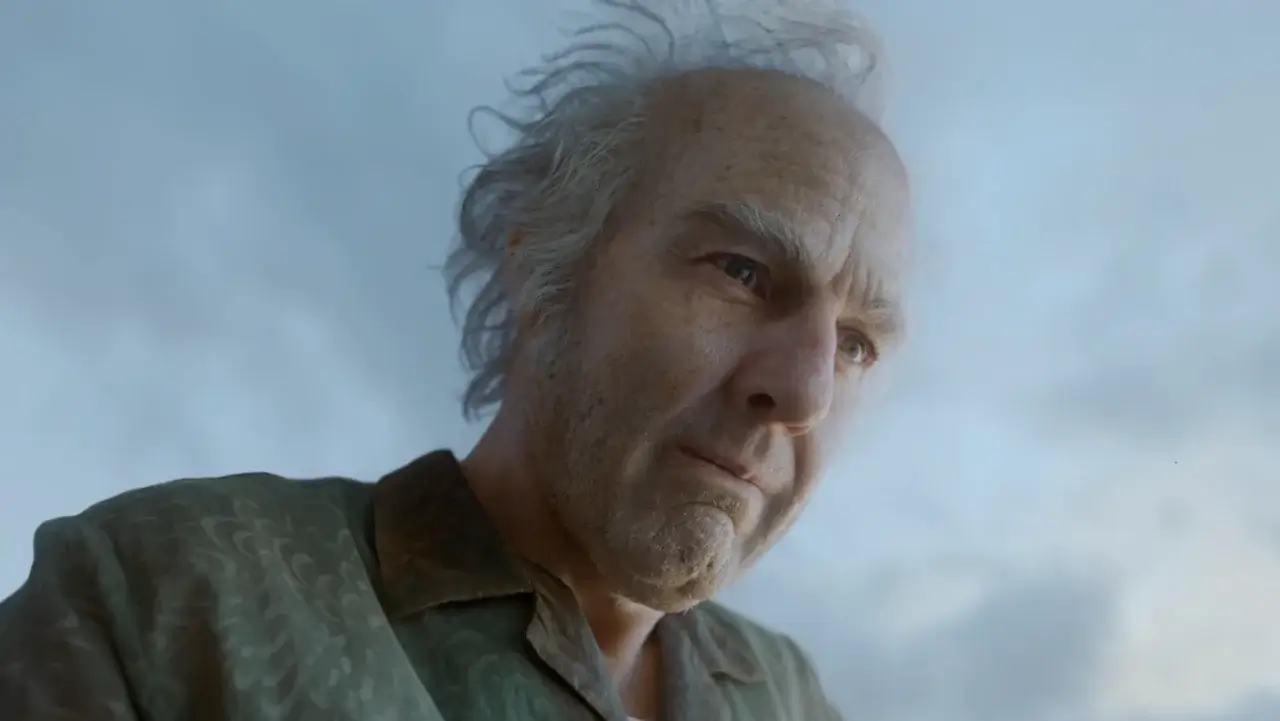
In many ways, Cruise is an ace at marketing his films. Hell, during a time when everyone told him to relegate Top Gun: Maverick to streaming in the wake of COVID-19, he waited it out and banked on a campaign of “let’s get back to the movies” that helped that film gross $1.503 billion worldwide. No one is denying Cruise’s movie star appeal, especially with mainstream fare, but with a film as different as Digger, the actor needed a different strategy. One that maybe allowed people to know more about him than what’s on the surface.
Cruise was out there promoting Digger, but it felt like more of the same in many ways. Thirty seconds of footage were first released from the film after a retrospective of Cruise’s film career over the years, but that played into Cruise the movie star (and the conceit that you haven’t quite seen him like this before) and not Cruise the man. That’s not to say that Cruise owes moviegoers an ounce of his personal business, but he’s a very smart man. He could’ve given more during the marketing campaign that wasn’t based around the things we know. Everyone is aware of his star wattage, and Digger was a film that wasn’t relying on that.
Cruise did a GQ article with a photo spread that garnered buzz for the wrong reasons. Some thought the images were trying too hard to maybe reclaim a bit of his youth, and that’s something the 64-year-old actor doesn’t need to do. Then there was the interview itself. Nothing new came of it. He gave safe and generic answers to questions that some said were the fault of the interviewer, but one suspects that even GQ was given strict guidelines on what to ask the actor. Before the September 2026 cover story and long-form interview for GQ, Cruise hadn’t appeared on the cover in 20 years, and he has been known to avoid long-form in-depth interviews with U.S. publications for over a decade. The elusive star has mostly stuck to press junkets, promo clips, and controlled red carpet soundbites and has done away with sit-down print profiles.
Granted, he has his reasons. He has said that he wants to focus the discussion on his craft, filmmaking, and creative process rather than talk about himself because he wants the attention to be on the project. This could be part of the reason, but it’s largely speculated that he avoids this because of the 2005 press tour for War of the Worlds, where his behavior was viewed as erratic, and his controversial ideals took center stage. There was the couch jumping on The Oprah Winfrey Show as he declared his love for his new romance with actress Katie Holmes, and then there was a very awkward interview with Matt Lauer on The Today Show where Cruise argued with the host about psychiatry and the use of antidepressants (something that the Church of Scientology is extremely against and with which he has been affiliated since 1986). He was more combative and vocal about his views, and it damaged his public image, taking a few years and a game-changing role in Tropic Thunder to recover from.
So it’s easy to see why Cruise is gun-shy about certain types of press, but Digger was a movie that needed some kind of switch-up to get moviegoers more interested. Doing the Spirit Tunnel on The Jennifer Hudson Show, complete with the dance from Risky Business, is a nice touch but, again, it’s a more superficial move. If Digger was meant as a return to Cruise being more fearless and challenging himself as an actor, his marketing campaign should’ve reflected that as well.
Most Moviegoers Couldn’t Gauge What Digger Was About
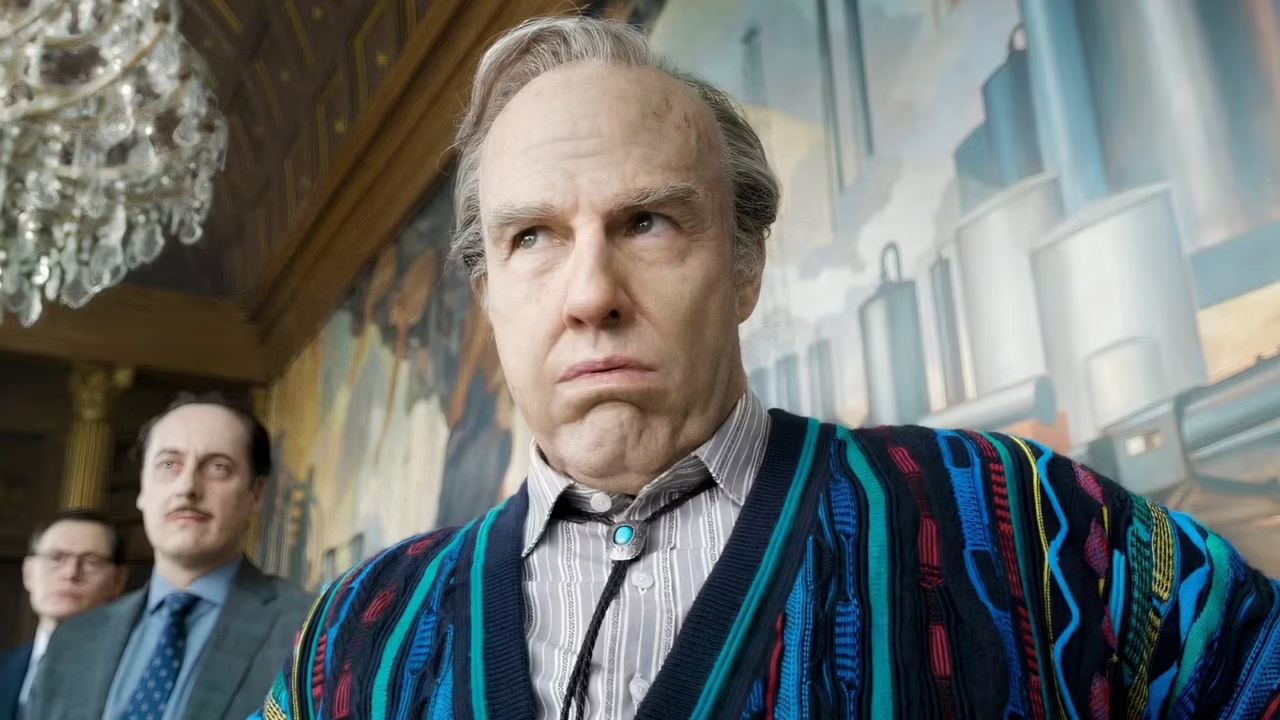
A little mystery in movie marketing isn’t a bad thing. A good trailer can be elusive but offer a hint of insight of what might be going on. That wasn’t the case with Digger. The trailers mostly banked on Cruise in extensive prosthetic makeup, thinning grey hair, and a padded fat suit. There wasn’t much more about what the film was about, and that likely didn’t help the movie as it hit pre-sales and box office tracking.
A quick look at cinephiles discussing Digger on social media offers a look at the satire working within the narrative of Digger, and its concepts are some that either movie fans have loved or found pretentious. Either way, these thoughts about its deeper intentions and its primary plot have been within the confines of cinephile spaces, and sometimes those spaces can be very niche. Mainstream moviegoers are going off trailers, TV spots, and the occasional interview. If these offer no insight into the film, some moviegoers are likely to spend their money elsewhere (during Digger’s opening weekend, it was Verity which opened to $32 million).
Making things even more confusing for those who took a chance on Digger is that the film is even more different than the marketing indicates. There won’t be any spoilers here, but things are much more meta than the trailers appear to be, and it’s something that adds to the satire the movie is selling. This isn’t an indictment of the approach, but casual moviegoers have been known to ignore standard satire at the box office, and that doesn’t improve when a meta twist is thrown in for good measure. To say Digger was a tough film to market would be an understatement.
Mixed Reviews & Word Of Mouth Derailed Digger Quickly
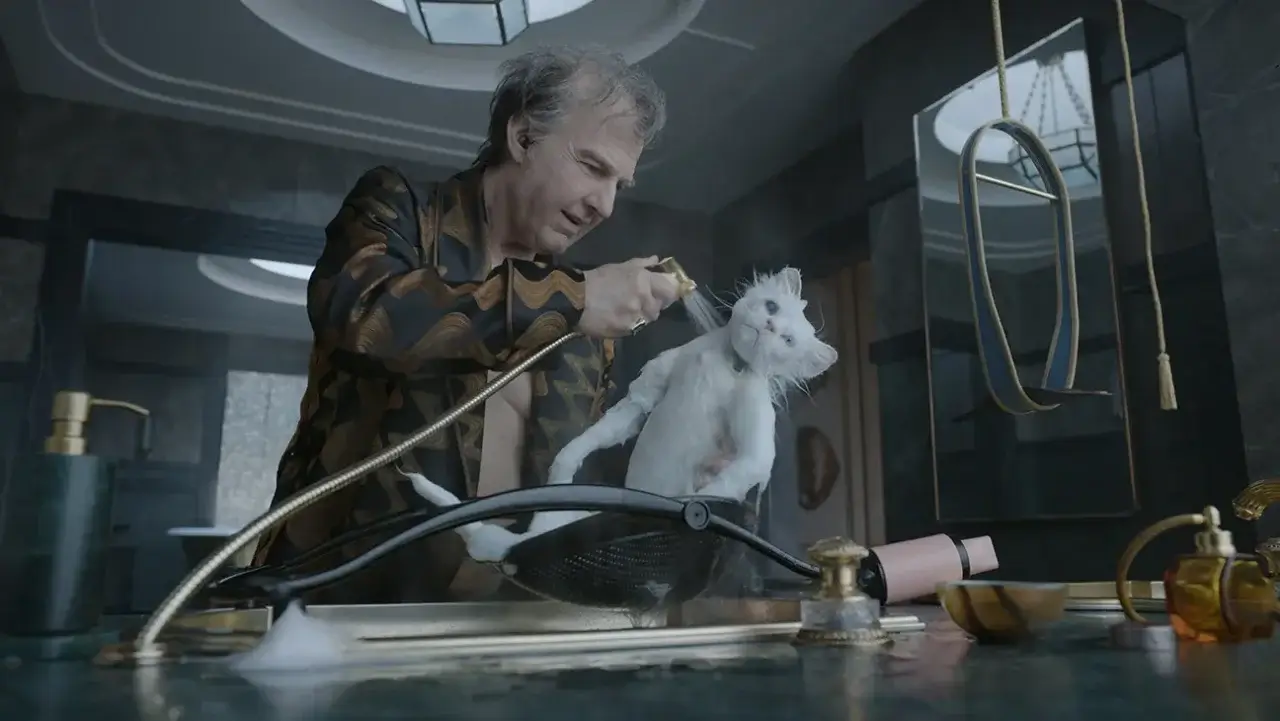
Given the fact that Digger wasn’t a typical Cruise vehicle, rock-solid reviews and word of mouth were needed to help sell moviegoers on taking a chance on his offbeat offering, but early reaction was mixed on the film, and once reviews dropped, it was clear that Digger was more polarizing than entertaining.
The Rotten Tomatoes score is down the middle at 51 percent, and while the audience score is much better at 73 percent, it’s too low for a film like this to sustain any kind of word of mouth. The opening day CinemaScore came in at “C+”, which was much better than most saw it coming at (remember when Darren Aronfosky’s mother! received a “F”?) but it’s not a good score when your film debuts to $8 million at the domestic box office.
Digger didn’t have a splashy film festival run to coincide with a potential awards season push. The film had to rely squarely on the response ahead of and after its opening weekend. In a time when word can spread quickly, good or bad, about a film, Digger was down and out by the end of its opening weekend. Critics didn’t fully embrace it and moviegoers who chose to see it, didn’t universally love it either.
However, Is A Tom Cruise Flop Really A Flop?

For those looking at the bright side of all of this, say that a Cruise film, even if it underperforms or outright flops, never really is a complete disaster. Joe Russo, a filmmaker and writer, made an interesting case on his Substack that Warner Bros. didn’t invest $160-180 million just in Digger; they made it to satisfy Cruise, his first-look deal, and a lucrative future with the actor.
The argument is that the studio bit on Digger because it was a strategy to boost the financial profile of the studio, especially as Zaslav likely knew that, even in 2024, he wouldn’t be there all that long. It’s believed that Zaslav came in to flip Warner Bros. for a quick windfall, and having Cruise on deck with that first-look deal made the $110 billion Paramount-Skydance paid for Warner Bros. Discovery all the more worth it, and the money spent on Digger feels like a loss worth taking. Cruise will continue to work with the newly merged company (he’s publicly been in support of it); he’ll give them some big hits that he’s known for, and Zaslav takes off with his $500 million as he exits the company.
There is also interest in Cruise’s past filmography whenever he releases a new movie. His library brings in more money because people want to explore his older work. So, even if Digger fails, he has 53 other titles released across various studios that are likely to bring in revenue. Something others in the industry can’t boast.
Even with Digger performing the way it has, it feels best to leave things with a recent Cruise quote that is more positive, given the circumstances. Maybe seeing the writing on the wall, the actor had this to say during an appearance on the podcast On Film With Kevin McCarthy, via Variety:
“When I am making [movies], I’m not going, ‘Opening weekend!’ I feel very much like we’re going to make something that is a lasting piece of cinema. They transcend… you just hope you can make a film that can last. So many things happen when you open a movie. I was fortunate to release movies in the ’80s and ’90s, when movies would stay in the theater for a year. With ‘Rain Man’ and ‘Born on the Fourth of July,’ these movie would just play and play for a year. How can I make a film that can translate and last and evolve? And I feel that way…. that is ‘Digger,’ it’s one of those movies.”
That’s the kind of optimism that will give Digger a life beyond what is currently being viewed as a disaster.
Digger is now playing in theaters nationwide.



![The “Digger” Complex: Satirical Deconstruction Through Nihilistic Cynicism and Movie Stars [Spoilers]](https://thathollywoodshow.com/wp-content/uploads/2026/07/diggers-1500x844-1-960x540.webp "diggers-1500×844")







Reviews