
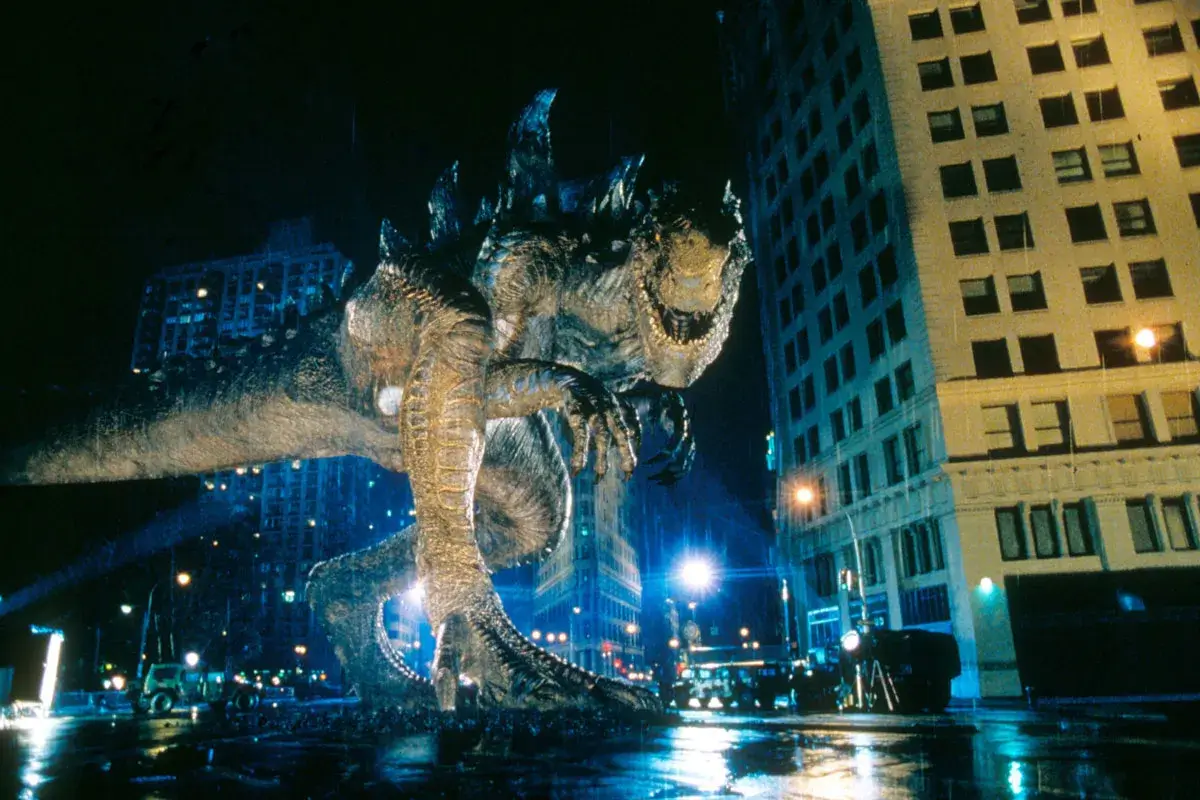
It all sounded like a match made in monster movie heaven. TriStar Pictures would bring Godzilla, Toho Co., Ltd. ‘s most famous creation, to the big screen with a healthy production budget for American audiences. Helping make this happen would be director Roland Emmerich and screenwriter Dean Devlin, who turned 1996’s Independence Day into the year’s highest-grossing film and helped make disaster films a robust box office genre in their own right during that period.
What could go wrong as these creative parties came together for Godzilla? Apparently, a lot went wrong when they stripped the concept of its core mythology, rushed production, and turned it into a standard creature feature that had more in common with Jurassic Park than with Godzilla’s 1954 beginnings as one of the king of the monsters. With Godzilla Minus Zero opening this weekend to stellar reviews and what appears to be a sizable box office, it’s time to look back at 1998’s Godzilla and what happens when new cooks think they can make something better than the original recipe.
Directed by Roland Emmerich, who co-wrote the screenplay with his producing partner Dean Devlin, Godzilla serves as the 23rd film in the franchise and focuses on authorities investigating and preparing to battle the giant monster known as Godzilla, who has made his way to New York City to nest his young and reproduce. The film stars Matthew Broderick, Jean Reno, Maria Pitillo, Hank Azaria, Kevin Dunn, Michael Lerner, and Harry Shearer.
TriStar Pictures Began Developing Godzilla In The Early ’90s
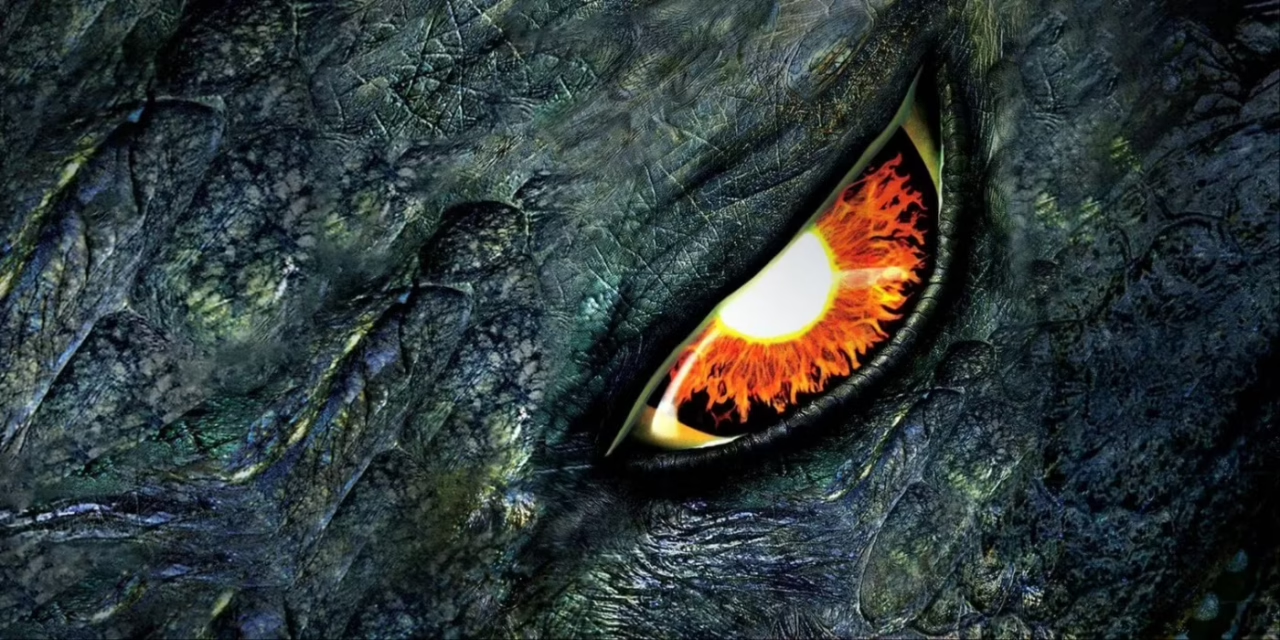
Henry G. Saperstein, who co-produced and distributed past Godzilla films for the U.S. marketplace, was granted permission by Toho Co., Ltd to pitch a new Godzilla project to Hollywood studios after putting pressure on the company for a decade to get one made in America. Sony Pictures producers Cary Woods and Robert N. Fried saw potential and wanted to inquire about the rights to Godzilla and then submitted the idea to Columbia Pictures, which passed right away, thinking that the project would fall into camp, and then it was pitched to TriStar Pictures, which also originally passed on the project because the owners at the time didn’t see the commercial appeal. It wasn’t until Woods and Fried got the idea to Peter Gubar, who was the chairman of the board and CEO of Sony Pictures at the time, that he got it set up himself at TriStar because he saw the international potential of the brand.
TriStar announced the acquisition of the rights to Godzilla in 1992, and with that came plans to produce a trilogy of films with a key promise that it would remain true to the original concept. From there, what would become 1998’s Godzilla went through a few development hands. Director Jan de Bont became attached to direct in 1994, following his success with the movie Speed. Ted Elliott and Terry Rossio had previously been hired to pen the screenplay in 1993, with the intention of taking the concept seriously and making a legitimate sci-fi story that would make Godzilla a creature you could fear but still root for. When De Bont signed on, he wanted to do away with the character’s atomic origins and sought to make Godzilla an artificial creation by Atlantians to protect humanity from an extraterrestrial monster known as “The Gryphon.” Elliott and Rossio made changes based on his notes, but De Bont would end up leaving the project in late 1994 after TriStar would not approve his budget, which was said to be upwards of $120 million. Elliott and Rossio stayed on the project after De Bont left through 1995, although TriStar hired Don Macpherson to do rewrites on their script.
Macpherson planned to appease TriStar and make an $80 million Godzilla project, using the classic Toho design for the creature as a reference. Each version of the screenplay had ideas that worked from Elliott and Rossio’s script, but Macpherson took issue with some of its changes from the source material, particularly Godzilla being a clear allegory for nuclear devastation that could be a threat to the entire world. The current version of the story made him a threat to the U.S. alone, and he was more of an unstoppable monster rather than a developed character. Differences of opinion about how Godzilla was portrayed would play directly into Emmerich and Devlin ultimately taking over the project.
Emmerich & Devlin Had No Interest In The Toho Legacy
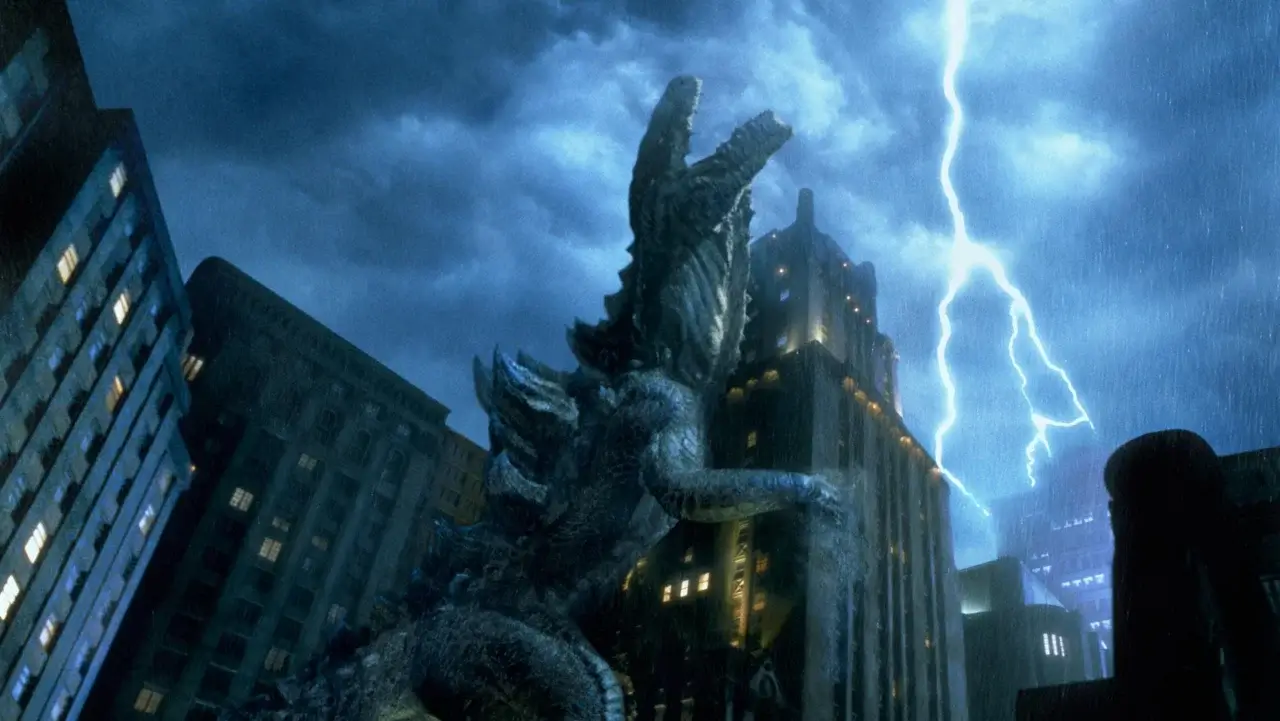
Emmerich and Devlin came on board Godzilla in May 1996, just a couple of months before the release of Independence Day, but the conditions of their signing on would become one of the film’s central shortcomings. They wanted to attack the material in their own way because they viewed Godzilla more as something cheesy and a product of the past rather than for the deeper allegorical messages that are aligned with the character and his background. What becomes clear is that Emmerich and Devlin likely did Godzilla for the paycheck rather than out of passion for the source material.
Case in point, Emmerich praised Elliott and Rossio’s screenplay for the project but completely discarded it. Emmerich said, “It had some really cool things in it, but it is something I never would have done. The last half was like watching two creatures go at it. I simply don’t like that.” Emmerich and Devlin wanted to push the concept of the monster away from its origins almost entirely by radically changing its design. Godzilla would no longer be a prehistoric creature with atomic-breathing abilities. He would be an iguana-like creature that moved sleekly and quickly, something more in line with the Tyrannosaurus Rex from Steven Spielberg’s Jurassic Park. If we remember the promise made when the rights were acquired in 1992 to remain true to the original concept, this pushes back against that entirely.
I didn’t want to make the original Godzilla; I wanted nothing to do with it. I wanted to make my own. We took part of the [original movie’s] basic storyline, in that the creature becomes created by radiation and it becomes a big challenge. But that’s all we took. Then we asked ourselves what we would do today with a monster movie and a story like that. We forgot everything about the original Godzilla right there.” – Ronald Emmerich
Emmerich and Devlin did retain the radiation origins from the Toho films because versions of the screenplay by Elliott and Rossio made him more of an alien that was planted here on Earth. However, other key changes were made that made the creature inherently different. He was redesigned to be less like the original Toho creation and more like an animal rather than an outright monster. This came along with his ability to burrow underground, which is an ability that some lizards possess, and the loss of his signature atomic breath. This was replaced with something they called a “power breath” that allowed Godzilla to blow things away with a more logical, wind-like blast from its mouth. Fans caught on to this change early on, and it came under attack, which led to a variation of the original atomic breath that was grounded in logic. For instance, if Godzilla’s breath blows through flame, it could create a sort of flamethrower effect that was reminiscent of the atomic breath fans were familiar with. With every change that Emmerich and Devlin made, it became clear that they were stepping away from the popular mythic creature and that their ideas were bound to alienate longtime fans.
Godzilla Had A Rushed Production Due To a Planned Memorial Day Weekend Release Date
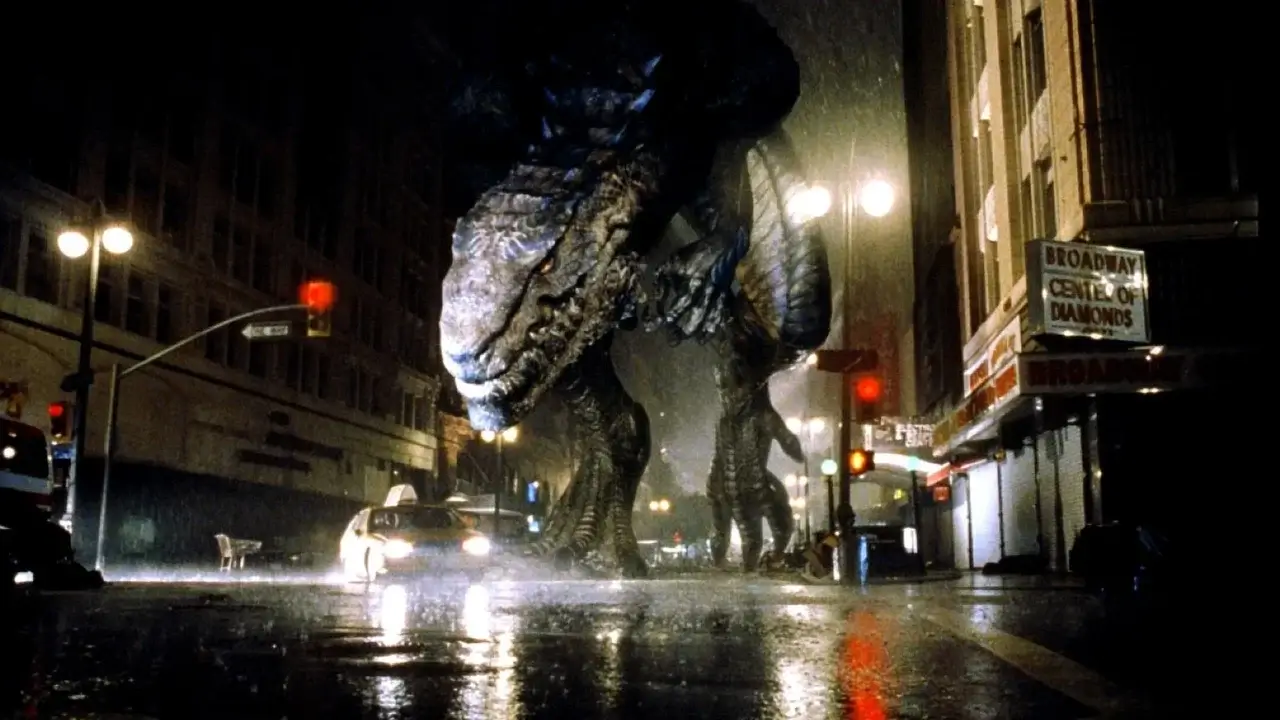
As is often the case with big-budget tentpole releases, Godzilla was already reserved on the release calendar for Memorial Day weekend in 1998. It was the big summer release for TriStar Pictures, and they wanted the bragging rights for kicking off the summer in a big way. The problem with this is that production becomes rushed, corners are cut, and the project begins to lose its way.
The timeline for Godzilla has been described as chaotic by many of the creatives behind the film. The main reason for this was the tight shooting and post-production schedule to guarantee its summer release. The shooting schedule was pretty compressed for a film of this stature, with principal photography running for close to five months (May 1, 1997 – September 26, 1997). Also of note is that since Emmerich and Devlin decided to toss the screenplay out by Elliott and Rossio, they had to come up with their story from scratch and quickly to ensure shooting could begin on schedule.
Even more problematic is that the movie was extremely CGI heavy and, due to the deadlines to make the film’s release date, the effects team was overworked and scrambling to get things done in time, often making some of the CGI effects look unfinished. If you watch the movie, you can spot some of these looks in Godzilla’s hatched offspring (they look like Temu versions of the velociraptors from Jurassic Park), or you may not see some of the effects at all because many of the digital shots are masked by heavy rain in the film. This is all the more troubling since TriStar’s original $80 million production was revised to as high as $150 million once Emmerich and Devlin took over. A film with that budget should not have effects shots that look amateur or unfinished and have to be obscured in order to hide how pedestrian they look.
Release, Box Office, & Immediate Criticisms
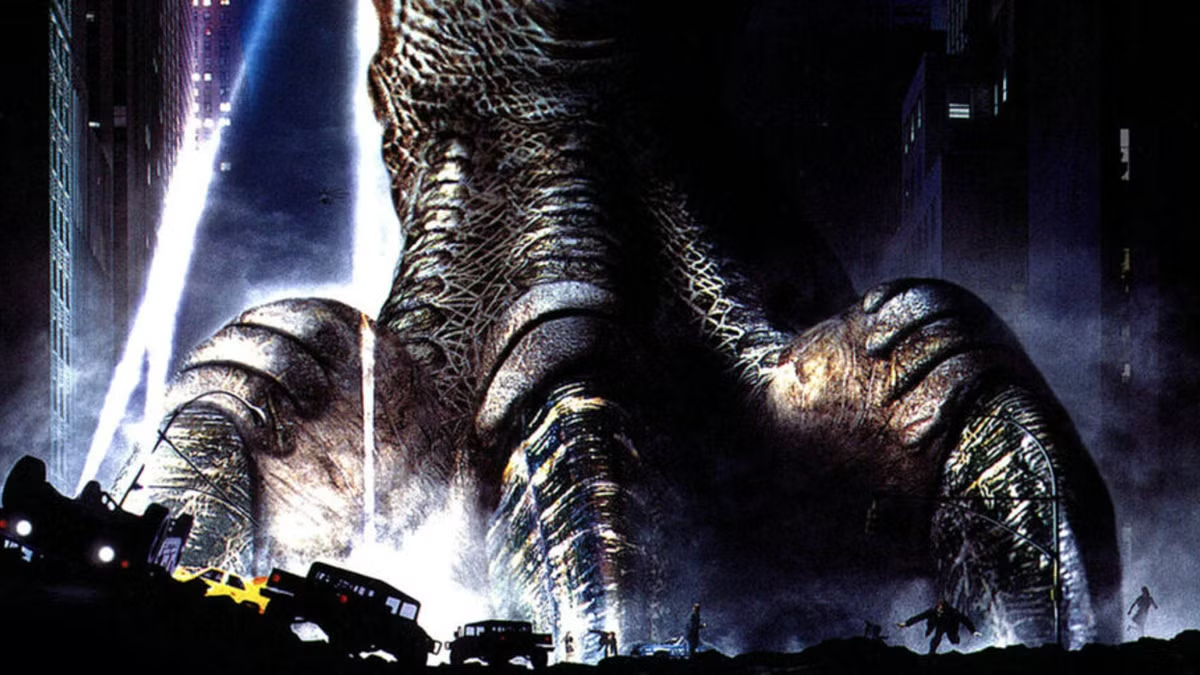
Despite the rushed nature of the project behind the scenes, the marketing campaign for Godzilla was one of the things TriStar got right, thanks in large part to Emmerich. The director didn’t want to use full-body or head shots of Godzilla in the marketing to add a bit of mystery (think not seeing the shark in Jaws until it’s necessary). The first teaser, filmed by Emmerich with a $600,000 budget, was just of Godzilla’s foot crushing the skeleton of a T-Rex at a museum, and it was met with positive responses from fans when it premiered ahead of screenings of Men in Black. From its “size does matter” tagline to a soundtrack that peaked at number 2 on the Billboard 200 and was later certified platinum, the promotional blitz for Godzilla looked promising, but that all subsided when the movie opened.
Opening in 3,310 theaters on May 20, 1998, TriStar was predicting a debut of $100 million for Godzilla during the long holiday weekend, hoping to make a new record in the process. However, those delusions of grandeur evaporated when the movie opened to $44 million over three days and $55.7 million over the four-day weekend, falling short of the $90 million record set by The Lost World: Jurassic Park in 1997. Due to poor word of mouth (the film earned an opening-day “B-” CinemaScore), the movie dropped 59 percent in its second weekend and suffered severe drops in the subsequent weekends that followed. Godzilla, following an eight-week theatrical run, grossed $136.3 million domestically & $379 million worldwide. Even though the movie became the third-highest-grossing film of 1998 and turned a profit due to its international grosses, its domestic performance was viewed as a box office disappointment, and the planned trilogy was cancelled, although an animated series did eventually come to light. TriStar would ultimately let its remake and sequel rights for the IP expire in May 2003.
Reviews for the film were even more distressing. Godzilla carries a 19 percent rotten score on Rotten Tomatoes, with a consensus that reads, “Without compelling characters or heart, Godzilla stomps on everything that made the original (or any monster movie worth its salt) a classic.” Critics attacked the film’s plot, character development, acting, and direction in many of their reviews, with most calling the movie absurd and, as James Berardinelli of ReelViews put it, “one of the most idiotic blockbuster movies of all time.” However, it was Stephen Holden’s review in The New York Times that summed a lot of it up best:
It is so clumsily structured that it feels as if it’s two different movies stuck together with an absurd stomping finale glued to it. The only question worth asking about this $120 million wad of popcorn is a commercial one. How much further will the dumbing down of the event movie have to go before the audience stops buying tickets?”
Perhaps the biggest criticisms came from fans. They were very critical of the redesign of Godzilla and the almost complete departure from the source material. The concept lost its core identity and became something more in line with Jurassic Park rather than what it began as in 1954. It was Godzilla in name only, with an animal-like creature looking for a place to nest and raise its young rather than representing the trauma of nuclear war. Maybe the creatives believed these original concepts were old-hat and wouldn’t be relatable to new audiences, but their rejection of the new Godzilla proved this notion to be wrong.
Were Lessons Learned?
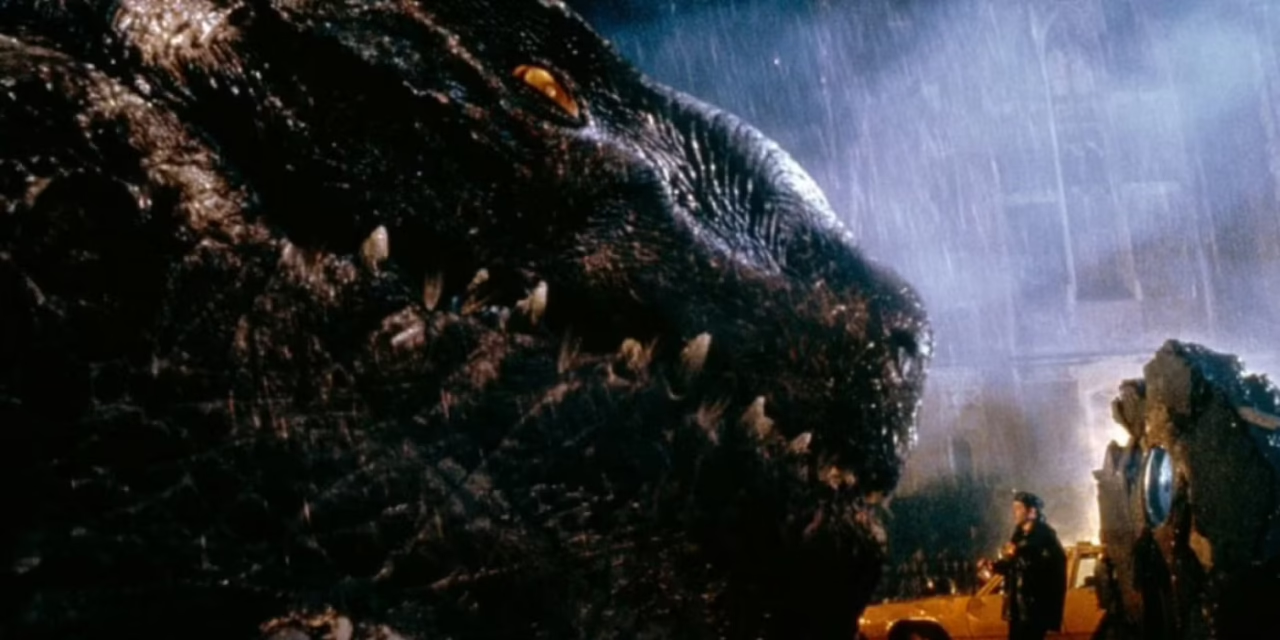
After the box office disappointment and critical beating (which included six Golden Raspberry Awards, with it winning Worst Remake or Sequel), Godzilla wouldn’t see a return to big-budget American filmmaking until the release of the 2014 film released by Warner Bros. and directed by Gareth Edwards. While opinions are split on whether Legendary’s Monsterverse fully respects the source material, they do a better job of not deviating from it in such a way that it’s unrecognizable, like the 1998 film.
The nuclear allegory is gone, with the modern Godzilla being more of an alpha predator, and the films serve blockbuster purposes rather than a more grounded tone. That being said, the new films respect the design of the character and depict the creature as a monster of grand scale and a force of nature rather than a sleek, fast-moving iguana, and even though the new movies are less grounded, the Toho films also stepped away from nuclear fears and shifted into alien invasions, camp/comedy, and showdowns between monsters. The new films may not be perfect, but the essence of them comes with more respect than the 1998 incarnation did.
Beyond that, fans get Godzilla Minus One and Godzilla Minus Zero, which rely on dramatic roots by showing the weight of Godzilla’s destruction without focusing only on Blockbuster spectacle and putting an emphasis on regular people dealing with the scale of his destruction. Godzilla is a natural disaster, much like he began, rooted in fear of atomic dread and devastation. A big lesson learned from anyone tackling this King of the Monsters now is to not deviate too far away from what has made him a legend for all these years. They didn’t get this in 1998, but they surely get it now.
Godzilla Minus Zero hits screens nationwide this Friday.






Reviews