

Paweł Pawlikowski’s new film is a dense exploration of a very specific part of Thomas Mann’s life and Germany’s history. Winning Best Picture at Cannes and chosen as Poland’s submission for Best International Film, the film expects a certain level of historical and geographic knowledge from its audiences.
The story takes place in 1949 when Nobel Prize-winning writer Thomas Mann (Hanns Zischler) and his daughter Erika (Sandra Hüller) return to Germany after 16 years in exile. Germany is a very specific place in its history, working on splitting itself into two parts: Allied West Germany and Soviet-occupied East Germany.
A Dense Tale Of Cultural Identity
Mann is invited to accept two Goethe Prizes, one in his birthplace of Frankfurt, the other in Weimar, where he spent most of his adult life. Pawlikowski, co-writing with Henk Handloegten, notes that Mann is living in a world he no longer recognizes, having become an American citizen during the Second World War.
The film acts less like a father-daughter road movie, and more like a German ghost story. The postwar world is haunted by the Nazis, haunted by its atrocities, about to disenfranchise a whole new generation. As Klaus Mann puts it, the options are either “Stalin or Mickey Mouse.”
The movie greatly concentrates on splitting down the middle. It’s not just Germany that is divided; the Manns themselves are torn between two sides. Thomas Mann is split between the country he belongs to and remembers, and the country he sees in front of him. The film ponders if a displaced person can ever go home and feel like it’s truly their home.
Unexpectedly, Fatherland is dryly humorous. The awkwardness is played for laughs, while numerous characters drop ill-timed quips about the political climate. Of course, this is all a lot funnier if you have an in-depth knowledge of the literary scene of the time and the socio-economic climate. But, the awkwardess of political difference is something we are all finding ourselves in these days.
A Slow but Misguided Father and Daughter Tale
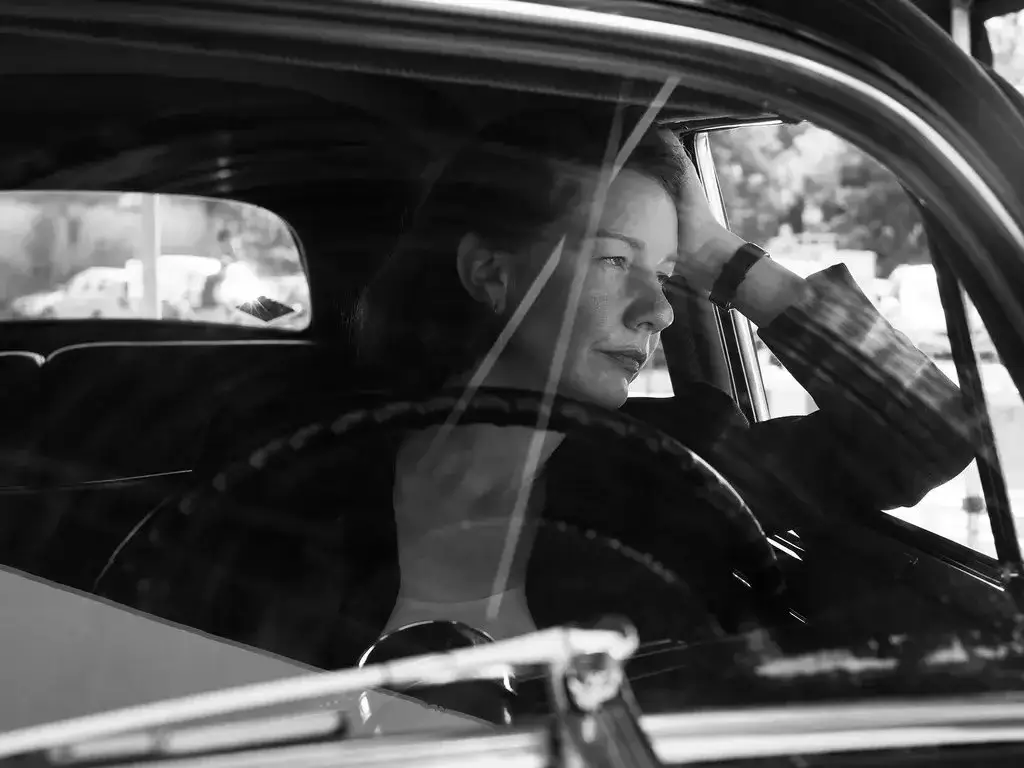
In reality, Mann was accompanied on this trip by his wife Katia. The change to his daughter does allow the filmmaker to highlight the duo’s father-daughter dynamics. Erika herself is a multi-talented writer and actress who attended the Nuremberg Trials as a BBC war correspondent.
Erika is a much more interesting figure than Fatherland would have you think. Here she exists as his assistant, translator, and editor, her own achievements a footnote. Hüller brings her to life with a curt duty to her father, although the repression of her character holds back the mighty actress. Her anti-capitalist politics, which make her wildly unpopular with Americans, are hinted at but never fully explored.
Wayward brother Klaus (August Diehl) lurks in the background, stuck in Cannes after his book Mephisto is banned in Germany. Openly gay and addicted to drugs, his misery is recounted over the phone. There is a more interesting film here about Erika and Klaus’ relationship with their father.
As for Thomas and Erika’s relationship, it requires some reading between the lines. Ultimately, it never quite gets the resolution audiences may desire from their relationship and their family’s tragedy.
A Beautifully Shot, Reserved Film
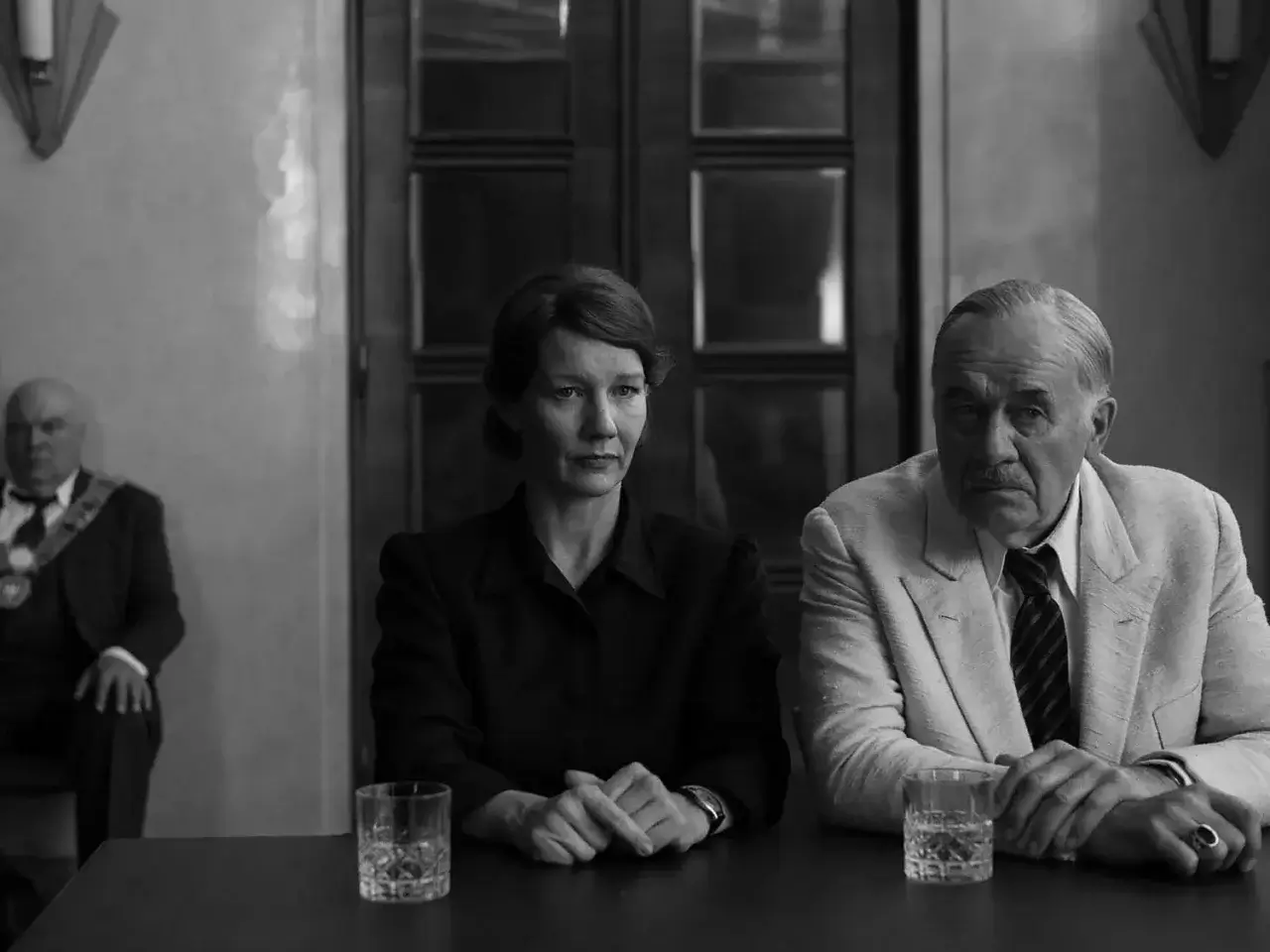
Fatherland is slow, purposefully so. Although it runs under 90 minutes, the movie feels much longer. It expects the audience to understand Mann and his history with Germany, and the ins and outs of 1940s German politics. The film doesn’t spell out biographical information, so if you don’t know the context, you might not care.
Say what you like about the narrative and pacing of the film, Paweł Pawlikowski’s movie looks beautiful. The cinematography is again by Lukasz Zal, who also worked with Pawlikowski on Ida and Cold War and shot Hüller in The Zone Of Interest. It’s almost worth the ticket price to see this gorgeously rationed black and white movie.
As a film, Fatherland is thematically rich, but it is a struggle to get through. The film meanders from stop to stop, as towns welcome in the author and the dup wait in quiet squares and cafes. Communist anthems are belted, propaganda is spouted, organs are played. The camera lingers in the awkwardness. If you’re not someone to stop and deeply unpick the meaning of every interaction, there is very little here to enjoy. Fatherland ties European politics to one family’s tragedy, which is much more rewarding if you know the nuances.
Strangely, for the same man who made Cold War, Fatherland is an austere and somber affair lacking any emotion. It’s all too buttoned up and reserved for its own good. And the resolution is frustratingly hollow, especially when the film had raised such philosophical questions.
For more Reviews, make sure to check back to That Hollywood Show.








Reviews