

In I Want Your Sex, director Gregg Araki asks audiences to embrace the primal, animal parts of ourselves. Sex, he says, is a natural thing to want. And for an under-sexualized generation, it has become something that hardly anybody pays attention to. That, however, is not to say that they don’t know what sex is–rather, as Araki puts it, they don’t appreciate what it does.
Right away, we know that whatever happens can’t be good, as we are introduced to our characters in the midst of what seems like the worst days of their lives: A woman lies naked facedown in a pool, and who can only presumably be her bloody lover clad in frilly lingerie is seen jumping in after her. But that is all that we get, as the film cuts back to “9 1/2 weeks later.”
This time, these characters are given names. The woman is Erika Tracy (Olivia Wilde), a modern artist running her own studio full of Gen Z worshippers. Her acolytes are so devoted that they are willing to chew gum for hours to finish a provocative piece of artwork before the opening of her new show.
Here we meet Elliot (Cooper Hoffman), who had no idea who his boss was until researching her for his interview. Nevertheless he becomes just as devoted as the others. Currently navigating a sexless relationship with his disinterested girlfriend (Charli XCX), it is rather easy to see why Elliot is so quick to fall under Erika’s spell.
I Want Your Sex is about discovery, good and bad

Araki has always been adept at creating multidimensional characters in colorful worlds, and I Want Your Sex is no exception. Everywhere you turn is another bright, interesting pop of color, lending the film an almost surrealistic feeling. It is also an interesting choice for a character like Elliot, who is anything but bright and interesting in the beginning. It almost makes him feel static among the chaos.
Hoffman, however, nails the befuddled charm of Elliot. Erika clearly sees it, too, as she offers him no-strings-attached sex under the promise that it won’t “get weird.” Thus begins the kinky education of Elliot, as Erika puts him in everything from leather to lace and shows him the wonders of absolute subservience. (At one point, she forces him to crawl, which shouldn’t work but really kind of does.)
As Erika rails him, whips him, makes him beg and cry, we can see just how deprived Elliot has been. He is desperate for affection and praise, and Erika hones in on it like a hawk, pushing buttons Elliot never even knew that he had. It’s Araki’s way of saying Look what you all have been missing, look what you can have. But it is also showing just how deeply addicting it can be for somebody like Elliot.
The importance of proper dynamics
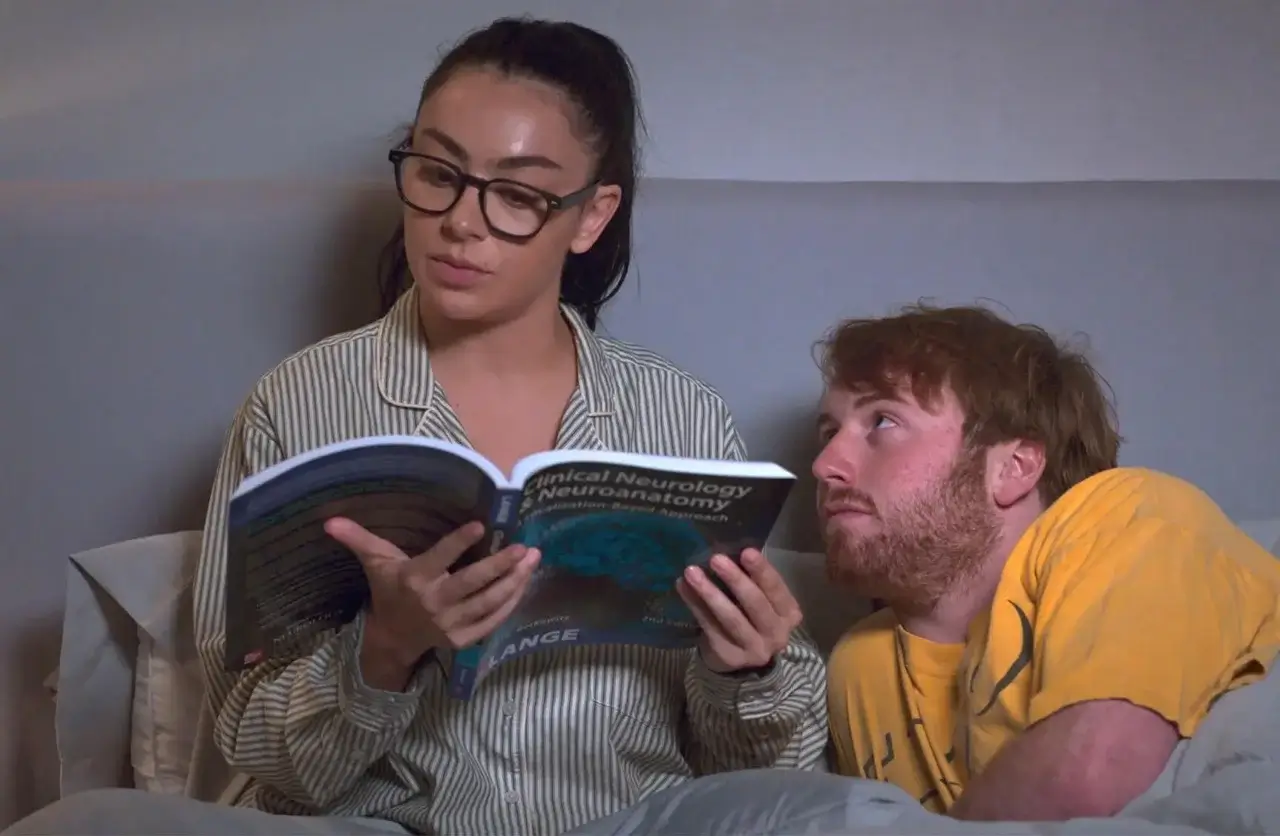
Not all good things can last, however. Erika is demanding and cruel at times. When she asks for a threesome, Elliot brings his roommate, Apple (Chase Sui Wonders). But when things go awry, all Erika gets is annoyed and pushy, inevitably ruining the one good constant in Elliot’s life. This is where we can see the cracks in their Dom/sub dynamic: Much like this year’s Pillion, the greater thread beneath the film is how important consensual dynamics are within these relationships.
Their arrangement is not a secret in the studio, either. “You’re not the first, you won’t be the last,” says Erika’s assistant, a shrew Daveed Diggs. Likewise, Elliot’s closest friend, a rather promiscuous gay man played by Mason Gooding, is concerned for him as well. Does Elliot listen to them? Hell no. At this point he’s so wrapped up in Erika’s web that he comes at her beck and call–literally.
Elliot is not the type of man meant for this dynamic, but damn if he tries, over and over. In fact, he tries so hard he ends up becoming the sole suspect of an investigation, which the film flashes forward to periodically. The agents, played by Margaret Cho and Johnny Knoxville, are subject to Elliot’s entire sordid tale. And though their addition was clearly written just to be able to move the flashbacks along, it also felt like we needed more of them for how perfectly they played off of each other.
There’s a lot of substance, but sometimes not quite enough

At a tight 90 minutes, the film is one that is easily digestible for the masses. With its crisp dialogue and quick pacing, it sometimes feels even faster than that. For once, this is a film that could have benefited from a little more time, just to get to know these characters more. Sure, there is a lot that can be said about power dynamics, and the film absolutely never pulls its punches about a certain kind of self-righteousness people like Erika express, especially in often irresponsible ways. Every light has its shadow, and this film positions itself just a little too much to hide the darker elements that could have made it richer.
That said, Araki certainly gets his point across, rounding it all out with a stellar cast that help solidify the importance of growth and self-discovery in life.
For more Reviews, make sure to check back to That Hollywood Show.

















Reviews