
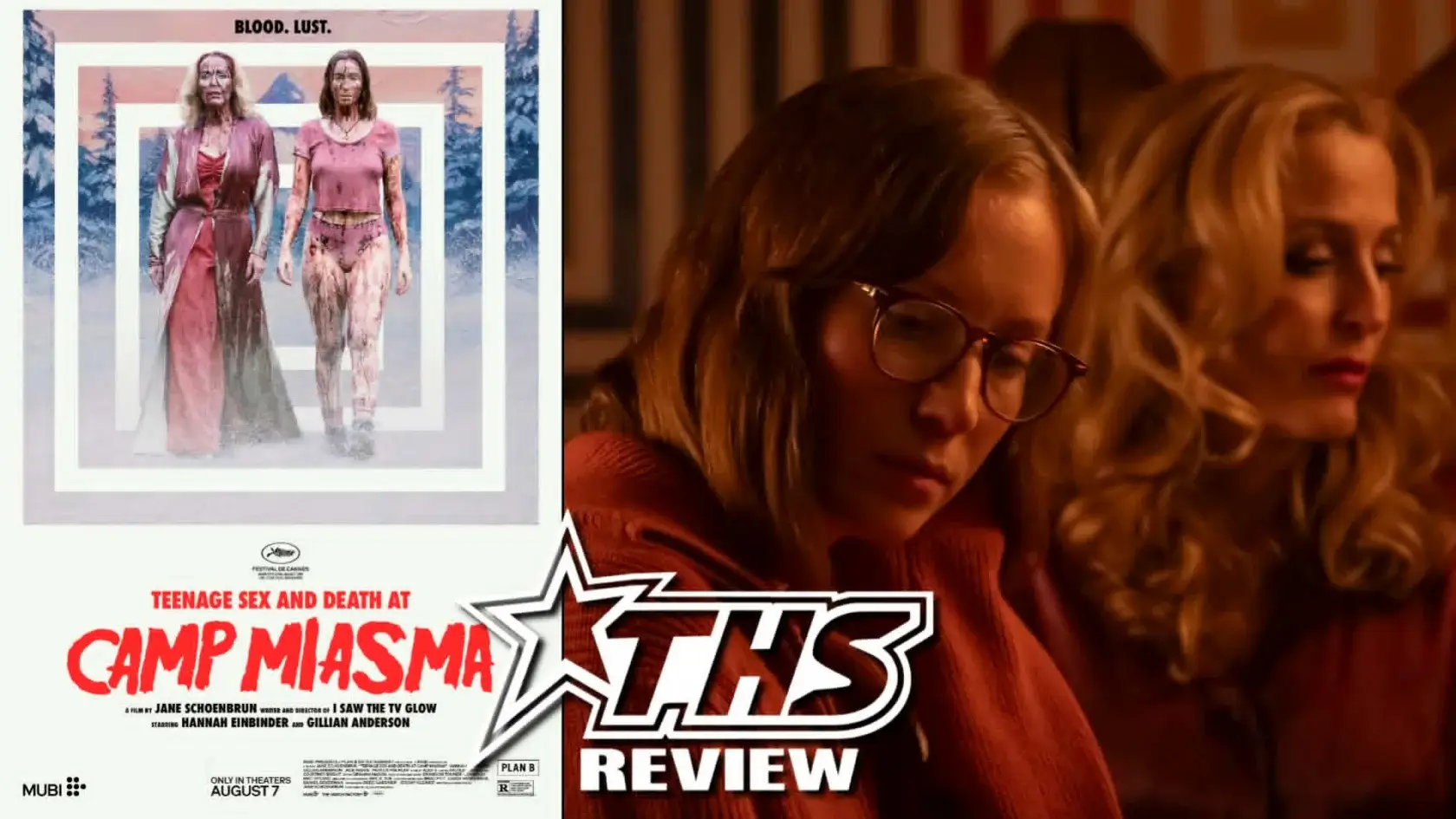
Cover Your Eyes, Kid
We all have that one film we saw when we were far too young to see. That one movie that we snuck a peek at when our parents went to bed, or movie hopping at the theater to the R-rated movie you couldn’t buy a ticket for, or at your friend’s house with parents who didn’t care what you watched. What lasting impact that experience has differs from person to person and movie to movie, but one thing is universal: where and when we watch movies shape us more than we often realize, and Teenage Sex and Death at Camp Miasma magnifies that lasting impression ideally through a satirical and queer lens, delivering a deeply personal yet wholly universal cinematic experience – an unforgettable one at that.
I can’t recall a filmmaker who has made such a huge impact with such a small filmography. One that grows in its themes of sex, media, and identity in brand new ways and new iterations on them. There are almost no comps to Jane Schoenbrun’s work; they are one of one, which is a wild thing to say since so much of their work is deeply rooted in tropes, nostalgia, and general cultural zeitgeist. Teenage Sex and Death at Camp Miasma explodes with exuberance, eroticism, and blood, a culmination of everything they have worked to convey.
And it’s only their 3rd feature film. Schoenbrun not only keeps getting better as a filmmaker, but manages to make their films bigger and bolder without losing sight of the things that make them great and original. Camp Miasma is a feat to say the least; audacious, horny, violent, and easily the funniest film they’ve made to date. It is without a doubt the best deconstruction of the slasher genre ever put to screen.
Do Movies Watch US, Too?
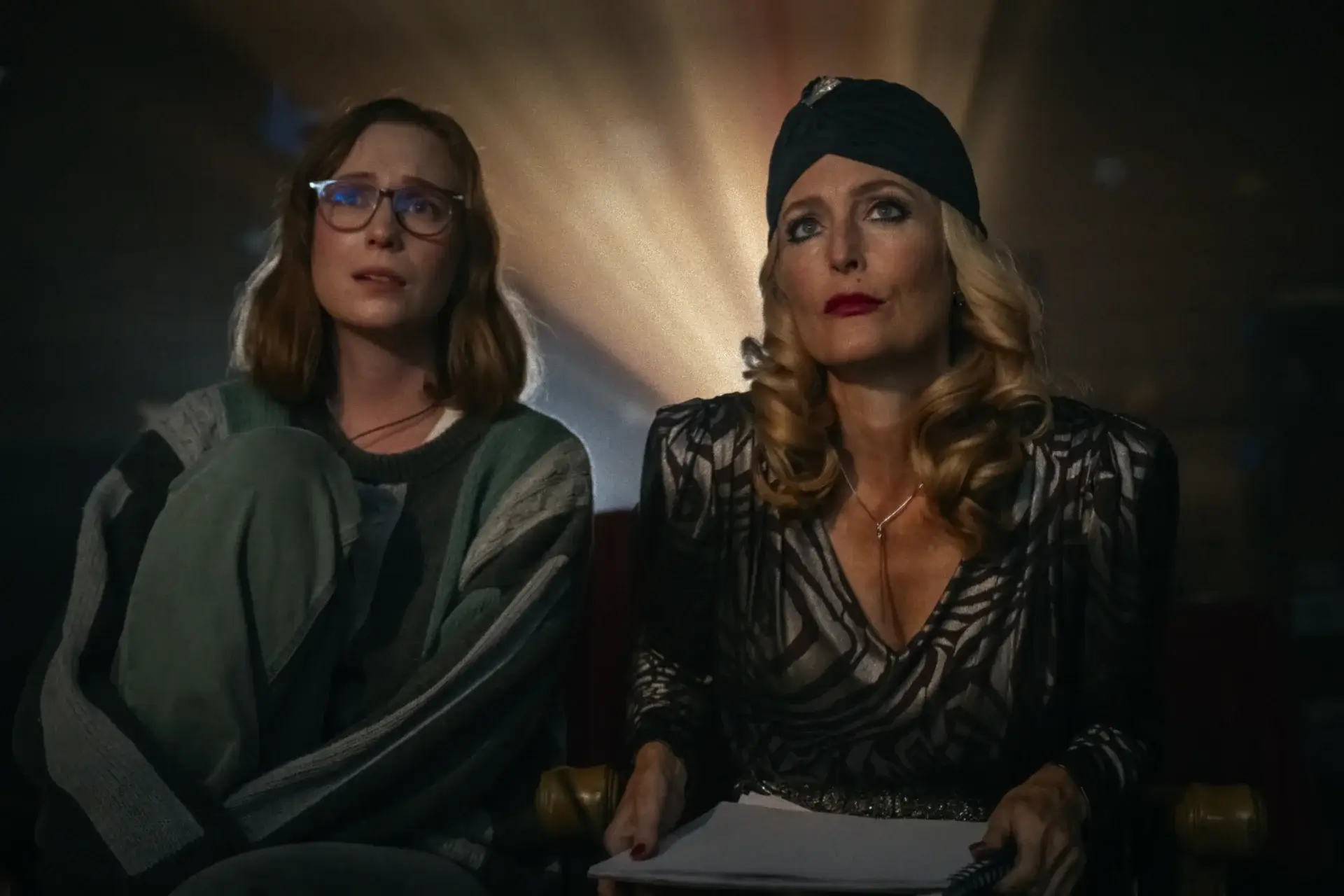
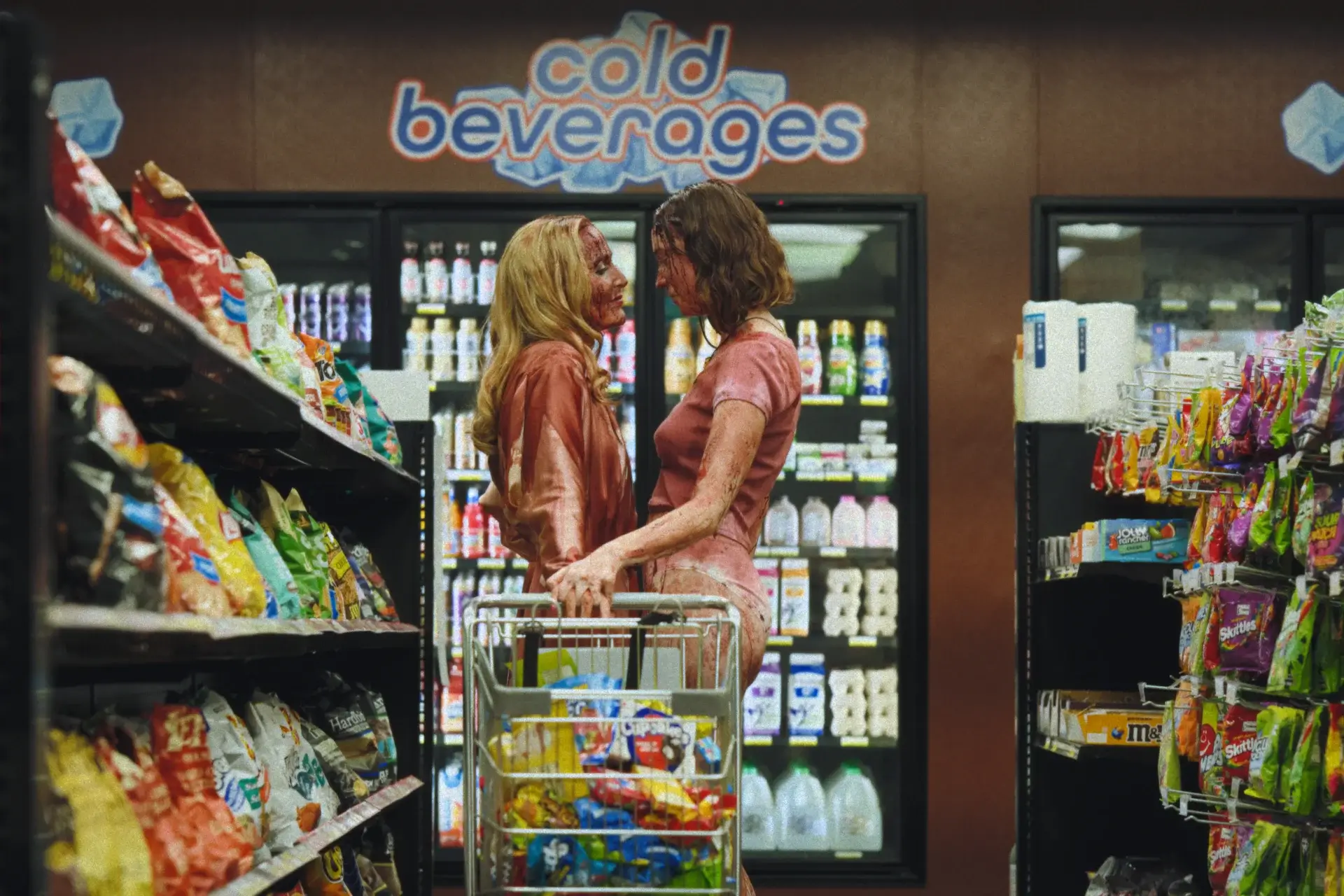
Written and directed by Jane Schoenbrun (I Saw The TV Glow), Teenage Sex and Death at Camp Miasma follows Chris (Hannah Einbinder) a young, up-and-coming filmmaker and Sundance critical darling who is tasked with rebooting a once-popular slasher franchise called Camp Miasma. Desperate to do the reboot right, she tracks down the reclusive final girl Billy (Gillian Anderson) from the original film to hopefully bring her back for a cameo. Billy now lives in the isolated campgrounds where the original film was made. After an awkward first meeting that involves smoking weed and watching the original Camp Miasama print, Chris is invited to stay with Billy so they can “make something together.” But there’s a mystery that surrounds them both, and as their relationship grows they are both thrust into a whirlwind of desire, fear, blood, sex and snacks. Lots and lots of snacks.
There is such profundity to their work, and Camp Miasma is loaded with personal and universal ideas that both permeate and resonate long after the credits role. What is so fascinating and effective about Schoenbrun is how richly textured every frame is – both visually and thematically – leaving a bevy of interpretations and meanings behind each and every choice. There is no wrong way to eat this Teenage Sex and Death at Camp Miasma Reese’s.
Sure, there may be a baseline of ideas that everyone can understand and personalize, but Jane is an expert at removing general objectivity and letting their work mean whatever you want it to mean. On its surface, Camp Miasma is about how media has shaped them and explores that in us, too. How we watch movies defines us. The movies we choose, what age we found them, our escapes, our ups and downs are all a part of the cinema that make us. And with Camp Miasma, Schoenbrun asks us a very unusual question: we watch movies, we fantasize about them, but do movies watch US too?
A Horny Horror Deconstruction
The relationship to fandom and nostalgia – framed here as a slasher horror franchise – is deeper than just comfort. They can be a sexual awakening, a personality-defining experience, a mirror of who we are, were, and want to be. Yes, even schlocky, problematic 80s slashers can unlock parts of us we don’t fully understand. I can’t explain it as well as Schoenbrun can show us, and that makes Teenage Sex and Death at Camp Miasma one of the best films of the year and an infectious piece of cinema that demands discussion and dissection. As a film critic – or more known on the internet as a pretentious cinephile who won’t shut up about things in movies no one cares about – I felt VERY seen. Schoenbrun not only understands movies and sexuality and the link between personality-making experiences and film, but the industry at large.
Teenage Sex and Death at Camp Miasma is an incendiary indictment of the inner workings of Hollywood; how films get made, how filmmakers get boxed in by zoom calls with people who truly do not care about art, and the toll of giving yourself over to the camera can take on those behind and in front of the camera. There’s a sensual voyeurism to movie watching, and Camp Miasma dials this up to 11 as it blurs the line between reality and fiction. Schoenbrun puts franchise filmmaking through a woodchipper, using slashers as a base for literal and metaphorical sex and death.
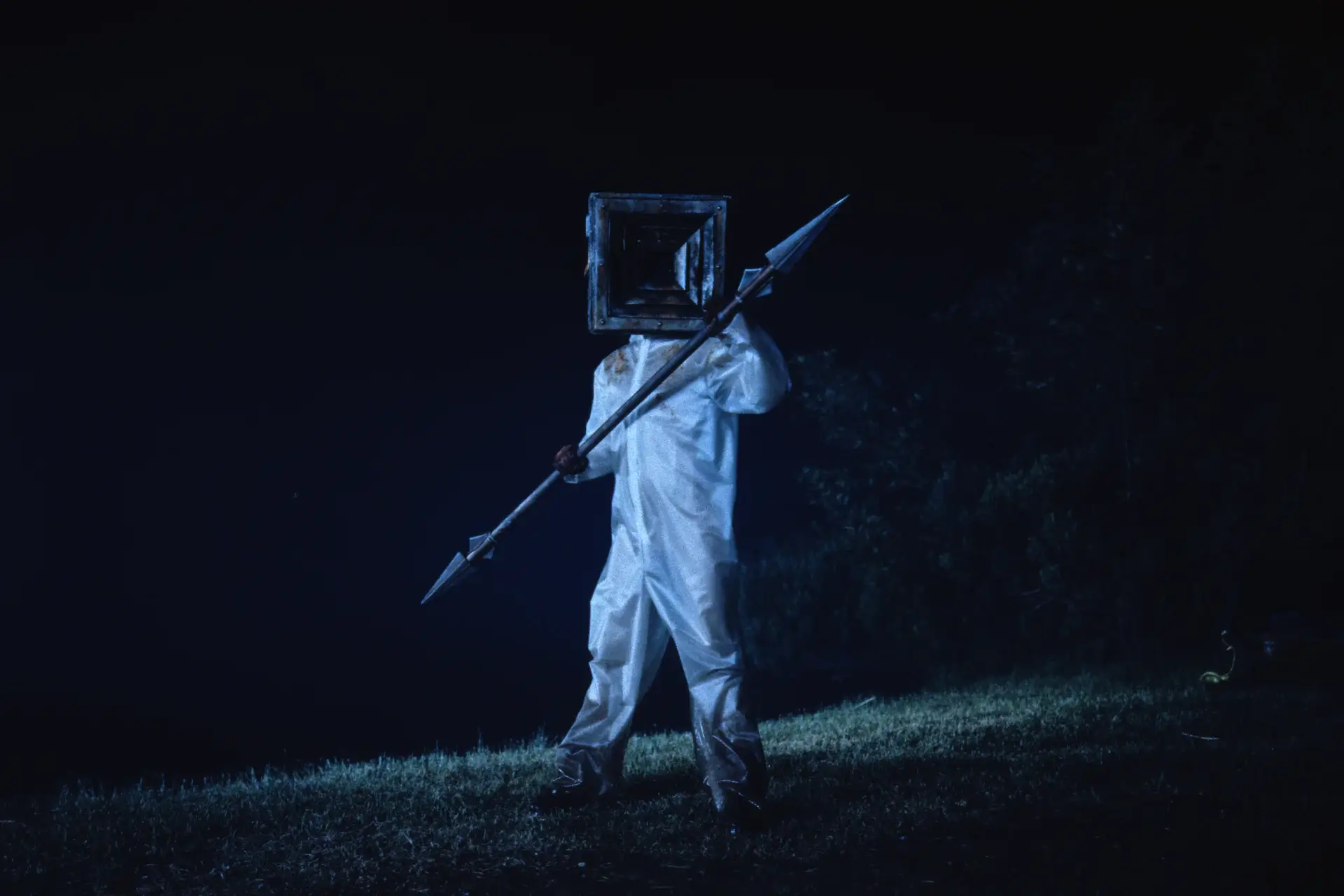
A young poet once wrote, “the only different between sex and killing is the fluid.” Strangely, there’s something to that sentiment present here in Camp Miasma. The killer (played by an excellent Jack Haven) is literally named Little Death, a French term for orgasms. So while that may be an abrasive statement to read, Teenage Sex and Death at Camp Miasma does, in fact, marry sex and violence in a harmony only someone as skilled and attuned to their voice as Schoenbrun can pull off this well.
Wait, Is This Play About US?
Gillian Anderson delivers a god-tier performance here. A sort of Norma Desmond from Sunset Boulevard (directly referenced in the film more than once to describe her) recluse who is as assured as she is mysterious. Anderson is transcendent, giving us a new side of her we’ve never seen before and owning every minute of screentime. Fried chicken, dipping sauce, and movie snacks have never been so erotic, framed as a sort of horny “it’s good to be bad” device that is as funny as it is sharp.
Hannah Einbinder is equally excellent, diving into the awkwardness of a wunderkin filmmaker without confidence in her work, her choices, and her identity – both who she is and her sexuality. She is consumed by cinema and unable to express herself through any other lens. Einbinder IS Jane as much as she is all of us cinephiles. Full of references and asides, incapable of allowing herself to BE herself because she actually doesn’t know. Einbinder is vulnerable and wholly committed, and the pair demonstrate that they more than grasp what Schoenbrun is trying to convey.
As horny and sexually charged as it is, it’s also really funny. Teenage Sex and Death at Camp Miasma is easily their funniest film to date, particularly for the cinephiles it’s digging at – those who get the classic cinema and split diopter references. There’s actually scene where Gillian and Einbinder are watching the original Camp Miasma and a split diopter shot appears. Being the film nerd I am, I clocked it in my head right as Einbinder says out loud, “That’s a split diopter…” and is then shushed by Anderson. It’s a very “wait, is this play about US” moment, and Schoenbrun is unfraid to lay the best and worst of our film-loving tendency bare, lovingly poking fun at us while they stand next to us in solidarity.
Blood Splatter and Needle Drops: A Perfect Pair
These little easter eggs are abundant, and they make Camp Miasma Jane’s most accessible film to date. The style and ideas present in We’re All Going to World’s Fair and I Saw The TV Glow – the latter being the closest comp – are all still intact, but the humor and satire paired with the over-the-top schlocky kills and overt horniness in nearly every aspect allows it to tap into a larger audience. It’s a queer film first, but the satirical elements of a beloved subgenre unlock new doors for Schoenbrun to explore. Here, they decide to have a little bit more fun and hope in their approach, balancing its slasher satire with its more tactile thematic richness. They expand their own walls and we get to watch a new and exciting filmmaker truly come into their own.
It’s not just the themes or personal discovery that they get better at conveying, either. Shoenbrun’s craft is unparalleled. It’s one thing to find new ways to express yourself through film. It’s quite another to elevate your actual filmmaking simultaneously. Gorgeous cinematography with stunning matte-painted backgrounds, gorgeous lighting, brilliant costume design, expert needle drops and perfectly rendered 80s slasher sequences make Camp Miasma a feast for the eyes. And that’s before you get into a few steamy sex scenes between Anderson and Einbinder. It opens with a remix of Night Swimming by R.E.M, a deep cut for 90s band stans and another key that unlocked a core memory for myself. There’s also a oner that sees Little Death killing their way through camp counselors while A Long December by the Counting Crows blares loudly over a sea of blood splatter.
Cinema Leaves Its Mark
It genuinely might be one of my favorite sequences of the year. Jane knows all too well little film nerds will get turned on by such carefully curated set pieces, once again making Camp Miasma a series of little deaths. They know that we see ourselves on screen all the time just as they do, and knows that our desires – sexual and more – are often tied to our experiences with cinema.
Teenage Sex and Death at Camp Miasma not only wants to deconstruct long-standing tropes within a specific genre, but wants to remind us all that movies change us. Whether we know it or not – and Chris’ own sexual discoveries reflect this – cinema leaves its mark. it could be a childhood wish or a first crush or our first experience with our bodies or yes, a bloody, savage killing that we witnessed when we were far too young and it fucked us up forever.
Movies live in our head, some buried deep beneath the lake in a hole where movies come from. They arise to claim us, sometimes through sex, sometimes through satire, and sometimes through violence. in its own weird way, Camp Miasma is a both a testament to and a deconstruction of the power of cinema. They’re beautiful, they’re enlightening, they’re scary. But they also ask us to let go, to get out out of our own head and let out the dark angel in all of us. They beckon us to express ourselves, to be true and comfortable with who we are and define what we like. Movies change us, and Teenage Sex and Death at Camp Miasama is firmly planted in the transformative canon.
Final Thoughts
Teenage Sex and Death At Camp Miasma is by far and away Jane Schoenbrun’s best work. It’s horny, bloodly, and brilliantly crafted, richly layered and funnier than expected. Is a film I can’t stop thinking about and one I can’t wait to see again. And no, not just to perv out on lesbian sex surrounded by a mountain of candy wrappers.
I found it riveting and marvelously entertaining. Enthralling and sexual and powerful, and means more to me than my many, many words can properly experience. It may be a masterpiece. Or maybe I’m just a pretentious film lover who wants to watch Psycho from the perspective of the curtain.
For more Reviews, make sure to check back to That Hollywood Show.








Reviews