
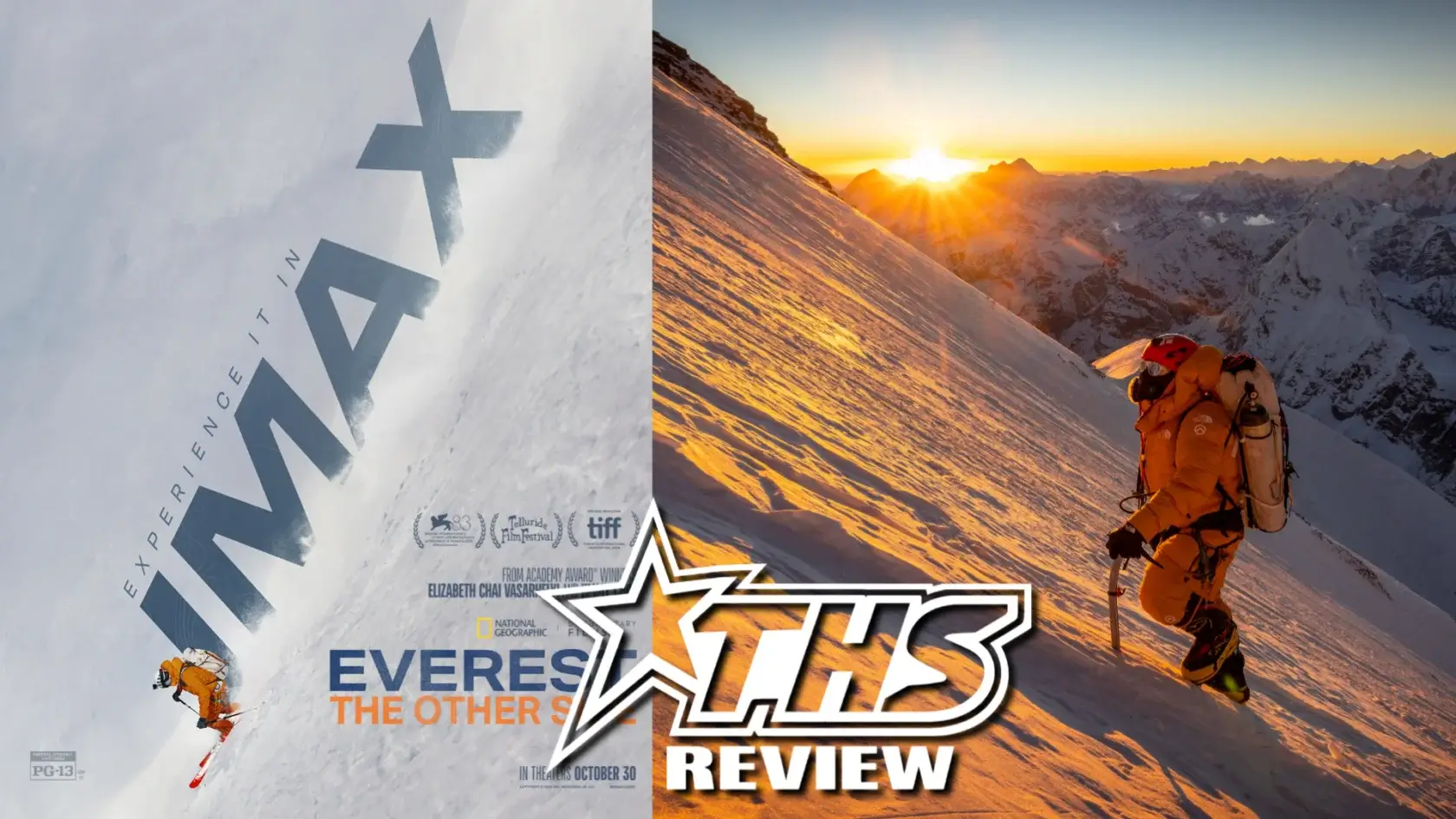
Mountains and Emotions
The magnitude of human achievement is as high as Everest itself. The depths in which we can push ourselves beyond assumed capability is quite astounding, and Everest: The Other Side is a prime example of unbelievable human feats. The risks and dangers are all optional, but the drive for greatness continues to be undeniable in our spirit. Even if those risks ripple out to others, the allure of conquering the unconquerable remains an irrestible call. Not for all of course. But for the proud few who dedicate their lives (literally) to traversing untraveled paths and placing their names in the history books, it remains their everything.
These kinds of pursuits always come with a dark side. Something Everest: The Other Side does attempt to get at but falls short into a morally murky avalanche. It leaves the film both compelling and unsettling; the climb itself captured with stunning magnificence and breathtaking cinematography. You truly feel like you’re on the mountain, and the dangers are visceral as they take each step towards the summit. It’s the intimacy with which Chai and Chin frame their subjects that leave you a bit unnerved. Whenever we aren’t on the mountain, Everest: The Other Side feels like we shouldn’t be watching this. There’s a near exploitative nature to which they’re able to capture the emotional state of their subject, and the more people that are included in the project the more it starts to feel icky instead of triumphant.
A Bit Too Close To Their Subject
While the documentary duo are masters are crafting shots no one else on earth could capture as the continually pursue the most extreme adrenaline junkies in existence, they have a major blind spot in how they capture everything else. Everest: The Other Side is a visual marvel, the mountain alive with ice and snow and wind and collapse. What the team that assists Jim Morrison achieves is nothing short of legendary. But it’s the conditions under which this is achieved that gives great pause. And I’m not just talking about the unforgiving weather. From the very beginning it becomes clear that we are being welcomed into the lives of people who are so singularly focused it becomes hard to sign on to their pursuits as heroic.
While Everest: The Other Side does grapple with the realities of death defying extremity, it ultimately argues that the reward is greater than the risk and the lives lost or altered pale in comparison to being able to say you climbed the unclimbable. It’s too close to its subjects and too enamored with the victory to allow itself to dive in deeper into the loss that’s been experienced in these communities, in these lives and even pushes aside the sherpas – again. It’s a beef I have with most mountain climbing documentaries. They all seem to push the people that make climbing possible in the first place to the background, making sure the rich, white, crazy foreigners get all the credit.
Sherpas, Death and Consequences
Chai and Chin at least show more of the sherpas and their unheralded work – you would literally not be able to ever climb Everest on any side without them doing a good 80% of the work – adding a bit of robustness to their film. But it never goes far enough, and while I understand that this is Jim and Jimmy’s story at the core, it just feels wrong to move these men who probably risk more to the side. And sure, Everest: The Other Side makes it clear that these men have made their choice and can leave at any time. Some even do after the weather conditions completely ruin their first attempt and leave one of the sherpas with a broken leg. But the collective that gets brought together to foster one man’s obsession is something that is clearly on the surface but never investigated fully.
That’s probably because Chin himself is an adrenaline junkie just like his subject. Both men seem completely unconcerned with the lives they put at risk even if they try to assure us that they know the risks for themselves. There’s a scene where Chai herself confronts Chin about the all of the friends they’ve hosted at that very table that are no longer here. Chin rattles of a shockingly long list of names, and then just kind of brushes it off and signs on to go up the mountain with Morrison. It all comes off as deeply irresponsible. Climbing and skiing, the idea of achieving something no one else has more than outweighs the deaths that have happened and could happen to any number of people on the team, not to mention Jim’s children who are forced to essentially write their parents off as living dead figures.
No Malice But Still Morally Gray
Don’t misunderstand me. Nothing in Everest: The Other Side signals a true disregard for life. Not from Chai or Chin or Morrison. There’s no malice here, but they are all blinded by the idea of their accomplishment rather than truly reckoning with what’s left in its wake. It’s all there in the text but never really explored enough to feel that it was all justified. Sometimes, doing something in grief for the right reasons is still the wrong thing to do. And at the end of the day, Everest: The Other Side is more a portrait of grief rather than a straightforward mountain expedition. And the expedition itself is breathtaking. Every moment spent on Everest is some of the most riveting visuals I’ve seen all year. Seeing it in IMAX made my stomach drop at times, and I held my breath constantly knowing that death was around every corner.
Final Thoughts
When Everest: The Other Side is physically on the other side of Everest, there is simply nothing like it. It is visually arresting and almost plays like an edge of your seat thriller. Chai and Chin are masters at this, and prove that no one else can put into frame the exhilaration of these extreme pursuits quite like they can. But its the motivations that muddy the waters. The context of the climb is largely left unexamined and the more morally murky aspects of the story and the people in it are brushed aside.
It’s a tough thing to wrap your head around, and I do have to give the filmmakers some credit for doing their best in trying to capture the emotional core of the entire experience. There’s no part of you that doesn’t understand WHY Morrison is so adamant about this or why Chai and Chin are wholly invested.
I’m simply not convinced the why of Everest: The Other Side is enough. And I don’t know that the ends – the kind with true finality and consequences far beyond the icy summit – justify the means. It’s beautiful but troubling and I’m not sure where that leaves me in the end.
I know one thing though: Leave me at base camp. Call me when you’re done.








Reviews