

Bunker centers on famous and celebrated architect Miguel (Javier Bardem), who has uprooted his family from Spain to London. His perfect life gets interrupted when his working-class neighbor Tony (Stephen Graham) starts to build a garage conversion with a window overlooking his garden.
The architect argues that it’s the intrusive window that is upsetting him, but there is a hint of classism to this primitive looking conversion in contrast with his modernist urban property.
A Drama About Modern Paranoia
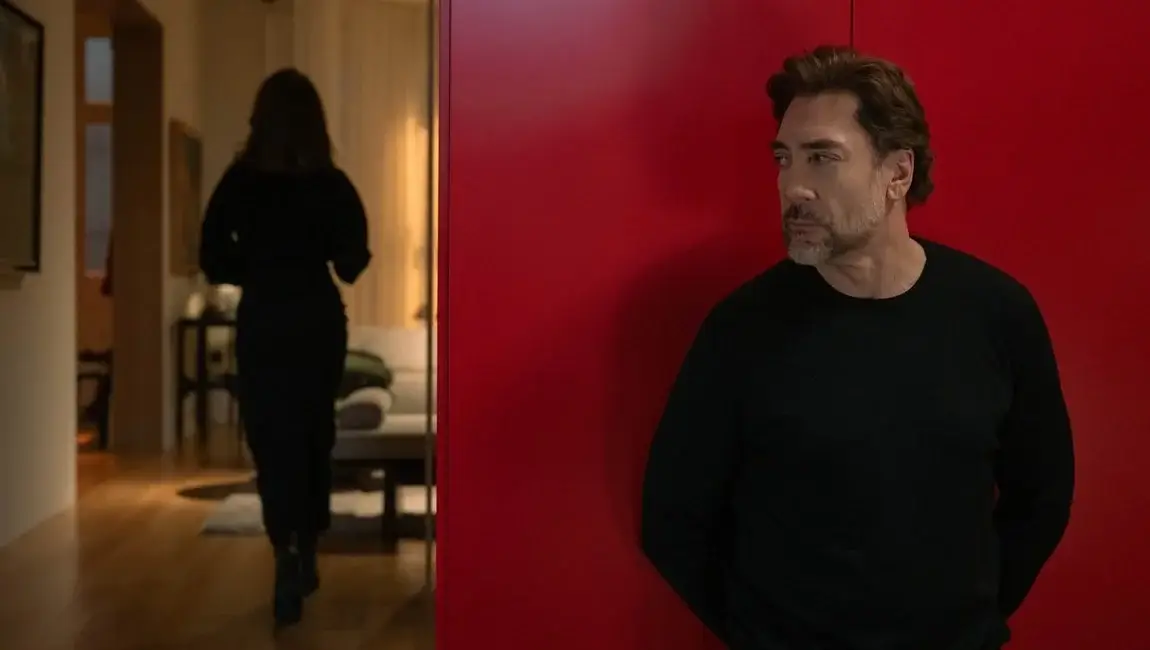
Bunker is, at its core, about one man’s paranoia. This is highlighted by an underdeveloped subplot which sees American tech billionaire Andrew (Paul Dano, appearing solely over Zoom) offer Miguel a once-in-a-lifetime job. He offers Miguel the chance to make a Sam Altman-style doomsday bunker in Hawaii. It’s more money than Miguel has ever earned but will pull him away from his already strained family.
This job offer raises ethical questions for his family. His book editor wife Sofia (Penélope Cruz) sees the project as everything wrong with society, while both are concerned with the behavior of their phone-addicted teenage daughter, Lucia (Chloe Conh).
Their marriage is also in a rough patch. Sofia is struggling at work, refused a promotion because she isn’t a native English speaker, and is generally underappreciated at home and at work. At one point, Bunker teases her relationship with twenty-something author Jeremy (Patrick Schwarzenegger. But it appears much of Jeremy’s character and their subplot was left on the cutting room floor.
With the idea of a secret bunker stuck in his head, Miguel becomes paranoid about the safety of his own home. He gets fixated on his neighbor, to the point that it threatens to tear his family apart.
Florian Zeller’s Bunker Spreads Itself Too Thin
Bunker is very happy to raise really important moralistic questions and themes. But, once introduced, it doesn’t quite know what to do with them. The script perhaps spreads itself too thin, using multiple plots to highlight Miguel’s paranoia. Ironically, the bunker is the least interesting or relevant part of this film.
Florian Zeller really wants to deliver an analysis of modern life, whether that is addiction to social media, wealth inequality or the general malaise everyone is finding themselves in. But he doesn’t seem to know whether to make the central couple part of the issues or accidental bystanders.
These socially conscious points may have been a little sharper if the filmmaker didn’t make the central characters a very successful architect and book publisher. In one scene, the pair go to her friend’s art show and stare at a black canvas that is hailed as a masterpiece. It centers them as outsiders looking in on pretentious, upsold modernity. Yet they go back to their perfect modern home, their artistic jobs, their smart wardrobes. Audiences may find a disconnect here that results in the couple seeming two-faced and smug, rather than sympathetic.
For good measure’s sake, Bunker likes to tell you what the themes are and how you’re supposed to feel about them. Miguel and Sofia talk in big monologues and exposition-heavy dialogue. It’s a film that repeatedly reminds audiences of its themes rather than letting them make up their own minds.
The Final Act Puts The Rug Out From Under Audiences
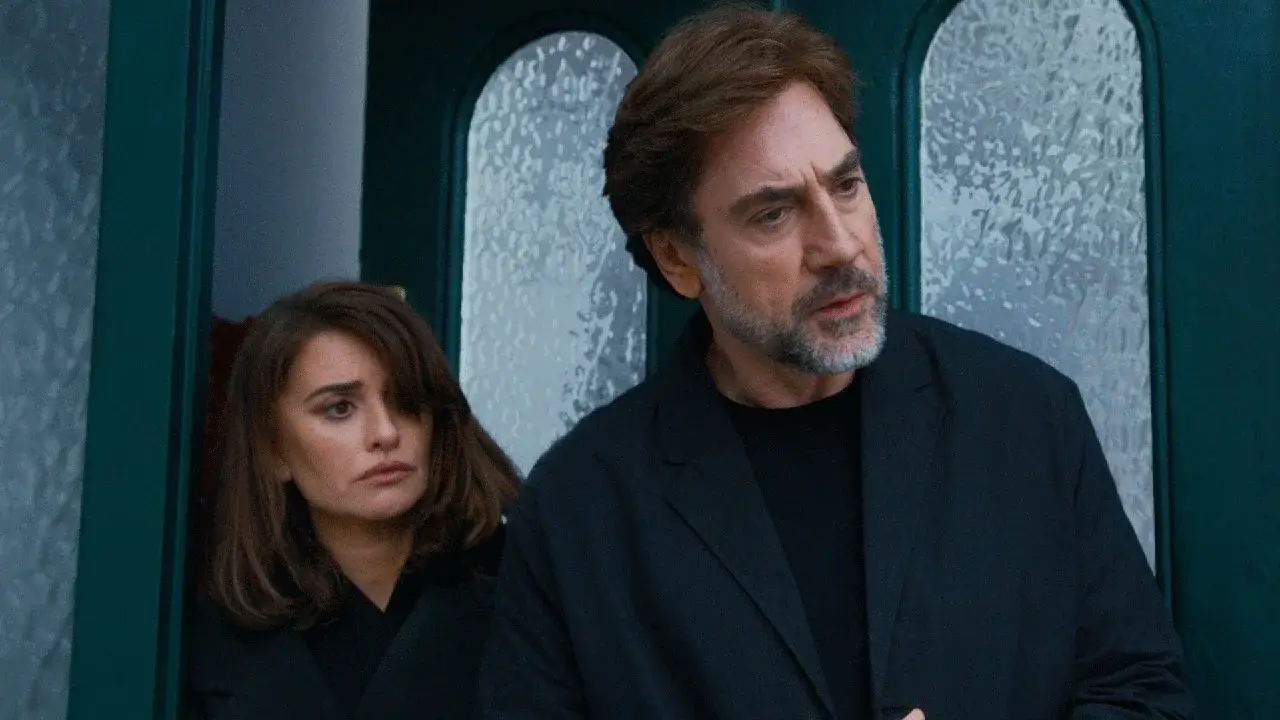
Bunker does effectively put Miguel’s paranoia into the audience’s heads. The writing leads you to believe you are watching one type of film before it reveals itself to be something totally different. The twist is effective but somehow not rewarding. The film is so certain it’s going in one or two directions that the third comes out of nowhere, making the first two acts feel redundant. At over two hours long, Bunker manages to say a lot but mean absolutely nothing.
The cast is entirely watchable in a script that doesn’t reward its talents. Cruz and Bardem manage exposition-heavy dialogue, yet the underbaked writing will likely leave audiences cold at their marital problems. Stephen Graham is underused but fantastic as the neighbor, his natural menacing demeanor doing the heavy lifting. Paul Dano’s name shouldn’t even be included here, his one-scene Zoom call looks like it was quickly filmed during his lunch break. Mark Gatiss uses his limited screen time to shine as Miguel’s architect colleague.
Bunker is the first of his three films not adapted from Florian Zeller’s own plays. He made a big splash in the industry with 2020’s The Father, which earned Anthony Hopkins an Oscar. The follow-up The Son, which also tackled the psychological turmoil of family life, didn’t quite land. Bunker raises the question: was The Father truly just a fluke? While this film is nowhere near as thorny and controversial as his last film, it’s certainly a hollow story full of wasted potential.













Reviews