
Post Summary
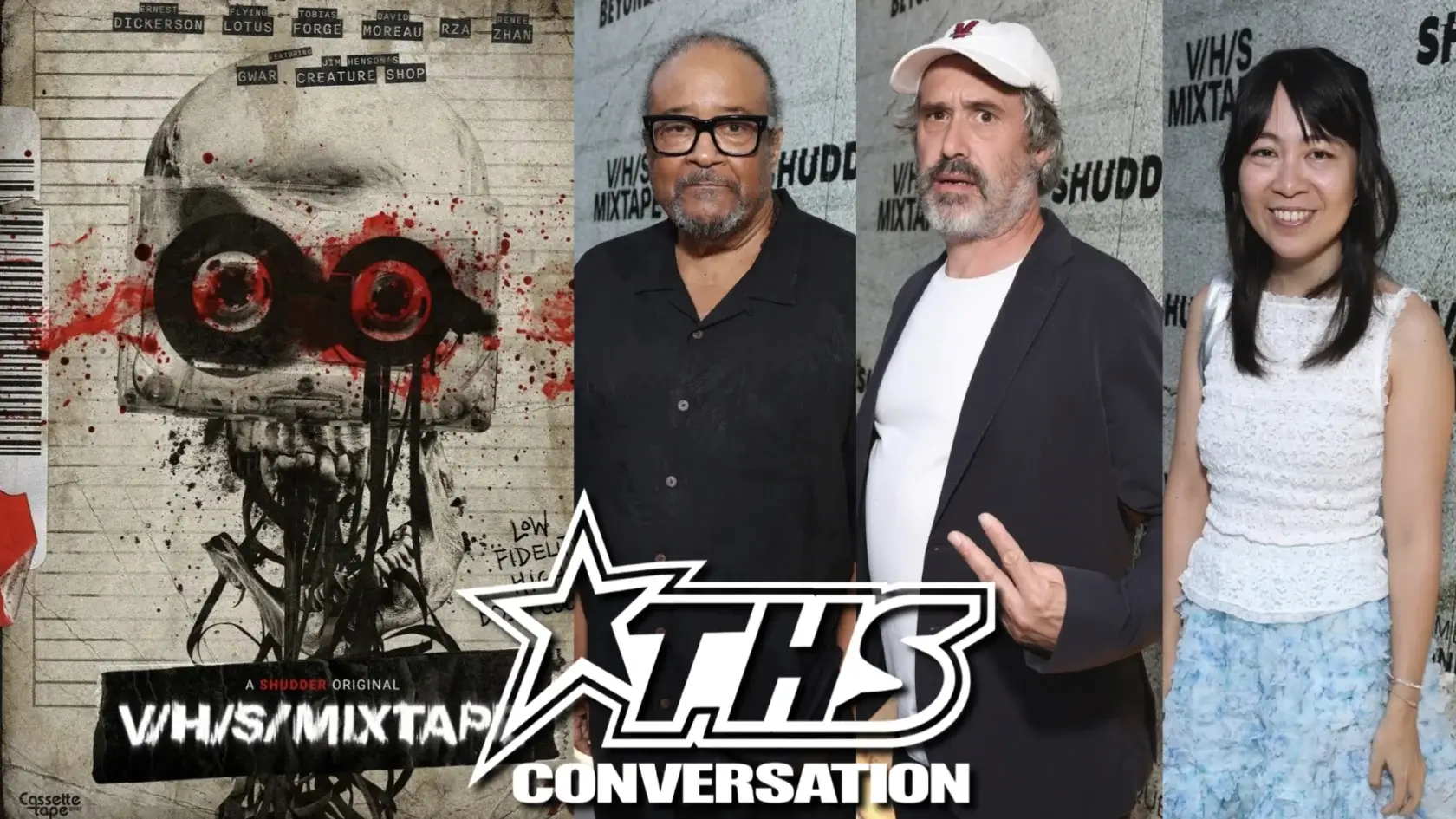
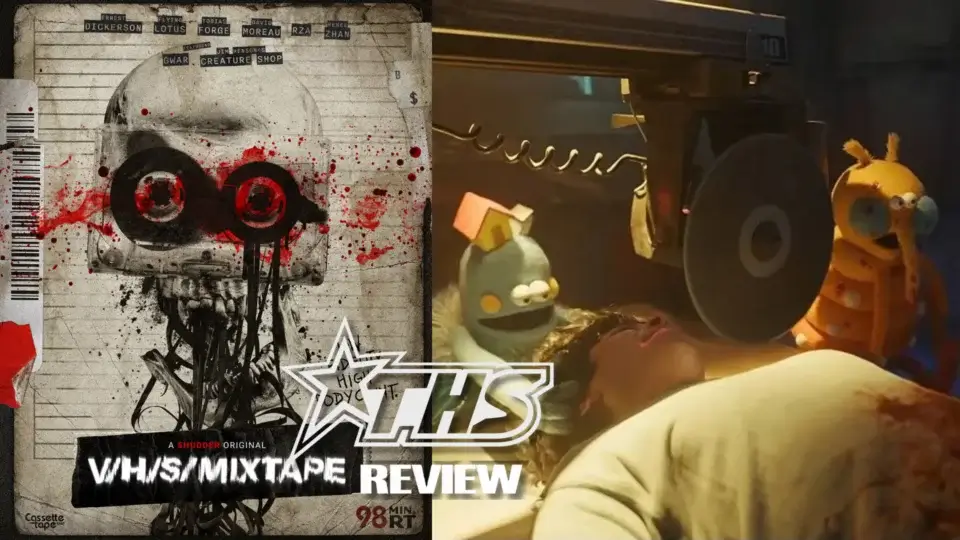
The V/H/S horror anthology franchise has a new entry, V/H/S Mixtape, with each new short film centering around sound or music. This iteration includes short horror films by Renee Zhan, David Moreau, Ernest Dickerson, RZA, and a wrap segment from GWAR with music videos directed by Ghost frontman Tobias Forge and Flying Lotus.
V/H/S/Mixtape is now available on Shudder.
Hearing V/H/S Mixtape’s Talented Crew
This iteration of V/H/S/Mixtape sends V/H/S into exciting new sonic territory for some creative franchise highlights. I spoke with Mixtape directors Renee Zhan (“Dance, Dance, Dance, Dance”), David Moreau (“Heartbeat”), and Ernest Dickerson (“The Music of Mr. Sze”) about this fresh V/H/S entry and their own new slices of audio-influenced horror. Catch our review here.
I love the idea of this new sound-inspired iteration. Why are sound and music such perfect vehicles for horror?
David Moreau: Have you ever tried to watch a horror movie without sound? It could look really strange or really fun, or people acting weird, listening to what you cannot hear. So sound is like… I don’t want to give a stupid number, but it’s like you cannot do a cool horror flick without cool sound. You have to make it right because you know that it’s as important, and maybe more important, than what you see.
And I myself have always been very connected with the sound work, because I really like when you actually don’t see something, and you hear something, so you have your imagination… listening to a sound that you don’t hear where it’s coming from, and you start imagining things. I do think that imagination sometimes is stronger than every visual you can give to an audience, because they’re making their own visual with the sound.
But in this V/H/S/… we haven’t seen the other [short films], we just saw ours, so we’re going to discover the other movies tonight. So I could not speak about my partners’ work, of course. But I do have to say that when the producer approached me to make a scary story based on sound, it was very exciting, because you know that having a scary sound or scary music… I don’t have music in my short, but building scares with sound is probably the best way to scare the shit out of people. It’s just fun.
Ernest Dickerson: Music to me has always been a storytelling medium, you know. It’s been another way of telling stories, and in film it amplifies the story being told. When done right, it amplifies the emotions. It sets the audience on edge, or it makes the audience relax to a point where you want to get them not to relax. So it’s always been a good way of controlling mood, of manipulating mood. And you know, to me, film and music are the two closest related art forms. One is direct input to the eyes and the ears, and the other is direct input to the ears. So they’re direct routes to the brain, and how you use them can be quite devastating sometimes.
Renee Zhan: I think sound and music have always been really important, present factors in my work. They’re so powerful, and I think in my segment it’s like they can underscore what’s happening, or they can contrast what’s happening in the picture. In mine, it was about that contrast of having this really cheerful, joyous song, like almost so joyful that it’s painful, and then having these painful things happening on screen.
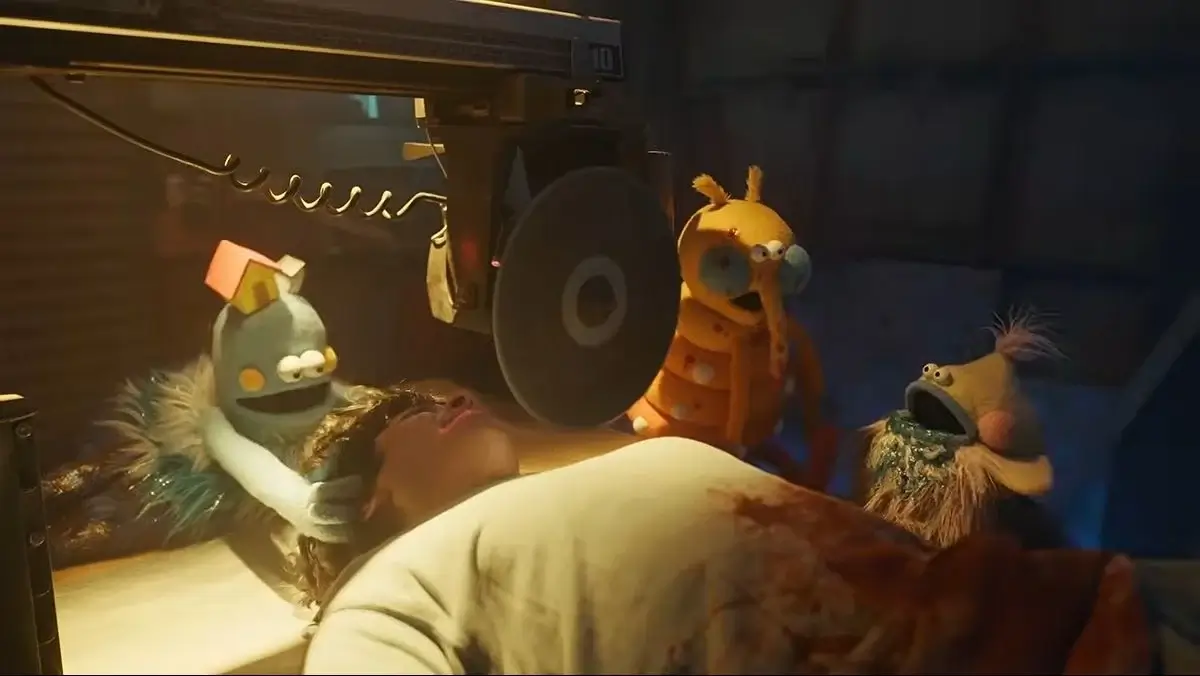
Renee, that’s a great bridge to what I wanted to ask you. There’s something beautifully perverse about how your segment uses childhood nostalgia in such an eerie way. I love the puppet design, a collaboration with Jim Henson’s Creature Shop. Can you tell me about designing and creating both thoes puppet characters and the in-world show itself?
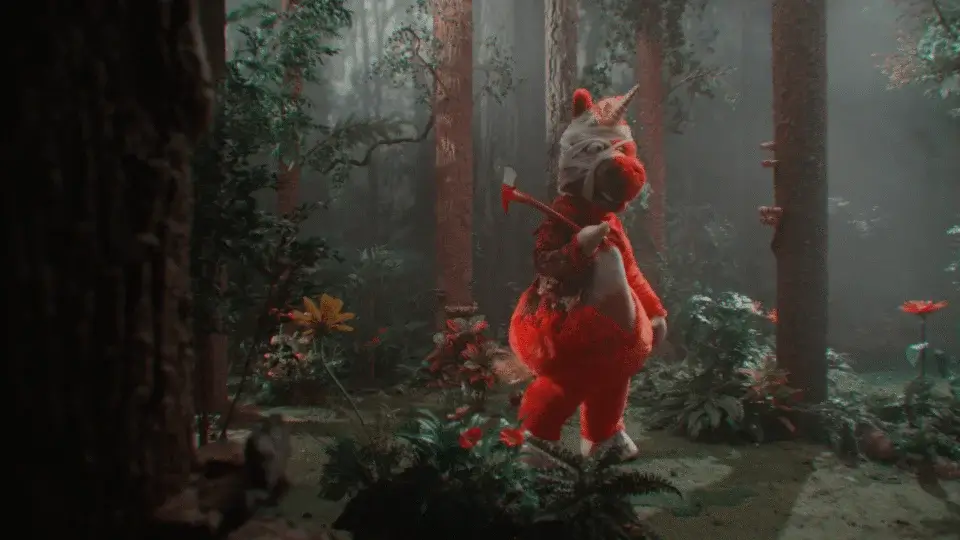
Zhan: With the puppets, I wanted to really evoke Muppets and Sesame Street, like it should. I thought they should feel like part of that world, but obviously not any of those, specifically. Each puppet is named after and based on a thing that is deadly, so there’s Hemlock, Riptide, Skeetto, and Botulism. I like the idea that these like really sweet things are actually deadly inside, which is what they are. I made an illustration, and then Jim Henson Workshop, they just smashed it. The puppets came out better than I could have imagined.
And as far as designing the show, designing the show was really fun. It’s kind of the same thing. It’s just that sort of classic kids TV, sickly sweet nostalgia. One thing that we did in the sound mix was we added the sound of birds flying in the background. I hadn’t thought about that before, but that added so much. It suddenly was like, ‘oh, yeah, we’re in this constructed world,’ where it feels innocent, but that innocence feels eerie somehow. It really was one of my favorite parts of directing the segment.
Wonderful, thank you for sharing that. Ernest, I’m a big fan of your work as a whole. I’m also a big cosmic horror fan. I loved your design of the other realm and… what’s there. Can you tell me about thoes designs and your inspirations for them?
Dickerson: I actually storyboarded the whole thing, and I had a rough idea of what I wanted my creature to look like. I spent a lot of time searching for images that were close to it. I spent a lot of time on Pinterest, searching for images. I knew what I wanted. It was just finding the right inspiration in the combinations. And so finally I was able to put that together, and got a lot of encouragement to actually go practical with it, which is what I wanted to do.
But practical is very difficult on such a such a tight schedule because a lot of stuff goes wrong, a lot of shit’s gonna break, a lot of shit is not gonna work right. And doing more than one take can be very, very costly. But, you know, we were able to really put it together and compare it pretty well.
I’ve been studying physical and visual effects practically all my life, so I had a good idea of how I wanted to go about this, and my inspiration came from two HP Lovecraft stories. I just was able to mash them together, and update them because a lot of the horror projects that I want to do, that I’m trying to do, are taking older wine, older story ideas, but putting them in new bottles. You know, updating them, and that’s kind of like what I did with these two Lovecraft stories.
The entity looked really good in the final product.
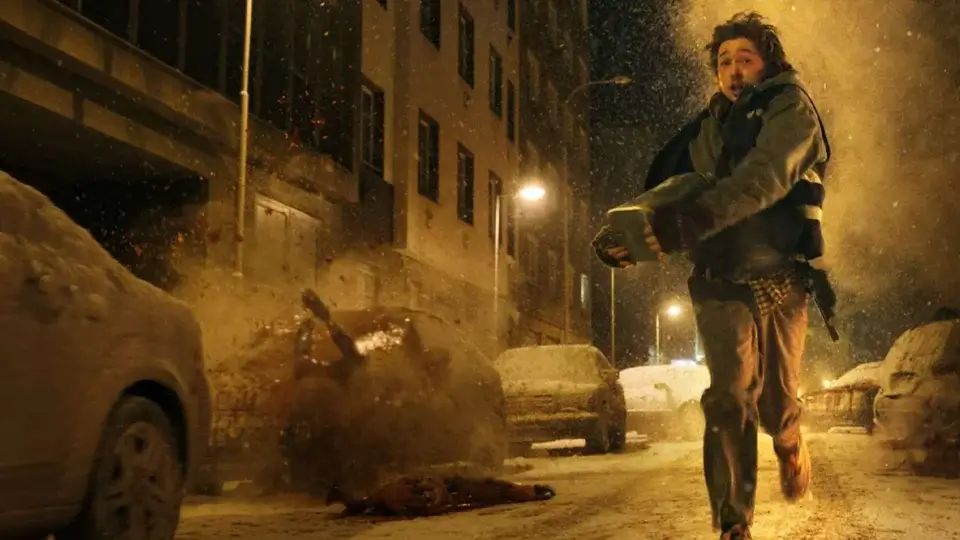
Yeah, my cinematographer Patrick [Murguia] and I, we worked out a whole way of making it work. It did get a little scary when we first saw the creature in the light of day. And we’re both cinematographers, so we knew we had to play with the visuals a little bit to make it work, but it did. Hopefully the audience will feel the same way that you did.
David, I love how claustrophobic your film is, set inside that surreal sound-absorbing space with cameras in such tight corners and angles. Tell me about crafting that space and working the camera into it the way you accomplished.
We could not shoot in a real anechoic chamber… we call it anechoic; it’s the chamber where you actually have almost perfect silence. So we had to build the set with those pyramids, all the cones everywhere on the floor, on the ceiling, on the walls, everywhere. And so we had to, we had to lock the set and have the actors getting in, and then we were closing the doors, and it took ages to open and to close it.
So basically, the actors were like alone on the sets, and so they were really inside the space. They really felt like it was for real, you know. And being able to find the right shots and to find the right angles to shoot in such a tiny place, we use Insta360 cameras, which are like 360 cameras that allow you to, because they are YouTubers, they are [used to having] cameras on them. But what is cool with the Insta360, basically the camera is shooting 360 [degrees]. So you can choose in post if you are having a shot on the face, reverse shots.
It makes a whole different way to edit a movie, where you’re actually choosing your shot in the editing room, because you have tons of possibilities. You can go with a wide 360 shot or a close-up on the face, on the nose, on what the character is looking at, so it was very, very useful. Because when I can find those crazy angles where I could, in the sound mix, actually make the audience hear what they are hearing through a very close-up, very strange angle that actually allows the sound mix to make the audience hear what they are hearing inside. So the use of those Insta360 cameras was really useful, really new to me. It was the first time I used this kind of camera. And so this is how we crafted it.
V/H/S/Mixtape is now available on Shudder.
For more on Horror, make sure to check back to That Hollywood Show.







Reviews