
The Movie of Our Time Has Arrived
Once in a generation, a film comes along that redefines how we think about movies. Something so incisive, so singular, it can only be understood from the moment it is consumed rather than informed by anything previously accomplished. You Can See Everything is that kind of work. A masterpiece in just about every way films can be yet also feels like something completely new. You have never seen anything like this. It exists without comps in over a century of cinema, a singular vision that pokes and prods at perception and truth with both laser focus and unpredictable revelations. Filmmaking – not just documentary but everything in motion pictures – will never be the same again after You Can See Everything. It is the movie the year, but also a movie that will define them for decades.
It’s an indescribable film. One that really cannot be processed immediately and requires viewers to wrestle with all its trying to accomplish. You Can See Everything rewired my brain chemistry and fried my circuit breakers. I’m still picking up my jaw off the floor, and I had to consciously fight the urge to not stand up and pace back and forth in the middle of the theater – especially when it gets into its second act, which is packed with more twists and turns and reveals that the best thrillers imaginable. I’m sorry for being so hyperbolic, but truly nothing can prepare you for what Fielder and Oppenheim have in store. What they’ve created with You Can See Everything has been to be seen to believed, and even then I’m not even sure if one can fully wrap their mind around what they’ve witnessed.
The Less You Know Heading In, The Better
For the sake of trying to provide the same kind of unknowing blindness I had the pleasure of viewing the film with, I’m going to do my best to not reveal any spoilers here. It’s gonna be very hard to keep some of its best secrets in the box as more and more people see it. And we all know the internet is unkind to spoiler-free content. So if you CAN avoid everything outside of the very simple premise, You Can See Everything will be all the more rewarding. Unfortunately, keeping so many things so close to the chest requires me to hurl far more superlatives around than I would like. And I’m forced to approach the material with a sort of “trust me bro, it’s great!” way of speaking. But the less you know about You Can See Everything the better, and I’d rather be coy and use big words to capture the feeling of watching it than reveal what you’re actually seeing.
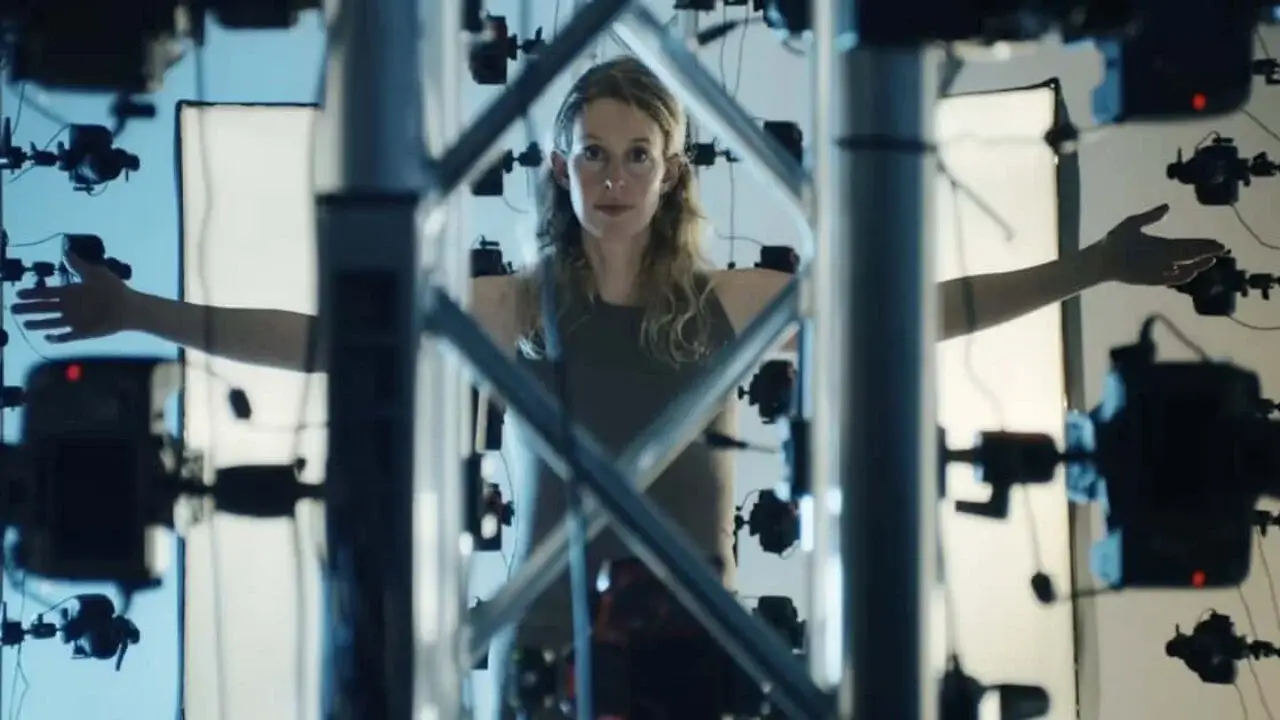
34 days before notorious Theranos founder Liz Holmes (no longer called Elizabeth) is sent to prison for 11 years, Nathan Fielder and Lance Oppenheim are granted unprecedented access to their lives. They are both welcomed to see everything – literally – and eventually invite Nathan to live in the guest room to capture as much of their daily lives as possible. Shockingly, this experiment is only half of the film. Holmes does in fact go to prison during filming, and just when you think that’s all there is to the story, it picks up two years later and starts going down unexpected paths that reveal more than you could ever imagine.
An Unstoppable Force Meets an Immovable Object
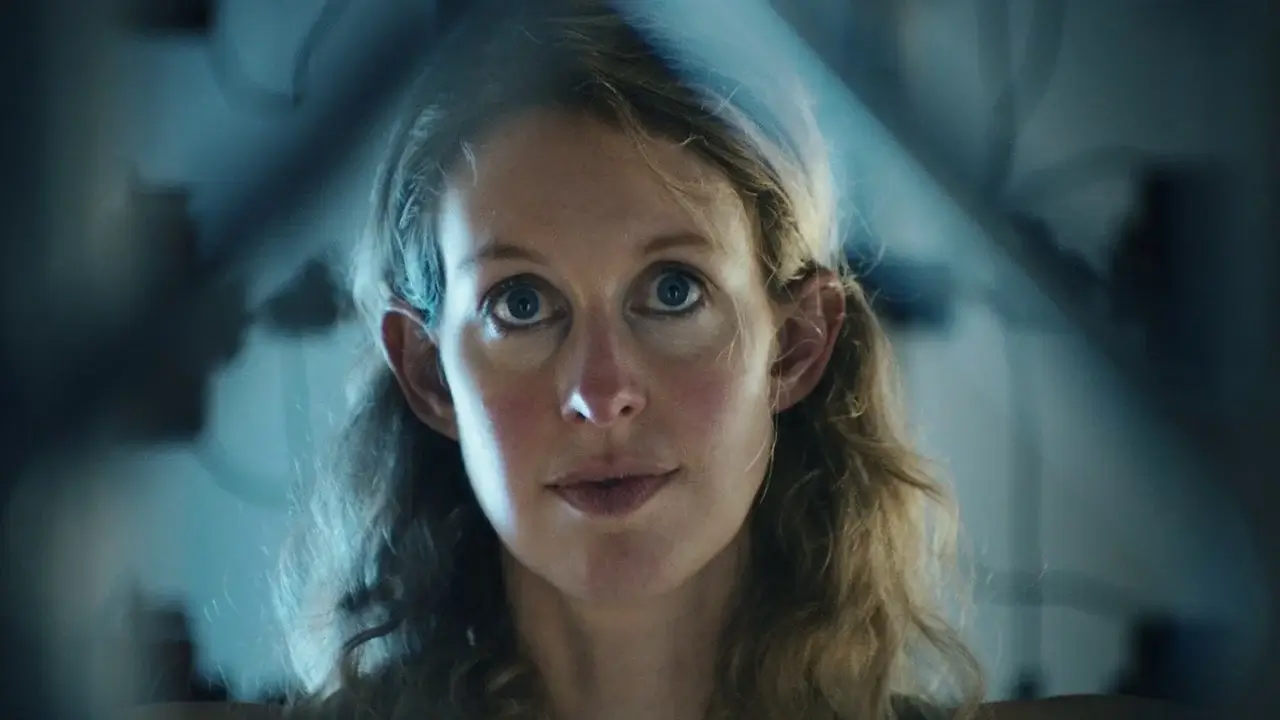
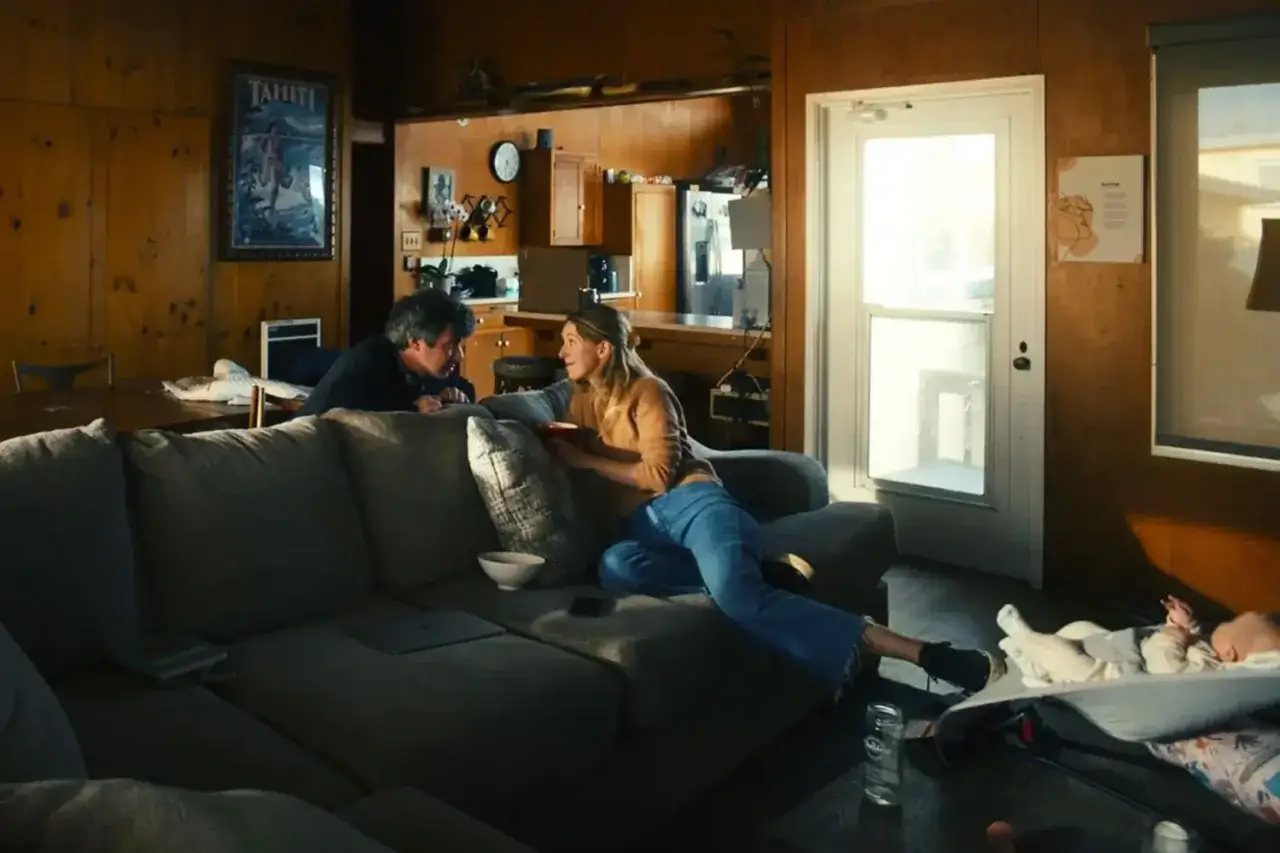
Told with a brilliant melding of Nathan’s unyielding commitment to the bit and Lance’s deft documentarian hand, You Can See Everything strikes the perfect balance used to investigate an elusive subject. Masks, perceptions, deceptions, memories, cons, moments of sincerity, questioning reality and more are all major thematic topics that find their way into every conversation. For the first time, you can see Nathan start to unravel a bit, questioning his own comedic styling and performative, deadpan awkwardness the more he injects himself into their lives. It becomes an unstoppable force meeting an immovable object, making some of these quiet, beachside interactions in You Can See Everything some of the captivating and riveting moments you’ll ever experience.
Nathan is much more restrained here, unable to exert the kind of staged control he has enjoyed in all of his projects, including Nathan For You and The Rehearsal. Oppenheim’s own sensibilities are seen working the background to craft and capture the story, using all of his prowess and skills to place and move the camera in fascinating ways. Fielder isn’t for everyone, but with the silent partnership of Oppenheim he deploys the best of Nathan’s work without ever letting him get in the way of their pursuit. Their partnership in You Can See Everything would be enough to be good, but its the subject and the way they capture it that makes it truly great.
You can feel both working out the next steps and the next path in real time, a departure from Nathan’s assured approach and Oppenheim’s openness for uncharted territory. The entire first act is relatively standard doc fare. You Can See Everything lulls you in for about 90 minutes with familiarity, giving us doses of what we know as it examines characters we know very little. Again, this would be good enough on its own, the kind of experience that would leave you feeling like you saw a really good documentary and then probably forget all about it later. But it’s what the pair do in the second half that changes everything. The more threads they pull on the more yarn continues to unravel, thrusting viewers into an indecipherable, psychological experiment that calls everything – perception, reality, truth, self-actualization, and rot of grifting American life – into question.
You Can See Everything, But Do You Believe Everything You’re Seeing?
There is nothing out there like this, no experience you can recall as you’re watching You Can See Everything unfold. Even when you think you’ve got a handle on it, Lance and Nathan’s own self-reflections and self-questioning cast doubt on every curated moment. They continually call into question their own recall of events even as they’re playing out in front of them, which in turn causes the audience to start doubting their eyes and ears. Just because you can see everything doesn’t mean you can believe everything you’re seeing. And You Can See Everything does this over and over again, getting into the core of our understanding of others or rather, who others want us to view them as and shattering it all. It’s more than mirror, it’s an ever-shifting reflection that bounces back something different each time you look.
There are moments in You Can See Everything that left me completely speechless. Just sat, leaned forward, stupefied, mouth agape, sometimes even gasping. The audible gasps and “what the fuck!” whispers in my sold out screening were constant. You simply cannot believe what you are seeing, and just when you think you’ve got a handle on things or know where it’s going to go, the film – both the makers and subject – zag hard into directions you never thought possible. It’s not here to give you all the answers. You’ll probably know less after seeing You Can See Everything, but the larger ideas about perception and how much can we really know someone beyond what they want to reveal is explored with such veracity and singularity it’s hard to wrap your head around how this exists and find anything in existence like it.
Final Thoughts
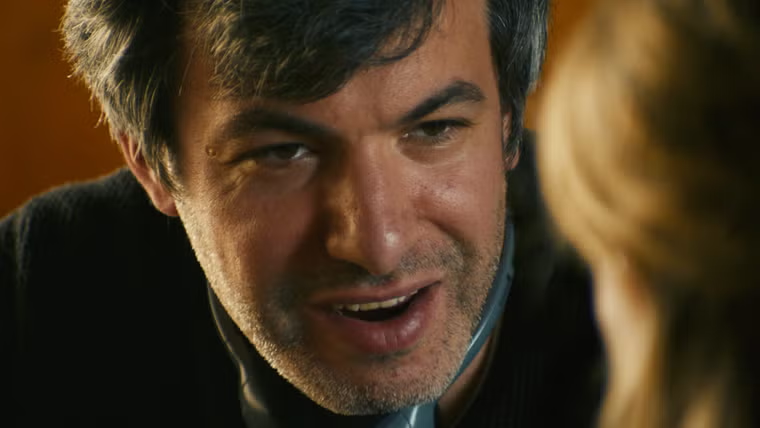
Without question, You Can See Everything is not just the movie of the year – it is the movie of our time. A defining piece of cinema that will transcend its genre confines and be studied and copied for decades. It will be a new baseline of filmmaking for all filmmakers – documentary and fiction alike – who will continually draw from and be inspired by what transpires here. And to think: no one even knew this movie existed before You Can See Everything premiered at Telluride. Which at the time of this writing is less than 45 days ago. A once-in-a-lifetime, generational holy shit idea of a film, crafted with unparalleled access and unflinching blur between director and subject, wading in the waters of the unknowable as it desperately searches for some semblance of an answer.
I truly can’t believe something You Can See Everything exists. And you need to see it all immediately. Even when these guys have no idea what they’re doing, they know exactly what they’re doing and we are all made better for watching this experiment unfold. We didn’t even talk about the electric score from Ari Balouzian, one that delivers a haunting, constant sense of unease with every strum of violin and guitar. Or David Bolen’s immaculate cinematography, or Adam Locke-Norton’s incredible editing. You Can See Everything is a masterwork of craft in just about every facet of filmmaking, unrivaled and unlike anything out there right now. What a time to be alive.
Also, not the point but You Can See Everything has a sneaky WeWork joke that absolutely sent my theater into a raucous eruption of laughter.
For more Reviews, make sure to check back to That Hollywood Show.








![Sydney Sweeney, Amanda Seyfried Go Head-to-Head in ‘The Housemaid’ [Trailer]](https://thathollywoodshow.com/wp-content/uploads/2025/09/the-housemaid-HOUSEMAID_Unit_250131_00327RC3_rgb-960x640.webp "the-housemaid-HOUSEMAID_Unit_250131_00327RC3_rgb")



Reviews