
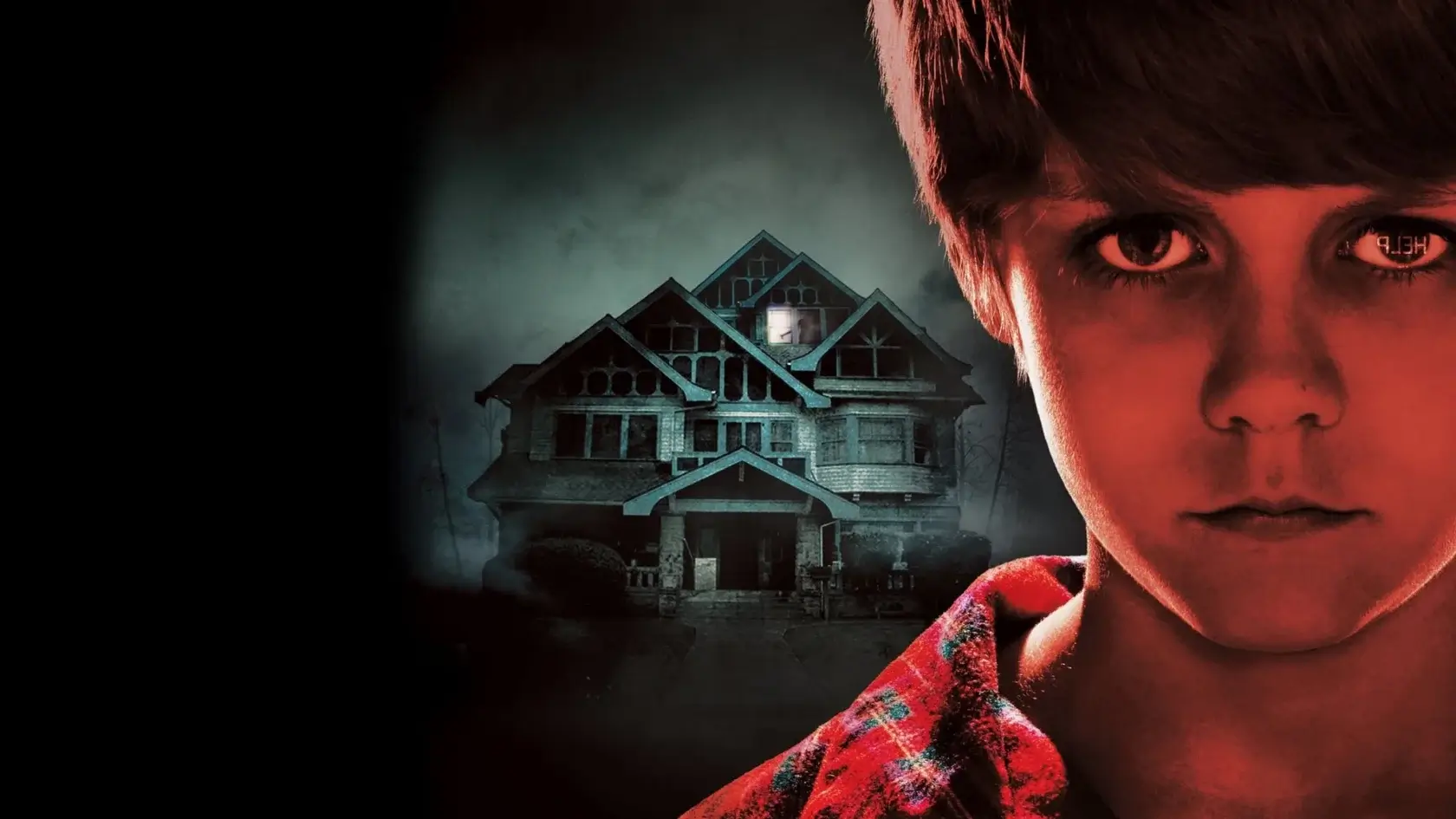
This weekend sees the release of Insidious: Out of the Further, the sixth installment of the popular Insidious franchise. Across the five films that have been released in the supernatural horror series, the IP has grossed over $744 million worldwide on a combined budget of roughly $60.5 million. There is no denying the popularity of the franchise, but no matter how lucrative or absurd some of the sequels have gotten, everything comes back to the masterclass 2010 original directed by James Wan and written by Leigh Whannell. It appears to be a typical haunted house story, but it’s soon revealed that Insidious is something very different, and in that originality comes one of the scariest horror films of the 2010s that continues to hold up as a sublime offering of the genre.
Insidious has all of the ingredients of what appears to be a by-the-numbers haunting of a family within a home. The film centers on a married couple, Josh and Renai Lambert (Patrick Wilson and Rose Byrne), whose son, Dalton (Ty Simpkins) has an encounter with a mysterious presence and falls into a coma. Following this incident, strange things begin happening in the home that suggest a haunting but it turns out that Dalton is now the vessel of demonic entities in an astral plane. The movie also stars Barbara Hershey, Leigh Whannell, Angus Sampson, Joseph Bishara, and Lin Shaye.
Not Your Typical Haunted House Story
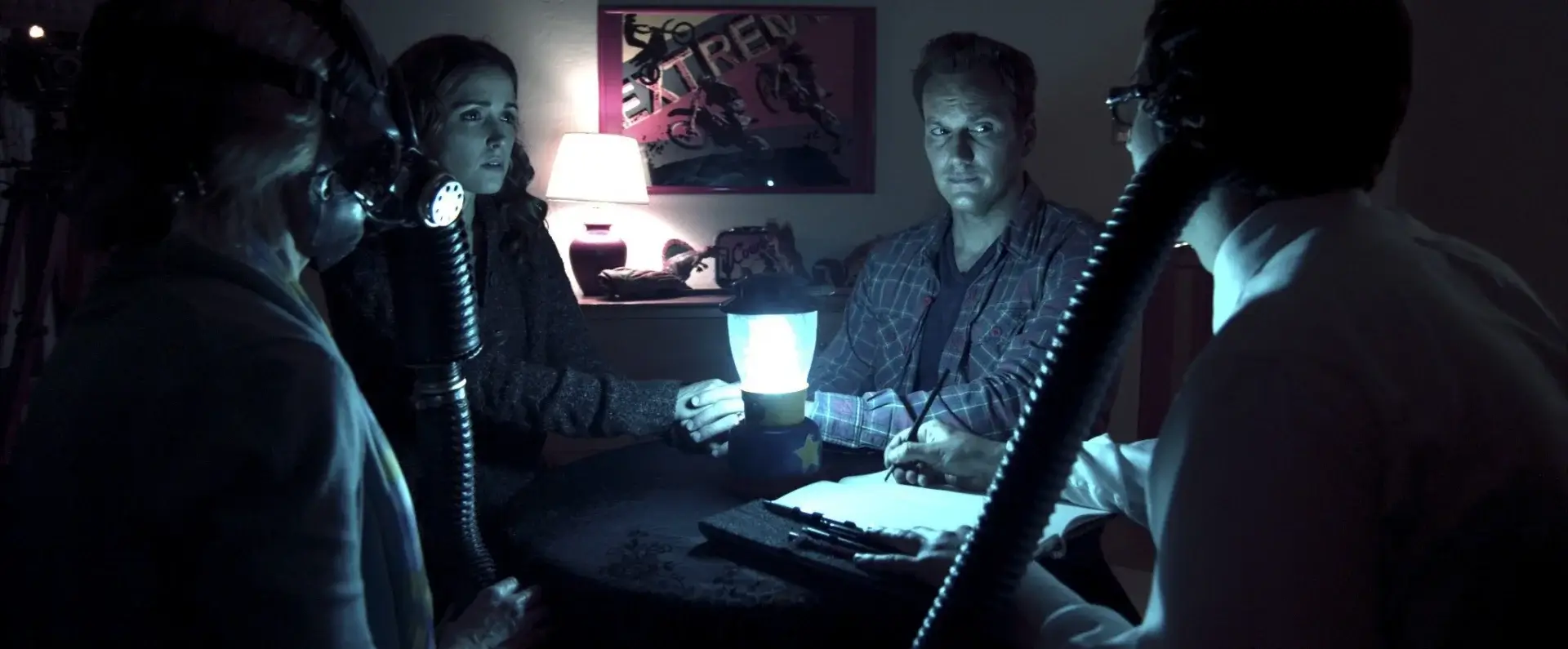
Insidious gradually asserts its brilliance by subverting expectations and avoiding typical haunted house tropes. There is more at play here than “our house is haunted, and we need to leave.” By making the audience believe the story will take this route, Insidious pulls the rug out from under you by having the haunting linked to their comatose son and not to their physical residence.
In one of the film’s best moments, the Lamberts decide to move when they notice signs of a haunting in their home. As genre fans, how many times have we questioned why a family doesn’t just move when things begin to go bump in the night? Not only does that make the characters smarter than what the genre typically offers, but it deepens the mystery of what’s going on when these strange happenings continue after they have packed up and taken up residence in a new house. What makes this frightening for the audience is that there is no real rhyme or reason to the haunting, at first, and it escalates.
There isn’t one specific event or a centralized ghost that seems to be following the Lamberts. Instead, there is a world of its own that is haunting them in some way, from a red-faced creature known as the Lipstick-Face Demon to a creepy old woman later revealed to have a disturbing backstory as a serial killer to a young boy wearing 1900s-era clothing dancing to Tiny Tim’s “Tiptoe Through Tulips”, Insidious creates a legion of legimately creepy entities that only grow more fascinating, and frightening, once the film lowers the hammer on why all of this is happening to the Lamberts. The payoff is well worth it, and it only allows Insidious to go to even more interesting places.
Horror Experienced By Characters We Care About
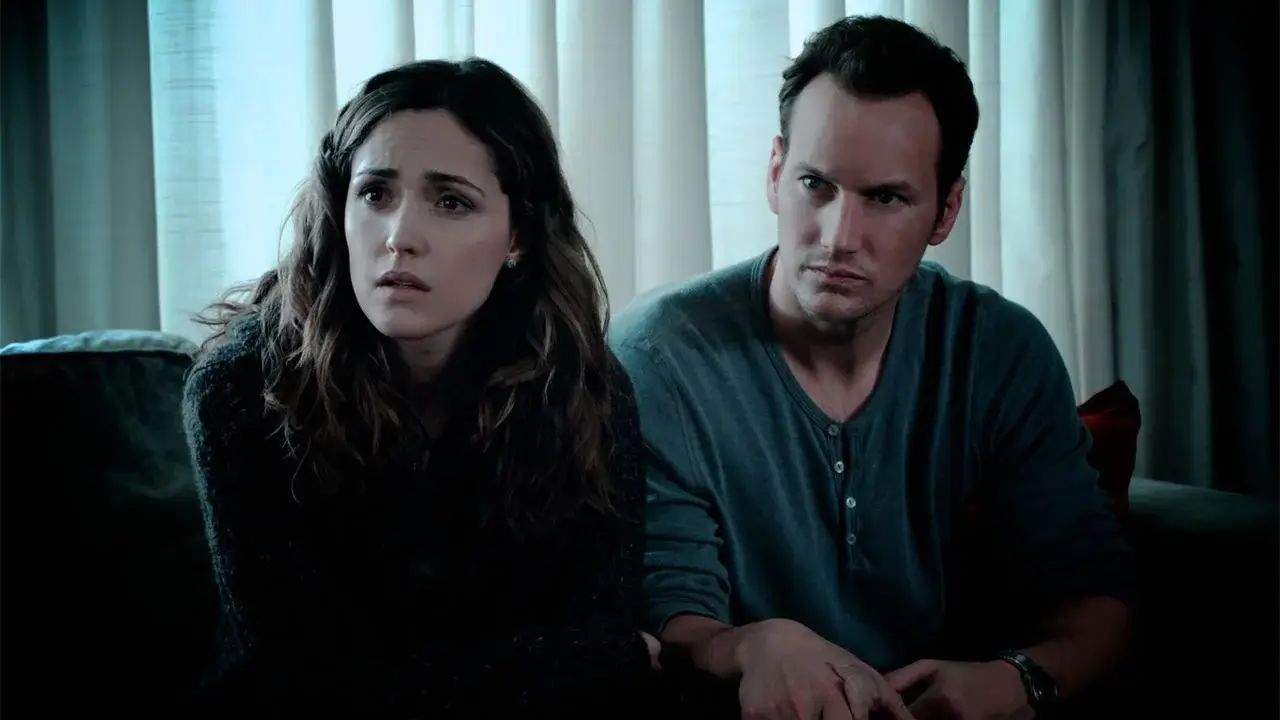
The best horror films throw characters we care about into the terror, and Insidious gives us just that with the Lamberts. They’re very easy to root for, and by connecting what’s happening to Dalton in his comatose state to Josh’s past in particular, the story is far more personal than everything happening at random. There is a strong sense of family throughout Insidious and doing whatever it takes to protect it, even if that means confronting demons that have been suppressed over time.
As the audience eventually learns, Dalton himself is inadvertently causing the hauntings by astrally projecting himself into a realm known as The Further. In The Further, spirits and demons lie in wait and fight to get out, using Dalton as a conduit, which can result in ghosts of all kinds escaping to cause all sorts of malevolence should they break through. This resonates way more than the home being the cause of the supernatural phenomena. It’s not a fight to save their son’s physical and mental plane, and that fight has far more frightening implications than a battle for a space. We’re watching a family face more than one kind of evil to save their son.
The story takes on an even deeper meaning once Josh’s connection is revealed to what’s going on with his son. Josh has to dig deep into the recesses of his own mind and confront some harsh truths in order to save his son. He is set up as a father who feels insecure and inadequate as a father and caregiver to his family, especially after Dalton falls into a coma, but those insecurities are rooted in a very real and scary place.
Josh has had to deal with his own haunting, and this has forced him to confront it. Standing just as tall is Renai, who has to be a pillar of strength for first her son and then her husband as more of the film’s secrets come to light. In the end, Insidious is really a story about family at its heart, and the horror works because the film never loses sense of that.
Insidious Is A Masterclass In Building Tension & Scares
Wan, known before Insidious for helming Saw and Dead Silence, is a clear fan of the horror genre. Saw was one kind of beast, while Dead Silence, still a rather underrated offering, is another. With Insidious, Wan proved his versatility as a genre filmmaker and that he wasn’t a one-trick pony. Wan has said that Insidious was born out of some critical reactions to Saw that focused on the gore and violence, which he believed made some people hesitant to work with him. He wanted to prove with Insidious that he could make a horror film that didn’t need to reach the level of violence seen in Saw to be scary.
Wan, with Whannell assisting by scripting some very tense moments, makes Insidious a film driven by mood and escalating tension that almost sneaks up on you. Atmosphere is built and earned without Wan having to attack the audience with endless gore and cheap shocks. The horror is teased, and the tension grows more unbearable as the film moves along. Unnecessary jump scares aren’t needed to elevate the horror but that doesn’t mean Wan can’t craft one that remains a true genre classic.
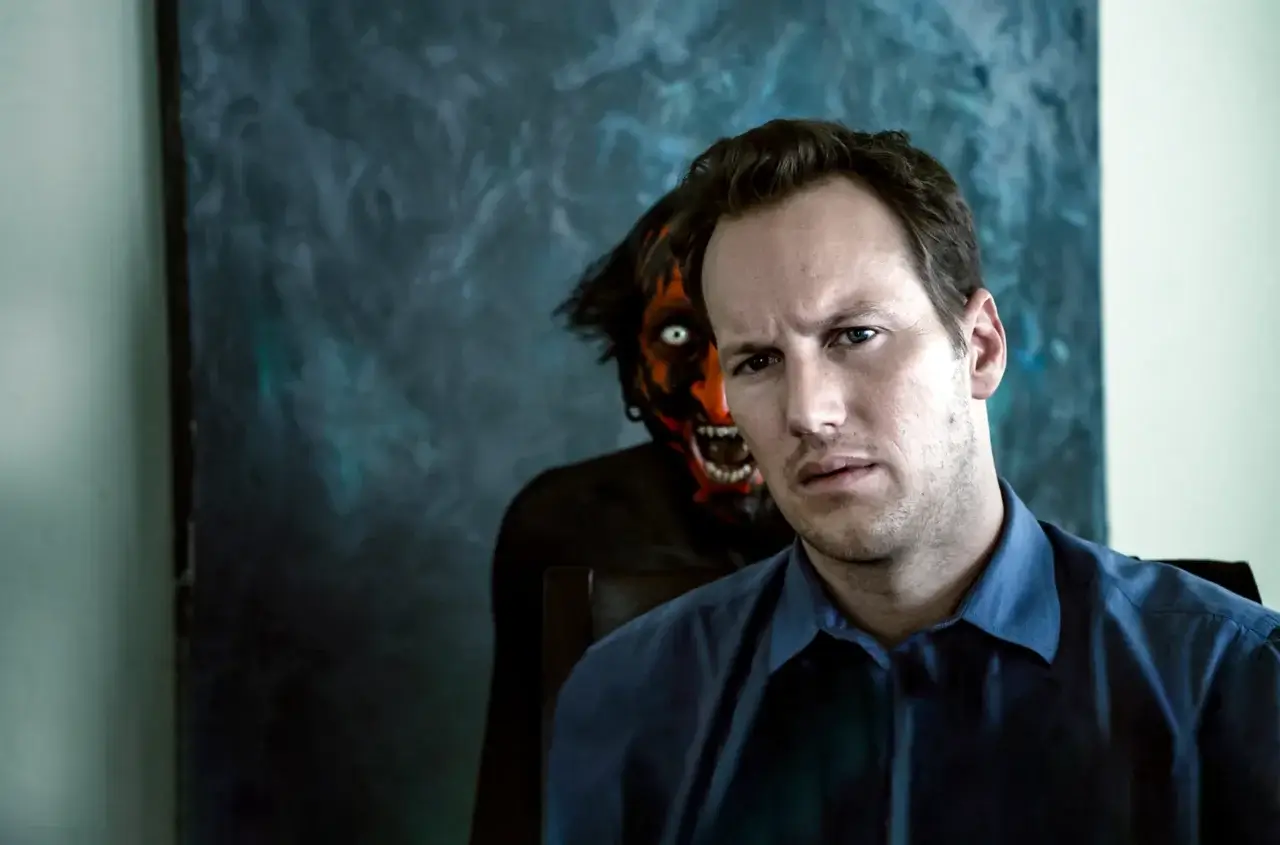
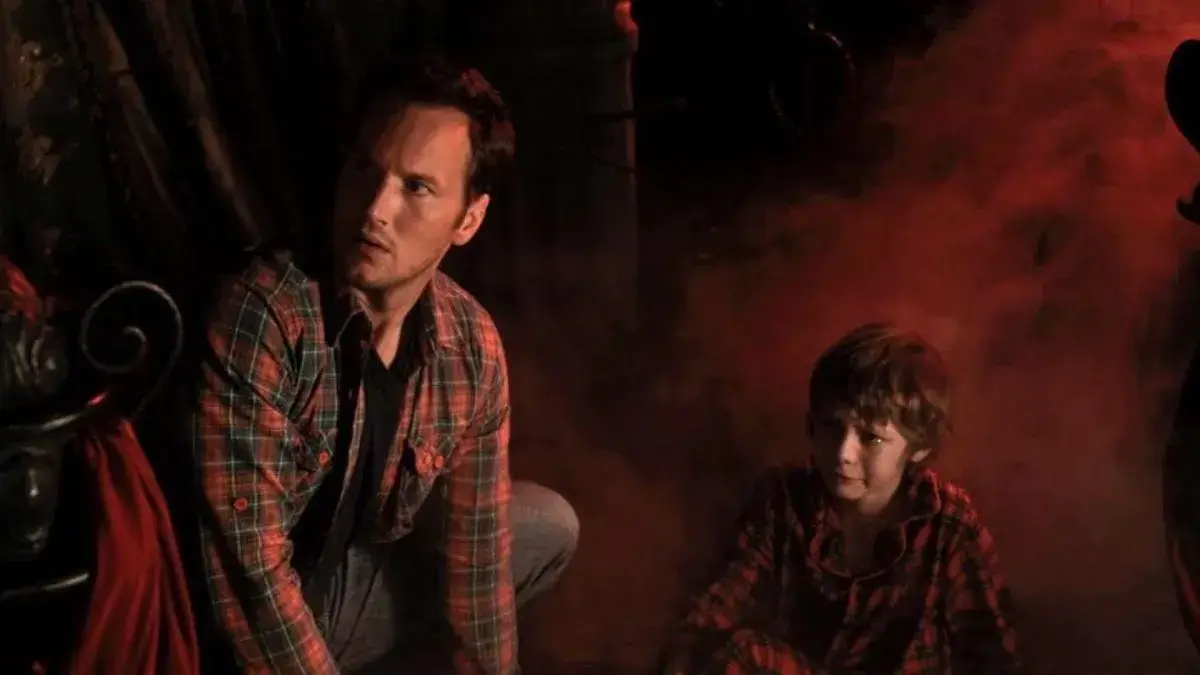
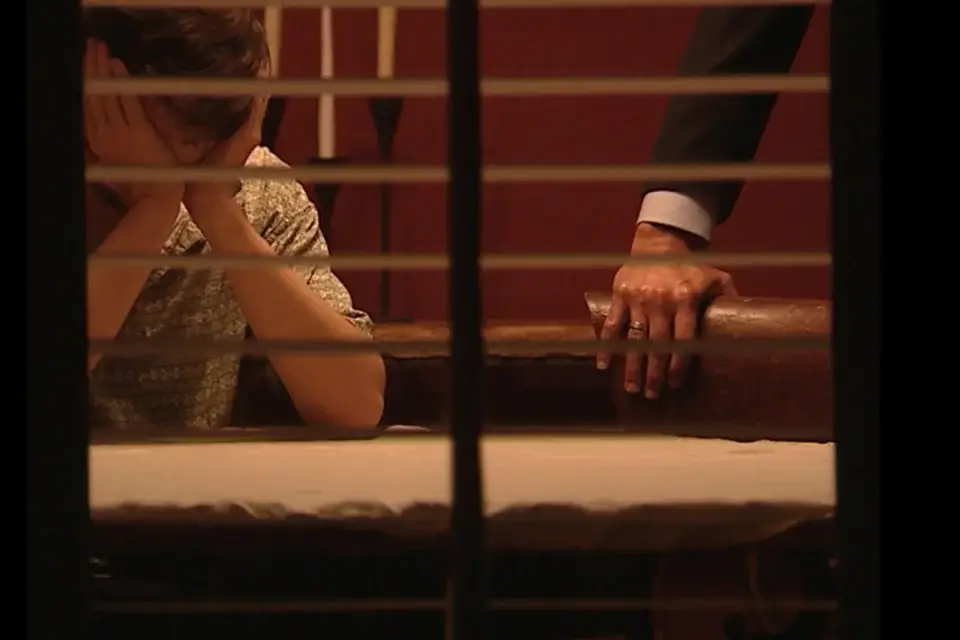
In what turns out to be the scariest moment of the film that still holds up today, Barbara Hershey’s Lorraine Lambert is describing a nightmare she had about a demon with a red face in Dalton’s bedroom. The scene is played mostly in silence other than Lorraine’s story, as the camera slowly moves in on Hershey, which is expertly cut between the camera slowly moving in on Josh and the entity being described by Lorraine in shadow in Dalton’s room.
The audience is so transfixed by Lorraine’s description that it comes as a total surprise when the Lipstick-Face Demon suddenly appears behind Josh to provide Insidious with one hell of a scary scene. It’s the kind of jump scare so expertly executed that it still manages to frighten you no matter how many times you’ve seen it. It’s also a scare that is earned because the film hasn’t been riddled with them. Wan, and by extension Whannell, know that there is great feat in the unexpected.
What’s also unexpected, in a sense, is that you get two films in one with Insidious. There is the moodier first half, and then there’s the second half once Elise (Lin Shaye, heading towards franchise royalty), Specs (Whannell), and Tucker (Angus Sampson) enter the picture as a psychic and her team of paranormal investigators. Some might argue that the second half becomes less atmospheric and a bit more typical than what came before it, but it again showcases Wan’s versatility in presenting his story. The seance gone wrong does its part to reveal more of the story, and even if things get wilder, Wan never loses hold of the tension he has built.
Insidious works because it’s technically made with such care. Wan understands the importance of space and utilizing sound design when absolutely necessary, or when to drop it out in order to build a true scare. This is extended to the film’s incredibly creepy score, composed by Joseph Bishara, who also portrays the Lipstick-Face Demon. When describing the film’s sound design and score, here is what Wan had to say about creating the mood for Insidious:
We wanted a lot of the scare sequences to play really silent. But, what I like to do with the soundtrack is set you on edge with a really loud, sort of like, atonal scratchy violin score, mixing with some really weird piano bangs, and take that away, and all of a sudden, you’re like, ‘What just happened there?'”
The Legacy Of Insidious
Insidious premiered during the Midnight Madness program at the Toronto International Film Festival on September 14, 2010, and Sony Pictures quickly saw something in the film that went beyond a single picture. The studio, a mere 12 hours after the screening, secured the U.S. distribution rights to the film and the worldwide distribution rights to any sequels. FilmDistrict, a then relatively new film company, worked with Sony to release the film theatrically on April 1, 2011.
When Insidious opened to the masses, critical reviews were solid for a horror film at the time, securing a 66 percent fresh rating on Rotten Tomatoes. Some of the negative notices towards the film were that its second half didn’t match the more taut and tight build-up of the first, but most saw the brilliance in Wan’s ability to build suspense. John Anderson of The Wall Street Journal said it best in his review of the film:
What makes a movie scary isn’t what jumps out of the closet. It’s what might jump out of the closet. The blood, gore and the noise of so many fright films miss the horrifying point: Movie watchers are far more convinced, instinctively, that what we don’t know will most assuredly hurt us…Insidious establishes that these folks can make a film that operates on an entirely different level, sans gore, or obvious gimmicks. And make flesh crawl.”
Audiences were also satisfied with Insidious. After a modest number three finish at the box office with a gross of $13.3 million, the film had better-than-usual legs for a horror film and carried that to a final domestic gross of $54 million and a global tally of $100.1 million on a very slim $1.5 million budget. From here, a franchise was born, and even though the quality of those follow-ups can certainly be debated, none of them taint the pure terror of the film that started it all. Insidious remains a cornerstone of modern-day horror years after its release.
Insidious: Out of the Further is now playing in theaters nationwide.
For more on Horror, make sure to check back to That Hollywood Show.
-

‘Halloween 4: The Return Of Michael Myers’ Is A Shining Example Of A Sequel [Fright-A-Thon]
After the release of Halloween Ends, it puts Halloween at the most entries in one of the main core slasher franchises. They’re at thirteen Halloween movies, and even if Halloween Ends is the end for Laurie Strode, it’s not the end for Michael Myers. There’s money to be made, there’s
-
‘Whalefall’: First Reactions Call It Intense, Claustrophobic, & Another Win For Austin Abrams
Austin Abrams recently fought his way through Raccoon City and its infected monsters in Zach Cregger’s Resident Evil, and now he has to fight to survive being swallowed alive by a sperm whale in Brian Duffield’s Whalefall. How much can an actor go through in just one month on the big
-
‘The Birthday Party’ Willem Dafoe Throws a Decadent Drama Filled Party in New Trailer
Willem Dafoe is throwing a birthday party, but the celebration may leave his empire in ruins. Lionsgate+ has released the official trailer for The Birthday Party, a psychological thriller set against the wealth and decadence of a private Mediterranean island. Dafoe stars as Markos Timoleon, a Greek
-

‘Transformers’ Returns With the Iconic Duo Who Brought Us the Film Franchise
The Transformers franchise has helped many fans get to know Optimus Prime and his team of Autobots as they protect earth, Sam Witwicky, and all those that cross their path from Megatron and the Decepticons. Starting in 2007, the films allowed an entirely new generation to fall in love with






![The “Digger” Complex: Satirical Deconstruction Through Nihilistic Cynicism and Movie Stars [Spoilers]](https://thathollywoodshow.com/wp-content/uploads/2026/07/diggers-1500x844-1-960x540.webp "diggers-1500×844")



Reviews