
THIS FEATURE CONTAINS SPOILERS ABOUT OBSESSION. PROCEED WITH CAUTION
Horror fans and critics alike are currently obsessed with Curry Barker’s Obsession and rightfully so. It’s one of the best horror films of the last few years and one where, as you’re watching it, you feel as if you’re witnessing a masterpiece of the genre in real time. There is a lot to love about Obsession, but the near-universal acclaim from those who have seen it has been Inde Navarrette’s all-timer performance as Nikki, the young girl who loses all of her autonomy after her childhood friend Bear (Michael Johnston) makes a wish that she’ll love him more than anything in the world because he has a longstanding crush on her.
It’s a performance that fans of the genre can eat up, but it’s also so much more than that. Navarrette is putting every facet of her emotions and physicality into a role that could easily just be a case of scenery chewing in the wrong hands. It’s a star-making turn that has garnered attention outside of the genre and given the recent success of Amy Madigan’s turn in Weapons, earning her an Academy Award, Focus Features should put its energy, despite being early in the year, into campaigning Navarrette during the awards season because she’s seriously that damn good.
The basic premise of Obsession, at first glance, would make some believe that Nikki could be a one-note horror villain, as what seems to be an innocent wish made by the protagonist goes off the rails. Bear earns a little sympathy early on because his insecurities are crippling and his loneliness is palpable. He has a crush on his childhood friend that runs deep, but can’t seem to pull the trigger on telling her.
When he uses the “One Wish Willow” to make his wish, it’s done so in a flippant manner because he doesn’t really think anything will come of it…until it does. It’s then, once the real Nikki has disappeared and this new version has taken over her body, that become abundandtly clear that she’s a victim of a man’s needs and desires and that the real story is actually about her losing her free will.
Navarrette gives layers to Nikki early on that make the audience even more empathetic to her situation once her true essence is stripped away. Sometimes characters in films like this don’t feel like real people and have to utter dialogue that feels unnatural to their age range. Due to Barker’s script and Navarrette’s innate likability, the audience is instantly drawn to Nikki and finds it completely understandable why Bear would be pining for his BFF.
Her energy is effortless, she’s sincere, creative, funny, and she genuinely cares about Bear as a person (whether or not she likes him as more than that before the wish has been a topic of debate). Navarrette doesn’t get a lot of time on screen as the real Nikki, but she makes the most of it and does just enough with the character that the audience cares as her soul is sent to the ether and her body is taken over, meant to only love Bear to the deadliest of levels.
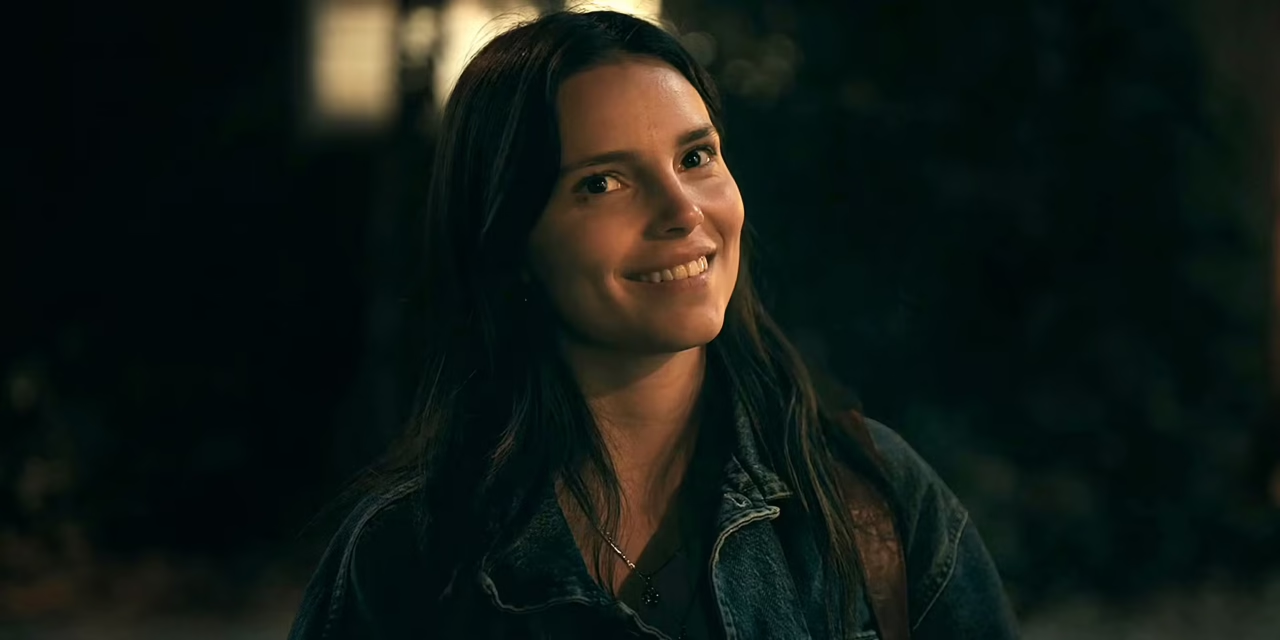
The escalation of Nikki’s devotion is given time to develop by Navarrette. It begins as a sudden infatuation, although there are early signs that something is truly off, but from the outside looking in, it just looks like excessive PDA by a girl who has found the man of her dreams. Navarrette gives just enough in these moments that some of it is darkly funny, while others are profoundly tragic or just downright frightening (when she screams immediately after kissing Bear for the first time provides an early indication of the real Nikki fighting to get out). The key to her performance is that she doesn’t go for the jugular too soon. It’s a natural build to something more that avoids the actress from merely going over the top.
As things get darker and Bear learns that his wish came true, things grow much more dire for Nikki’s soul in the process. The person walking around and declaring her almost robotic love for Bear isn’t who she is at her core. Something is possessing her body, and she no longer has control. To convey this, Navarrette not only uses impressive delivery of Barker’s lines, but she also uses her face and body to express that she’s a body that’s almost malfunctioning because Nikki’s soul is fighting for some kind of agency.
Navarrette has expressive eyes that the camera loves, and Barker doesn’t shy away from drawing focus to them to show all of her emotions, from her being enamored with Bear to showing immense sadness when she can’t command his attention to a chilling, maniacal rage that emerges when that attention is threatened. However, the best use of her eyes is when the real Nikki is trying to come up for air and reclaim her life. That melancholy is eerily real and ultimately sad because the audience knows she’s just a viewer and innocent bystander of a cursed object and a man that have taken control of her life.
It’s the lucid moments that show Navarrette at her best because she has to switch her emotions and personality on a dime on multiple occasions in a single scene. There will be times that she’ll be spouting off her love for Bear, almost like a child that lacks true adult expression, and then suddenly she’s raging to reclaim her agency, but the curse put on her is too strong for her to get it back. There is one scene after Bear and Nikki first have sex, where she’s standing off in a corner shrouded in darkness, and she’s hard to see until her expressive face is visible just enough to show her combination of fear and sadness as she accuses Bear of not loving her as much as she loves him.
The image feels like it’s the entity and Nikki fighting for control. The entity is expressing her sadness about Bear’s lack of love compared to hers, but it also looks like Nikki’s fear and disappointment that she can see, even briefly, that a friend she cares about has decided to take advantage of her in the worst kind of way. If that isn’t enough, Navarrette even finds the dark humor in the scene as she tells Bear she likes to watch him sleep and urges him to go back to bed.
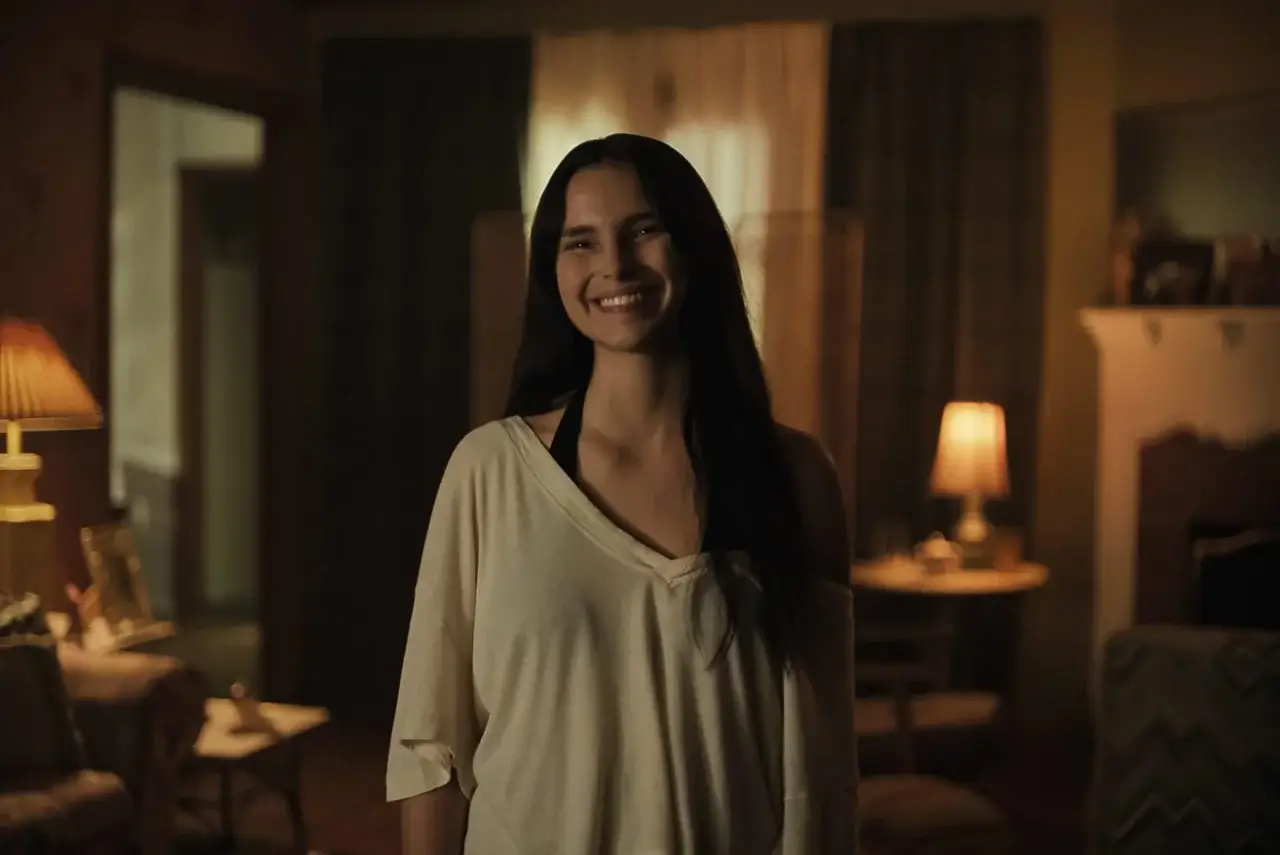
For a role that sees a character losing so much of her control, it’s amazing how much Navarrette has over her performance. It’s a skilled portrayal that is so powerful it can’t be ignored because of the confines of its genre. There is no frothing at the mouth or bits of intensity that add up to nothing. Everything she does is intentional, as she never loses sight of the narrative that Nikki is battling to regain control of her body while also performing as the cursed being, now a vessel for Bear’s selfishness and desires.
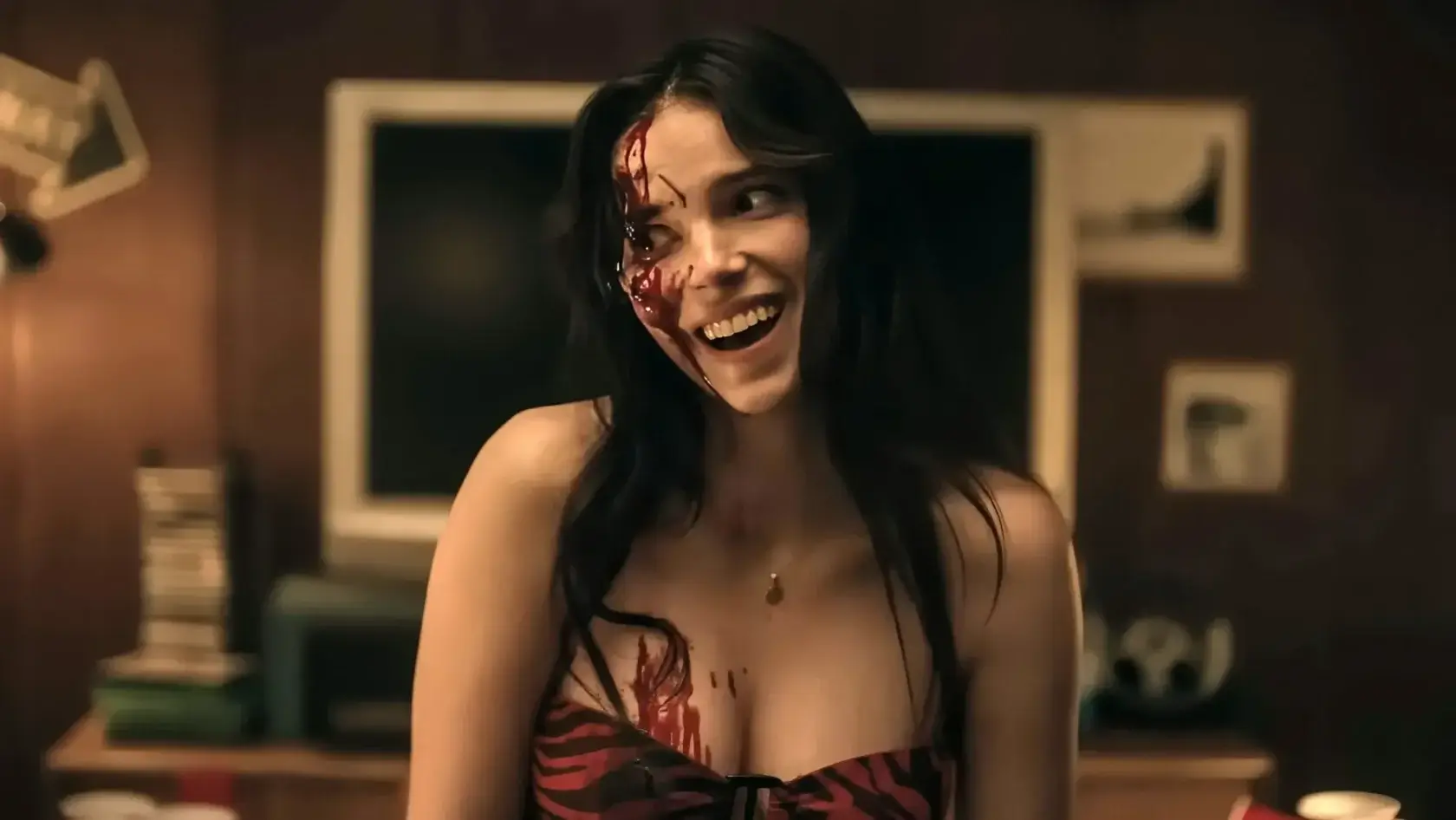
The audience never loses sympathy for Nikki. Even as she incestually recites Hansel & Gretel before violently stabbing herself in the face with a broken bottle, or as she resorts to murderous impulses in the name of holding on to Bear’s undivided attention. The audience knows this isn’t her, and that credit goes to Navarrette’s effortless performance because she always allows for moments that express Nikki’s agency while establishing the key differences between herself and the entity controlling her.
It’s no secret that the horror genre hasn’t always garnered much love during awards season. There are exceptions with films like The Exorcist, The Silence of the Lambs, Get Out, and most recently, Sinners and Weapons, but given the long history of the head honcho of awards season, The Academy Awards, there have been more misses for at least a nomination for the golden statue that still sting. From Toni Collette in Hereditary to Lupita Nyong’o in Us, it feels like the Academy still doesn’t give the horror genre the credit that it deserves, as these performers give their blood, sweat, and tears in some of the best performances of the year. A film’s genre shouldn’t become its scarlet letter in terms of awarding a performance. A stellar turn is a stellar turn, no matter what genre the film comes from.
That being said, we did just see Amy Madigan ride awards season with her supporting turn in Weapons, a performance that received similar attention to Navarrette’s role in Obsession when it opened in August 2025. One could argue that Navarrette’s instant acclaim is even stronger than what Madigan received, but basing it purely on critics and moviegoers equally taking notice, Madigan was able to take those good reviews for her performance as Aunt Gladys and become a viable presence during awards season, which ultimately led to her snagging the Best Supporting Actress Academy Award.

Also working in her favor is that Warner Bros. campaigned for her once they saw potential was there for her to earn a nomination, and she became the sole representative of Weapons that led to Oscar gold. The same is also true of Sinners, with a big win for Best Original Screenplay for Ryan Coogler and Michael B. Jordan’s turn as twins in the vampire flick, earning him a Best Actor Oscar. Once again, Warner Bros. campaigned hard for that film as well, and that’s what is key here. It’s early enough in the year that Navarrette’s performance could be forgotten in the months ahead if Focus Features allows that to happen. Given what the indie horror film has already done at the box office and where it’s headed, some of that profit should go into giving her the proper push through awards season.
Sure, everything isn’t about awards attention, and perhaps the real win here is that the Superman & Lois star is now on the radar of many as a movie star and actress to watch. That being said, it’s a performance that deserves its flowers and shouldn’t be ignored. What Navarrette does in Obsession is so very skilled and nuanced. Not only is it a horror film performance to remember, but it transcends genres in its execution, which would be deserving of the awards attention given to most performances in prestige films.
Obsession is now playing in theaters nationwide courtesy of Focus Features.
For more on Horror, make sure to check back to That Hollywood Show.











Reviews