
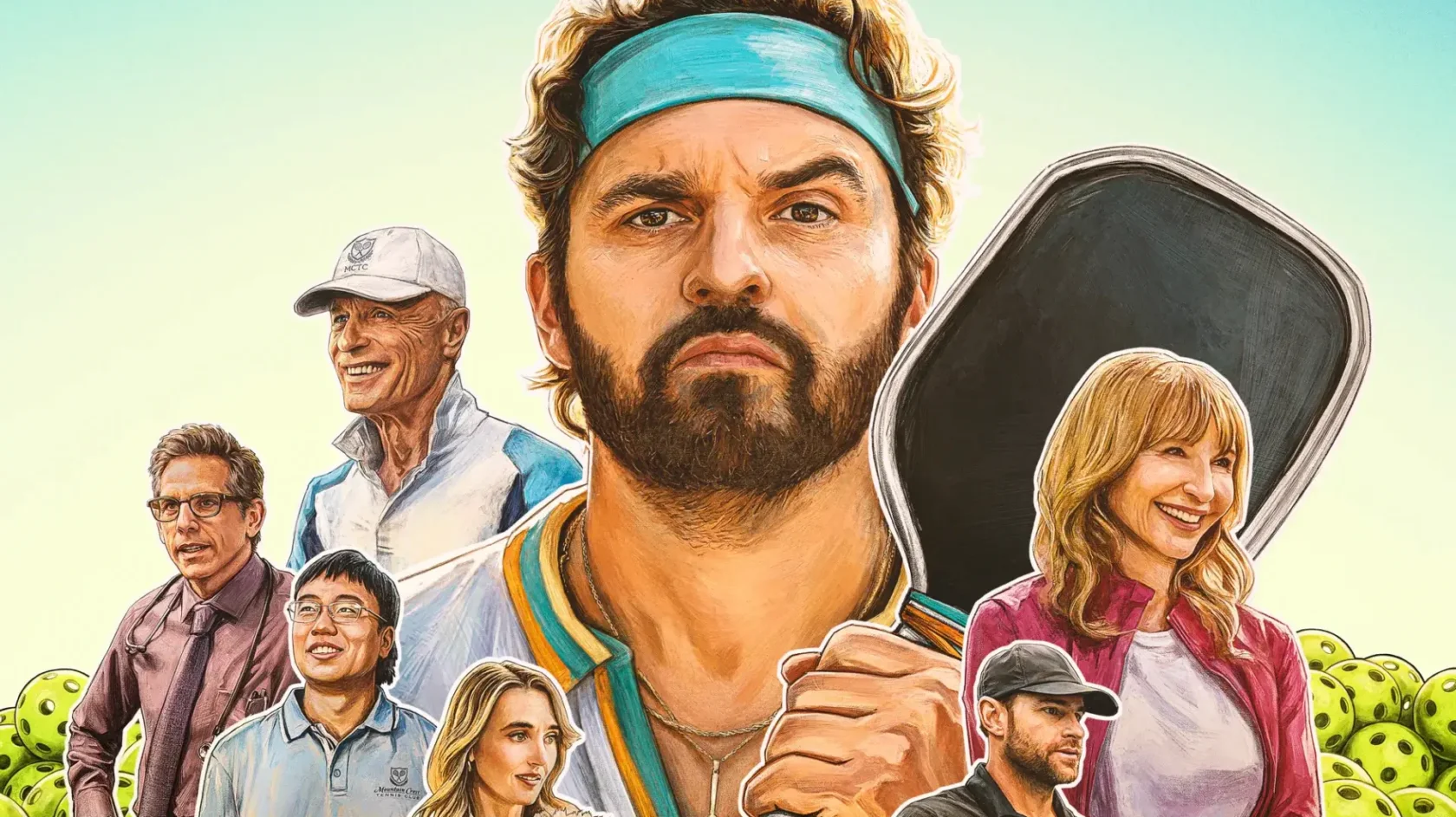
Movies about sports have always had a special place in the hearts of movie fans around the world. Whether the audience is familiar with the sport or not, they can still find inspiration in the plight of the athlete or team at the center of the story. And we’re not even just talking about the more mainstream sports like baseball, hockey, or American football. Some of the most beloved movies of all time follow a hockey player who learns how to play golf to save his grandmother’s house, a Jamaican bobsled team, and a former pro wrestling champion who may not kick out again after his fight with real life. But as unorthodox as some of those premises are, is the world of cinema ready for pickleball? The filmmakers behind The Dink seem to think so.
The new Apple TV comedy stars Jake Johnson of New Girl and Jurassic World as Dusty Boyd, a washed-up former tennis prodigy who is desperately seeking his father’s approval. He thinks he can do that by helping his dad eradicate pickleball from their country club. But when Dusty ends up reaggravating an old tennis injury, he turns to pickleball to rehab his body and his mind, which has been plagued by his past failures on the court.
While promoting the film, director Josh Greenbaum and writer Sean Clements spoke to That Hollywood Show about their pickleball picture. The duo discuss the various films that inspired the vibes they were going for in this film, how things came together at various stages of production, and where they hope to sit in the landscape of modern comedy. Plus, while Clements dives into his connection to pickleball stemming from his past experience with tennis, Greenbaum shares some lessons that he took from The Dink to his future sets, including the highly anticipated Spaceballs: The New One.
The Comedy of Pickleball
“Pickleball: Tennis, but easier” seems to be a popular perception of the fastest-growing sport in America. At the beginning of the film, Dusty Boyd would definitely agree. But as someone who has experience in both sports, what was the appeal of pickleball for you from both an athletic and comedic standpoint?
Clements: Pickleball is definitely easier to start out playing. The amount of time that you need to spend playing tennis to become competent is much longer than pickleball. [I was] someone who grew up playing tennis [and,] at one point, was very serious about it. Then later. [I] was very disappointed in myself and what I couldn’t do anymore… I would often think, “God, I used to be good at this. I used to be able to hit that shot.” And when I played pickleball, I didn’t have that baggage of feeling like I had gotten worse at it because it was a new sport for me. So every time I went out to play, I felt like I got a little bit better. And because of that, there was like less self-loathing and more fun. And it was a more purely enjoyable experience.
Comedically, the game is sort of silly and silly-looking. The name is kind of dumb. The ball is a bright yellow wiffle ball. It clicks and clacks and it’s plasticky. The court is small. [And] the variety of people who come to play it [come] from all different age groups and backgrounds… Tennis has a perception or reputation as being kind of stuffy and pickleball just feels a little bit more loosey goosey. More people who wouldn’t normally meet are colliding with one another. And all those things said about how silly it is, it still is something that, because it’s competitive, people can take very, very seriously. So whenever someone is taking something that feels from the outside like it should be low stakes and they’re treating it high stakes, I think there is an opportunity for that to feel funny.
Vibe Check
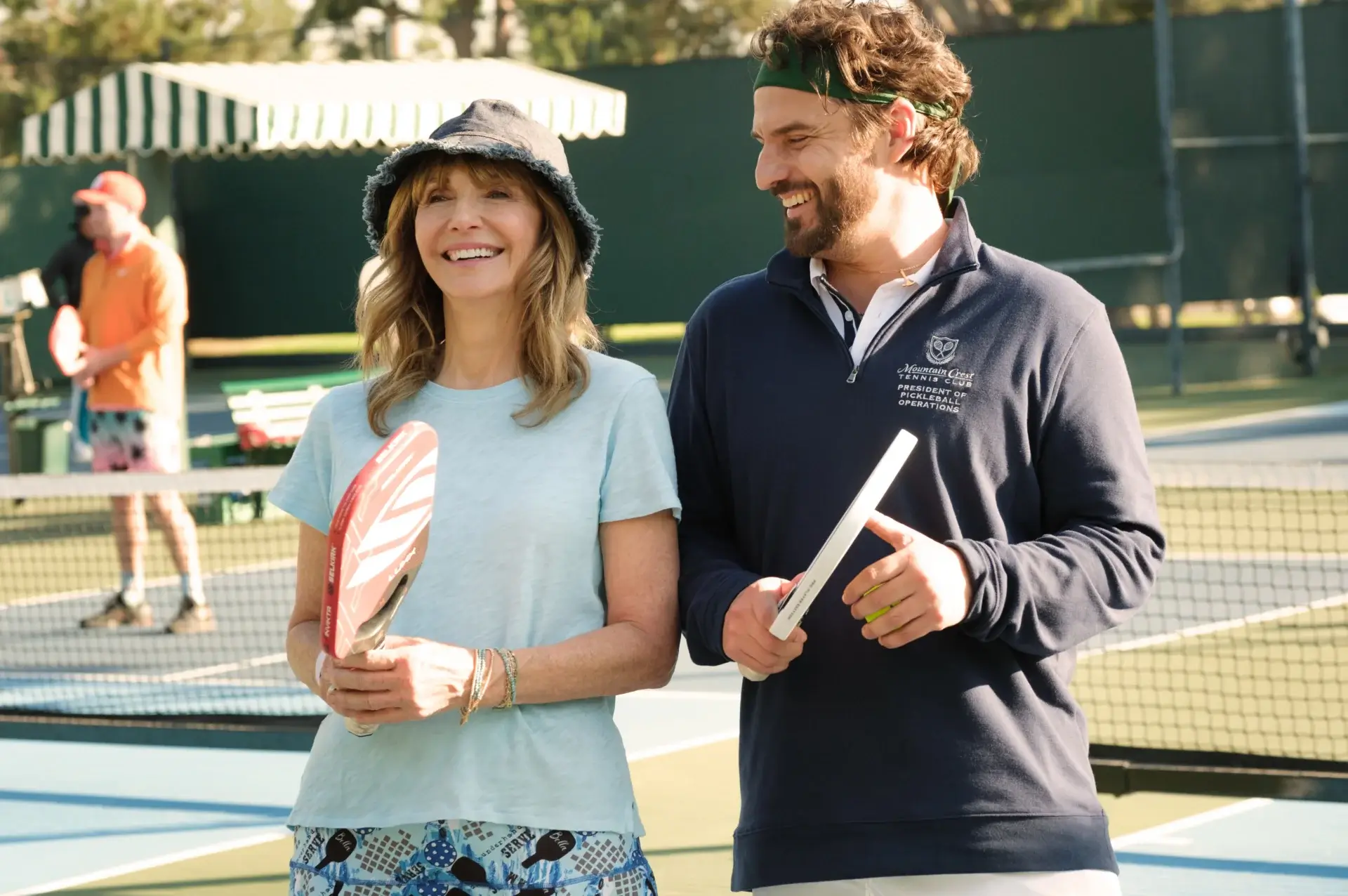
The movie-going audience loves an underdog sports story. Sure, there’s Rudy and Rocky. But Happy Gilmore, The Mighty Ducks, and Dodgeball are some of the all-time greats. The Dink shares a lot of DNA with those movies, but what were some unexpected sources of inspiration for you while crafting this story?
Clements: Those movies are definitely inspirational.
Greenbaum: That’s a great question and a great list of films. I hope to be included in that list someday with The Dink.
Clements: I talked a lot with Josh about other movies that could be good comps for us. Best in Show came up as a movie where it’s a subculture that maybe you don’t know that much about. But the people who are in it, they really care about it. And it teaches you some of the rules of the competition early on, but always in a way that feels fun and entertaining. You end up caring about the outcome because these people care.
Greenbaum: Another touchstone for me was Little Miss Sunshine in a weird way. [It] may seem like a bit of a reach when you watch the film, but I think it is at its core. It has that underdog kind of vibe and ensemble. There’s a lot of heart and I think it’s a story about people trying to reclaim their dignity and their identity in very unexpected ways in places they wouldn’t have thought.
Clements: You mentioned Happy Gilmore, but we also talked about The Wedding Singer as a movie that was really sweet and had a lot of heart. It had big comedy moments, but the main character is someone who is the king of this small community. Then he has the rug pulled out from under him. He has to recalibrate and find a new path a little bit. And so that was a touchstone for us because that’s where Dusty is. He feels like he knows exactly who he is, but he is hanging on to this identity and this idea that aren’t really there to support him anymore. Through meeting the new people that he meets in pickleball, he kind of finds a way to redefine himself. So that was a movie where we would talk about how there’s some big comedy that happens, but it’s usually some of the side characters and the people in the margins who are doing the really crazy stuff. A lot of the comedy from the main character is more grounded and emotionally resonant.
Greenbaum: [With] Ben Stiller as a producer of the film, as well as an actor in it as he plays Dr. Stone, Dodgeball was an inspiration in a lot of ways. I think you’ve got kind of ridiculous characters who take the world very, very seriously… [But] I think The Dink is maybe a little bit closer to The Wedding Singer energy than maybe to Dodgeball. It’s one of my favorite films, but it’s in a very heightened reality. As is Happy Gilmore. We’re not really in the real world. There’s a coach who throws wrenches at people to train them, which I absolutely love. But it’s a different kind of world. Whereas I think The Wedding Singer exists in a little bit more of that grounded space. It’s still Adam Sandler. A lot of fun, ridiculous, funny characters, great dialogue, but the world you’re in is a little more rooted in reality and emotional truth. And I think that’s sort of what I was going for with Dusty. There are a lot of ridiculous characters. PJ, his sidekick played by Aaron Chen, is one of them. Ed Harris feels like the slightly heightened version of the overbearing dad who doesn’t really respect or show enough love to his son. But it’s all still rooted in reality. The Wedding Singer is one that reminds me of the tone that we were aiming for.
When Tennis & Pickleball Collide
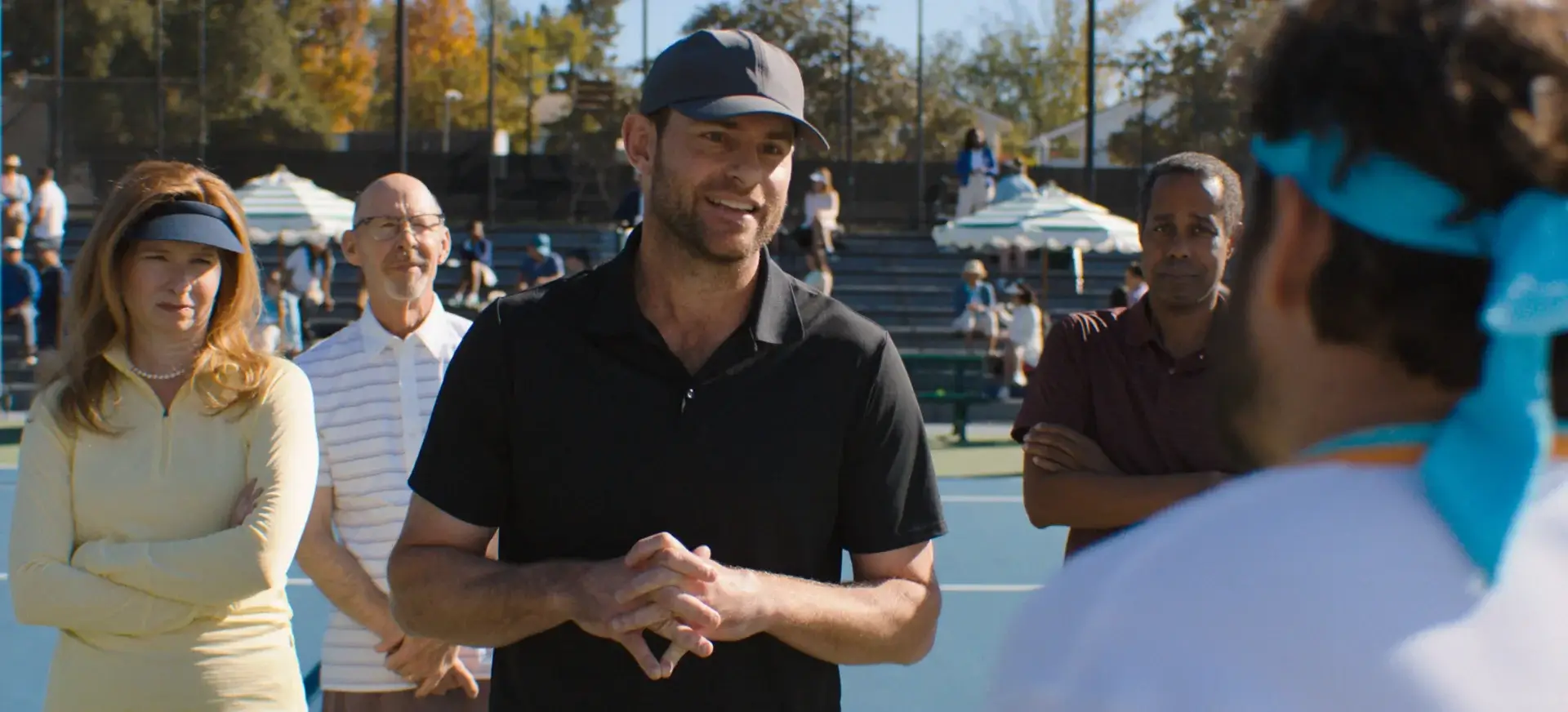
Real-life tennis greats John McEnroe and Andy Roddick appear in the film. How early in the process did they get involved? Did you have them in mind when you were first conceiving the story?
Clements: When I wrote the first version of the script, I had Dusty telling a story about getting beaten badly by Andy Roddick when he was a kid and it being a turning point in his life. And then I invented a different character to be the rival through the movie because never in my mind did I think that we would be able to get Andy Roddick. It didn’t even occur to me. When Ben Stiller got involved and read the script, he said, “Well, why do you invent this fake guy? Why don’t you just have it be Andy Roddick?” I said I didn’t think you could and he was like, “Well, I think he could do it.” {…} It was not something that I would have ever dreamed of, but I was so, so happy that he got on board. I was a huge tennis fan growing up. He and John McEnroe, these are some of my idols. Getting him was great. I think he gives a very good performance in the movie. He’s funny. He doesn’t overdo it, which, when someone hasn’t acted before and they’re in a comedy, sometimes they think they have to do so much. But I feel like he played it just right.
And then with McEnroe, that came about because Josh said you need to have someone helping us understand some of the mechanics of this match that they’re watching. You need someone to be commentating. The best commentator in the world at racquet sports is John McEnroe, so I’ll just say it’s that and we’ll cross our fingers. He has acted. He’s a really funny guy and a good performer, so it was very cool.
And I did walk by at one point on set and I saw the two of them. One of them said, “Are you going to be at the Australian Open this year?” “Oh yeah, I’m going to be there.” I just thought this is so surreal to just have these two legends chopping it up on a movie that I wrote.
The Enduring Nature of Comedy
Josh, this isn’t your first time working with Jake Johnson. You also directed a few episodes of New Girl, along with a number of other awesome sitcoms like Fresh Off The Boat. But there definitely aren’t as many sitcoms as there used to be. What lessons did you take away from working on sitcoms and how do you feel about the state of sitcoms today?
Greenbaum: Yeah, I got to work with Jake on several [episodes of] New Girl. He and I then actually sold a pilot to Apple many years ago that unfortunately never made it. But we had a great time making it. And I’ve cast him in a couple other projects of mine.
I think New Girl was unique and I wish we had more of them. You think about New Girl and Friends and Seinfeld. Those types of shows. Some of them still exist, but I think a lot of them have moved into [Ted Lasso and Shrinking territory]. I’m plugging Apple shows [since] we’re an Apple film, but I think Apple does have the newly modernized, slightly elevated [sitcom]. They add an element since they’re not a network broadcaster. They add a little bit more adult themes or swearing or reality in that way. But I think people will always be hungry to spend time with characters they love. They’ll always be around. They just might show up in different forms [in] the same way comedy dipped out for a little while in the feature film space. But if you paid enough attention, you saw it was actually in a lot of the superhero action stuff. Guardians of the Galaxy. There was a lot of comedy being introduced into some of those films that was sneaking its way into a new format.
I’m a big believer that we have certain needs that need to be met as human beings. People thought maybe live music was going to be dead after COVID, right? No, no, we’re always going to want to gather and listen to artists we love perform in a communal setting. We’ve been doing that since we were cavemen. And I think the format of a quote-unquote sitcom where you spend a half an hour with characters you love every week and they feel like family, I don’t think that’ll ever go away. It just may keep morphing into different formats and show up in different outlets.
You Do You
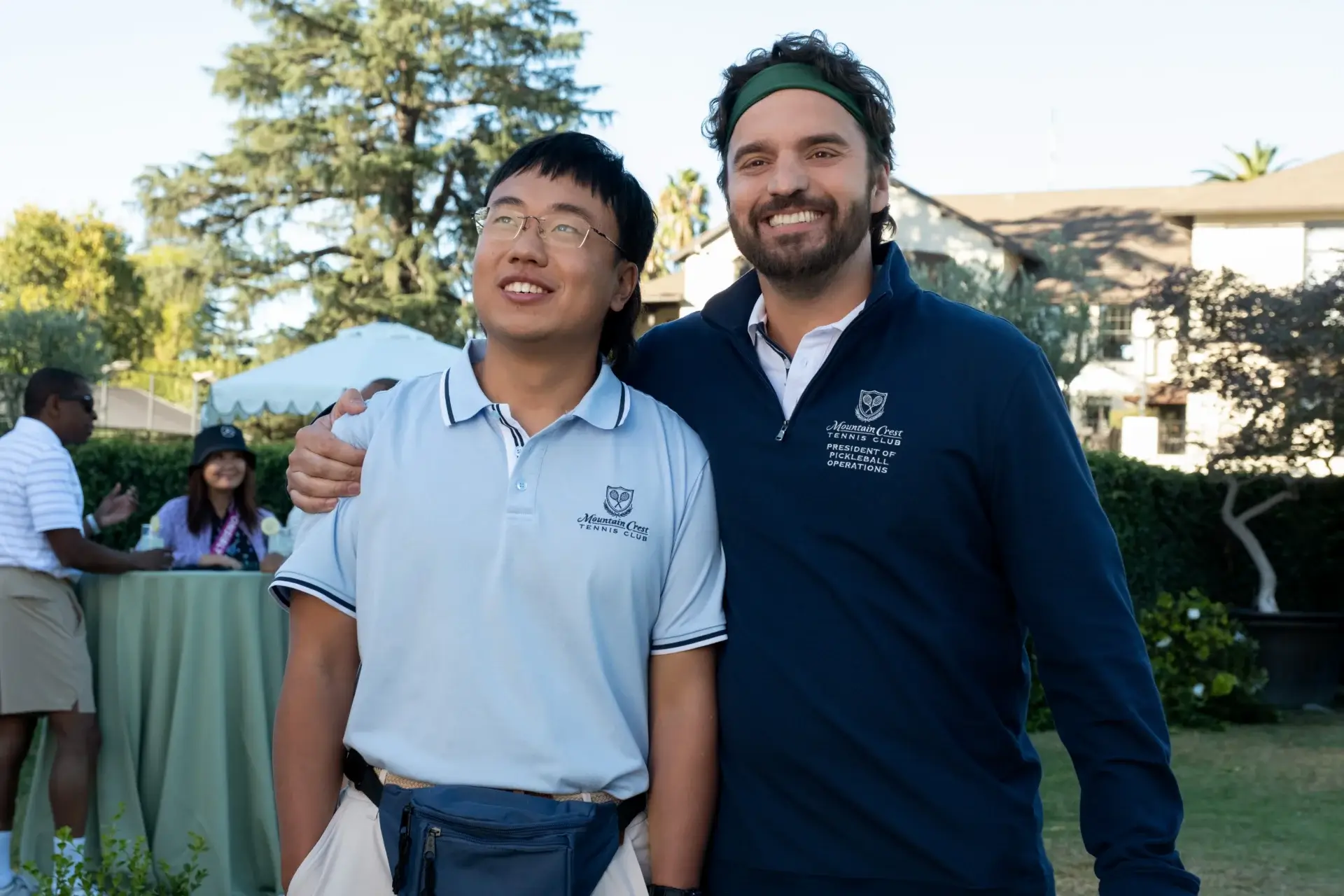
Historically, comedies have punched down on things outside of or newly added to the mainstream. But in the same way that Community, The Guild, and Mythic Quest spotlight beloved niche interests, The Dink uplifts pickleball and country music. Sean, what are some other special interests that you hope get a similar shine in the future?
Clements: Well, I’ve gotten back into Pokémon Go. My son started really enjoying it. I have a seven-year-old, and he loves Pokémon. He was bringing the cards home from school and reading the books and I said I actually used to play one of these games. I think I missed the initial wave of Nintendo games and stuff, but I had done the app and I put it back on my phone and I was showing him my collection. And then he wanted to play too. It’s become a bonding experience for us. I think that would be my next pick after we get pickleball and country music approved mass approval by the mainstream. As popular as it is, I think we could still remove some of the stigma from Pokémon.
From Pickleballs to Spaceballs
Josh, after The Dink, you went on to work on Spaceballs: The New One, the sequel to the iconic Mel Brooks film. Were there any lessons you learned from The Dink that you carried over to Spaceballs? And maybe lessons from both that you may carry with you moving forward?
Greenbaum: (laughs) I didn’t bring any pickleballs into Spaceballs, if that’s your question. There should have been a pickleball in space.
I came off of that set of The Dink, which we shot here in LA. I was so glad we got to film right here where I live and where so many incredible craftspeople and crew work. We had such a great team here. And then when I had to go make Spaceballs: The New One, we had to go to Sydney, Australia for that. You kind of feel like, “Oh, is there a different way of doing things?” Different country, different crews. What was really refreshing was, no, the lessons you’ve learned on The Dink shooting here in LA, they all apply. It’s that same approach.
I’m very inclusive of “best idea wins.” If somebody’s got a good idea, I don’t care where it comes from. My PA, my assistant, somebody else. I take no ego into it. And I think that was a great reminder because that’s how I ran The Dink and then brought that into Spaceballs. Same thing. I had a jar [where] people could submit anonymously because someone shy came up to me and said, “What if I have a good idea, but I’m too scared to speak up in front of everyone?” And I was like, “Well, we’ll come up with another way for you to pitch ideas.” So we had a good idea jar [that] I took from The Dink into Spaceballs.
Who I Am Vs Who I’ve Been
Potential can be hugely motivating, but it can also be soul-crushing, especially for exceptional young people. We see Dusty struggle with not living up to his potential as a young, gifted tennis player in the film. What advice would you give people who are similarly struggling with that in their lives?
Clements: Oh, well, good question! Anytime somebody is labeled as a prodigy or [when] part of what is impressive about you is how young you are to be doing the thing that you’re doing, there’s an expiration date on that. If someone is defining themselves [as being a] whiz kid or gifted in some way, I think that can be very challenging. There could be real growing pains once there no longer is a label that can apply. And I would say you have to take a step back and really evaluate getting your self-esteem from some internal source. Find something that you really love because you love to do it and you enjoy it. And [you say] this is what I am, rather than this is what someone told me I was a long time ago and I’m struggling to still fit that mold.
Greenbaum: It’s a universal theme, right? Sometimes you just gotta let go of what that version of yourself was, who you thought you were going to be, and carve a new path.
The Dink starring Jake Johnson, Mary Steenburgen, Aaron Chen, Ed Harris, and Andy Roddick is now streaming on Apple TV.


![‘Black Torch’ Stars AJ Beckles & Ryan Colt Levy Talk Shonen Action & Cats [THS Interview]](https://thathollywoodshow.com/wp-content/uploads/2026/09/project_20260921_1900515-01-1-960x540.webp "project_20260921_1900515-01 (1)")

![‘Scrambled Up’: Michael Yo On Mixing Up The Game Show Formula [THS Interview]](https://thathollywoodshow.com/wp-content/uploads/2026/09/project_20260921_1855475-01-960x540.webp "project_20260921_1855475-01")


Reviews