
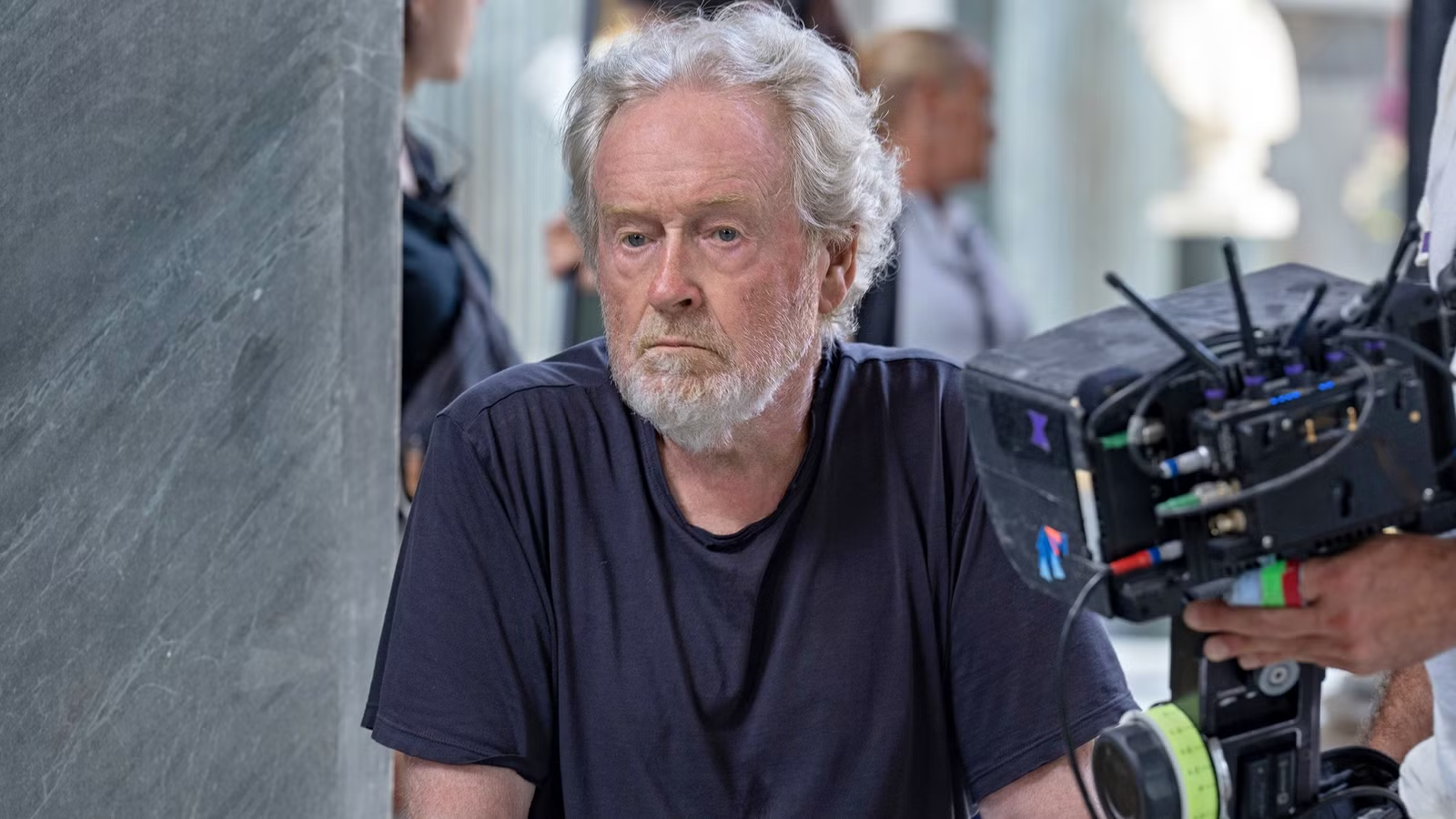
Director Ridley Scott returns to the big screen this weekend with the post-apocalyptic science fiction film The Dog Stars, and this release brings up the discussion of Scott’s career that typically arises whenever the prolific director debuts a new film. Scott is 88 and has been cranking out films for nearly half a century, beginning with his 1977 directorial debut, The Duellists. In that time, he has made some classics (Alien, Blade Runner, and Gladiator, to name a few), but with a filmography as vast as his, not everything is going to be a winner. However, instead of making a list of his films that didn’t exactly work, it felt more interesting to take a look at his movies that deserved more, either critically or at the box office (or sometimes both). One certain thing is that, no matter what anyone tries to say, Scott is one of the industry’s best directors who has given us his fair share of gems, and now it’s time to check out some of his more underrated efforts.
Honorable Mention: All the Money in the World (2017)

Scott has showcased his fair share of resilience throughout his career, but perhaps the most recent case of this came with the release of the biographical crime thriller All the Money in the World. The director had to deal with a full-on actor swap two months before its premiere due to the initial performer facing serious sexual misconduct allegations but given all of that pressure, All the Money int he World turned out to be a compelling piece of work that deserved a bit more in the end. Written by David Scarpa, All the Money in the World is based on John Pearson’s 1995 book Painfully Rich: The Outrageous Fortunes and Misfortunes of the Heirs of J. Paul Getty, and it chronicles the event surrounding the 1973 kidnapping of John Paul Getty III and the refusal of his grandfather, J. Paul Getty, who was a multi-billionaire oil tycoon, to cooperate with the kidnappers’ demands. All the Money in the World is likely known more for its behind-the-scenes lore than its merits as a film itself. Kevin Spacey was cast as J. Paul Getty, and principal photography wrapped on the project in August of 2017, with a planned Dec. 8 release. However, two months before that release, several sexual misconduct allegations were leveled against Spacey, forcing Scott and TriStar Pictures to pivot quickly if they wanted their film to see the light of day without public scrutiny. The late Christopher Plummer was cast by November and 22 scenes were reshot within eight days, which also included other lead performances from Mark Wahlberg and Michelle Williams (the fact that he was paid $1.5 million for those reshoots while Williams only received $1,000 is a story for another time). All of this was done a month before the film’s new Christmas Day release date, with Scott delivering a film that still delivered on a fascinating true story that managed to keep the stakes high while also mixing in a dash of dark humor as it showed how the rich sometimes lack basic empathy for those who are less fortunate. Above all else, Scott pulls stellar performances from his cast, particularly Williams as Gail Harrris, the mother fighting to save her son with very little resources, and Plummer, who stepped in late in the game to showcase a performance of shrewd brilliance. It’s a villanous turn in the sense that J. Paul Getty had all the means to end this but his refusal due to his wealthy offers a fasicnating look at the disconnect between the wealthy and basic human emotions. For his eight days worth of work, Plummer received an Academy Award nomination for Best Supporting Actor while the film also garnered solid reviews (79 percent on Rotten Tomatoes). Box office wise, All the Money in the World was a moderate performer, grossing $25.1 million domestically and $57 million worldwide on a $50 million budget, so it didn’t exactly turn a profit when all factors are weighed in but it’s a film that certainly deserves more than the attention it got beyond the eight-day-miracle recast. It’s a solid adult crime thriller and Scott showcases how proficient he is across many genres.
5. Body of Lies (2008)
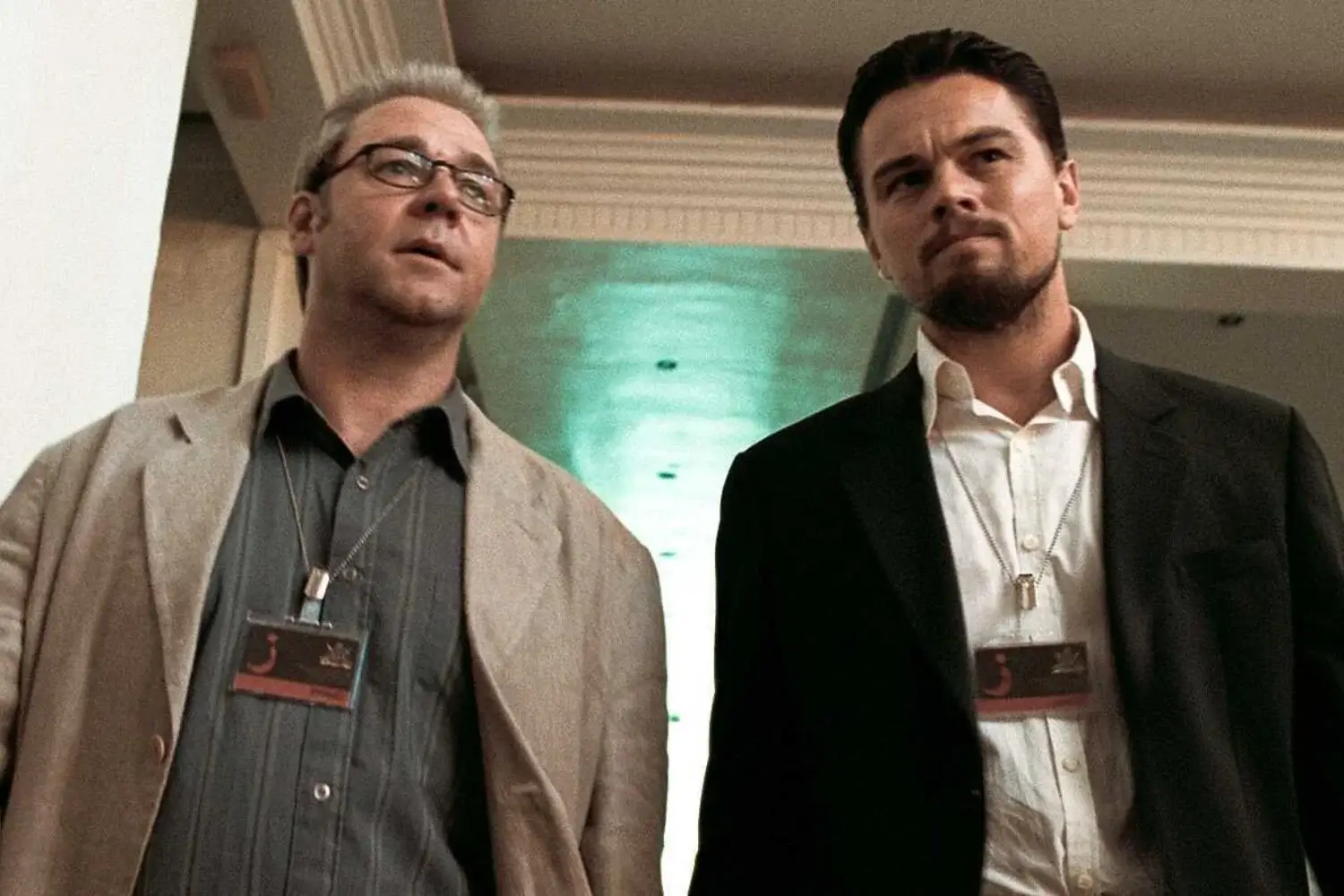
An action spy thriller directed by Scott and starring Leonardo DiCaprio and Russell Crowe should be a sure thing, but Body of Lies doesn’t feel like a film in his filmography that’s remembered as much as it should be due to its mixed critical reaction. Written by William Monahan, Body of Lies is based on the 2007 novel of the same name by David Ignatius and focuses on the attempts of the CIA and the GID of Jordan to catch the terrorist Al-Saleem (Alon Abutbul). With the target remaining elusive, tensions begin brewing between CIA operative Roger Ferris (DiCaprio), his superior Ed Hoffman (Crowe), and the head of Jordanian Intelligence Hani Salaam (Mark Strong) and their different approaches in trying to catch him.
Body of Lies is elevated by Scott’s work behind the camera as he crafts a very paranoid atmosphere throughout that only adds to the film’s tension. He also achieves great visual depth and utilizes the space of Morocco as a substitute for several Middle Eastern nations through the impeccable cinematography of Alexander Witt and a mix of practical locations and impressive production design. Scott also keeps things high-stakes by focusing on modern spy work and how it’s used to subdue enemies (drones and cell phones are frequently used), but the film also looks at the psychological effects of spy life by showing how mistrust and lies can lead to extreme paranoia. Another interesting contrast is the differences in the job.
While Ferris has to face serious danger out in the field, Hoffman gets to be more cold and distant from his home as he gives out orders. It creates a compelling dynamic between DiCaprio and Crowe that both performers utilize to bring real tension to their scenes. The performances are top-notch from all involved, but even better than either DiCaprio or Crowe is Strong, who steals his scenes thanks to a natural aura that permeates off the screen.
Body of Lies received mixed reviews upon release, registering a 55 percent on Rotten Tomatoes, as most critics found it to be a conventional espionage thriller. In terms of box office, Body of Lies grossed $39 million domestically and $119 million worldwide on a $70 million budget, with its Middle East setting likely contributing to its international performance compared to the States. Maybe there is some truth to Body of Lies being somewhat conventional, but Scott’s direction and its performances give the film a palpable intensity.
4. House of Gucci (2021)

Depending on who you ask, House of Gucci is either a compelling look at a crazy true story, or it’s a campy piece of work that pokes fun at the lavish lifestyles of the rich. When it comes down to it, the film is highly entertaining because it’s a bit of both, and Scott balances the tone effortlessly thanks to a carefully assembled ensemble cast that delivers. Written by Becky Johnston and Roberto Bentivegna, House of Gucci is based on the 2001 book The House of Gucci: A Sensational Story of Murder, Madness, Glamour, and Greed by Sara Gay Forden.
The film focuses on Patrizia Reggiani (Lady Gaga) and Maurizio Gucci (Adam Driver) as their romance turns deadly as they fight for control of the Italian fashion brand Gucci. House of Gucci is full of glamour and excess, something that Scott revels in throughout the film. This is a director who has a keen outlook on the film he’s making, and he makes no qualms about going all in on its depiction on family greed. Some might find this to be an insult, but House of Gucci feels like a big-budget soap opera, going all-in on its Dynasty-influenced guilty-pleasure DNA to deliver something truly trashy in the best way possible. Essentially, since the true story is basically one messy piece of work, House of Gucci did its job by properly replicating it.
In Scott’s arsenal are performers who understood the assignment, with Lady Gaga truly delivering on capturing Patrizia’s ruthless ambition, while Driver’s transformation from socially awkward to cunning and calculated is also a delight. Hell, even Jared Leto’s eccentric turn as Paolo Gucci has its charms. Again, critics were mixed on the film, with House of Gucci currently sitting at a 62 percent on Rotten Tomatoes. Some critics didn’t like the mix of camp and drama, but it seems like they missed the idea that it was supposed to be a healthy dose of both.
House of Gucci saw some awards season love for some of the actors, with the cast alongside Lady Gaga and Leto landing SAG nominations while Gaga also scored with BAFTA and Golden Globe nominations. Audiences embraced the film a bit more, with the movie grossing $53.8 million domestically and $153.2 million on a $75 million budget. They found some gold in the trash and realized Scott knew exactly what he was doing.
3. Alien: Covenant (2017)

Alien: Covenant seemed like it was made as a response to 2012’s Prometheus, the Alien prequel that was criticized for being too talky, philosophical, and lacking action. With Alien: Covenant, Scott took things back to basics, elevated the action and scares, and went for something that wasn’t as deep. The result was better reviews from critics but a more subdued box office and proof that you can’t please everyone. Written by John Logan and Dante Harper, Alien: Covenant serves as a sequel to Prometheus and follows the crew of a colony ship that lands on an uncharted planet and encounters more than they bargained for.
If audiences believed that Prometheus was too thoughtful, Scott proved that he could embark on a return to form by putting more of an emphasis on horror and atmospheric visuals. The Neomorphs are suitably vicious, and there are some body-horror sequences that more than bring the franchise back to its more horrific roots. Alien: Covenant is also a wonder of cinematography, with David’s (Michael Fassbender) laboratory workshop and Engineer City being highlights and a testament to Scott’s unwavering visual eye. However, even though there is more of a focus on mood and scares, Scott doesn’t abandon deeper ideas.
The duality between David and Walter (also Fassbender) offers up a compelling conflict between David’s more cold outlook and Walter’s more peaceful sensibilities. In all honesty, it’s Fassbender who steals the show in dual roles, with his evolution as David into a more mad-scientist type attempting to achieve godhood being some of the film’s best choices, which leads to a rather chilling and bleak ending that still resonates. Critics responded more favorably to Alien: Covenant over Prometheus in certain ways, although with the film hitting a 65 percent on Rotten Tomatoes, it’s still rated a bit lower, but the film’s box office performance showed that the audience can be a very fickle beast.
The movie underperformed in the U.S., grossing $74.3 million on a budget that was said to be as high as $111 million. Global grosses saved the film ($240.9 million worldwide), but even that fell short of Prometheus’ $403.4 million global tally. When it’s all said and done, Alien: Covenant is a more than adequate addition to the franchise that proved Scott could still deliver the shocks and scares.
2. Matchstick Men (2003)

Scott tried his hand at a crime caper mixed with a compelling family story that resulted in gold with 2003’s Matchstick Men, a movie in his filmography that isn’t discussed nearly enough. Written by Ted Griffin and Nicholas Griffin, Matchstick Men is based on Eric Garcia’s 2002 novel of the same name and follows a con artist named Roy Waller (Nicolas Cage), who suffers from severe Tourettes syndrome and obsessive-compulsive disorder and his partner and protege Frank Mercer (Sam Rockwell) as their lives and unsavory job becomes more complicated when Roy is reunited with his teenage daughter Angela (Alison Lohman).
Matchstick Men is more of a character story rather than a crime caper that lives and breathes on action. The father-daughter dynamic between Cage and Lohman proves to be the film’s biggest asset, as both share an unforced chemistry and Scott manages to transition the movie from being just about a long con to being about the relationship between a father and his daughter. Both aspects of the film move in perfect lockstep with each other and make it pretty unique for the genre, but even that dynamic isn’t as it seems, given the film’s final major twist that may change some of the character relationships but doesn’t dilute its intentions. Matchstick Men is both appropriately dark and light, with some of the film’s humor being more on the snarky side while Scott and cinematographer John Mathieson give the movie a breezy look and style that add to its more lighthearted charms.
All of the performers are excellent, with Scott’s direction aiding in showcasing what it’s like to be inside Roy’s anxious mind, which is expertly conveyed by Cage, while Rockwell is suitably smooth and confident as Frank, providing his own chemistry with Cage that makes the film pop even more. Reviews for Matchstick Men were solid, registering an 83 percent on Rotten Tomatoes, but this is a film audiences should’ve embraced more. The movie grossed $36.9 million domestically and $65.5 million worldwide on a $62 million budget, which means it didn’t profit theatrically, but Matchstick Men feels like it’s a cult movie that hasn’t quite found its cult yet, all these years later. Hopefully it does because it’s truly deserving.
1. Prometheus (2012)

Maybe it’s not fair to call Prometheus underrated in the traditional sense, as it did clear $400 million globally, but it’s a film that remains polarizing with audiences and critics alike, as some camps praise it as one of the best films of the franchise while others declare it to be a self-indulgent miss. Written by Jon Spaihts and Damon Lindelof, Prometheus is the fifth installment of the Alien franchise and serves as a prequel that takes place before 1979’s Alien. In the film, the crew of the spaceship Prometheus follows a star map discovered among the artifacts of ancient Earth cultures. As they seek to discover the origins of humanity, they arrive on a distant world and stumble upon a threat that could lead to human extinction. Admittedly, a lot of pressure was put on Prometheus when it was officially declared to be a prequel to Alien.
Scott was returning to a franchise that his filmmaking prowess spearheaded with the game-changing original film, so Prometheus had more weight on its shoulders than was likely anticipated before it was released to the masses. That being said, Scott delivers wholeheartedly with Prometheus by not playing it safe and by the numbers. It would’ve been easy to make the film a simple Alien rehash, but Scott was shooting for more ambitious philosophical themes about the origins of humanity, faith versus science, and what happens when creators and their creations collide.
Where do we, as the human race, stand in the grand scheme of things? Are we the superior race, or do our origins trace back to something bigger than us? Instead of making a standard chase-and-stalk monster movie, Scott believed that what was far more interesting was determining WHO the monsters really were. If that wasn’t enough, working with a much bigger budget than he was afforded with the 1979 feature, Scott turns Prometheus into a true visual wonder that is a marvel of cinematography (Dariusz Wolski finds beauty in the film’s scope and its mysteries) and practical effects. Scott’s choice of using wide shots is also effective, as it becomes clear that in the universe, humans are minuscule compared to the vastness of space, and his directorial choices drive that concept home.
In terms of heroines, Sigourney Weaver’s Ripley is a tough act to follow, but Noomi Rapace holds her own in a different capacity as Dr. Elizabeth Shaw, a woman driven by her deep belief in religion who maintains that faith, even as she discovers scientific evidence that challenges it. She’s unwavering, but in a way that feels open to other ideas. She’s a compelling character who also springs into action later in the film, proving her resilience goes beyond her faith. Then there is Michael Fassbender’s David, a cold and curious android who becomes one of the most interesting characters of the franchise. It’s not a foreign concept that something created for the task of simply obeying wouldn’t become curious and self-aware, but Fassbender’s performance makes David’s intentions feel fresh.
Prometheus sits at 73 percent on Rotten Tomatoes, but the primary criticism of the film is that it lacked significant action and was too philosophical for its own good. That’s something that should be pushed back on at every turn because with Prometheus, Scott evolved the franchise in a way that showed it still had fresh ideas up its sleeve. In all honesty, it stands in a solid third place behind Alien and Aliens as one of the material the IP has to offer.
The Dog Stars is now playing in theaters nationwide.
For more on Movies, make sure to check back to That Hollywood Show.












Reviews