

Minotaur is the latest film from exiled Russian director Andrey Zvyagintsev. Winning the Grand Prix at Cannes this year, the story loosely adapts Claude Chabrol’s 1969 French classic La Femme infidèle (remade as Unfaithful with Diane Lane in 2002).
Set in September 2022 against the backdrop of Russia’s invasion of Ukraine, much of the opening act of Minotaur presents itself as a slice-of-life family drama. The film centers on Gleb (Dmitriy Mazurov), his wife, Galina (Iris Lebedeva), and their son, Seryozha (Boris Kudrin). Zvyagintsev goes to great lengths to set up how mundane their life is before it implodes in the most darkly delicious way.
A Subconscious Exploration Of Life Amid Conflict
Minotaur subtly explores life in Putin’s Russia without advertising it in neon signs. The conflict is always in the back of the script’s mind, casting a shadow over the mundane. Yet, the movie never really explores what it means for this family, nor does it signpost its sympathies. But it does explore how an environment can subconsciously shape how daily life unfolds and how people conduct themselves.
This is highlighted in Gleb’s job as a wealthy shipping CEO, whose role includes choosing which workers to draft. This life-changing choice is picked out like people choosing wall paint. He can easily sit back and detach himself from the cold realities. Minotaur certainly makes its point about how the wealthy elite can distance themselves from war without slapping people around the face with social satire. A cynic might note that the film tries to nod to the situation while also distancing itself from the harder questions.
Anyone who doubts which side this film sits on should know that Zvyagintsev was quick to criticize Putin after winning the Grand Prix at Cannes in May. In September, he was put on a list of foreign agents and made an enemy of the Russian state.
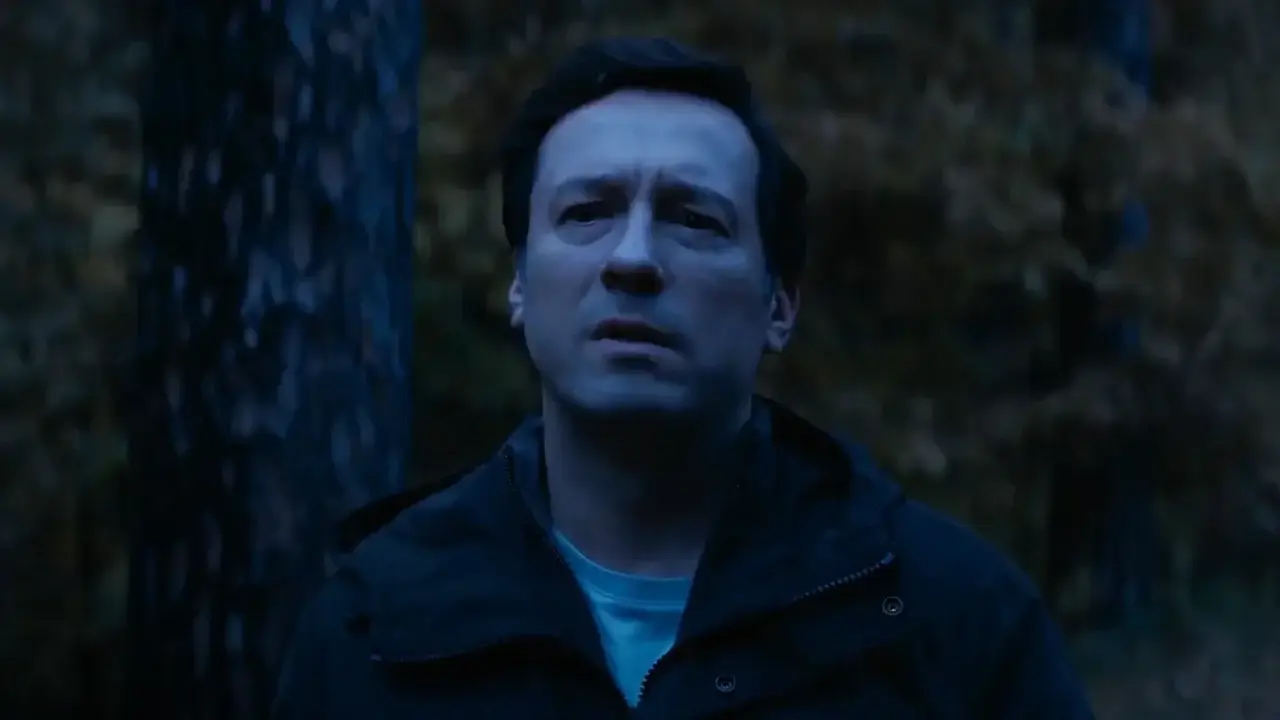
A Cold Tale Of Vengeance and Jealousy
The 140-minute runtime fully allows the filmmaker to languidly unveil the state of the country and its subtle effects on Gleb’s family. While he makes big decisions at work, his wife Galina finds herself bored as a housewife.
The film pretty quickly reveals she is having an affair with a 30-something photographer, Anton (Yuriy Zavalnyouk), whom she visits under the guise of modeling for him. Minotaur also makes it no secret that Gleb has his own past of infidelity and jealousy. This makes his reaction to the affair inevitable rather than a shock to audiences.
If you’re seeking a snappy, exciting movie, look away. Minotaur is purposefully slow-paced. It takes a long time to get to the action, something American cinema would have likely reached within the first 20 minutes. It’s less a film about a specific incident and more a slow exploration of certain people in a certain place.
Minotaur is purposefully cold and distant from the subject matter. Cinematographer Mikhail Krichman’s frames are often pale and half-empty, showcasing the minimalist architecture of the elite. Zvyagintsev’s editing loves to linger uncomfortably after the action ends, while DP Mikhail Krichman gives the entire movie a moody atmosphere with his monotone sheen.
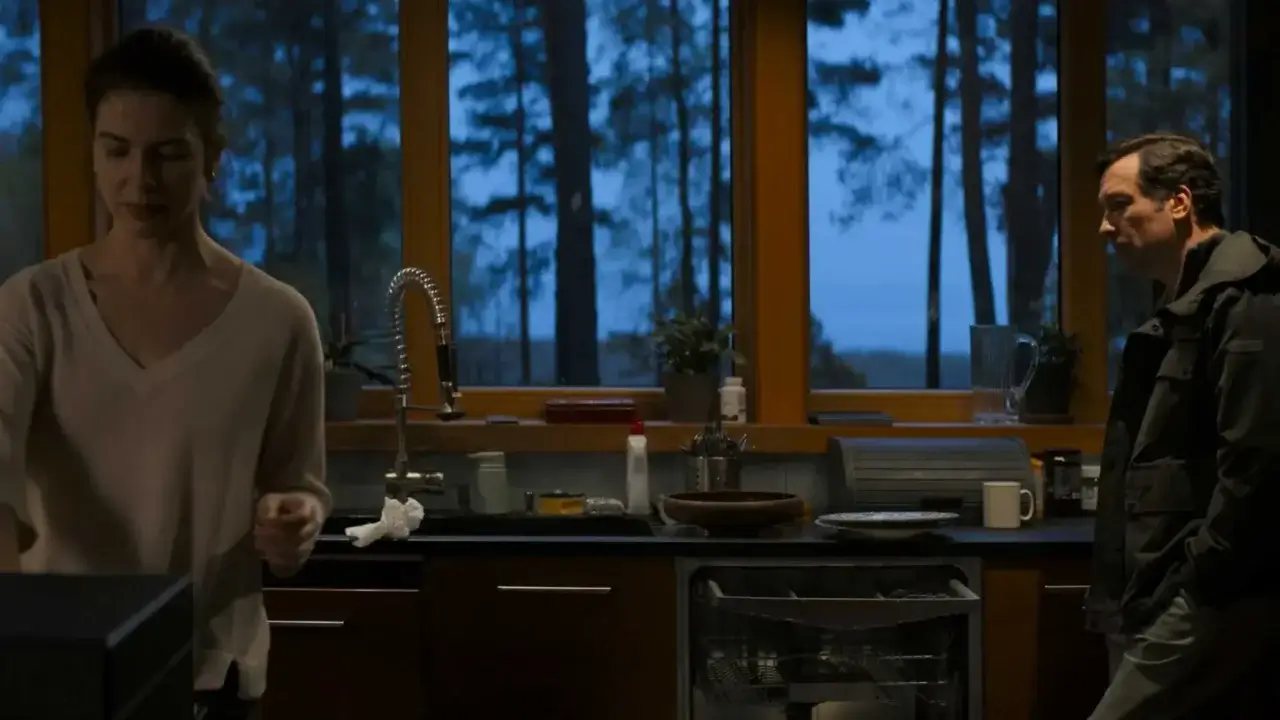
There is little warmth to this family’s life. Gleb and Galina’s marriage is performative, wandering around a loveless, minimalist home. Gleb can’t even muster any warmth for his son, threatening to bash a school bully’s face in rather than offer any real comfort. Which is why his behavior after learning about his wife’s affair offers whiplash. Yes, it’s violent, and it’s cold, but it’s occasionally played for laughs. The writing struggles to balance the sudden urge to turn spousal jealousy into a slapstick comedy. You’ll be forgiven for suffering from tonal whiplash.
Minotaur uses the framework of Claude Chabrol’s erotic thriller to explore the climate of carrying on as normal in a wartime state. The film unevenly places a domestic drama parallel with a political thriller. It’s a clinical and bleak remake of a steamy classic that works better when considered as a family drama and less as a political thriller.
An Austere but Memorable Drama
The slow pacing and detached tone sometimes work in the film’s favor; it builds tension and acts like a red herring. But the lethargic opening hour may leave a sour taste in some audiences’ mouths. Some moments feel unnecessarily drawn out, padding the narrative with window dressing. A slight trim in the first act would have greatly benefited the drama.
But once Minotaur gets going, it’s an immensely entertaining thriller that subtly parallels politics and marital strife. Luckily, the second and third acts more than make up for the slow start, with everything coming together in a satisfying way that mostly helps you forgive earlier missteps. The script’s emotional distance from events makes the film a more austere experience than necessary, but it also adds an eerie atmosphere that keeps it from becoming your everyday extramarital affair drama.
This post may contain affiliate links. If you make a purchase through these links, we may earn a small commission at no extra cost to you.
For more Reviews, make sure to check back to That Hollywood Show.













Reviews