
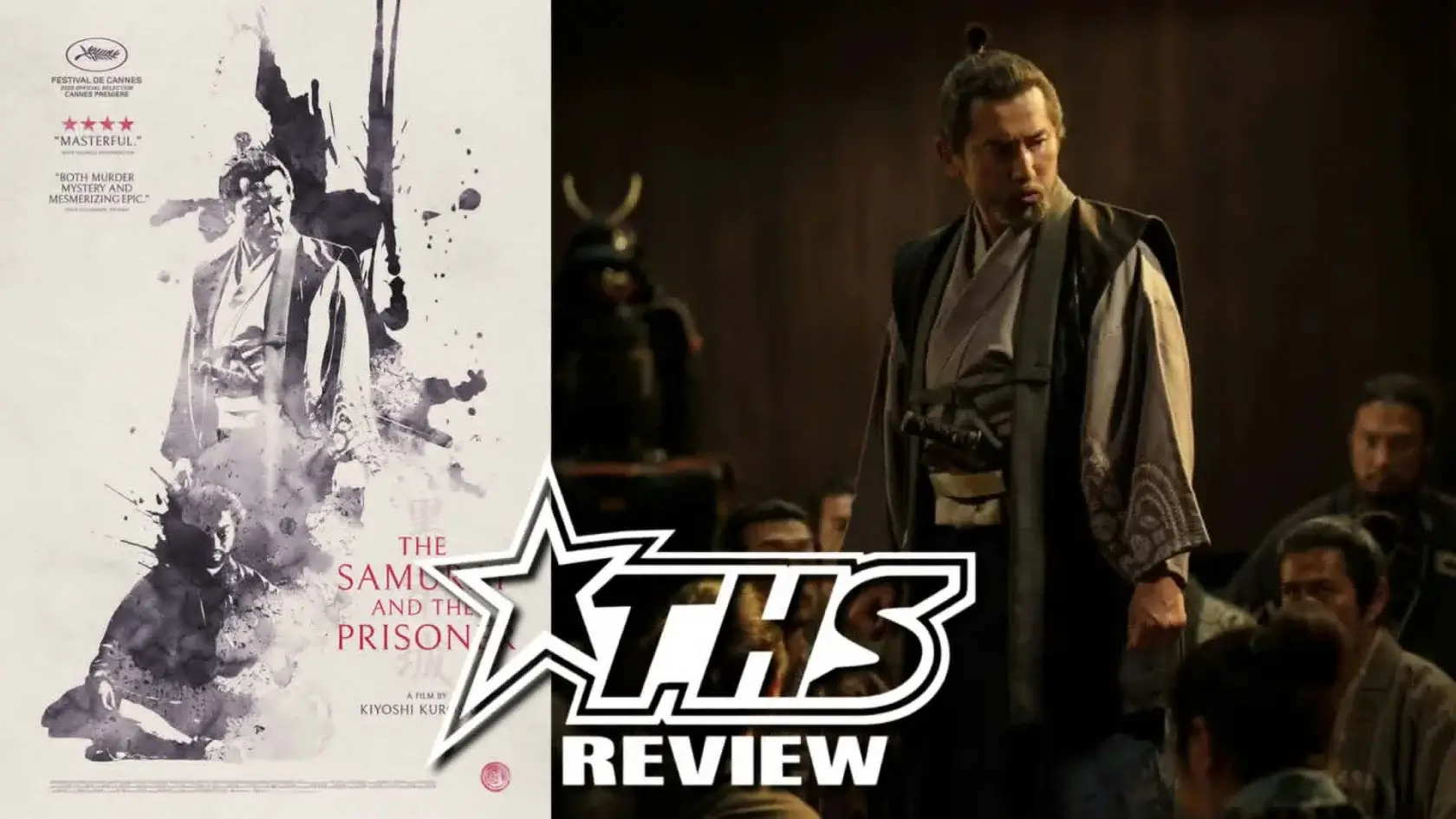
New Setting, Same Themes
There are very few filmmakers as prolific as Kiyoshi Kurosawa. Averaging 1-2 films a year for nearly two decades (Cloud and Serpent’s Path last year, Samurai and the Prisoner this year), he has delivered plenty of masterworks in his wheelhouse. Considered the premier of psychological horror, much of his filmography focuses on the way things are. The harshest realities of our crumbling society, morally corrupted or gray characters, and often a descent into hell as we watch people systematically lose their way. These themes are present in all of his work and are almost always set in modern times, deconstructing modern society. So K. Kurosawa jumping to the past of feudal Japan to tell a story about warring factions, Japanese politics, divine intervention and murder mysteries comes as a shocker, a true outlier in his long-running canon.
And yet, The Samurai and the Prisoner feels both wildly outside and completely inside his filmography. K. Kurosawa merely moves the date range, keeping the rest of his interests intact. What transpires is a methodical, patient, wholly engrossing examination of tradition, belief, glory, and regret. Magnificently rendered and beautifully shot, Samurai and the Prisoner is endlessly entertaining even as it sprawls about the walls of the castle and keeps its measured, somber approach. It blends a classic murder mystery with historical epic, which is a strange combination that only someone as skilled as K. Kurosawa can make work so well.
Murder, Politics, and Divine Intervention
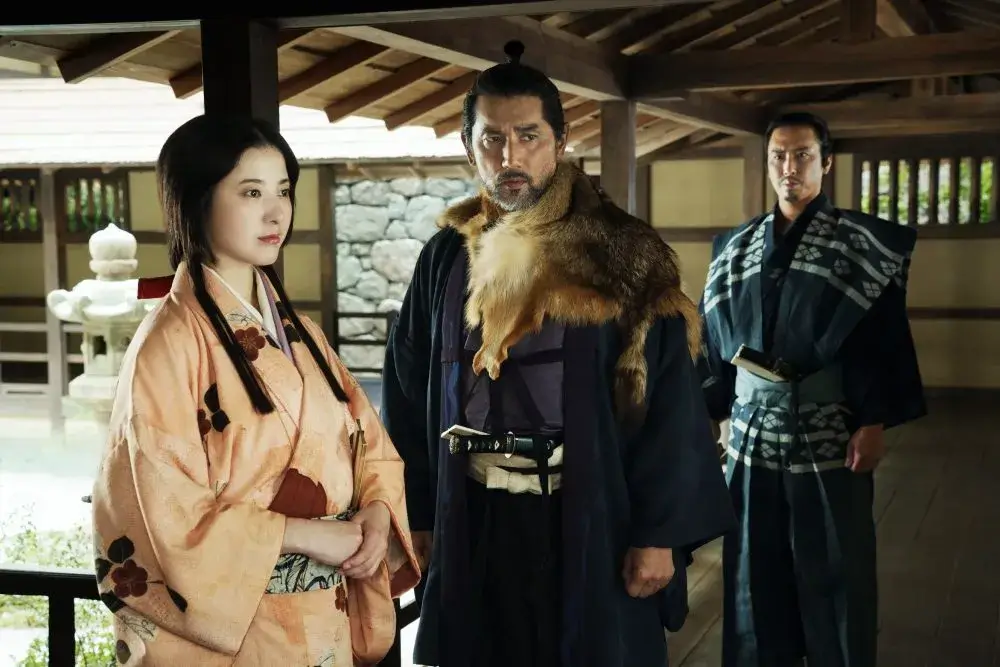
Based on the best-selling Japanese novel of the same name by Honobu Yonezawa, The Samurai and The Prisoner is a fictional retelling of historical events during the Azuchi–Momoyama era of Japan circa the late 1500s. It follows feudal lord Araki Murashige (Masahiro Motoki) who served under the reigning and ruthless lord Oda. After rebelling again the overlord and barricading himself inside the impregnable Arioka Castle, he is visited by a rival faction’s emissary Kuroda Kanbei (Masaki Suda) a brilliant military strategist who tells Murashige he cannot win the war against Oda. Believing the bad news will be met with death as per tradition, he is shocked and insulted when Murashige doesn’t follow the rules of war and throws him in a dungeon instead.
Shortly after his imprisonment, a series of mysterious murders begin happening around the castle. These acts of violence seemingly have divine origins, implying that Murashige’s bucking of the ways of the Samurai have brought down ire from Buddha himself. With Oda’s enemy forces closing in and his allies dwindling, Murashige turns to the only mind he knows that can help solve these crimes: the prisoner Kanbei. Together they must uncover the mysteries and prevent an uprising before everything comes crashing down and the war – both inside and out – is lost forever.
Dense, Rich and Riveting
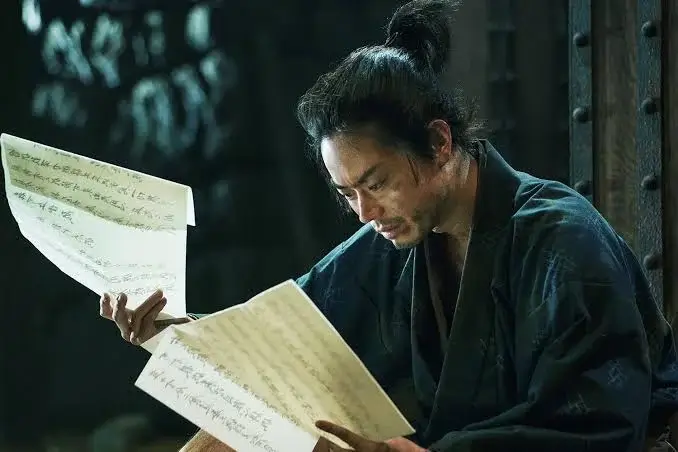
If that sounds like a lot of movie, you’re not alone. The Samurai and the Prisoner is pretty disorienting at the start, introducing character after character and unleashing a bevy of dense, historical perspectives. K. Kurosawa seems deeply unconcerned about your level of knowledge about Japanese history, and instead trusts you enough to follow along and put the pieces of daily life together yourself. It’s a mystery in and of itself, but beckons you to pay attention and immerse yourself in this beautifully created world. Once you get your bearings, The Samurai and the Prisoner is off to the races with intrigue and excitement. Every murder leads to another event, and just when you think you’ve got it all figured out, another twist comes at you out of nowhere.
It’s so tactile and lived in at all times. Its intimate character study plays out against a backdrop of breathtaking landscapes and production design, wholly transporting you to the time with expert visual flair and veteran Savoir camera work. The Samurai and the Prisoner is both densely plotted but easy to follow, something K. Kurosawa has developed quite a knack for in his legendary run of filmmaking. It’s a chamber piece and a massive epic, a quiet meditation of Japanese politics that is mostly people sitting and talking in rooms punctuated by grounded violence and mysterious intrigue. It’s an astounding achievement, honestly. A film so well crafted that by the time it ends, you’ll want to rewind it and watch it again immediately to see what you may have missed.
Kurosawa on Kurosawa
What is most fascinating about The Samurai and the Prisoner is that it feels like a Kurosawa doing Kurosawa. Whether Akira or Kiyoshi, It combines the spectacle of one with the thematic richness of the other. This is interchangeable depending on what sticks out to you the most, and that is just something I never thought possible in cinema. Two legendary Japanese filmmakers separated by decades, not existing in the same time are brought together by an experimental adaptation that somehow captures all of their strengths, none of their weaknesses. The Samurai and the Prisoner manages to bring together the psychological horror of one Kurosawa and marry it with the epic cinematic scale and scope of the other. There’s just no way something like that shouldn’t excite your cinephile heart, and Samurai and the Prisoner feels tailor-made for a movie lover like me.
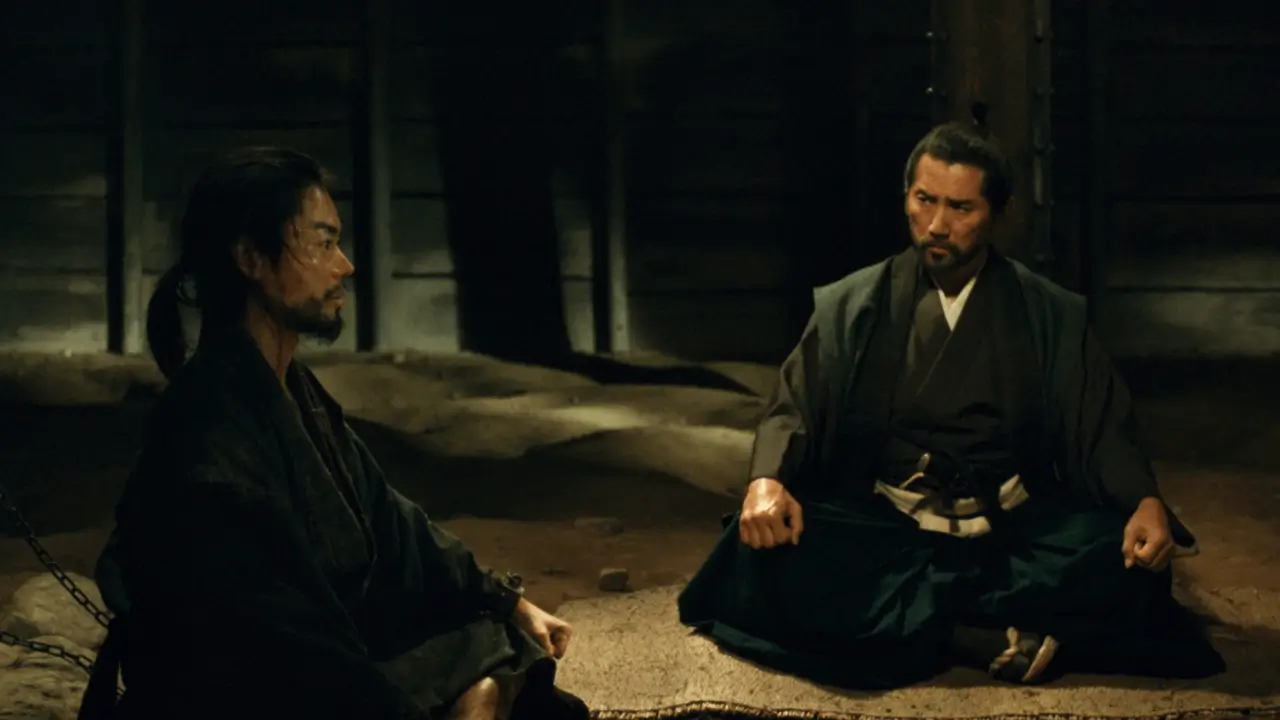
If I had any knock on this, it would be that there isn’t enough Prisoner. Suda gives an excellent performance as Kanbei, a man trapped but assured and always knowing he’s the smartest man in the room. You’re never quite sure whose side he’s on, if he’s only serving himself or if there’s a larger plot afoot as he aids his captor. But his screentime is vastly underutilized in order to show us everything happening outside of the dungeon walls. Every scene with Kanbei and Murashige is electric. Both men work to uncover truths about each other through conversation and tea while trying to maintain an uneasy alliance. We learn so much about our characters here, and The Samurai and the Prisoner doesn’t give us enough of them.
Final Thoughts
That’s a pretty small nitpick for an otherwise flawless victory. The execution on display is marvelous, and I found myself enraptured by the events and moved by its profound conclusions. Even in the 14th century, Kurosawa is still able to comment on our current state of things. Tradition, divinity, truth and lies that live within all men are on full display, and the consequences for their actions never go unpunished or unrealized. The Samurai and the Prisoner may be dense, but it also thematically rich, enough to fester in your mind indefinitely and continually pick it apart bit by bit.
I loved Samurai and the Prisoner. A murder mystery set against a historical epic set in early century Japan with samurai and swords? Ya, Kurosawa made another film specifically for me and I hope he never stops making movies this good.
For more Reviews, make sure to check back to That Hollywood Show.















Reviews