
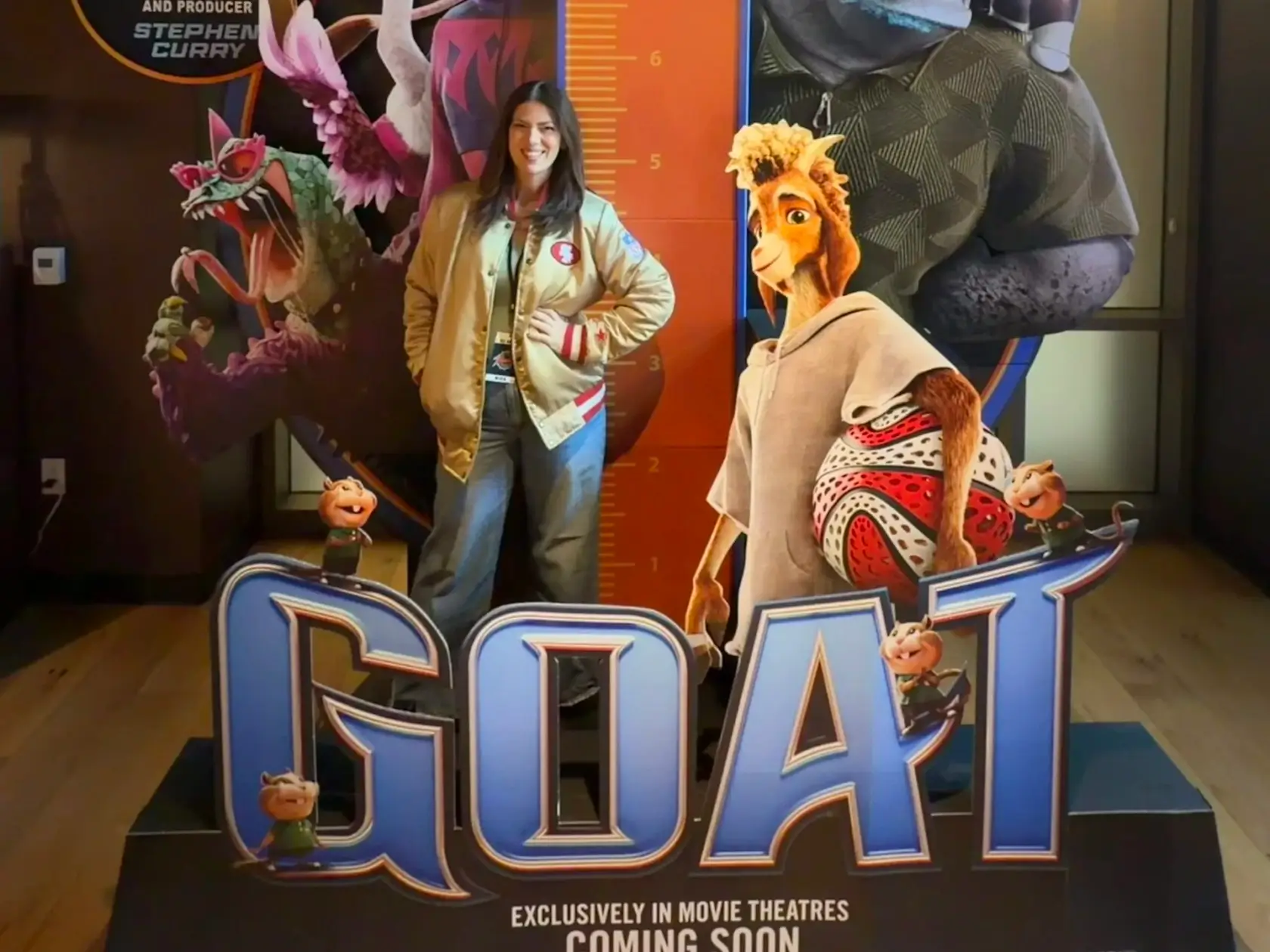
At a recent “spa day” inside Sony Pictures Animation, the making of GOAT was unpacked layer by meticulous layer. What I experienced wasn’t just a behind-the-scenes look at an animated film, but an immersive learning experience into the film’s creative ecosystem. The film creators were meticulous about every detail, from the curve of a sneaker to the glow of arena lights. Why? Because GOAT didn’t appear out of thin air, it was developed.
GOAT was brought to life by a powerhouse team at Sony Animation Studios, led by Tyree Dillihay and co-director Adam Rosette, and by producers like Michelle Raimo Kouyate, who kept the project on course over its seven-and-a-half-year journey. NBA superstar Stephen Curry played a key role as both producer and voice actor.
The team also leaned on Eric Payton, another producer who helped connect them with NBA players and real-world arenas, and Christine Belson, the studio president, who championed the idea of an animal-centered sports movie. Behind the scenes, a 12-person storyboard team shaped the acting, staging, and visual storytelling of every scene. While NBA player Andre Iguodala consulted on real plays to make the on-court action feel authentic. In total, nearly 900 artists and crew members collaborated to craft the immersive arenas, meticulous details, and vibrant characters that bring GOAT’s world to life.
From Idea to Obsession
GOAT is a film rooted in basketball; authenticity wasn’t optional. It had to be built into the DNA of every sequence. How? By adding authentic personalities, iconic moments, and more.
The Sony Animation Team dove into real-world inspiration, embedding Easter eggs throughout the film. References range from iconic NBA moments to broader cultural films like Do the Right Thing and City of God. It also nods to streetball and sneaker culture, as well as legendary players.
You’ll find visual echoes of figures like Dennis Rodman, recreated dunks inspired by Vince Carter and Shaquille O’Neal, and even subtle character details pulled from real-life courtside moments. For example, when Allen Iverson’s mother was braiding his hair courtside.
The environments themselves were also designed with equal care. Each stadium carries its own identity, drawing inspiration from sprawling, distinct worlds rather than a single unified aesthetic.
“We wanted each stadium to feel like a different place, almost like Game of Thrones,” Director Tyree Dillihay explained.
That philosophy extends to one of the film’s most imaginative locations: a temple-like space inspired by Angkor Wat in Cambodia, reimagined as a place where players “worship the game.” For Director Tyree Dillihay, GOAT isn’t just a technical achievement. It’s deeply personal.
“This movie is a love letter to everything I love, from basketball to sneaker culture to animation,” he said. “If you talk about a dream project… this is me.”
So, GOAT isn’t just a film about chasing greatness. It’s a film built through it, one frame, one decision, and one difficult compromise at a time.










Reviews