

“If I Go Will They Miss Me” is a prayer and a window. It’s a tragic saga wrapped in a painfully beautiful story of generational trauma, unbroken cycles, and the realization that life doesn’t stay the same after you leave. It has the melancholy of “The Virgin Suicides” and the inner turmoil of “Moonlight,” but the layering in of mythology makes it something so unique. It’s a film unlike anything I’ve seen before.
Mild spoilers ahead.
Sadness Passed Down From Man to Boy
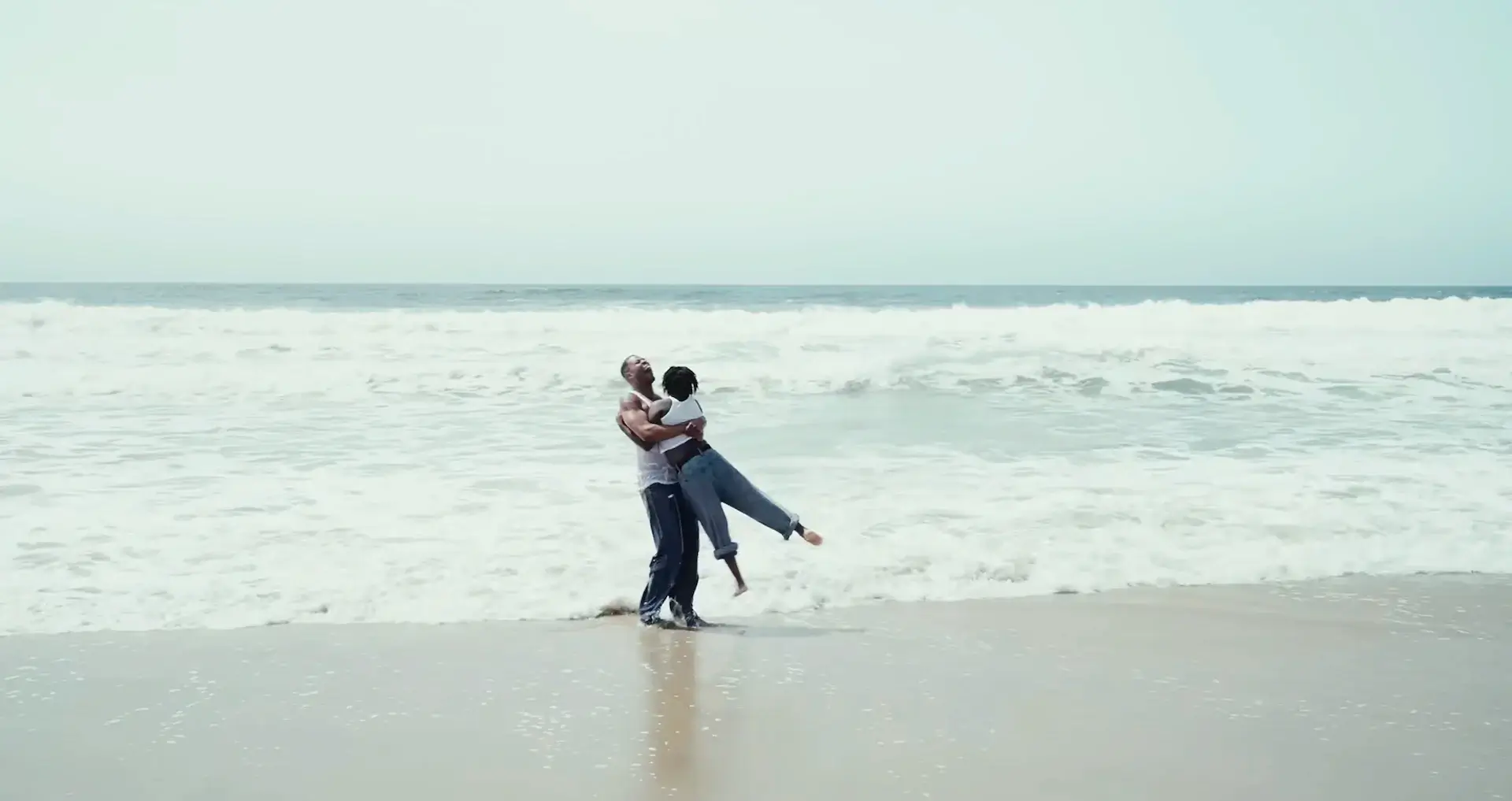
Directed by Walter Thompson-Hernández, “If I Go Will They Miss Me” mesmerizes with every shot right from the very beginning, starting with the sea. It invites the audience in, soothingly with the score ebbing and flowing, reaching its crescendo at the right moments. With how integrated the story is with the real life housing projects of Watts, California, this film at times felt like a documentary.
It also makes you remember that almost no experiences are unique, that we’re all living in a collective unit, experiencing life almost the exact same way, but from our own individual realities. This film reminded me so much of my childhood to a specific degree that it is uncomfortable at times. A lot of people can relate to being a tiny daydreamer with a neglectful or abusive parent.
The key to that feeling is how well the characters’ stories are threaded throughout. Big Ant (J. Alphonse Nicholson), Lil Ant (Bodhi Dell), Lozita (Danielle Brooks), Acacia (Zaria Kelley), Trae (Mark Lane III), JJ (Myles Bullock), and Lo’s mom all felt like real people you’ve not only met before, but who are members of your own family.
The cast is the backbone of the entire story; if we’re not invested in them, then there’s no point in watching. Lo is the glue trying to hold her family together at the expense of her own heart. Big Ant is an endless void sucking everything in until all that’s left is his abyss; he’s not even aware he does it either. Lil Ant is a caterpillar trying to find his wings without having much of a destination.
Big Ant’s selfishness causes ripples through the family that we only really see affect Lo and Ant Jr. The other kids are background support to continue telling the main three’s stories, which works for this slice of life. We’re meant to see how the cycle of trauma and abuse starts right here, with one father’s alienation, bullying, and discounting of his oldest son, who’s named after him.
It becomes painfully obvious that Big Ant sees himself so much in his eldest, that innocence he lost years ago with a single brick thrown. He rejects everything he lost in himself and in doing so rejects his son, who escalates in his attempts at validation from his father. The sweetest moment of the film is when Big Ant finds Lil Ant’s Pegasus papier-mâché project and separate, wearable wings. He puts them on, closes his eyes, and imagines flying. He and his son are so much alike, it makes the heart ache.
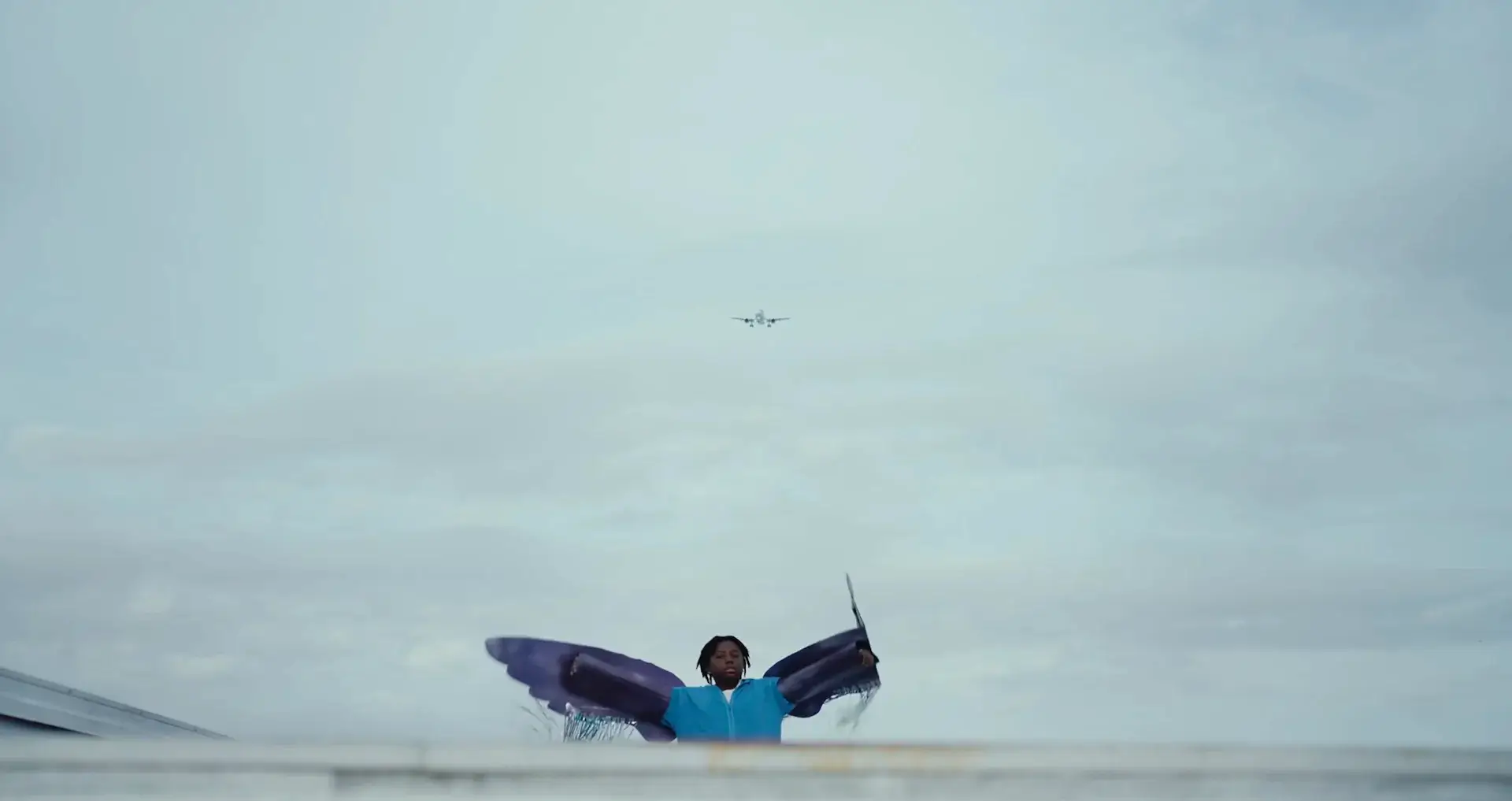
It would be relentlessly depressing, if not for the fantastical elements layered throughout the story. With every smile from Lil Ant, every drawing he created, every plane he imagined flying, every time he saw his dad as a god, hope dared to endure. Lil Ant and his mother are embodiments of perseverance in the face of setbacks, a trait he gets from her.
Lo’s willingness to sacrifice her happiness to make sure her kids grow up in a complete home is admirable, but unfair. Her own sister agreed and ultimately gave her an out, which she finally took to her own benefit. Brooks’ range and depth of emotions shows how much care she has for this selfless mother and she deserves a lot of recognition for that.
Magical Realism, Curious Hauntings, and Sounds of Significance
Nicholson does heavy, but necessary work portraying Big Ant’s biting disdain for his son and it centers around how he deifies his father. Lil Ant draws him as Poseidon, which his father dislikes, telling him to stop, though never telling him why. His discomfort only adds to the power of Ant Jr. ‘s artwork, which comes to life when he’s telling a story or off in his own imagination.
With the drawings and scenes of Nicholson physically dressed as the Greek god—trident, toga, and all—being overlaid over their sometimes-grim reality, the juxtaposition makes for a surreal experience. Lo being the Medusa of the story (with her braids as snakes), making Lil Ant Pegasus, rounding out a deeply spiritual family history told through myth.

Greek mythology wasn’t the only aspect of fantasy featured in the story. The more mysterious and haunting pieces are the repeated scenes of boys and men in white shirts standing outside, moving like airplanes waiting to take off. It appears that this along with their artistic leanings is another thing the Anthonys share: either a shared hallucination between father and son or something odd is afoot in the neighborhood. This isn’t really answered, because it’s not the point. This father can’t separate or ignore his son and their similarities or how much he doesn’t fit into his family’s world anymore. By the end, he finally accepts his son’s view of him, fully receiving his “place” as the Poseidon of his son’s reality, a powerful moment of acceptance and love.
Underscoring all of the mystical elements is the astounding original score by Malcolm Parson. There were so many moments in “If I Go Will They Miss Me” that required no dialogue to get its point across, highlighted only by sounds that soared and sighed at the exact right moments. Whenever there was an absence in music, it was with a purpose. In particular, moments like Big Ant and Lil Ant’s argument turn violent; the sounds of their voices drop out and the airplanes soaring overhead take over. Moments like the sweet montage of beautiful Black people smiling or looking into the camera; the faces of their family, friends, neighbors, with Lil Ant’s voiceover asking, “If I go, will they miss me?” These striking editing choices are the ones that nestle in your soul for a while, making a home there.
A Film Like a Photograph
The cinematography and framing of certain shots make the entire film feel like you’re flipping through the pages of a family photo album. Thompson-Hernández frequently used wide shots where Big Ant appears in the corner, while something else is happening in the main part of the shot. These disquieting scenes truly show how isolated the man has been since coming back from his latest stint in prison; an entire story in a few shots.
The camera often lingers after painful moments to make sure the audience feels the full weight of what just happened. You could look away, but that says more about you than it does about the story.
Final Thoughts
There are few things more cathartic than Big Ant coming to terms with his own self-sabotage and how his behavior is creating another version of him in his son. There are plenty of coming-of-age, father-son stories about breaking generational curses, but “If I Go Will They Miss Me” is one being told through the perspective of a kid who idolizes his father. So along with the mythological elements, it makes for a remarkable experience that can’t be compared.

Brooks and Nicholson make a compelling, honest pair on screen; a match I’d love to see again in a different project. However, without young Dell, we’d be without our narrator. Lil Ant’s power is his storytelling and the film emphasizes the importance of this power in our communities, underprivileged or not. It’s point is that even if they’re painful, our stories would disappear if we never shared them.









Reviews