

Story & Setup
Hunger Games: Sunrise on the Reaping follows a young Haymitch Abernathy as he celebrates his 16th birthday and the reaping for the Second Quarter Quell, aka the 50th Annual Hunger Games. This year, the tribute numbers double, with 2 boys and 2 girls from each district participating.
When Haymitch is “chosen,” he is ripped away from his family and the girl he loves, Lenore Dove Baird. Then, alongside his fellow District 12 tributes, Haymitch is taken to the Capitol, where he must navigate political manipulation, shifting alliances, and the brutal spectacle of the Games.
As his time in the Capitol dwindles, he realizes more is at stake than his own survival; a rebellion is brewing. Now, Haymitch must decide how far he’s willing to go to fight back against a system.
Suzanne Collins has created a fictional world that doesn’t quite feel like fiction. As we read and watched through the original trilogy, the parallels were fascinating but not quite terrifying. With The Ballad of Songbirds and Snakes, we see how one man’s youthful heartbreak set him on a trajectory to make it everyone else’s problem. Now, with The Hunger Games Sunrise on the Reaping, it’s more than a prequel; it’s a call to action. These stories are warnings about the dangers of unchecked power, the manipulation of truth, and what happens when we become complacent in the face of injustice.
As more of these stories of rebellion and resistance come to life, the message couldn’t be clearer: The Hunger Games was meant to be a cautionary tale, not a roadmap. And recognizing the parallels means nothing if we’re unwilling to do something about them.
Now, let’s talk about the best Hunger Games film so far.

HUNGER GAMES: SUNRISE ON THE REAPING
Haymitch Abernathy. What a complicated and heartbreaking character. Throughout the original Hunger Games Trilogy, we meet a gruff, alcoholic who hates the Capitol and doesn’t seem to care if the District 12 tributes make it out alive. As his journey continues, we learn he’s so much more than that and has been part of the rebellion for a long time. What we didn’t know was how he got there.
Now, with Sunrise on the Reaping, we get to deep-dive into the psyche of a sweet, in-love young man who was tortured by President Snow just for winning the Hunger Games…and so much more.
As a book reader, the moment I saw the trailer, it was like they plucked the dangerous but beautiful Eutopia from my brain. The 50th Hunger Games takes place on a beautiful island where anything pretty is there to kill you. The flowers, the butterflies, even the adorable woodland creatures are programmed to murder you in the most brutal of ways. This allowed the filmmaker to enhance and create more terrifying moments while showing us how smart Haymitch truly is. One of these moments is when Haymitch uses his fireproof cape and exploding flowers. To not spoil, I’ll leave it at that.
I noticed a few other changes when adapting a book to a visual medium. However, a conversation between Plutarch and Snow about Haymitch rubbed me the wrong way. To me, it weakens Snow as a villain and makes him seem oblivious. That’s never been Snow’s character, even in the end. I’m staying spoiler-free, but if you’ve read the books, you’ll know what scene I mean when you watch.

A Cast Worth Fighting For
This film and its story will live and breathe because of the casting, and boy, did they nail it. Haymitch is originally played by Woody Harrelson, who created a character so full of strife, anguish, and a crack of empathy that finding his opposite would be one hell of a job, with giant shoes to fill.
Like Tom Blyth, who played a young President Snow in The Ballad of Songbirds and Snakes, I’m glad they chose an actor who was relatively unknown so no one would have preconceptions about his work. Joseph Zada (We Were Liars) tackled the character in a way that feels special. His performance is nuanced and exhausting. Haymitch goes from celebrating his birthday to carrying the weight of the world on his shoulders, and Zada carries that burden as a charismatic raw nerve on the verge of a breakdown, yet holding it together.
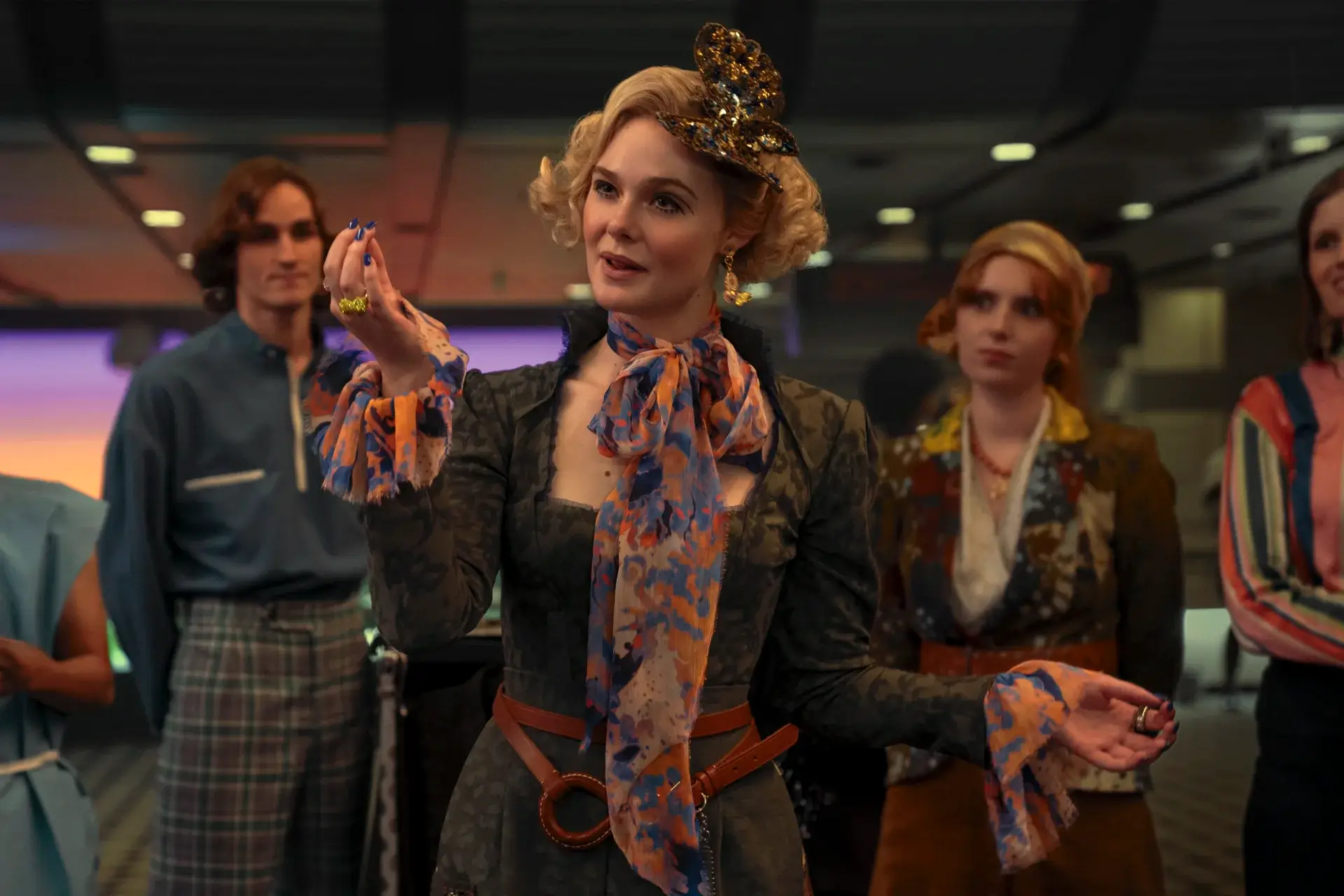
Glenn Close always plays a spectacular villain, and her portrayal of Drusilla Sickle is as vile and vicious as ever. Elle Fanning is an adorable young Effie Trinket who gives you a glimpse of the friendship she and Haymitch will share. Kieran Culkin, what a gem. His Caesar Flickerman had me cackling in my seat every time he was on screen. Mckenna Grace is the sunshine Maysilee needs to keep her grumpy but likable.
Whitney Peak (Gossip Girl) and Joseph Zada’s chemistry is spectacular. While reading the book, I didn’t feel the full level of empathy for his loss until I watched the film and saw their love and how it helped save him in the Games. This relationship gives us a glimpse of the life Haymitch could have had. Before the Games, before the alcohol, before the bitterness, there was a boy in love with an entire future ahead of him. Watching Zada and Peak together makes that loss feel painfully real. And I think that’s one of the greatest accomplishments of this adaptation.
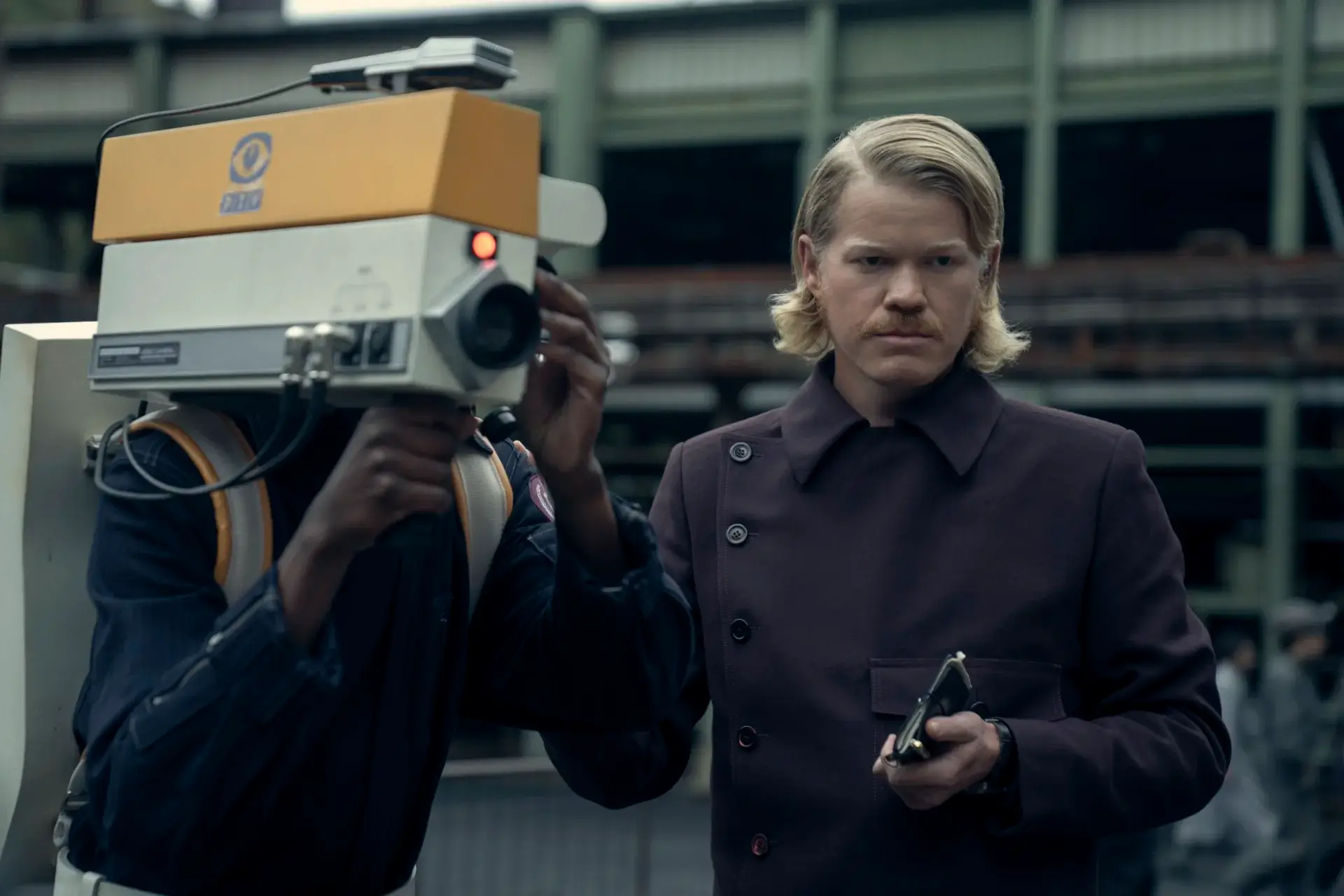
As for Jesse Plemons and Ralph Fiennes, they also had big shoes to fill as a younger Plutarch and President Snow, and they did their jobs perfectly.
The Art of Rebellion
Frances Lawrence has directed every Hunger Games installment since Catching Fire, and it shows. He truly understands the story on a deeper level. Lawrence knows when to push and when to pull back, allowing moments of brutality to speak for themselves while giving the characters room to breathe.
What makes his direction so effective is that the spectacle never overshadows the humanity. He understands the nuance needed to carry a story of this magnitude and to guide his actors where they need to go.
The propaganda machine is working overtime for these games. As we know, the Capitol wants the audience to see the Games as entertainment, but Lawrence never lets us forget that these are children being forced to murder one another for the amusement of the powerful. Lawrence balances the two with a careful touch, and the emotional weight the characters carry is palpable.
And while the arena offers plenty of visually spectacular moments, the quieter scenes make the violence hit that much harder. We all know where Haymitch ends up, but Lawrence makes us care about the person he was before the Capitol destroyed his life.
THE BEST HUNGER GAMES YET
The Hunger Games franchise has never shied away from difficult subject matter, but Sunrise on the Reaping delivers something particularly devastating. We all know the ending: Haymitch survives. But at what cost?
What sets Sunrise on the Reaping apart is how much it accomplishes even when we already know the ending. Knowing where it goes doesn’t make Haymitch’s journey any less suspenseful or heartbreaking. If anything, it makes every choice, relationship, and moment of resistance that much more meaningful.
For me, this is the strongest Hunger Games film to date. Everything from the performances, the world-building, to the emotional depth elevates an already powerful story, while reminding us why Suzanne Collins created Panem in the first place.
The Hunger Games has never just been about surviving the arena. It’s about what happens when people refuse to accept the world they’ve been given, even when fighting back comes at an unimaginable cost.














Reviews