
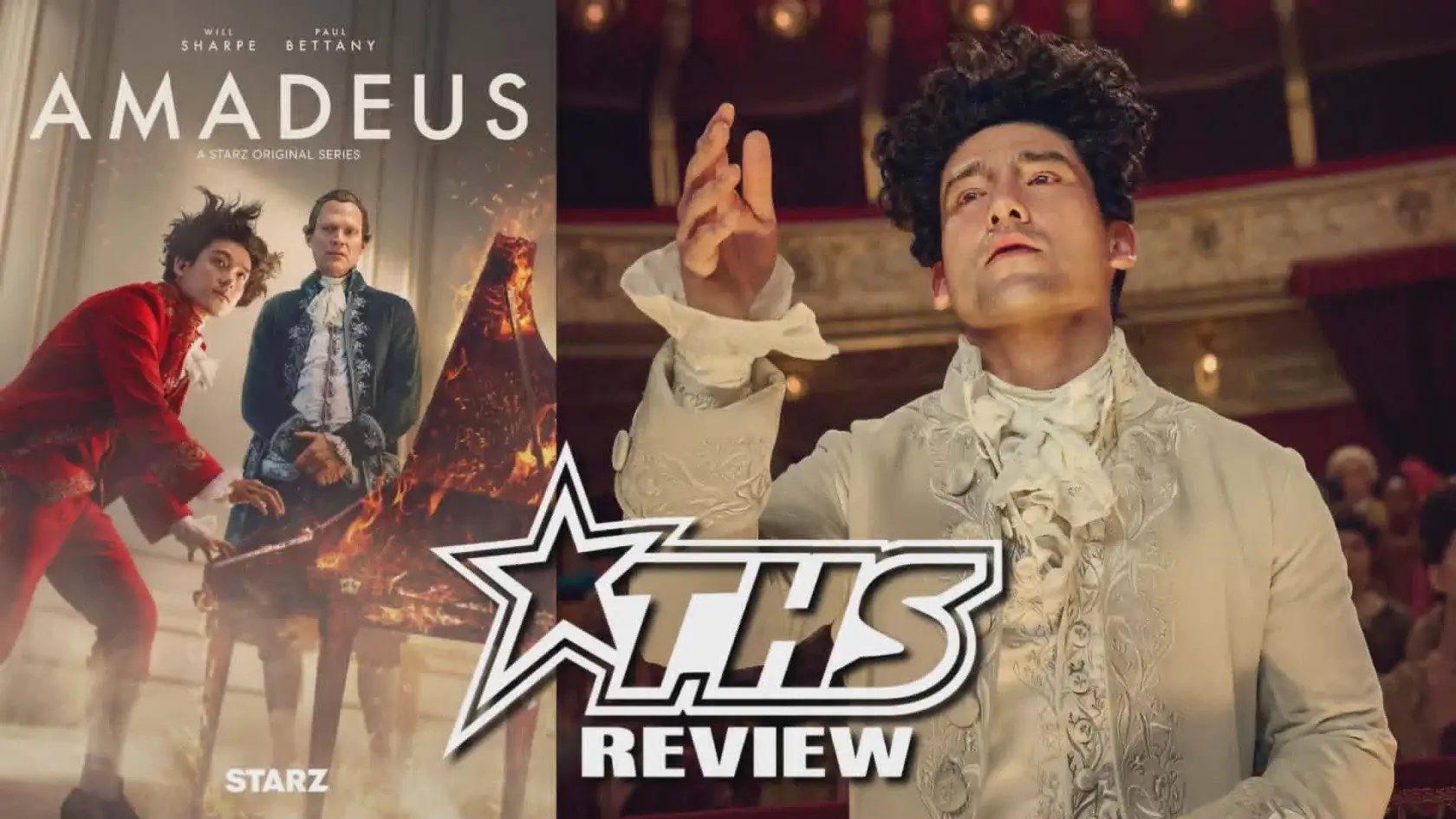
Starz’s new five-part series, Amadeus, sees Paul Bettany’s Salieri face off against Will Sharpe’ Mozart. Based on Peter Shaffer’s 1979 play, the show explores the two musical rivals as they strive to become the most respected artists in 18th-century Vienna.
The first thing you need to do when watching Amadeus is to forget the 1984 film starring F. Murray Abraham and Tom Hulce. Written by Joe Barton (Giri/Haji, Black Doves), it’s the same story of creative rivalry told in a similar way, but the two adaptations should not be compared.
The story is told as a confession by an aging Antonio Salieri to Amadeus Mozart’s widow, Constanze. On his deathbed, the composer clears his conscience by telling her about his feelings towards the younger, more successful Mozart. The show flashes back to a young, cocky Mozart 10 years before his death in 1781. He is new to Vienna, having recently left his father in Salzburg in the hopes of conquering a new city and finding creative freedom.
If you’re not a fan of stuffy period dramas, fear not, Amadeus has more DNA with a show like The Great or Harlots than it does with your more uptight classics. It’s crude, it’s rude, and it’s bold, acknowledging that Salieri and Mozart were their rockstars of the day, so it treats them as such.

A Bold Absurdist Take On Mozart and Salieri’s Rivalry
The White Lotus’ Will Sharpe plays Mozart like he’s a Mick Jagger-type figure, because in his day, he was. He swaggers around Vienna, day drinking, seducing women and puking in the street. Bettany’s Salieri is less sure about his trajectory, struggling to compose new work and feeling unsupported by his friend, Emperor Joseph (Rory Kinnear), who would rather revisit his previous work. The difference between court composer Salieri and wunderkind Mozart is made obvious very early. One believes in himself too much, while the other is struck due to his own cowardice and need to please others.
Initially, Salieri is revolted by Mozart’s ill-mannered temper and sharp tongue, but slowly finds himself entranced by the young man’s talent. The show predominantly follows their cat-and-mouse relationship as jealousy takes over, and they try to destroy each other. Told from the point of view of the older, unknown Salieri, the story recounts his frustration, Mozart’s rise to fame, his own fall from grace in the eyes of the emperor, and how his Machiavellian attempts to take down the young man only to poison himself.
On paper, Amadeus is another story of two geniuses destroying each other and themselves with madness. But the play and its TV adaptation present their rivalry like a ghost story, where the musicians are doomed to haunt each other in life and death for eternity.
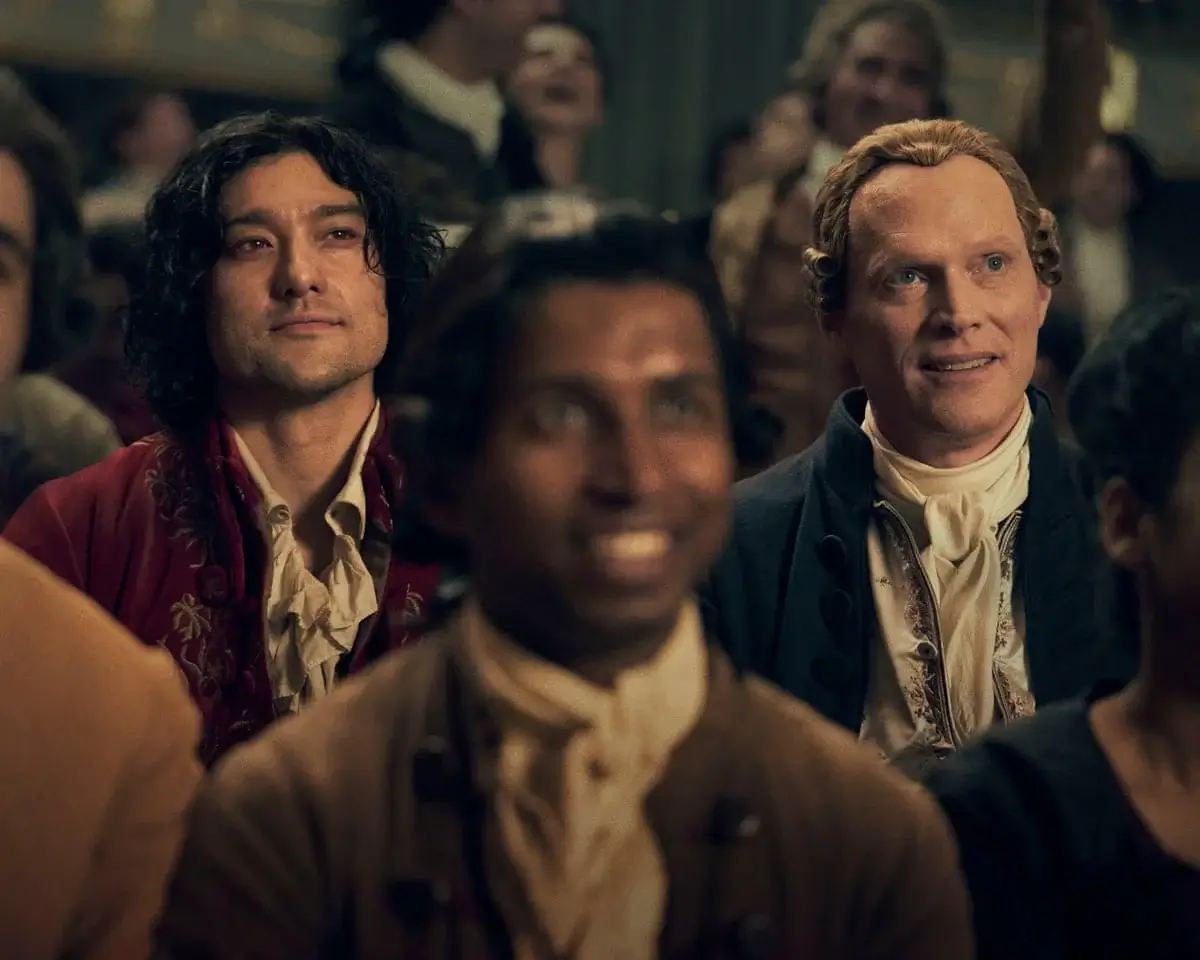
The Five-Part Miniseries Takes Time To Unpeel Two Geniuses
With five episodes, the writing has more time to explore Mozart’s unravelling mental health and Salieri’s wicked streak. The show also builds out from the source material to explore Salieri’s complicated relationship with God and his own mortality, as well as Mozart’s daddy issues. These new additions to the story fit in smoothly with the existing source material, giving a more rounded view of the tragedy of these two men.
The additional hours of time, also allow Barton to explore the ups and downs of Mozart’s home life, including his wife and the loss of his children. Gabrielle Creevy is a scene stealer as Mozart’s wife Constanze, who has no intention of staying a background figure in history. She does for Constanze what Jessie Buckley did for Shakespeare’s wife in Hamnet, portraying a woman trying to balance her own inner turmoil, her family tragedy and the madness of her genius husband.
While the expansion of the world is welcome, Amadeus does suffer from being dragged out an episode too long. The middle of this miniseries starts to feel like treading water as you wait for the inevitable to happen. The ending also doesn’t quite deliver the smack in the film of the source material, due to the slow unravelling of the unavoidable.
Amadeus certainly looks the part with no expenses spared when it comes to costumes, wigs and sets. Every episode is a feast for the eyes, but the show occasionally sacrifices character development and depth for spectacle. But maybe that is the point.
Paul Bettany is outstanding as the villainous Salieri, trapped by his own lack of bravery and jealousy. Will Sharpe, although never embodying a in his performance as Bettany, still bounces around the city like a puppy eager to explore their own limits. Both are as childish as they are brilliant. Neither plays the roles as extremely as Hulce and Abrahams, but upholding characters that are that larger-than-life over five hours would run the risk of becoming a caricature and losing any of the nuances of the writing. Chemistry fizzles between the two, who admire and despise each other to the same extent.
Much like the play, this miniseries uses these two real-life figures to explore jealousy, religion and the mystery of where talent comes from. Amadeus also explores timely themes like classism in the art and the battle creatives have between following their instincts and chasing fame and fortune.
Amadeus premieres on 8 May 2026, on Starz in the United States.













Reviews