
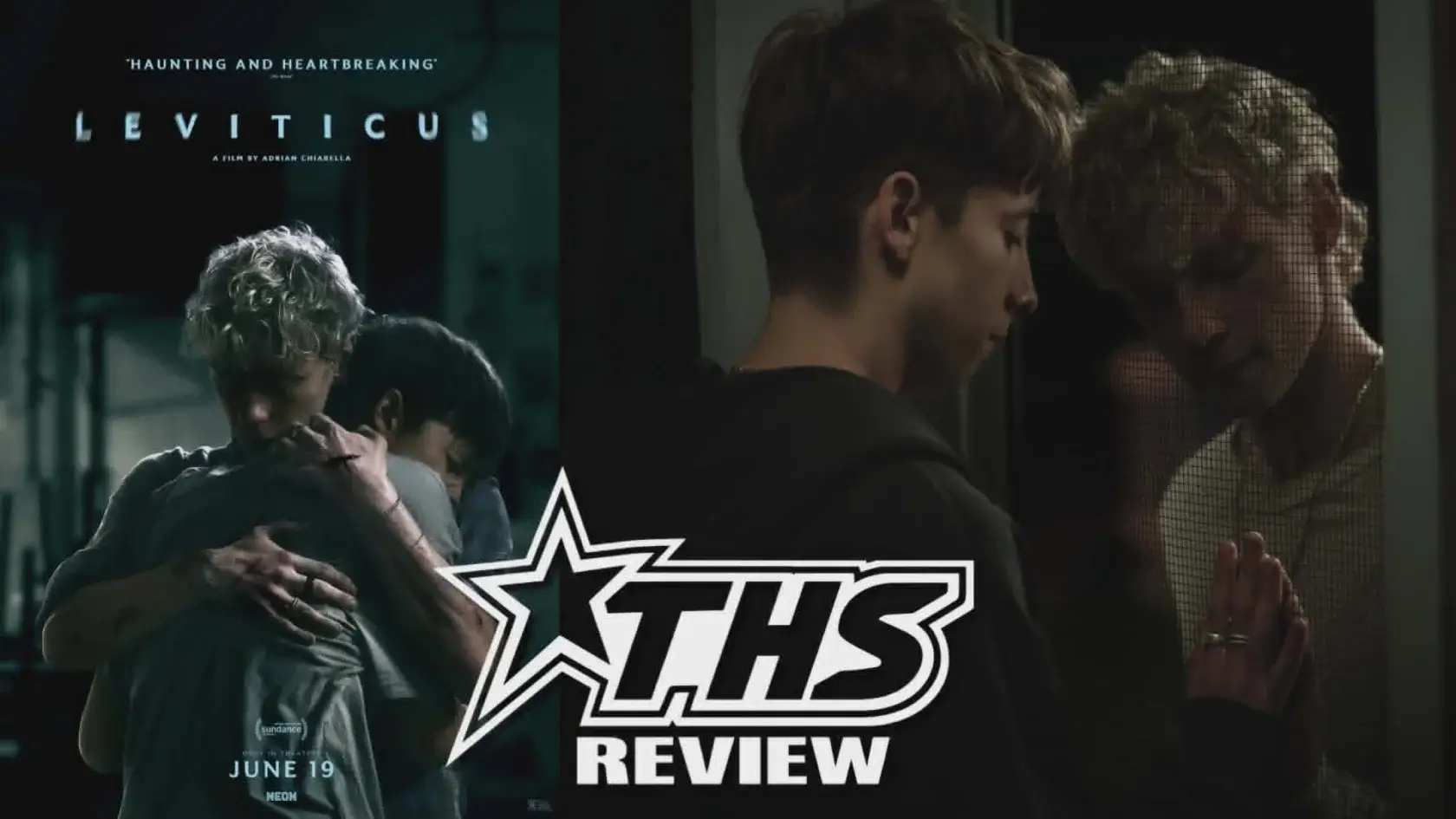
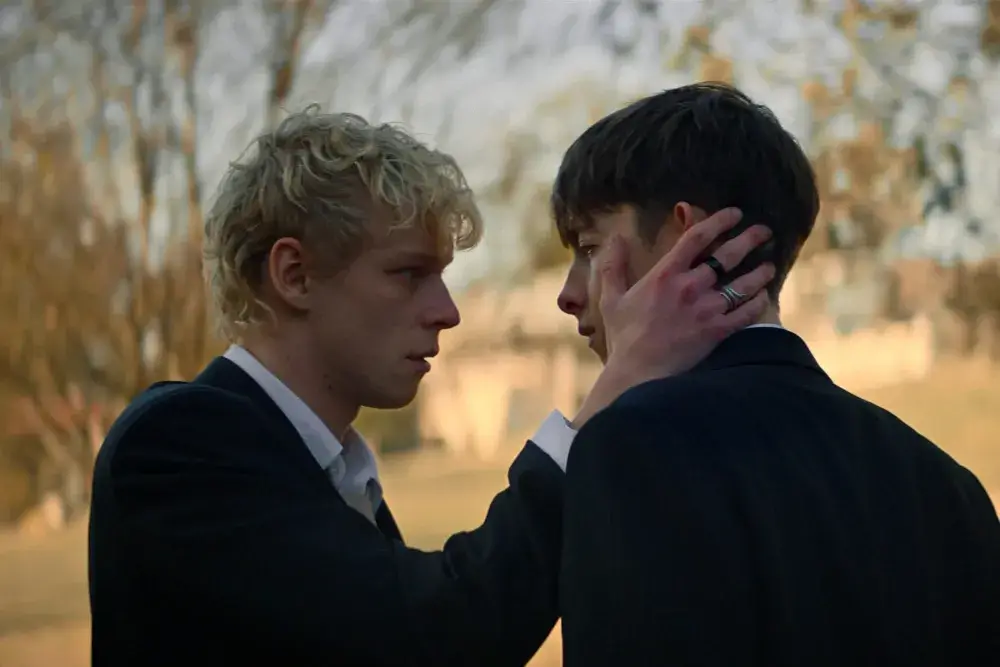
Leviticus takes us into suburban Australia, where two boys, Naim and Ryan (played by Joe Bird and Stacy Clausen), must navigate their growing feelings for one another in a fundamentalist town. Naim is new to the suburb, having moved there because of his single mother (Mia Wasikowska). When Naim meets Ryan, their brief romance is shattered as they both are subjected to a type of extreme conversion therapy that causes them to see monstrous versions of the other.
Premiering originally at Sundance on January 23 in the festival’s Midnight section, Leviticus has been garnering steady praise since. The film is writer/director Adrian Chiarella’s debut, and he explodes onto the scene with a quiet force, much like the force that is stalking these two young lovers.
The Book Of Leviticus
In the Bible, the Book of Leviticus stresses repentance among the sinful and unholy, allowing them to pursue holiness and purity in their life. That is the basis for the ritual the church uses. For Naim and Ryan, what they’re experiencing is, to their Christian parish, cause for atonement and sacrifice. It is something both boys are aware of, but in the throes of their young love, they feel removed from it, so long as they don’t tell anybody.
However, when Naim sees Ryan in the embrace of the pastor’s son (Jeremy Blewitt), he turns right to the church in a distressed pique. The pastor enlists a deliverance healer to rid Ryan and his son of sin–and at first, it seems like it is just for show. For Naim, that is probably what he expected and why he told on the pair in the first place.
Quickly, though, it proves to be anything but. As Ryan and the pastor’s son appear to undergo an exorcism, Naim watches on in horror before he flees. Not long after, he undergoes the ritual himself and begins being stalked. The entity is never explained besides something that takes the shape of the person you love. But as it is summoned in “cleansing” rituals like the ones featured in this film, with the sole purpose of ridding participants of their homosexuality, the entity needs almost no explanation.
The Darkness Of This Film Is Its Own Monster
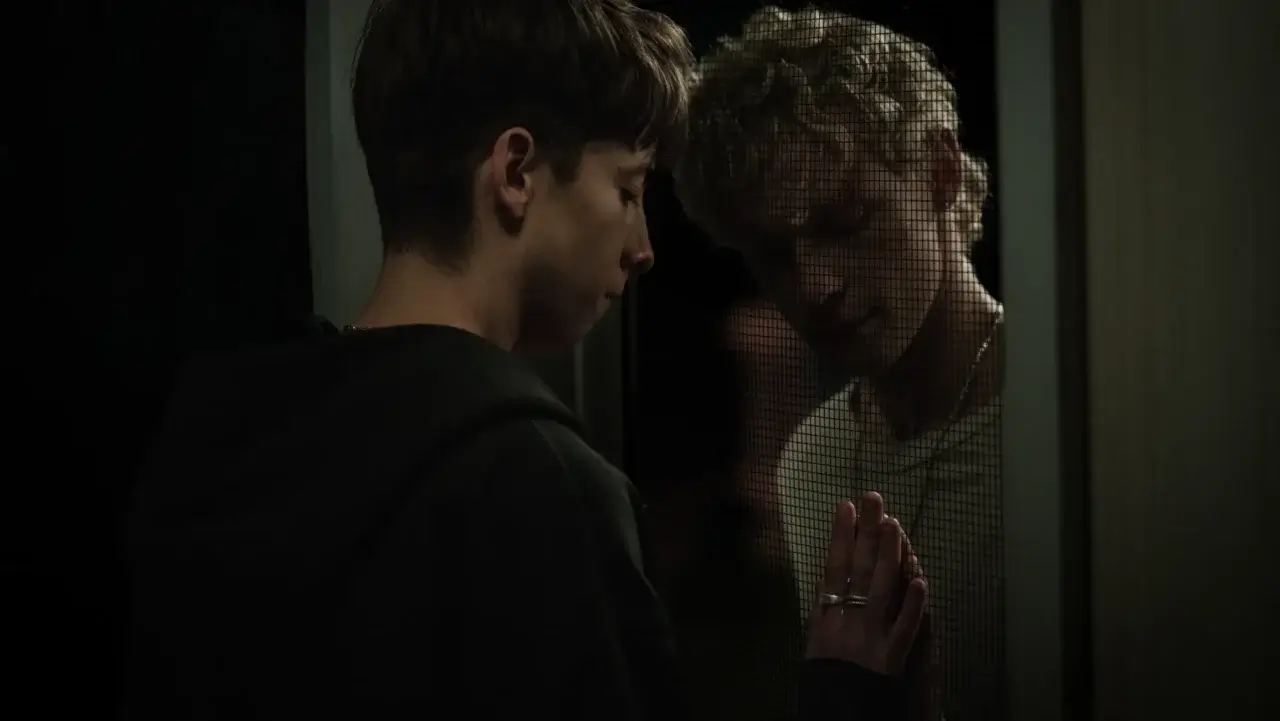
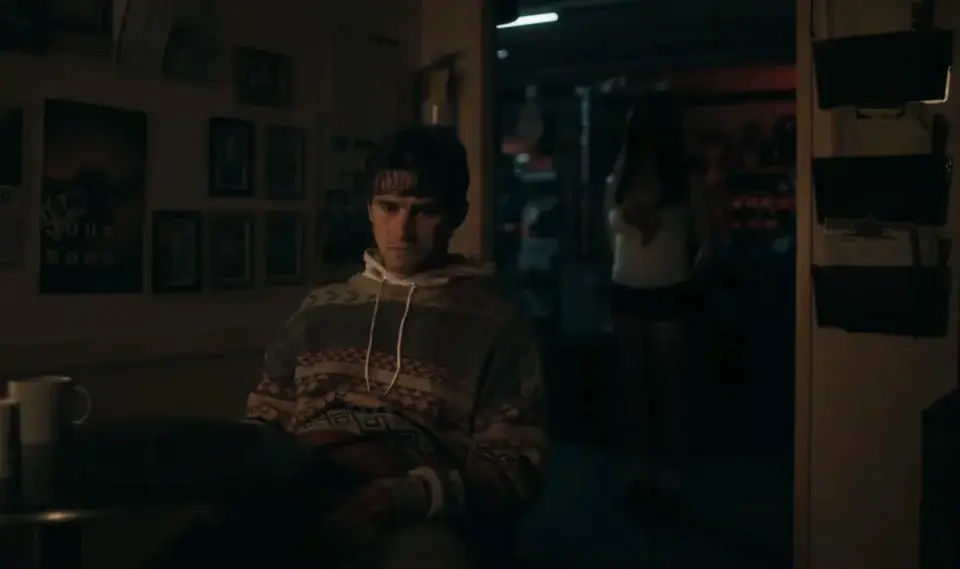
Darkness and shadow in Leviticus are used for more than just lighting. As the boys are stalked at every turn by these invisible entities, shadow is used to make us, as the viewers, feel just as hopeless in guessing whether or not it is the entity or the actual boy. In one scene, Naim and Ryan are talking through chicken wire. Ryan is mostly hidden in shadows as he desperately tries to convince Naim that it is him, not the entity, at the door.
Utilizing the lack of lighting taps into our primal horror. Along with stories of changelings, Chiarella’s story taps into the uncanny. Much like It Follows, the horror that lies within this monster reminds us of our fear of those who look like our loved ones. These rituals are done with the express purpose of scaring people out of their homosexuality. That is, if they don’t die first.
“They want us to be scared of each other,” Ryan says to Naim in a moment where they are not alone and are unable to discuss things more clearly. The entity, as we are shown in the opening scene of the film, is violent. As it continues to manifest, it will continue to attempt to kill the boys. Their choices, it seems, are to either kill themselves or never be alone again.
The choices Naim and Ryan must make mirror the real-world choices many queer kids face, just with a darker, sinister force to it. This reflection is one of the things that allows Leviticus to ground itself in reality and hit that chord of familiarity.
Final Thoughts on Leviticus
Though not a perfect film, Leviticus is still an introspective look at how queerness presents and why love is worth fighting for. Chiarella nails the machismo that protects a softer underside for many queer men, with Naim and Ryan’s physicality in their first scene being worn like armor. They tussle and jump around, proving their strength. Then, when the chips are down, the curtain falls, their feelings exposed.
Too many queer films are not allowed to be hopeful or uplifting. Horror films, especially, hinge on death. But that does not always need to be the case. Sometimes the experiences of simply being queer are enough.
For more Reviews, make sure to check back to That Hollywood Show.











Reviews