
“Lesbian Jesus” Creates a Sapphic Masterpiece
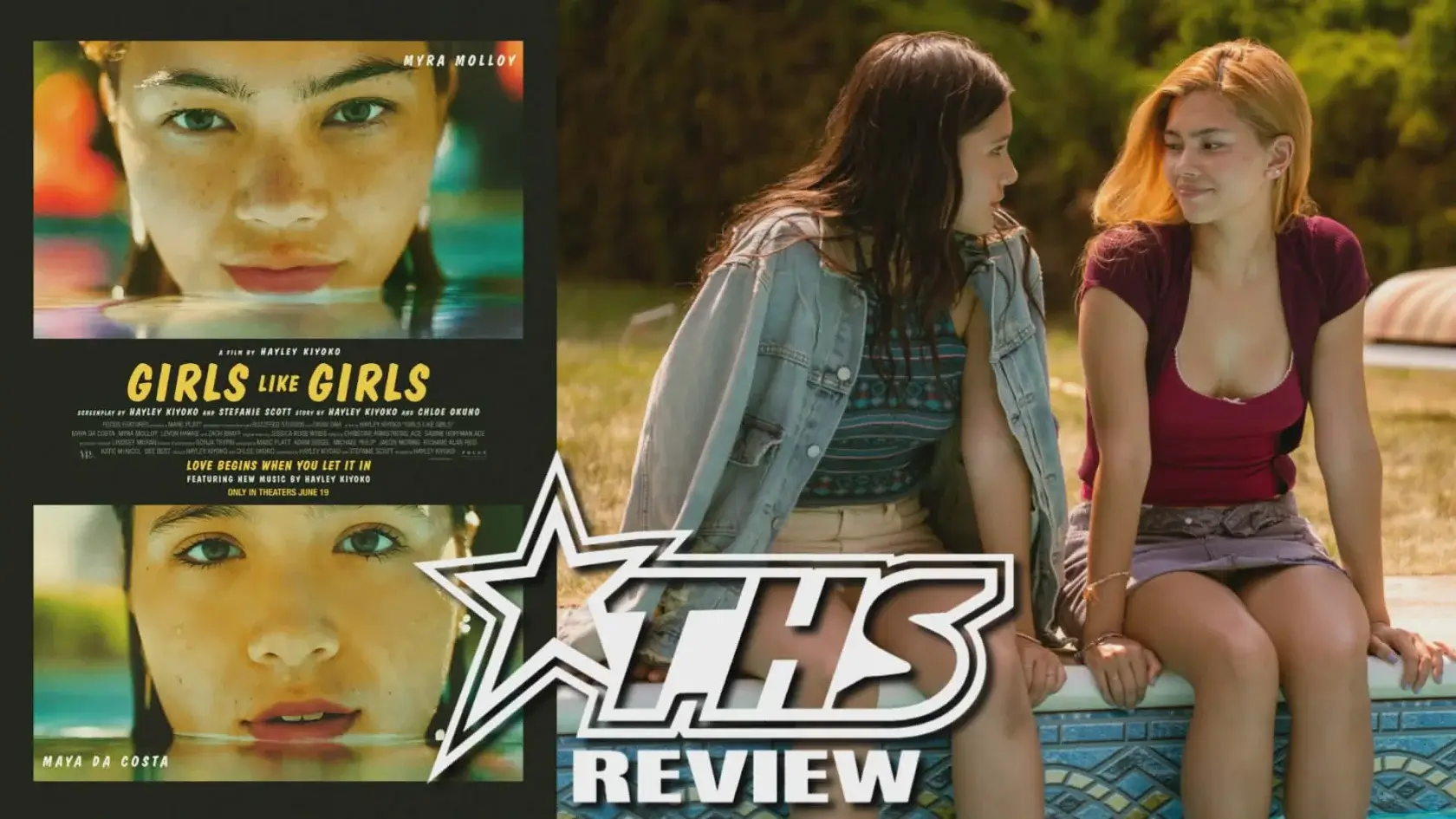
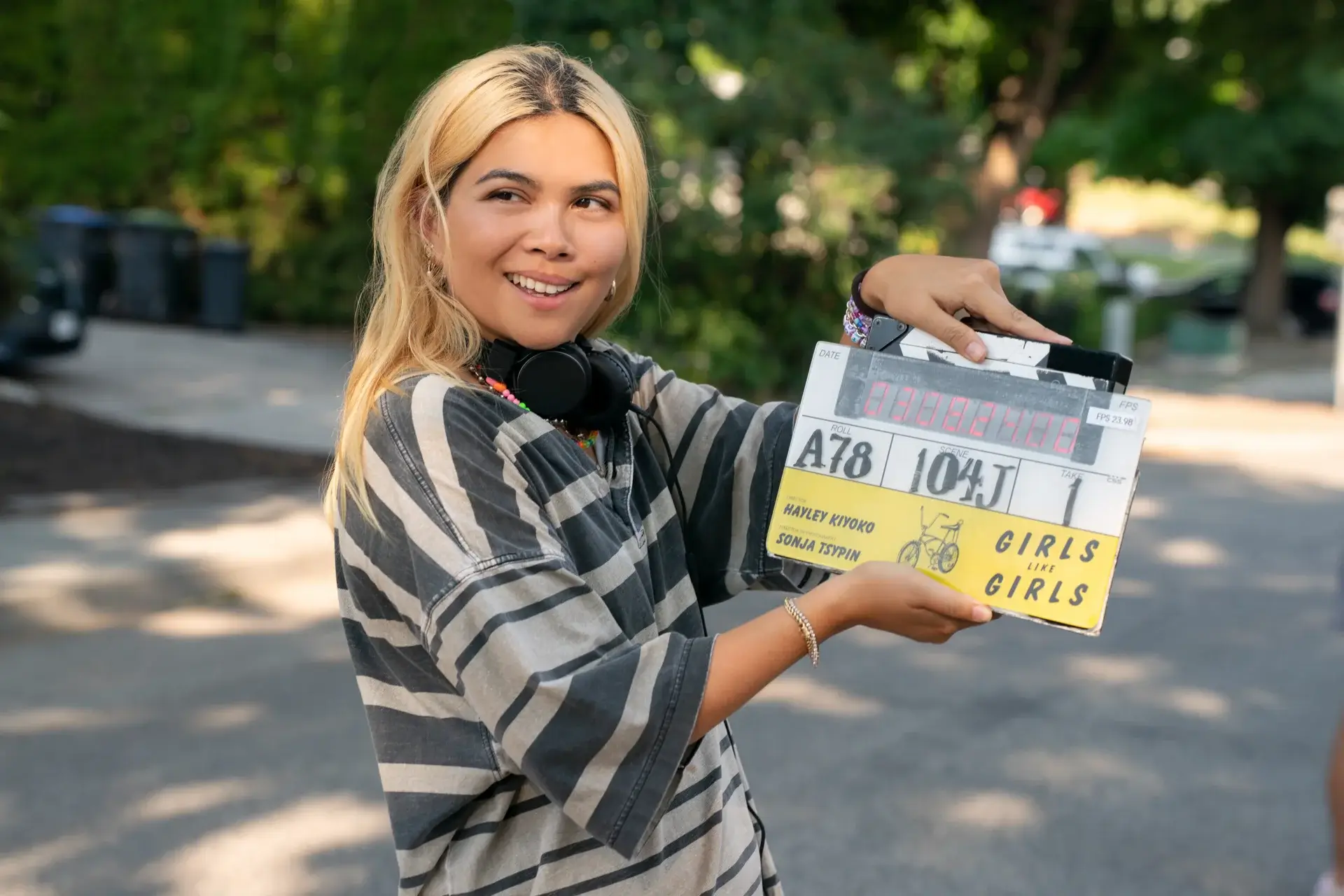
Hayley Kiyoko’s feature debut, Girls Like Girls (2026) is a charming and cinematic page-to-screen adaptation of Kiyoko’s album/book by the same name. It’s a sweeping, sometimes nostalgic – oftentimes sentimental – love letter to girls and the girls they fall in love with.
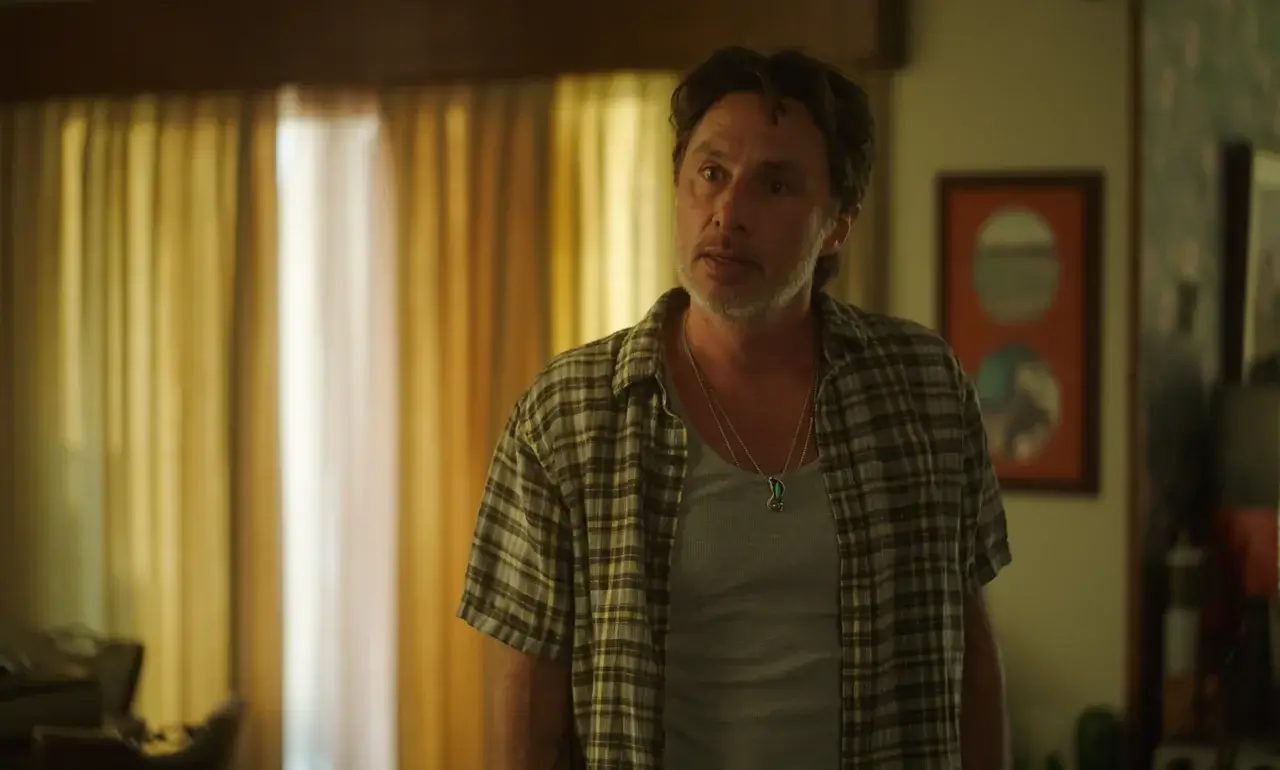
We follow Coley (newcomer Maya da Costa), a recent transplant to a nondescript town in the Pacific Northwest. She’s recently moved to the area with her estranged dad, Curt (a role played with loving patience by Zach Braff). There, Coley meets a local group of kids who attempt to take her under their wing at the behest of “cool girl” Sonya (Myra Molloy), an outgoing girl known for “taking in strays”. The group laughs at this description while Sonya just rolls her eyes at boytoy Trent (played with reliable frustration by Levon Hawke).
Coley joins the small town the summer before her senior year and is grateful to have made a group of new friends, though she’s not really interested in being popular or even being liked. She finds a reason to hang out, however, and that reason is Sonya. The chemistry between Coley and Sonya is evident even though neither girl knows fully what to do with it. So they hang, and they flirt and find reasons to invade each other’s personal space and touch each other while building up the courage to kiss.
A Supporting Cast Keeps the Story Grounded
Though Da Costa has a limited acting resume, she has a natural talent that she flaunts fearlessly on the screen. Coley’s open vulnerability would be easy to exaggerate in less capable hands, but Da Costa shines in the role, truly making it her own. Molloy has a cool easiness to her performance, where it feels like a well-worn skin. She could easily come off as someone who collects acquaintances – all of whom are very close to her heart but also forgettable. And really, that’s how she is, but Molloy makes it clear that her feelings for Coley are genuine and brimming with interest and intrigue. She also makes clear how new she is to letting others see her, and Molloy injects Sonya with enough humanity to make mistakes and be flawed.
In the realm of queer romance – regardless of subgenre – it’s interesting to see one where the factor that’s keeping them apart isn’t something that can be changed. We’ve seen films where the guy is emotionally distant, or the girl actually has eyes for another. The guy is going to college across the country, and the girl has decided to join a convent! Usually, the film is about overcoming negative barriers to the main couple being together. In Girls Like Girls, the “problem” is they are two girls who love each other. The “villain” is “Big H – Homophobia”.
The Big H
There’s no explicit hate outside of general jealousy from Trent, but the tension between the two young women is palpable. It’s tension that each of them tackles and handles differently; Coley veers towards acceptance while Sonya diverges towards rejection. Being teenagers means they don’t have the experience to ensure clear communication, so both are privy to the same pitfalls of all teenagers during that time of life.
Their actions, reactions, hopes, dreams, and wishes are so relatable that it keeps these moments sympathetic instead of exasperating. That kind of grace is helmed by powerful, grounded performances and passionate direction. There’s no doubt that Kiyoko – sometimes dubbed “Lesbian Jesus” wrote this story with love and reverence. No character is one-dimensional, but they’re also not blaring; they don’t become white noise. Coley and Sonya exist in the quiet moments they blissfully indulge in.
The film is not an action-packed thriller, but it also never lags. It has a musician’s pacing and intuition to know the exact right time to transform. As a long-time musician herself, Kiyoko seems to write and direct with an emphasis on physicality and movement. The words are there, but they’re accentuated by the rhythm, sometimes melodic, sometimes frantic. They can’t say “I love you” to each other, so instead they opt for the more kawaii version – “Olive Juice”. The love they feel for one another is shown rather than told; while that’s thrilling for the audience, it’s not enough for Coley, and that’s okay.
Credit: Courtesy of Focus Features
Along with Coley’s exploration of her sexual identity, we also learn she’s grieving her recently deceased mother. She’s living with her dad who left when Coley was young, leading to a sense of abandonment during her most vulnerable years. Curt is trying, and Braff gives Curt the humanity needed to know he needs to be insistent but also caring. The drive in the relationship between Cole and Curt adds a special emotional layer to the film.
Coley seems to live with the mantra of having nothing left to use, except that it’s clear she doesn’t know she’s doing it. It causes her to be brave, but also devastated when that bravery seems to fail her. She feels alone when she’s not and part of her journey is understanding that even though her future seems to expand past the walls of her small town, she can still love and live life within them.
They hang and… find reasons to invade each other’s personal space and touch each other while building up the courage to kiss about it.
Final Thoughts
Girls Like Girls is a diary, a love letter and a beautiful form of inclusive representation. I love that we get a queer coming-of-age story that’s centered around two young Asian women and the additional conflict that cultural limitations can bring. Again, it’s not heavy-handed, but you understand the burden of expectation on Sonya’s shoulders and why appearance is so important to her. All of the nonverbal signals help paint the picture of our heroines as more detailed and nuanced. The film isn’t necessarily about the things that bring Coley and Sonya together or keep them apart, it’s about them. Or more specifically; it’s about Coley’s reception of things in her life and self-editing what she can and can’t handle. There are lovely scenes of loving unconditionally, but also finally setting boundaries. Also, knowing when to lower the protective walls around her.
Kiyoko has been working on some iteration of Girls Like Girls for years. She waited until she had the right backing, the right cast, the right crew and she provided the bulk of the music. Everything coalesques perfectly to create a beautiful, thrumming romance that will leave you smiling and hopeful.
For more Reviews, make sure to check back to That Hollywood Show.













Reviews