
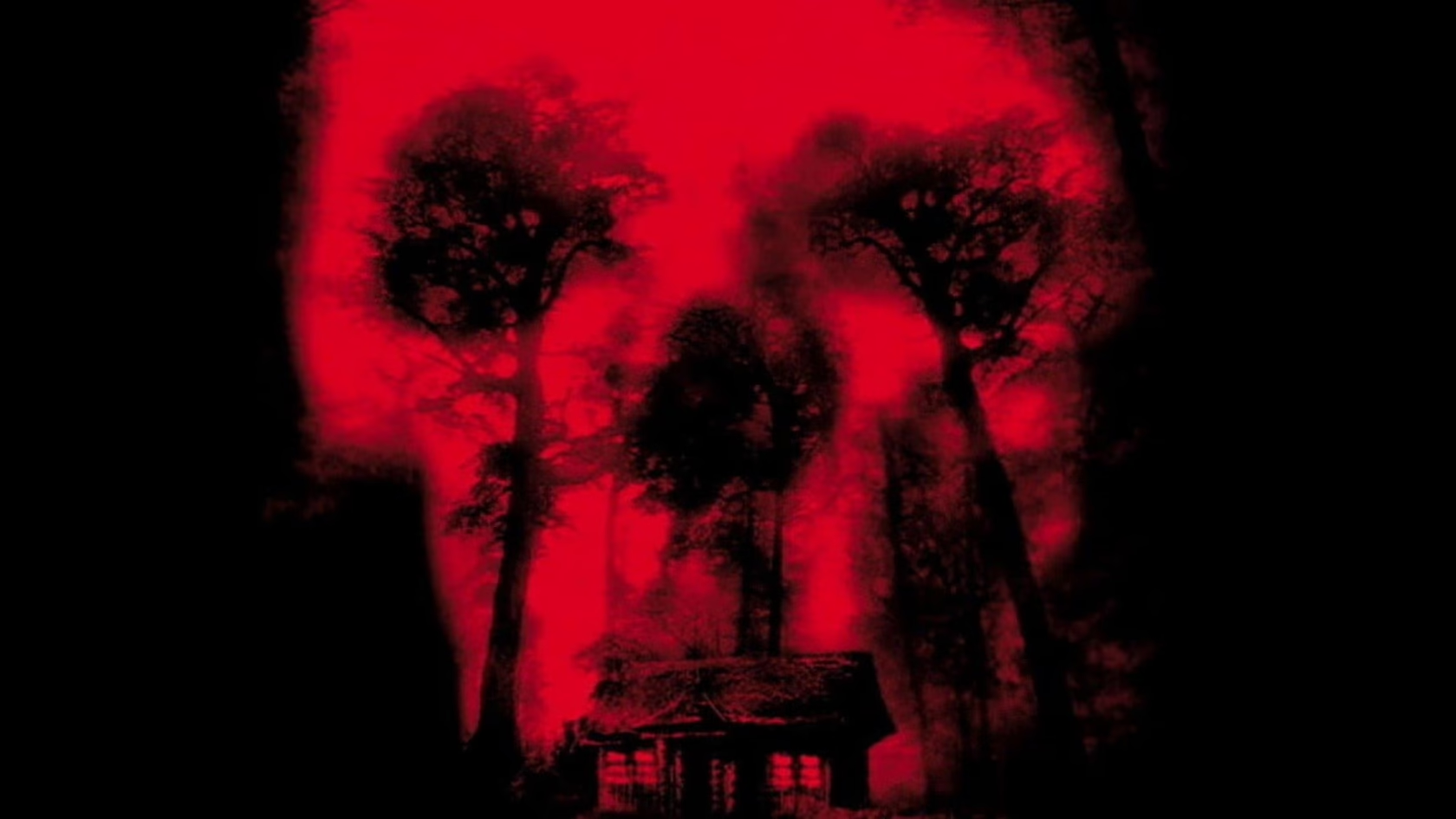
The horror genre is no stranger to bringing notice to filmmakers who emerge as a breath of fresh air. This year alone, we had Curry Barker with his critical and box office phenomenon, Obsession, as well as Kane Parsons concocting A24’s biggest financial hit with Backrooms. There are always new directors who change the game in the world of horror and take it to the next level, and in 2002, it was a man named Eli Roth with a little movie called Cabin Fever.
A last-minute screening of the film that year would completely change his life, and by September 12, 2003, the general moviegoing audience got to see what had the industry in such a tizzy. With Roth’s Ice Cream Man opening this weekend, it’s the right time to revisit the film that kicked off his career and maybe assert whether or not he has lived up to the promise from his frighteningly clever debut.
Directed by Roth, who co-wrote the screenplay with Randy Pearlstein, Cabin Fever follows a group of five college friends who rent a cabin in the woods and, through a series of unfortunate events, come in contact with an unknown flesh-eating disease. The film stars Rider Strong, Jordan Ladd, James DeBello, Cerina Vincent, Joey Kern, and Giuseppe Andrews.
Eli Roth’s Real-Life Inspirations
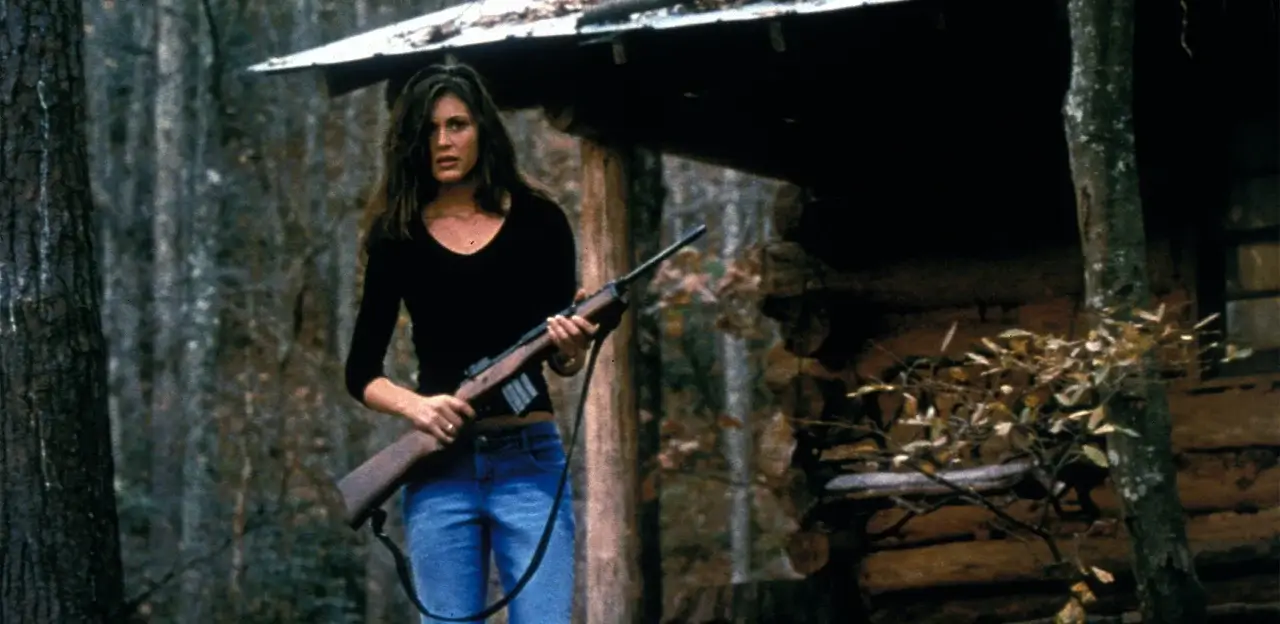
Roth’s love of the horror genre is evident, and the inspiration for Cabin Fever is clear from the start. There are shades of Sam Raimi’s The Evil Dead, and they’re mixed with visual homages to Tobe Hooper’s The Texas Chain Saw Massacre and Wes Craven’s The Last House on the Left.
Raimi’s influence is most apparent, especially in confining the characters to the cabin in the woods as the evil from the outside begins to infiltrate what should be a safe space for the protagonists. Eventually, the seeds of distrust begin to take root, and the “cabin fever” they’re experiencing starts to affect their psyches and turn them against each other. In terms of look and style, Scott Kevan’s cinematography is reminiscent of Daniel Pearl’s raw, unpolished style for The Texas Chain Saw Massacre, especially with the use of natural harsh sunlight and warm hues while the visceral realism of Victor Hurwitz’s cinematography for The Last House on the Left provides a visual inspiration. Roth is working with similar low-budget sensibilities, but beyond looking to the horror maestros who came before him, Roth had his very own personal experience that helped shape the plot.
Roth has mentioned before that the main inspiration for Cabin Fever came from his getting a skin infection while working on a farm in Iceland. From this experience, Roth can dig into deeper psychological themes that would help make Cabin Fever more than a series of gore sequences (although there are plenty).
There is an isolation one feels when one’s physical appearance is afflicted in any way. There are several moments in Cabin Fever as the virus begins to consume the group that the very physical deterioration they begin to experience plays a role in the separation of the characters. Not only has the situation personally isolated you, but the people who claim to be your friends begin to isolate you as well, out of fear of becoming the very thing they’re trying to shun.
Cabin Fever Found Harsh Realism In Basic Human Nature
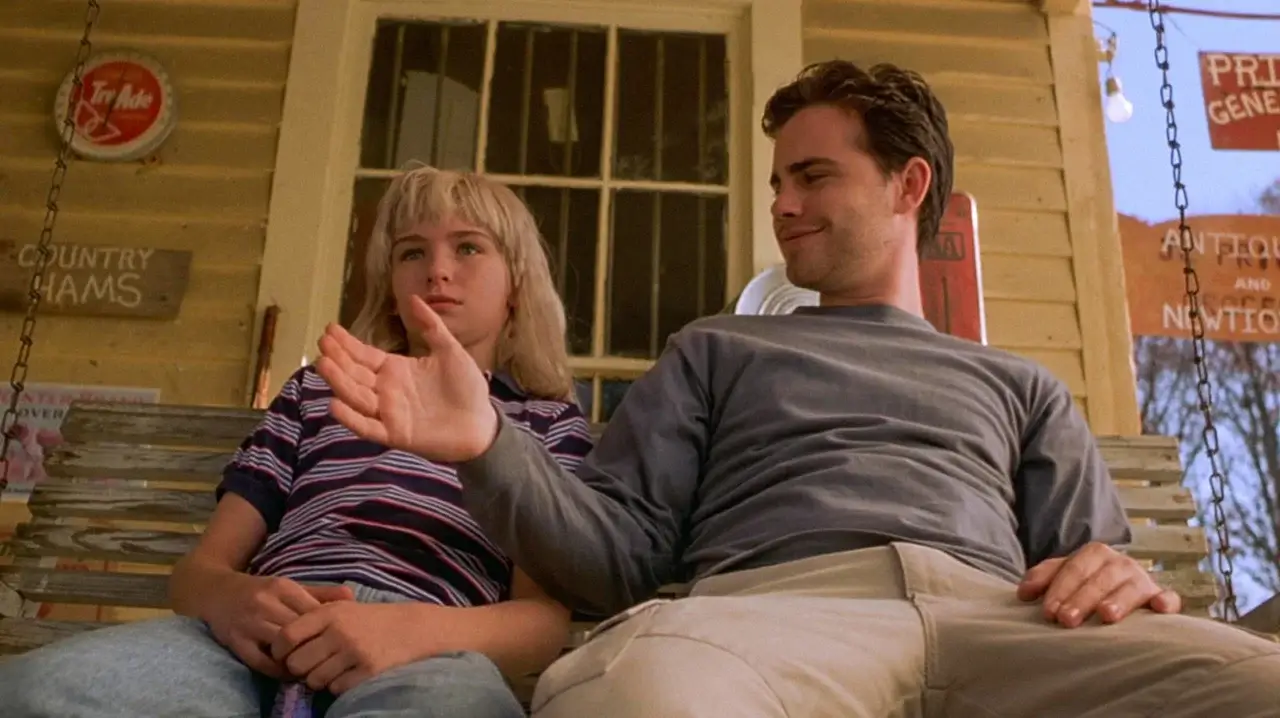
Beyond Cabin Fever’s primary premise, the film spoke to how society can turn its nose up at people and environments that are different from what they’re accustomed to. Through the five college kids who descend on an area that isn’t in line with their familiarity, Cabin Fever provides a sometimes uneasy depiction of urban vs. rural society.
Because of their discomfort, there is also a superiority complex that develops. The people seem off, and they aren’t afraid to acknowledge it, to the point of it being disrespectful, that there is something very weird about the locals they come in contact with. This is especially apparent once they stop at a local store to buy alcohol. They come across the eccentric store owner who, in true backwoods horror movie fashion, makes creepy remarks about the woods, and they also encounter the store owner’s non-verbal son (the infamous “pancakes” scene). Although the locals are off-putting, it’s their reaction to them that is cleverly flipped when one of the infected characters returns there for help later in the film.
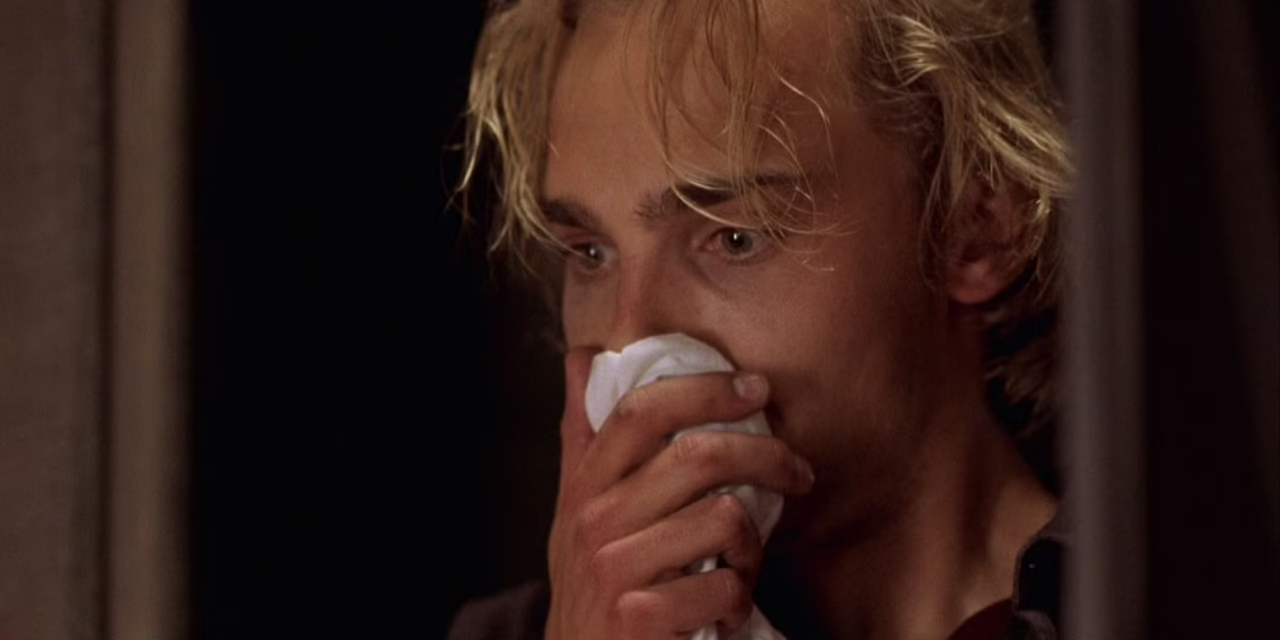
Once the virus begins to spread, Bert (James DeBello) returns to the store, looking completely disheveled and in need of help. However, due to his appearance, the locals have now deemed him a threat and treat him with a heightened hostility that they experienced early in the film. As they believe that the out-of-towners could be spreading a disease, they decide to hunt them down and kill them, which speaks to how society can turn its head on you when there is a lack of communication and understanding when class comes into play.
The social commentary of Cabin Fever became even stronger years after its release as we endured the COVID-19 pandemic. In the early days of the virus, human nature showed its true colors in the face of that disease. Because of the uncertainty of COVID-19 in the beginning and differences regarding how to treat it and contain it, we as a society saw how fear and distrust can make even the most sane people behave irrationally. It might be a $1.5 million budgeted horror film, but its themes ran deep which elevates Roth’s comedy horror film into something with a bit more meaning about human nature.
Cabin Fever Faced Rejection Before Success
Cabin Fever explored themes that would resonate as told through a comedic horror lens, but its road to the big screen, for everyone to see the vision, wouldn’t be an easy one. The film would go on to be the subject of a big bidding war, and it’s the stuff of independent horror legend how it all came together.
Roth required an additional $400,000 to finish mixing his film, and he was at the point of borrowing money from his parents to pay his rent. Roth believed that submitting the film to the Toronto Film Festival could get the movie the exposure he needed, but the film was rejected by the festival. All seemed lost until Colin Geddes, the head of programming for the Midnight Madness portion of the festival, entered the picture. Geddes saw the film, loved it, and added it as the festival’s closing feature. Due to the film’s placement on the schedule, Roth was afforded more time to finish mixing and get prints made for the project.
Once Cabin Fever had its Midnight Madness screening, a groundswell of buzz began to grow, and it would be Lionsgate that jumped in to snatch up the potential horror hit. Lionsgate acquired the film for $3.5 million and committed to spending $12 million on prints and advertising, making it the largest screen commitment the studio had made up to that point. Roth has said that when he previously tried to sell Cabin Fever, everyone wanted it to make it more like Scream, but Lionsgate didn’t force him to compromise his vision and had faith in the offbeat nature of the film.
Eli Roth Gets Acceptance From The Greats
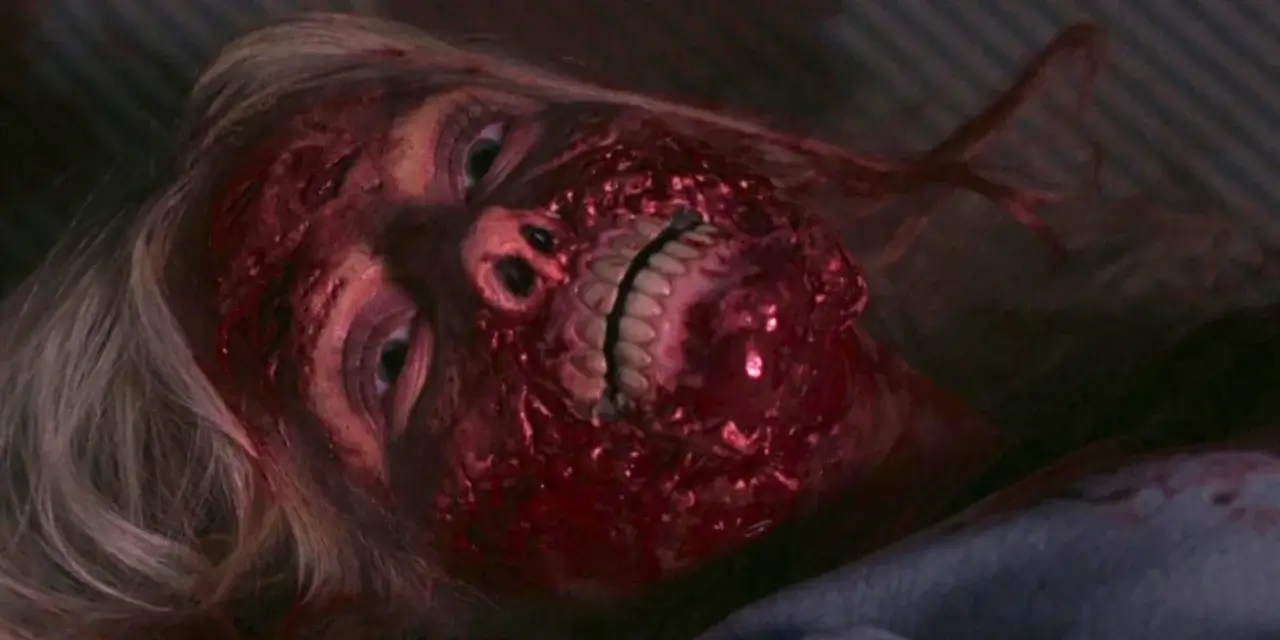
Cabin Fever opened worldwide on September 12, 2003, and buzz not only around the film but also around the director hit a fever pitch. Its festival run put it on the radar, which made it noticed by one director in particular, who gave the movie a huge assist that would go a long way to making horror fans take notice.
Filmmaker Peter Jackson was a huge fan of the film after he screened it and, despite stepping into big-budget filmmaking with The Lord of the Rings, Jackson had his beginnings in horror comedies that seemed to walk in lockstep with Cabin Fever. Films like Bad Taste and the zombie comedy Braindead made Jackson an authority on Roth’s intended sensibilities, and it likely didn’t hurt to learn that the director stopped production on The Return of the King twice to screen the movie for his New Zealand cast and crew.
Jackson’s approval would eventually make its way into the film’s marketing. The director gave his approval for his pull quote to be used for the film, which declared, “Horror fans have been waiting for years for a movie like Cabin Fever…I loved it.” That’s the kind of publicity you can’t buy, and it would go on to become a huge part of the film’s promotion at the time of its release.
In addition to Jackson, Quentin Tarantino also loved the film and would go on to call Roth “the future of horror.” It’s praise that would lead to the pair working together on future projects such as Hostel, which went a long way to solidifying Roth’s stature as a genre filmmaker at the time. The buzz would carry Cabin Fever to substantial box office success given its $1.5 million budget, with the film going on to gross $21.2 million domestically and $30.6 million worldwide. The success also made Lionsgate’s investment worth it as it became the studio’s highest-grossing film released that year.
Has Eli Roth Lived Up To The Promise of Cabin Fever?
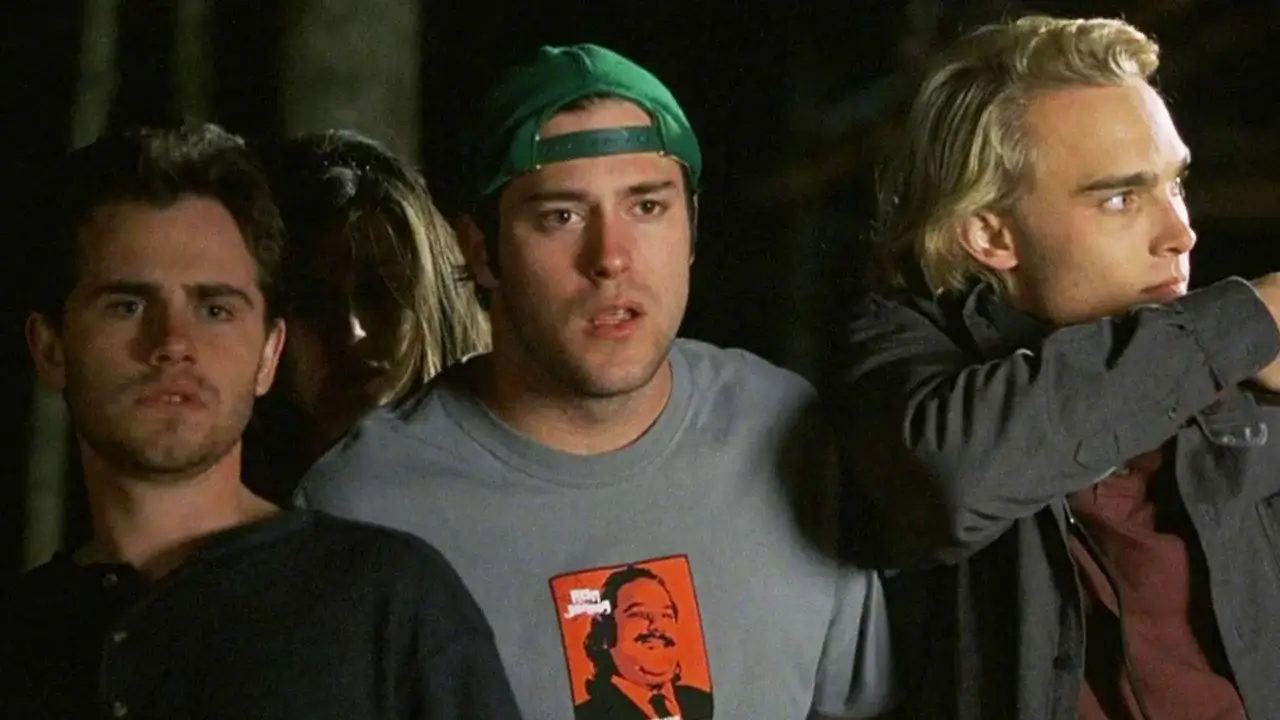
With a breakout success like Cabin Fever, the spotlight is instantly put on what you’re going to do next. Roth became the “It” boy of horror at the time of the film’s release and while not all mainstream critics loved the movie (It’s a respectable 62 percent on Rotten Tomatoes), horror aficionados took notice of Roth and in the wake of the film’s success, he became associated with the rise of a sub-genre of horror that proved popular but has been one that has been difficult for him to shake.
After movies like Saw and Cabin Fever found success, the torture porn sub-genre began to become more prevalent. Torture porn, or splatter films as they’re sometimes called, are horror films that intentionally focus on gore and graphic violence. Critics tend to believe that they sacrifice story and narrative for gratuitous depictions of various limbs being removed. These horror films had a huge resurgence in the early 2000s, and Roth led that charge, most notably with 2005’s Hostel. While that movie was a huge success for Roth ($82 million grossed worldwide on a $4.8 million budget), he became defined by the sub-genre and led to a perception that he was a one-note director.
Depending on who you ask, Roth has found it difficult to live up to Tarantino calling him “the future of horror.” Hostel: Part II and The Green Inferno, while having entertainment value, fell back on gore and shock value that no longer felt fresh, while his foray into other genres, like the erotic thriller Knock Knock, the fantasy film The House with a Clock in Its Walls, and the video game-based action comedy Borderlands, didn’t allude to groundbreaking talents that could stand up outside of his comfort zone. He shows spurts of the promise that defined his debut (Thanksgiving is a fun throwback slasher film), but he never seems to maintain it (his current film, Ice Cream Man, is even being derided by horror critics at 29 percent rotten on Rotten Tomatoes).
That being said, Roth’s passion for the genre, even when his films don’t live up to expectations, can’t be denied and it was on display early on with Cabin Fever, a film that provided something fresh for the genre when we really needed it and a movie that still holds up all these years later as a clever blend of horror, comedy, and social commentary.
Ice Cream Man opens in theaters nationwide this Friday.
For more on Horror, make sure to check back to That Hollywood Show.
-
 Score: 7.5
‘The Dog Stars’ Review – A Mishmash With Two Beautiful People Surviving The Apocalypse
I remember seeing the trailer for The Dog Stars and having my eyes roll back in my head. Do we really need more post-apocalyptic stories when we’re living in a real life apocalypse? Do we need another movie that has an analog for COVID-19 and the aftermath that had on our own society. Well,
-
‘It Ends’ Director Alex Ullom Wants To Keep The Setting Of The Movie Anonymous… And That’s A Good Thing [Interview]
It Ends opened in limited theaters over the weekend but hits general audiences across the country on August 28th. I had the chance to sit down with the writer/director of the film, Alex Ullom. Our conversation centered on some of the choices of the film, including the setting, the car used in the
-
Score: 9.9
Jaadugar: A Witch In Mongolia Ep. 9 “Tengri”: War And Poison [Review]
Jaadugar: A Witch in Mongolia both kicks up the action and ramps up the stakes with a very poisonous plotline in Ep. 9 “Tengri”. In fact, this is the most amount of bloody action we’ve seen in this anime in a while. However, in terms of story, it still takes second fiddle to the very sudden
-
Ryan Gosling Developing Flintstones Project at Warner Bros.
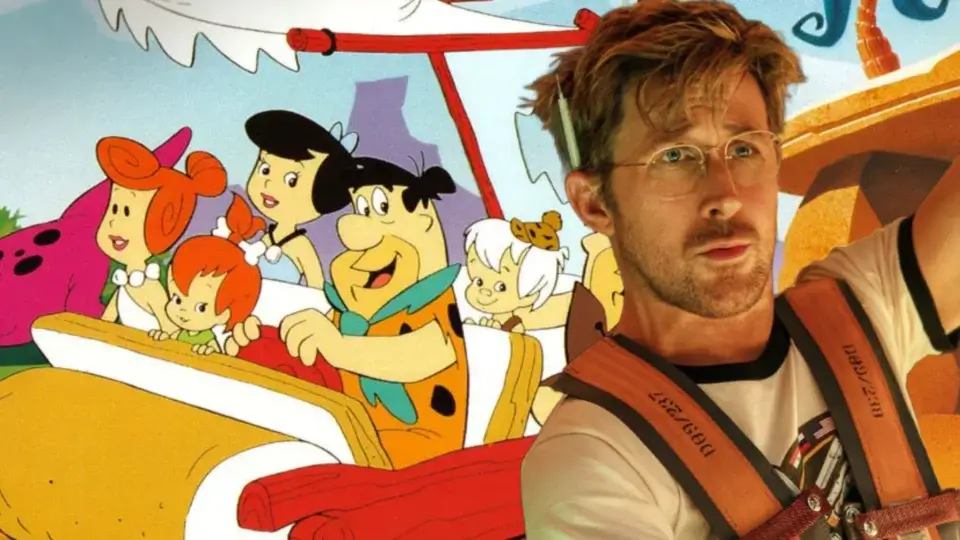
Warner Bros. is currently developing a live-action Flintstones project with Ryan Gosling. Producer Jessie Henderson, his partner in crime is also in on the trip to Bedrock with one of TV’s most-famous families. Deadline reports that the project would focus on a grown-up version of Bamm-Bamm Rubble.













Reviews