
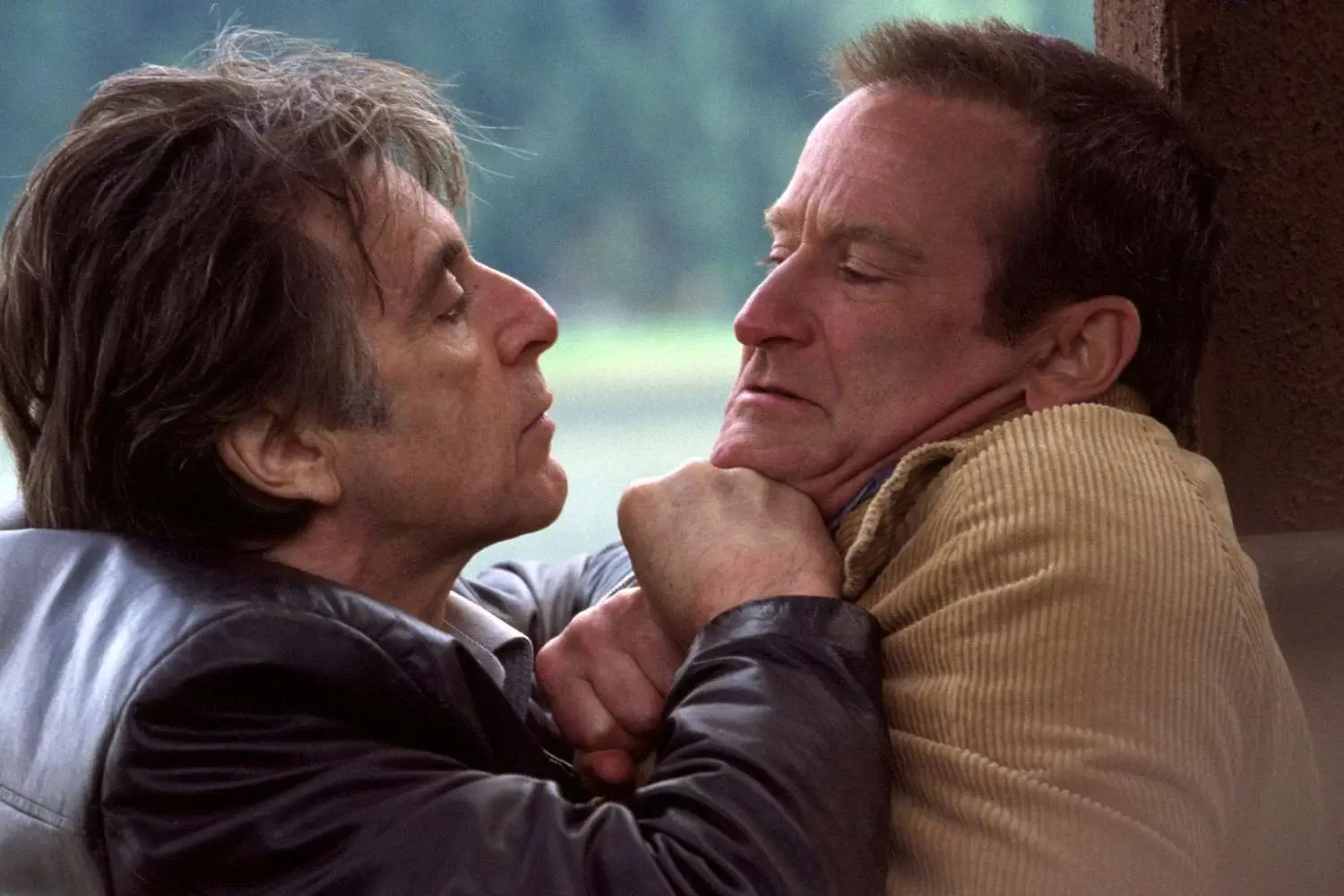
With a filmography as incredible as Christopher Nolan’s, there is bound to be one film that gets lost in the shuffle of his own excellence. In the case of the prolific director who has arguably never made a bad movie, the film in question is 2002’s Insomnia. The thriller was Nolan’s third feature film after 1998’s Following and his 2000 breakthrough effort, Memento, and it began his longstanding relationship with Warner Bros. that would endure until he parted ways with the studio after the release of Tenet, which ultimately led Nolan to make Oppenheimer and this weekend’s epic drama film, The Odyssey, with Universal Pictures.
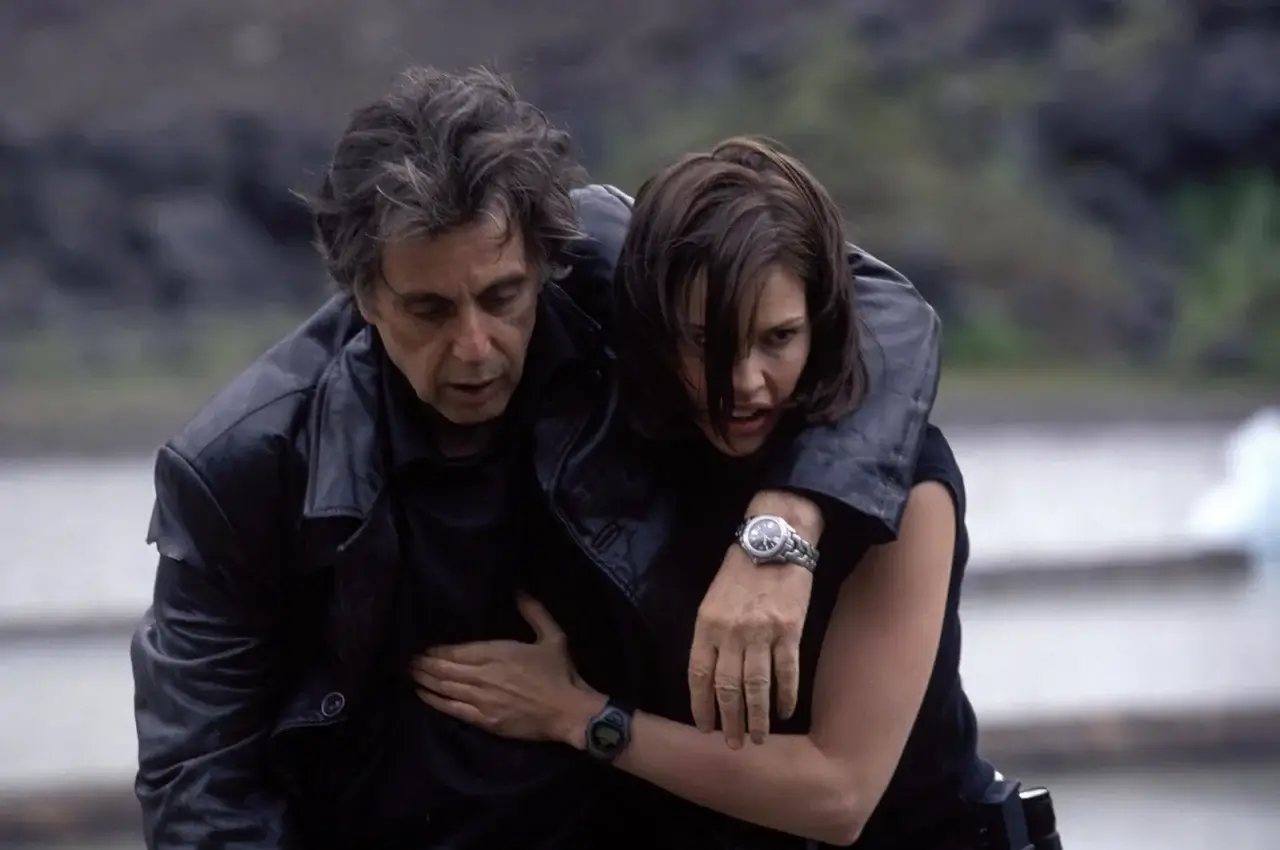
Insomnia is a remake of a 1997 Norwegian film of the same name that starred Stellan Skarsgård. Written by Hillary Seitz, Nolan’s film follows the same beats as the original, although the locations of the events have changed. The 2002 remake stars Al Pacino as Will Dormer, a Los Angeles homicide detective investigating the murder of a teenage girl in Nightmute, Alaska. Dormer is joined by his partner Hap Eckhart (Martin Donovan), but despite the partnership, tensions are brewing. Back in Los Angeles, Internal Affairs is investigating one of Dormer’s past cases, and Eckhart reveals that he’s going to testify against his partner in exchange for immunity because improprieties have been discovered that could bury them both.
Dormer has convicted various criminals based on questionable evidence, and they could go free if these cases are reopened and investigated. In the midst of all of this, the murderer of the teenage girl they’re trying to lure out witnesses an accidental shooting committed by Dormer, and it turns into a game of cat and mouse between the two that grows more complicated when Dormer begins to be plagued by insomnia due to his paranoia and guilt, as well as the never-ending daylight of Alaska. The film also stars Robin Williams, Hilary Swank, Maura Tierney, Nicky Katt, and Paul Dooley.
Christopher Nolan & Hollywood Don’t Make Films Like This Anymore
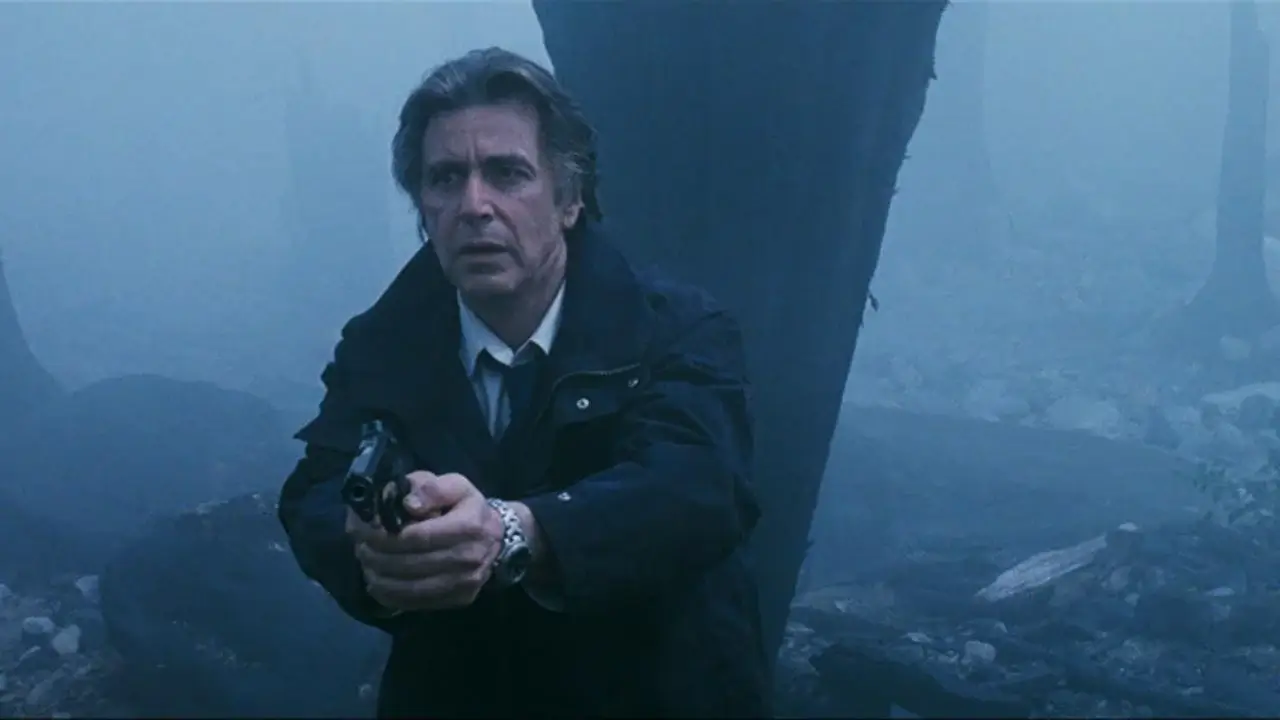
Insomnia is the kind of movie that Hollywood and Nolan don’t really make anymore. It’s a mid-budget R-rated thriller that features slow-boil tension over action. Nolan broadened his scope with Batman Begins, and with the success of that film, his directorial choices shifted toward bigger films that tested his growing abilities as a filmmaker. One might say that his last “smaller-scale” film was The Prestige in 2006, so Insomnia is a very important film for Nolan because it acts as a bridge between the attention-grabbing independent work that garnered him early attention and the blockbuster work that would ultimately begin to define his career.
Nolan has expressed that he is drawn to smaller films as a viewer, even citing such efforts as Past Lives and Aftersun as favorites during a 2024 Time Magazine interview when he also made it clear why he won’t go back to making smaller films himself becaue he feels a “responsibility” to continue to make larger scale films because knows how precious it is to be in a position to do so. That doesn’t mean we can’t miss it.
“I’m drawn to working at a large scale because I know how fragile the opportunity to marshal those resources is. I know that there are so many filmmakers out there in the world who would give their eye teeth to have the resources I put together, and I feel I have the responsibility to use them in the most productive and interesting way.”
In many ways, Insomnia does feel a bit like a relic of the past, but it is crafted by a filmmaker who didn’t want to make a by-the-numbers thriller. Because of the success of films like The Silence of the Lambs, thrillers began to be cranked out in Hollywood at a pace that made it feel like audiences were seeing one every weekend. By the time Insomnia was released in 2002, it was a sub-genre that was beginning to fade a bit at the box office, but Nolan was able to put his hands on a genre that was dying out and not only breathe some life into it but elevate it to a more prestigious level that had been missing from recent thriller offerings. Insomnia wasn’t built on cheap thrills. This was a film that dug into the psychology of its characters and gave adults a film that offered sophisticated storytelling as its narrative carefully unraveled.
Christopher Nolan Hones His Style With Insomnia
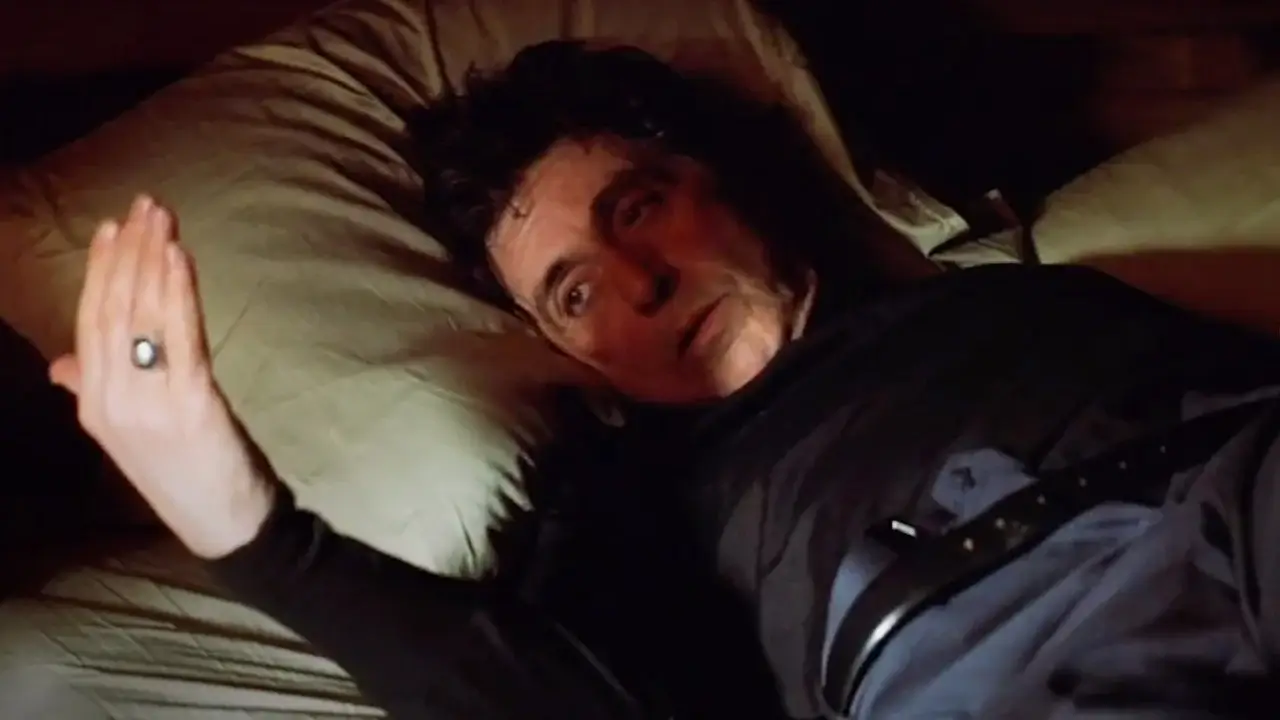
When you watch Insomnia, you really are witnessing Nolan come into himself as a director. A lot of his stylistic genius is on display here, and, given the film’s relatively modest $46 million budget, you can tell that he would be able to expand on his scope if given a little more money to play with. Something he would prove as his budgets increased after working on Insomnia.
There are some very gorgeous set pieces in the film, including the visually astonishing glacier-to-forest opening plane flight that starts the movie. Nolan makes full use of his locations in Alaska and British Columbia as he captures the beauty and mystique of the locales while also making them appear claustrophobic and nightmarish as Dormer’s insomnia begins to consume him. Nolan also uses the 24-hour daylight setting as a way to shine a spotlight on Dormer. Even though he’s on the right side of the law searching for the killer of a teenage girl, he can’t hide from his own personal wrongdoings. The “midnight sun” shines a light on his past and the deterioration of his own mind.
The film becomes a perfect union between director and cinematographer, as Wally Pfister helps give Insomnia this sense that someone is always lurking and watching. In the vastness of this space are secrets and people a step away from discovering them. This is what Nolan conveys through his visual palette in Insomnia without a single word being spoken. This is just more proof that whether he’s working with a $46 million budget or a $250 million budget, every move that Nolan makes, whether it’s visually or through the narrative, is in service to the story. Nolan’s visual aesthetic is so strong that it makes the story feel like his own despite the fact that this is the only film in his filmography where he had no input on the screenplay.
Insomnia Features Actors At The Top Of Their Game
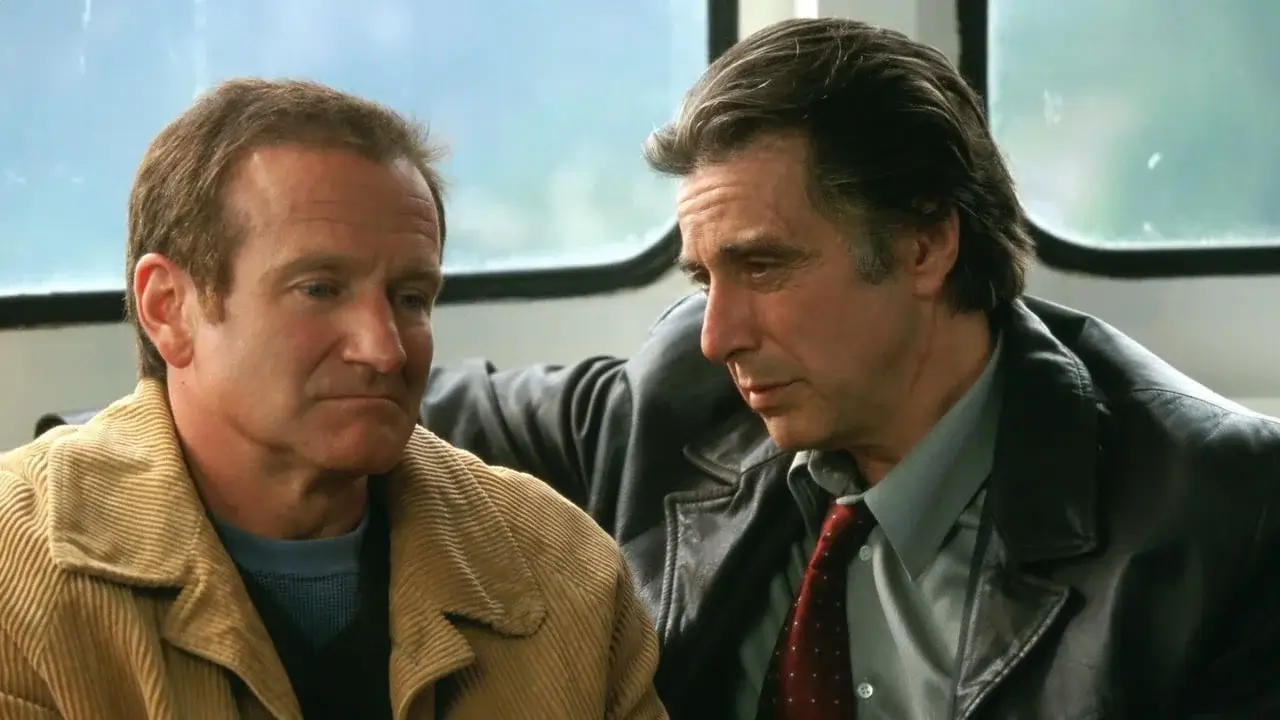
Nolan had the benefit of a great cast led by three Academy Award winners, including Pacino as Detective Dormer, who brings some of his signature personality traits to the role but layers them with unique complexities that make him a very complicated protagonist. Then there is Williams as Walter Finch, a darker role for the comedic actor who was no stranger to dramas but certainly had never portrayed someone with such a calm demeanor that hid a menace lurking within. Rounding out the trio of lead roles is Swank as the idealistic Ellie Burr, a role that could’ve been thankless in lesser hands, but she manages to hold her own in her scenes with Pacino with an earnestness that makes her the one character in the movie to root for because she believes in the integrity of her job.
One of the best choices that Nolan makes with the actors, particularly in regards to Pacino and Williams, is that he lets them play to their strengths and gets out of their way. Pacino and Williams have two very different acting styles, but they find a synchronicity in their scenes that adds to the moral ambiguity of their characters. Pacino’s almost combustible personality is wonderfully juxtaposed with Williams’ quiet, but chilling, portrayal of Finch as a protagonist with a secret is being blackmailed by the killer he’s pursuing.
Each actor is dedicated to the psychological dread of the story, and their performances elevate the tension as Insomnia is more concerned with the nuance of its character study rather than relying on elaborate action set pieces. The film might be a slow burn, but each scene adds fuel to a fire that makes the mvhe movie feel like it could explode at any moment.
Insomnia Was A Hit But Is Often Overlooked
Released in the summer of 2002, Insomnia was a hit upon release, grossing $113.7 million worldwide on a $46 million budget. The take wasn’t too bad for an adult-skewing thriller released against summer blockbusters, and it scored with critics as well, registering a 92 percent on Rotten Tomatoes, which is a better score than some of his more fan-favorite films such as Interstellar (73 percent) and The Prestige (76 percent). However, despite its success at the time, Insomnia is often overlooked in Nolan’s filmography. Not because it’s bad by any means, but because what followed was so stellar that Insomnia just looks and feels small in comparison.
Nolan himself has addressed Insomnia as the most underrated film in his filmography. During an interview for Tom Shone’s 2020 book The Nolan Variations, Nolan said Insomnia is “probably the most underrated “ of all his movies and even called it one of his “most personal films.”
I’m very proud of the film. I think, of all my films, it’s probably the most underrated. […] The reality is it’s one of my most personal films in terms of what it was to make it. It was a very vivid time in my life. It was my first studio film, I was on location, it was the first time I’d worked with huge movie stars.”
Even though Nolan’s scope became bigger and the scale in which he worked continued to top itself with each subsequent film. Insomnia served the purpose of proving that Nolan was capable of studio filmmaking, and it still stands as a glowing example that he’s a master of his craft who can work with very little or handle the most grandiose of productions.
The Odyssey hits screens nationwide this Friday.
-
 Score: 10
‘You Can See Everything’: An Astonishing Achievement That Changes How We Experience Cinema – [Review]
Once in a generation, a film comes along that redefines how we think about movies. Something so incisive, so singular, it can only be understood from the moment it is consumed rather than informed by anything previously accomplished. You Can See Everything is that kind of work. A masterpiece in
-
Crunchyroll Releasing ‘Attack On Titan: The Last Attack’ And More On Home Video In January 2027
Crunchyroll is proud to announce a pair of anime series that will be coming to home video, all next year in January 2027. As you can tell by the title, one of those anime series will actually be the anime film Attack on Titan: The Last Attack. This anime film is effectively an anime film
-

‘City The Animation’ Coming Soon To Home Video As Collector’s Edition
Fans of oddball slice of life comedy anime series like Nichijou and Azumanga Daioh will find the 2025 anime adaptation of CITY to be familiar. It has that same kind of surreal comedy vibe, featuring a highly quirky cast of characters and bizarre situations one would not normally find in a slice of
-
Score: 9.3
Magic Knight Rayearth (2026) Ep. 2 “The Legend Begins”: Every Journey Begins With A Single Mokona [Review]
The reboot of Magic Knight Rayearth finally takes our trio of main characters on the first steps of their quest in Ep. 2 “The Legend Begins”. If you’ve read or seen any traditional sword and sorcery fantasy story, then this part of the journey will look familiar to you. It even comes with the




What Might Come After the Multiverse Boom
Every era of genre storytelling eventually hits a saturation point: grimdark reboots, found-footage horror, YA dystopias. The multiverse probably isn’t going away completely, but it will stop being the default twist.
What’s likely next:
- Smaller, character-driven arcs inside big franchises
- Self-contained seasons and films that don’t require a viewing checklist
- New “hooks” built around tone and format (anthologies, limited-series experiments) instead of timeline gymnastics
When the dust settles, the multiverse stories that last will be the ones that used the concept to say something true about their characters, not just their continuity.


![The “Digger” Complex: Satirical Deconstruction Through Nihilistic Cynicism and Movie Stars [Spoilers]](https://thathollywoodshow.com/wp-content/uploads/2026/07/diggers-1500x844-1-960x540.webp "diggers-1500×844")



Reviews