
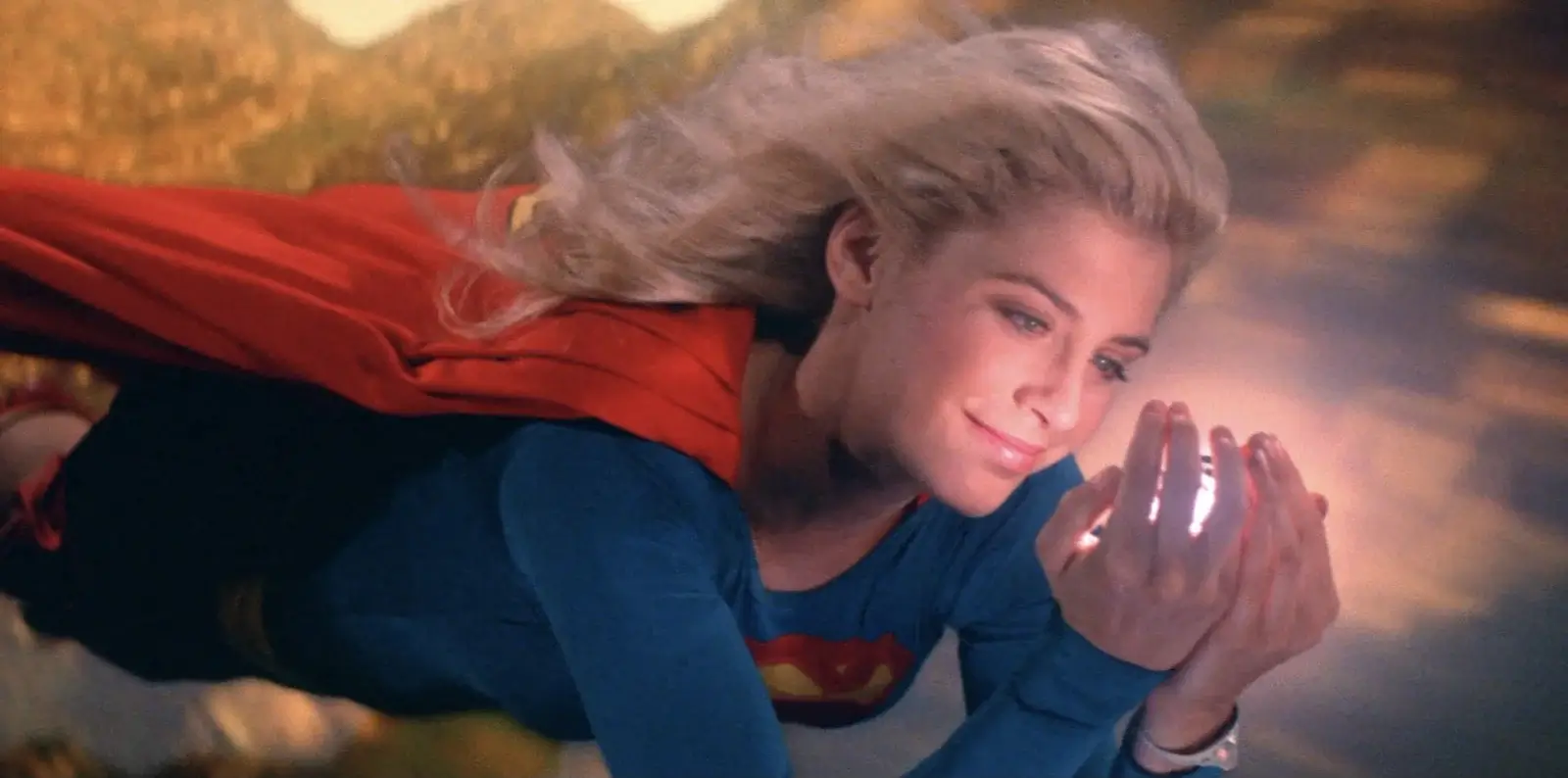
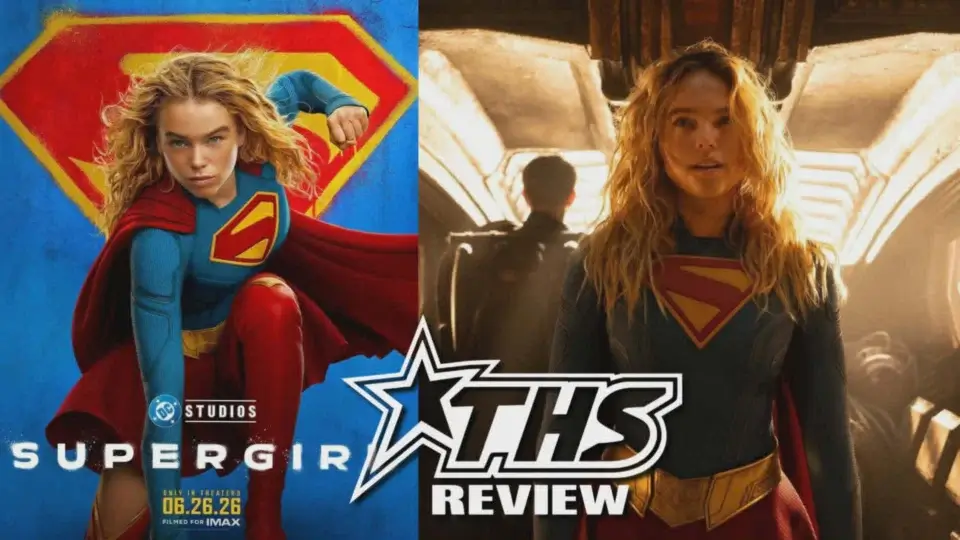
This weekend, a new take on Supergirl hits the big screen under the new DC Universe, but this isn’t the first time that Kara Zor-El has been given the chance to entertain moviegoers. Back in 1984, director Jeannot Szwarc and writer David Odell gave it their shot with a film that was intended to be a direct spin-off of the Superman film series at the time, taking place after the events of Superman III, but a series of events led to the film becoming a critical and financial disaster. However, like many relics from the ’80s that were once met with disdain, 1984’s Supergirl has earned a bit of a cult following as a piece of camp from the decade entertains in its own right, while Helen Slater’s take on the titular character has garnered its own share of praise.
In the film, Superman’s cousin Kara Zor-El (Slater) leaves her Kryptonian community of Argo City to find a powerful energy orb that powers her home, known as the Omegahedron, when it finds itself lost on planet Earth and in the clutches of a witch named Selena (Faye Dunaway). The movie also stars Hart Bochner, Peter Cook, Mia Farrow, Brenda Vaccaro, Peter O’Toole, and Marc McClure, who reprises his role as Jimmy Olsen from the Superman films.
How Supergirl Came To Be
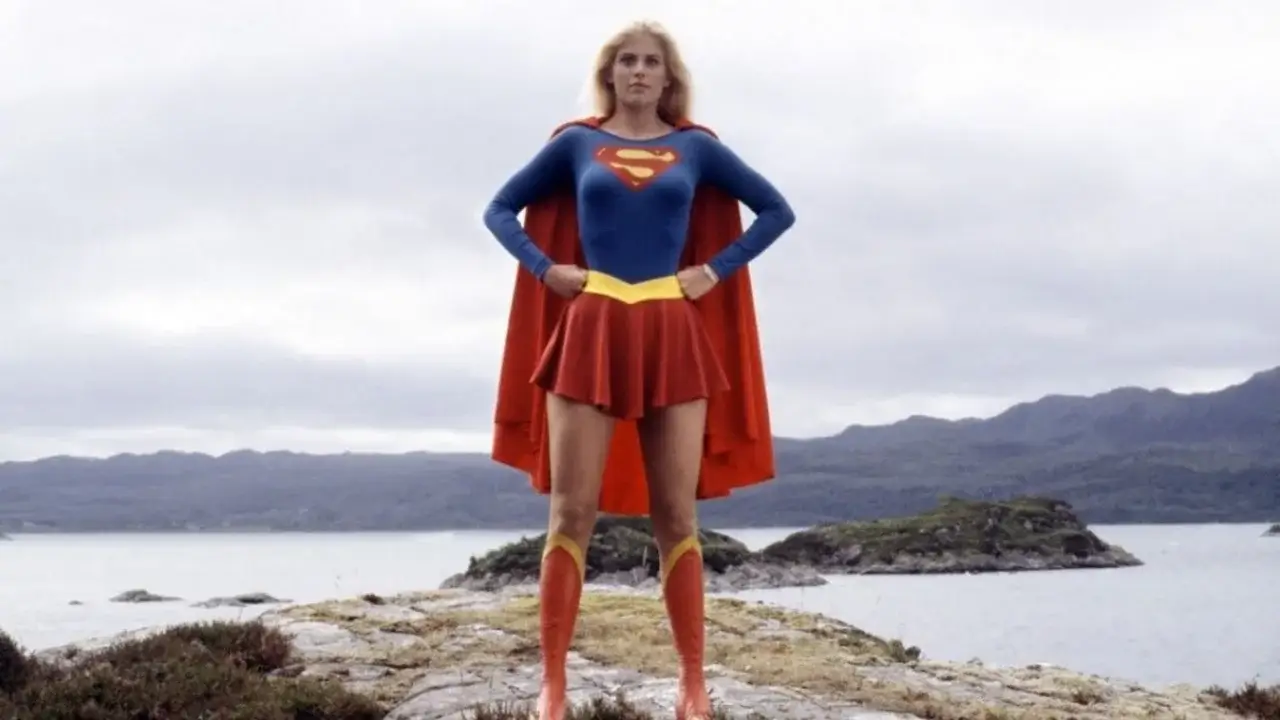
In addition to purchasing the film rights for Superman: The Movie in the ’70s, French film producer Alexander Salkind and his son Ilya also sprung for the rights to the character of Supergirl should they want to use her in any Superman sequels or spin-offs. The original intention was to include her in Superman III to set up the character for a standalone film, but that plot line was dropped from the project, with the Salkinds instead announcing the Supergirl film in 1982 before Superman III got in front of the cameras.
Things took a turn when Superman III was released in 1983 and was greeted with less than enthusiastic responses from critics and moviegoers alike. The film was viewed as a joke by most critics, currently sitting with a 31 percent on Rotten Tomatoes, and its grosses came down considerably from Superman II, grossing $60 million domestically and $80.2 million worldwide compared to the $108.2 million domestic gross of its predecessor and way shy of its $216.3 million global tally.
After the response to Superman III, the Salkinds believed that a Supergirl movie could breathe new life into the IP for those who felt that Superman was already starting to feel stale. That’s not to say that Superman wasn’t intended to be involved, as the original plot involved Kara rescuing her mighty cousin, but securing the actor who brought him to life on the big screen would be one of many problems for the film.
Supergirl Finds A Director & Its Lead, But No Christopher Reeve
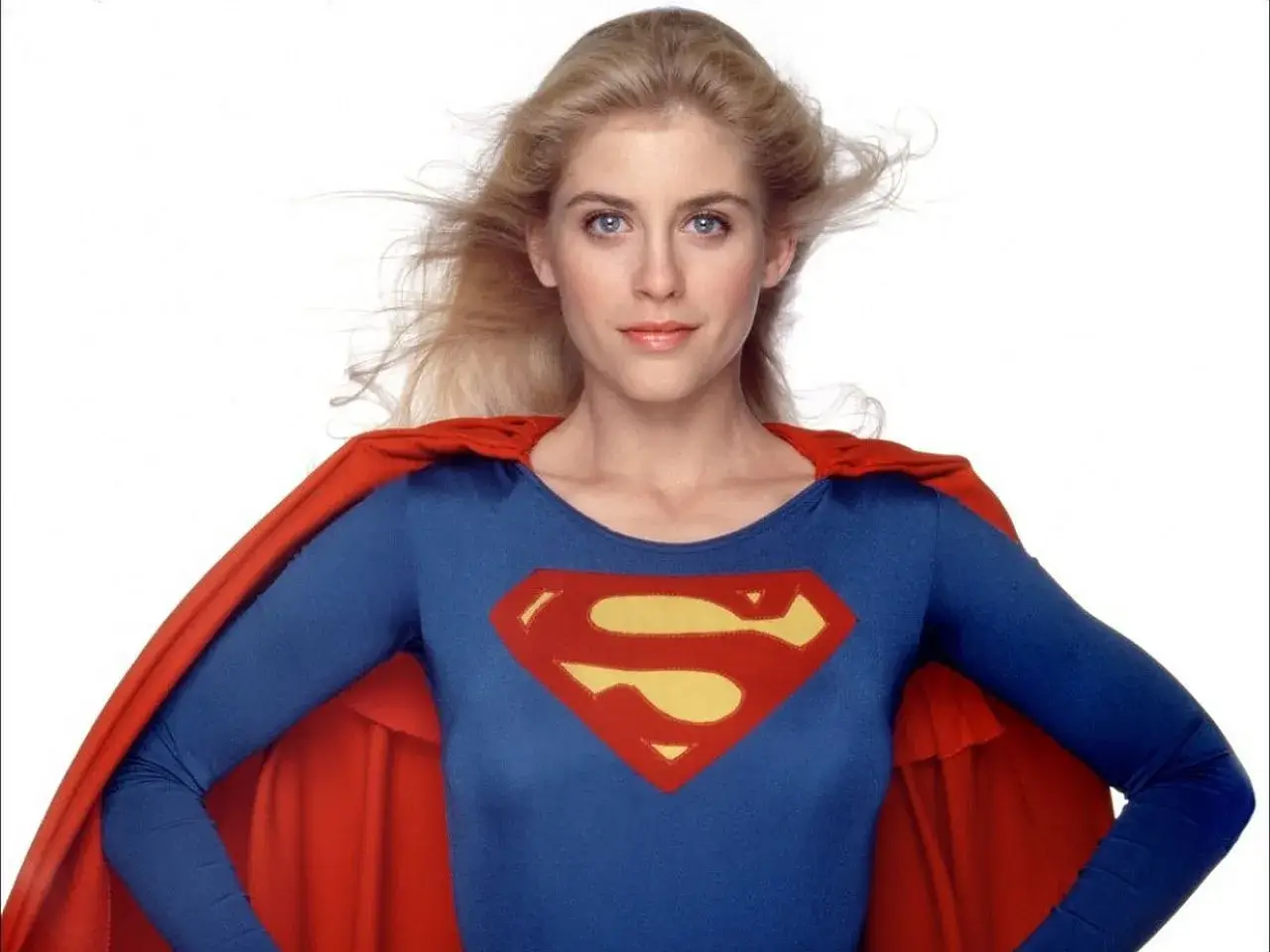
Producers originally wanted Richard Lester at the helm because not only did he direct Superman III, but he also finished up Superman II after they fired the film’s original director, Richard Donner. Lester ultimately turned down the project, as did Robert Wise, best known for his Academy Award-winning work on 1961’s West Side Story and 1965’s The Sound of Music. French filmmaker Jeannot Szwarc would eventually be tasked with directing Supergirl’s first big-screen adventure, at the time best known for helming Jaws 2 and primarily working in television. Oddly enough, he was chosen following a meeting with Superman’s Christopher Reeve, who thought he was a good fit, but that’s going to be a little awkward a bit later.
With a director in place, Supergirl needed its heroine and a couple of familiar names tested for the role. Demi Moore and Brook Shields gave it their best shot, but they were shot down by Ilya and Szwarc, who believed that an unknown actress would be a better fit, much like Reeve was when he was cast in Superman. Following a very exhaustive search, producers and the film’s director went with 19-year-old Helen Slater, whose eagerness to earn the role was likely palpable since she reportedly auditioned wearing a homemade cape that she sewed herself.
It’s clear that they had high hopes for Supergirl because she was signed to a three-picture deal and paid $75,000 to bring Kara to life on the big screen. Slater would also prove to be dedicated to the part, spending four months doing intensive physical training to prepare for the film’s stunts and wirework. It’s fair that Slater would want to do this since the film’s plot would see her rescuing Superman, but all of that would have to be changed once Reeve had a sudden change of heart, expressing that he was not fond of the script. Some believe that this was a money issue, but other reports suggest that he was unhappy with the campier direction that the Superman films had taken with the third installment, and he didn’t want to find himself typecast. Whatever the reason, Supergirl had to pivot once Reeve decided against appearing in the movie.
Supergirl Had To Lower Its Stakes
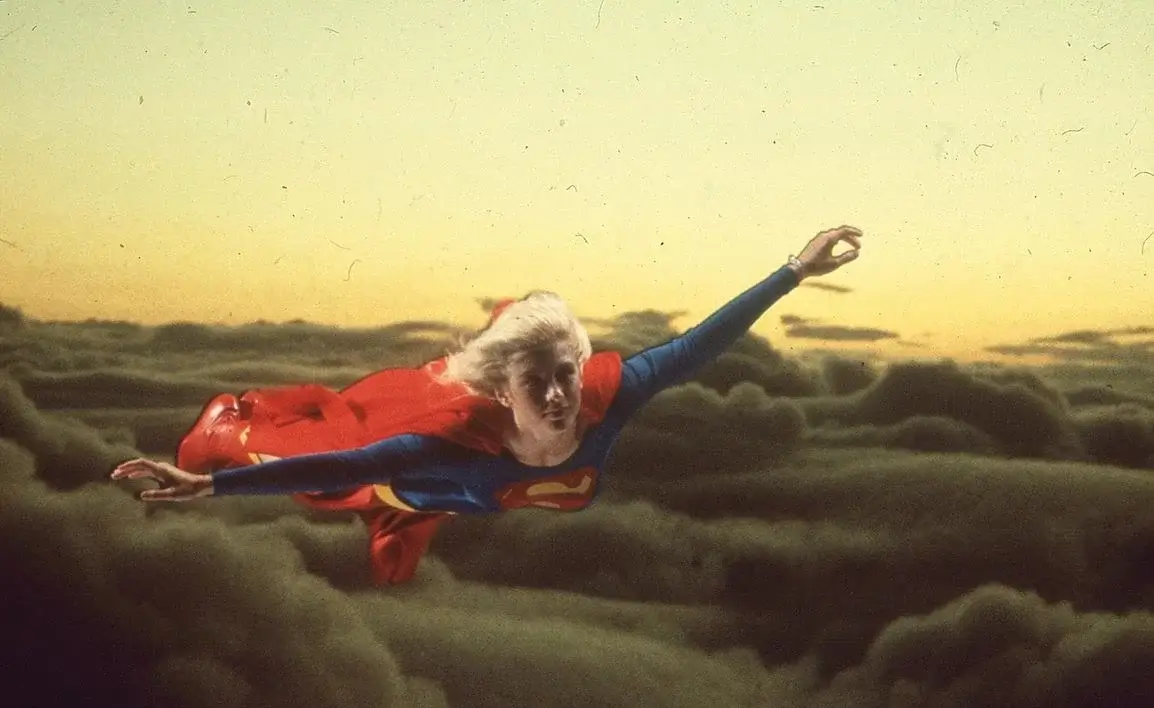
After Reeve declined to appear in Supergirl, the screenplay had to be rewritten considerably. McClure’s Jimmy Olsen would be the only presence connecting the movie to the Superman films, a far cry from the Man of Steel, while the new character of Lucy Lane (Maureen Teefy), Lois’s (Margot Kidder) sister, would provide another connective tissue. Since the joint adventure involving Superman and Supergirl had to be scrapped, a rather smaller plot was put in place that felt considerably cliched.
In addition to Kara coming to Earth to search for the Omegahedron, she would develop her powers as the titular character, and to make sure her secret identity remained…well…a secret, she assumed the identity of a high school student named Linda Lee. However, even with Superman missing in action, the rewrites still went for something more substantial for Supergirl, but budget cuts gutted the film’s screenplay, which was described as so fantastical that it would’ve needed a $200 million budget to make a reality.
[Screenwriter David Odell] wrote something pretty fantastic, but it would have been a $200 million budget, so we had to cut it down as it was far too expensive. In the Odell script, Selena literally took over the world, and that implied a lot more spending and special effects and all kinds of things that were very good, but it would’ve been expensive.”
So, given Supergirl’s more modest $35 million budget, she wouldn’t be embarking on some big adventure throughout the universe; she had to settle for an adventure set in a small American town. It’s also a product of its time that, despite Kara being someone with great power, the story dumbed things down for the character, with one major plot point being that, after the misuse of a love potion by the witch Selena, a groundskeeper with considerable good looks named Ethan (Bochner) finds himself under its spell, which makes him fall in love with the first person he sees. Since he first encounters Kara under her guise of Linda Lee, he falls in love with her instead of Selena, and it turns into a petty catfight between her and Supergirl. Not exactly a plot point of epic proportions, and not one that one would find in most superhero films with male leads.
Supergirl’s Veteran Actors Proved Difficult
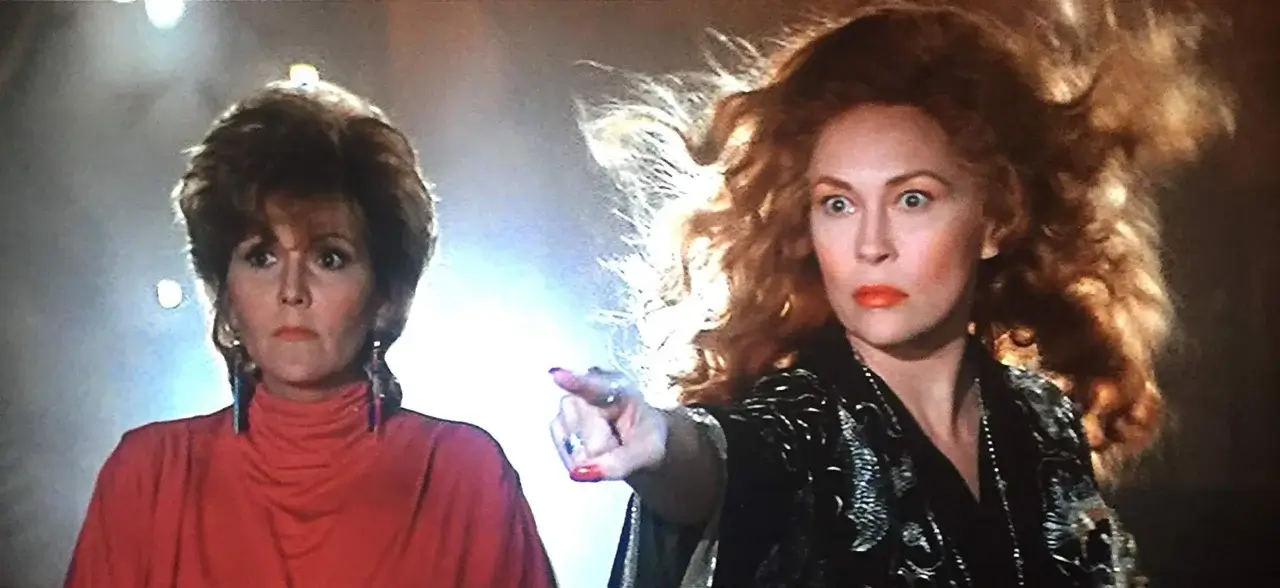
Despite landing names like Peter O’Toole and Faye Dunaway, both performers were difficult in their own right. While Slater remembers working with O’Toole fondly, the actor, who portrayed Kryptonian mentor Zaltar, was dealing with personal problems, and his alcoholism was evident on set. This caused O’Toole to be either unengaged while filming or being over the top at time which result in a very inconistent performance.
Dunsaway’s issues were less about her personal struggles and more about her diva behavior on set. The actress was under personal career pressure following receiving less-than-favorable reviews for her performance as Joan Crawford in Mommie Dearest. Dunaway looked at Supergirl as a way to redeem herself (I guess no one told her what kind of film she was in), and due to this, she overdid all of her scenes to come into the forefront.
This led to tensions between Dunaway and the film’s director, who sought more restraint from her, but she insisted on giving more, believing it would make her shine. Brenda Vaccaro, who portrayed her henchwoman Bianca, has said to have endured most of Dunaway’s tirades, with Vaccaro saying that she “terrified people” on set and that other demands included making her co-stars turn away from her during her close-ups so she wouldn’t have to look at their faces.
Warner Bros. Relinquishes Distribution Rights
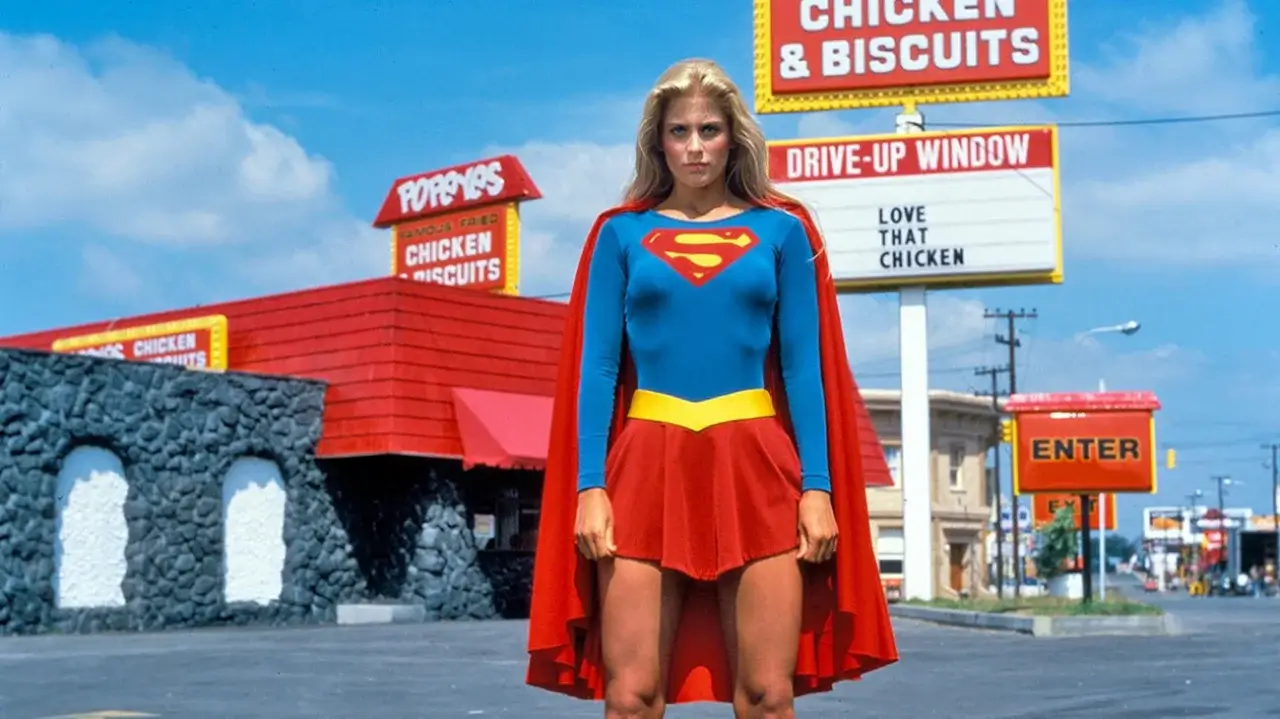
Even though the Salkinds financed the film with their own money, Warner Bros. was still involved with the film’s production since they held the distribution rights. They were also the parent company of DC Comics through Warner Communications, meaning they owned all Superman and Superman-related copyrights. Warner Bros. was involved with Supergirl during its production and post-production, but it’s believed that disastrous reactions during early screenings began to make them worry.
Warner Bros. originally intended to release the film in July 1984, but due to the screenings and the reaction to Superman III, the relationship between the studio and the Salkinds took a turn for the worse. The Salkinds wanted the film released during the holiday season to distance itself from competition from other major releases and the 1984 Summer Olympics in Los Angeles. Warner Bros. expressed that they couldn’t offer a holiday slot because they had other films scheduled, and this soured their partnership further.
The result was Warner Bros. relinquishing the distribution rights to Supergirl to the Salkinds, who then sold them to Tri-Star Pictures, with one of their contributions being cutting the film from 135 minutes to 105 minutes for its release in the United States. It can be argued that Warner Bros. simply cut its losses because it saw the writing on the wall. When it comes to these things, sometimes the studio is right.
Supergirl Opens At Number One But Quickly Plummets
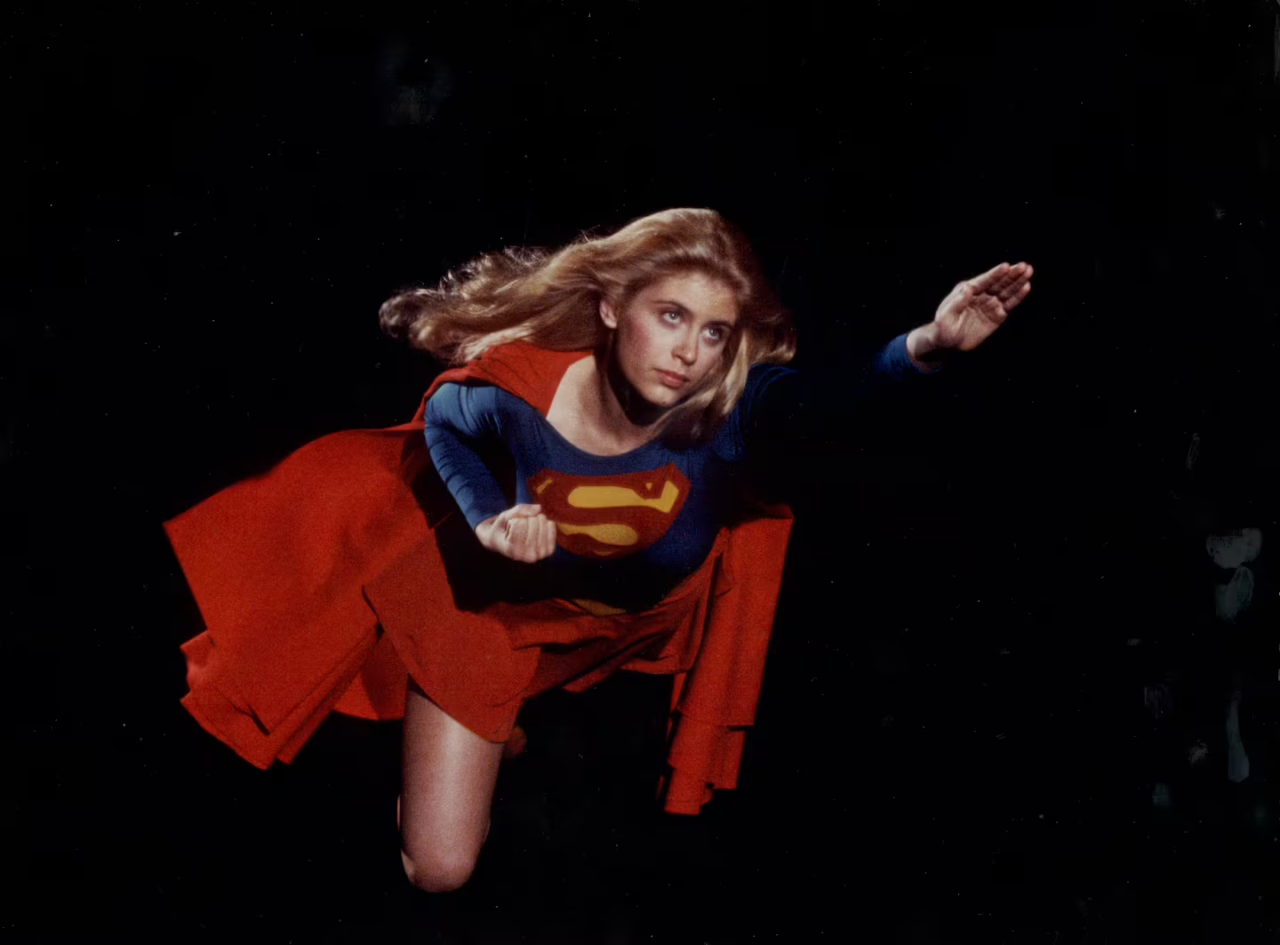
The good news for Supergirl was quick and brief. Despite opening at number one during its opening weekend with a gross of $5.7 million, the movie quickly fell off, tumbling 55.5 percent in its second weekend and going on to gross a mere $14.2 million of a $35 million budget. Reviews were also unkind, with some calling the film “juvenile”, judging its poor pacing, action sequences, and unfavorable production values.
Slater’s work was originally slighted in the film, with critics pointing to her inexperience as she was a drama student with only scant television work to her name before she was cast. That being said, some at the time did give her positive notices, with some saying that she made a very charming Supergirl. She was also nominated for a Saturn Award for Best Actress for her work.
Faring far worse were actors such as O’Toole and Dunaway, who were criticized for inconsistent work and going over the top. They were “rewarded” with the film’s two Razzie nominations, with O’Toole being nominated for Worst Actor while Dunaway was nominated for Worst Actress, the latter of which was likely unamused after her reviews for Mommie Dearest.
Supergirl Finds A New Audience As A Cult Classic

Like so many films from the 1980s that were misunderstood, Supergirl would eventually find new life as a cult classic, thanks to the film finding some success on home video and through television broadcasts over the years. International Video Entertainment paid $3.2 million for the North American home video rights, which was one of the biggest deals at the time, and the film’s various cuts, from the theatrical 105-minute cut to a 114-minute cut, have been released by various companies on VHS, laserdisc, and DVD. A lot of its cult status has been due to the film’s full versions being discovered by fans seeking them out, with StudioCanal finding the 135-minute director’s cut and a 124-minute international cut finding release in some circles.
Like films such as Masters of the Universe, which followed it, Supergirl’s detriments became its strengths with fans. It’s unapologetically campy and wears its 80s camp and vibrancy proudly on its sleeve. What seemed odd in 1984 feels quirky and fun today, proving that any film can have its moment. Even if it takes a while to have one.
Perhaps the best revaluation has been Slater’s earnest portrayal in the titular role, which is much better received by today’s audiences who believe she put in solid work because, despite the camp around her, she finds something heartfelt and powerful within Kara that has only become more prominent in a post #MeToo world where women are still struggling to earn their proper place in the industry and maintain the respect they deserve. Slater was the face of what was essentially the first female-led comic book movie, and that is a feat that shouldn’t be ignored. Her legacy with Supergirl became so substantial that she made a return to the DC Universe, portraying Lara, the biological mother of Clark Kent (Tom Welling) on Smallville, and the recurring role of Eliza Danvers, the adopted mother of Melissa Benoist’s Kara on the CW’s Supergirl.
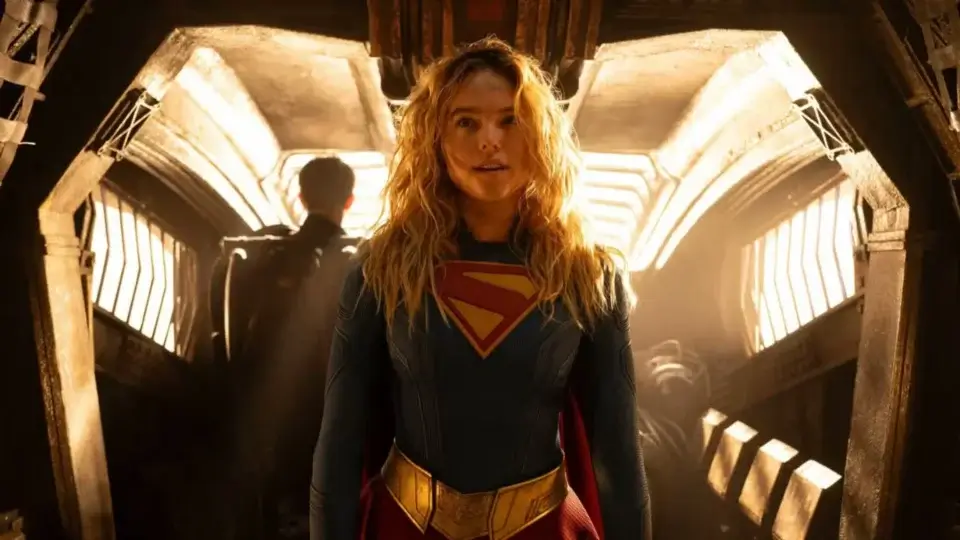
Time will tell if the divisive response, at least so far, to the new Supergirl will eventually turn it into a film worthy of cult status, but should that happen, it will be in good company with this 1984 incarnation that proved a woman could fly as high as her male counterparts and maintain a legacy that still makes it remembered all these years later.
Supergirl is now playing in theaters nationwide.
-

Robert Egger’s Latest Haunt Is Here to Terrify Us With ‘Werwful’
Robert Eggers is a man who really knows how to bring fans horror movies. His latest venture into monster films has proven to be a perfect combination for the Nosferatu director. And now, he’s taking on the full moon with Werwulf. Starring Aaron Taylor-Johnson, the film takes us to the 13th century
-
‘Hellbilly Hollow’: Kevin Wayne On Using An Existing Haunt For A Horror Feature [THS Interview]
The new horror feature, “Hellbilly Hollow” explores the idea of what would happen if there was a real killer at a haunted attraction. The film from director Kevin Wayne was shot on location at the real Hellbilly Hollow haunted attraction in Vincent, Alabama. It features a terrifying killer and
-

‘Clayface’ Soon Delivering DC Horror Story To Theaters In Final Trailer
Clayface has always been one of the most interesting of Batman’s villain gallery. After all, he’s the villain who goes down the villain route after something causes him to be able to freely alter his form. As though his body was made of clay, hence his supervillain name. However, with great power
-
‘Pathetic Fallacy’ Is an Emotional Rollercoaster That’s Worth the Ride [FANTASTIC FEST REVIEW]
Stories about grief, especially in the horror genre, are a dime a dozen. It’s a genre that really lends itself to exploring what that pain means and how it feels to lose someone you love dearly. With Adam Egypt Mortimer’s Pathetic Fallacy, the film explores how far someone is willing to go to














Reviews