
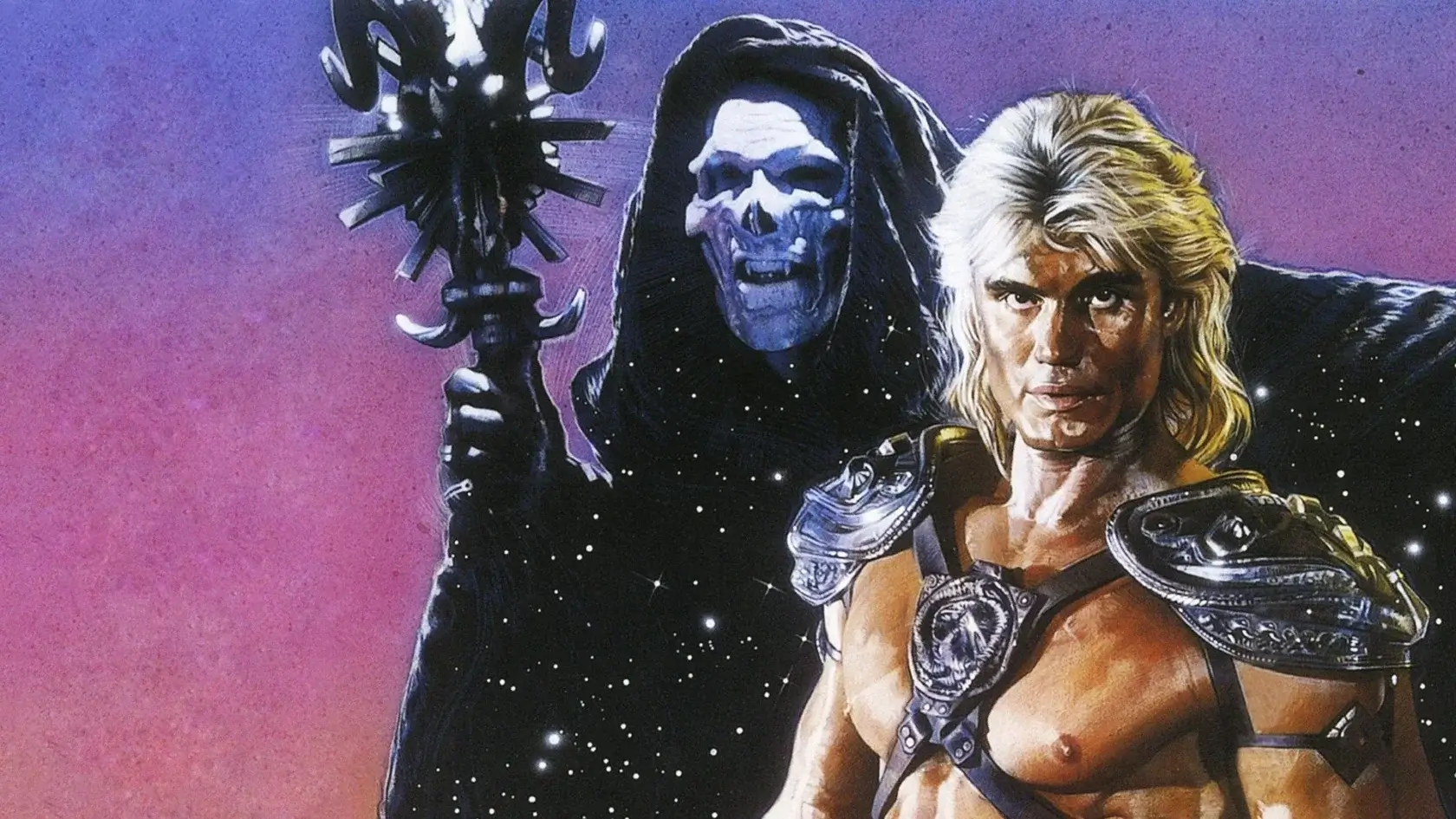
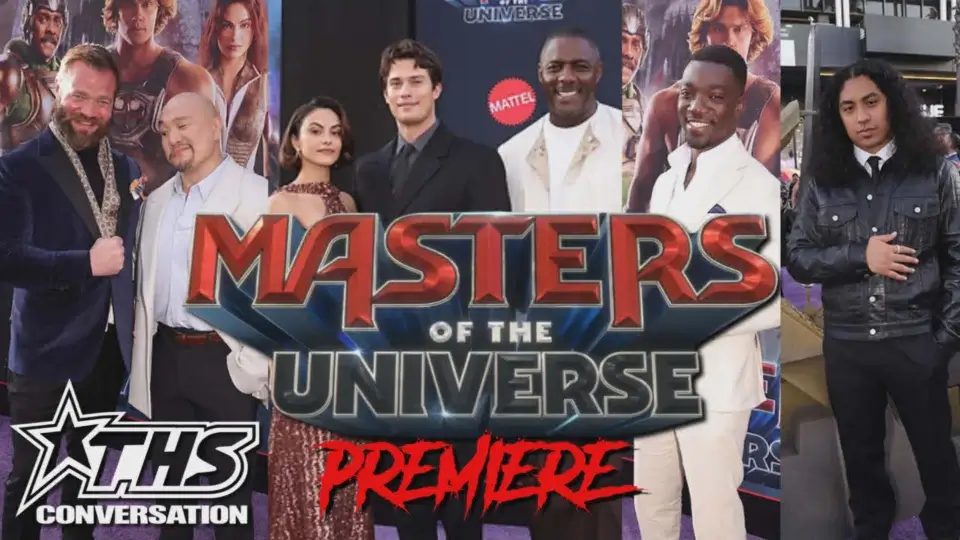
Before heading off to see the new live-action Masters of the Universe, which is so far certified fresh at 75 percent on Rotten Tomatoes, it would be a disservice to not look back at the first time He-Man and Eternia made it to the big screen in live-action form. In 1987, the Mattel franchise went from a toy line and animated series to a live-action sword and sorcery film that was likely meant to light the box office on fire but sadly that wouldn’t be the case. Masters of the Universe was a commercial and critical failure at the time of its release but something this fun with guilty pleasure goodness running through its D.N.A. wasn’t meant to come and go. The passage of time has been far kinder to the film as it has become a true cult classic to remember and one that is worthy of your attention.
Directed by Gary Goddard from a screenplay by David Odell, Masters of the Universe is based on the franchise created by Mattel and follows two teenagers named Kevin Corrigan (Robert Duncan McNeill) and Julie Winston (Courteney Cox) who encounter He-Man (Dolph Lundgren), the most powerful man in the universe, after he travels to Earth with his firends Man-At-Arms (Jon Cypher) and Teela (Chelsea Field) to stop the evil Skeletor (Frank Langella) and his Evil Warriors from obtaining the “Cosmic Key,” which would allow him to take over their home planet of Eternia and the entire universe. The film also stars James Tolkan, Christina Pickles, Meg Foster, and Billy Barty.
Developing A Cult Classic
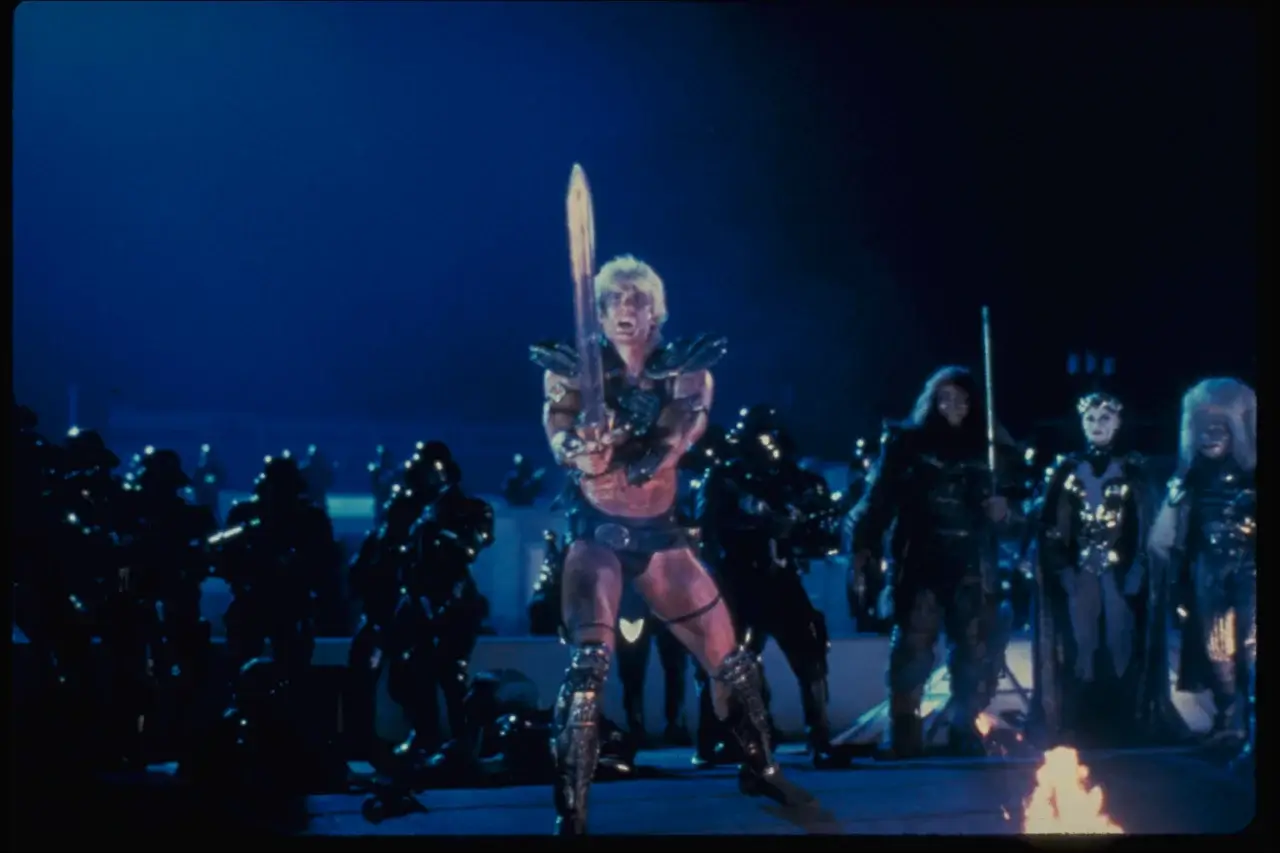
Masters of the Universe began as a popular toy line in 1982, and that led to the animated television series He-Man and the Masters of the Universe in 1983. Running for two seasons of 65 episodes each, the series became one of the most popular animated shows of the 1980s, even leading to a feature-length animated theatrical film called He-Man and She-Ra: The Secret of the Sword in 1985. As that film was set to spawn the spinoff sister series She-Ra: Princess of Power, which go on to run for two seasons and 93 episodes, plans then began to bring the IP to the big screen as a live-action film.
Before the film as we know it was shopped, producer Edward R. Pressman pitched a live-action version to studios in 1982 after he approached Mattel with an offer to purchase the film rights for Masters of the Universe. Following co-producing Conan the Barbarian, Pressman saw that the toy line and highly successful animated series could be transformed into a potential live-action summer blockbuster. Pressman ultimately hired Odell to pen the script, given his experience co-writing another fantastical property, Jim Henson and Frank Oz’s The Dark Crystal. Odell’s main concerns were of the budgetary variety because the television series’s depiction of Eternia and the gothic castle Grayskull, among other vast set pieces and creature designs, was so elaborate that it would make the movie incredibly expensive.
Knowing that a major studio wouldn’t invest in such a costly endeavor, Odell came up with the idea of having He-Man and his cohorts traveling from Eternia to Earth, where the majority of the film would take place. The plot device would make the fantasy film more accessible to moviegoers who might be unfamiliar with the source material, and it would serve the purpose of cutting costs on the film. As Odell developed the screenplay that would ultimately become what was seen on the big screen, Pressman began shopping the film to studios and searching for the right director to helm the project.
Finding A Director And Mattel’s Creative Interference
While finding a studio was problematic because many of them didn’t believe a children’s toy line could be made into a viable theatrical feature, Pressman honed in on Goddard as the film’s director. Oddly enough, Goddard didn’t have a film background but instead worked on live theatre and theme parks, even designing the Japanese pavilion at Disney’s EPCOT Centre and developing and directing the Conan the Barbarian live show at Universal Studios. Perhaps because of Goddard’s ambition to make a film beyond the toy line, he was the ideal choice as a director because he viewed the project more as a superhero comic book endeavor that he could bring to the big screen.
Goddard was a comic book fan, and this was something that comic book writer and artist John Byrne saw in the finished film, comparing it to Jack Kirby’s comic book metaseries Fourth World. Goddard confirmed this in a letter appearing in John Byrne’s Next Men No. 26, saying that New Gods was an inspiration as well as the classic stories featuring the Fantastic Four and Doctor Doom as well as a little sprinkle of Thor. He wanted to make a “motion picture comic book” but at the time comic book inspired films were a tough sell, despite the success of 1978’s Superman, because they believed comic books were just for kids and wouldn’t sell to an adult crowd.
Mattel’s creative interference also began to take shape early in the film’s development. One of their main assertion was that He-Man couldn’t kill anyone, likely because he’s the hero and his beginnings come from a brand aimed at kids, but Goddard pushed back on this by saying, “Well, this is an action movie and He-Man’s going to have to kick some serious butt or we are going to have a problem.” Mattel was so adamant that He-Man be depicted a certain way that they didn’t want the character doing anything morally wrong and had to be good as the driven snow.
The only thing that made Mattel relax on this was that the sales of the toys began to dip during the film’s production, which allowed Goddard to have more creative license with the character. Speaking of the character, it would turn out that only one person was being considered for the role at the time.
Casting The Film’s Hero And Villain
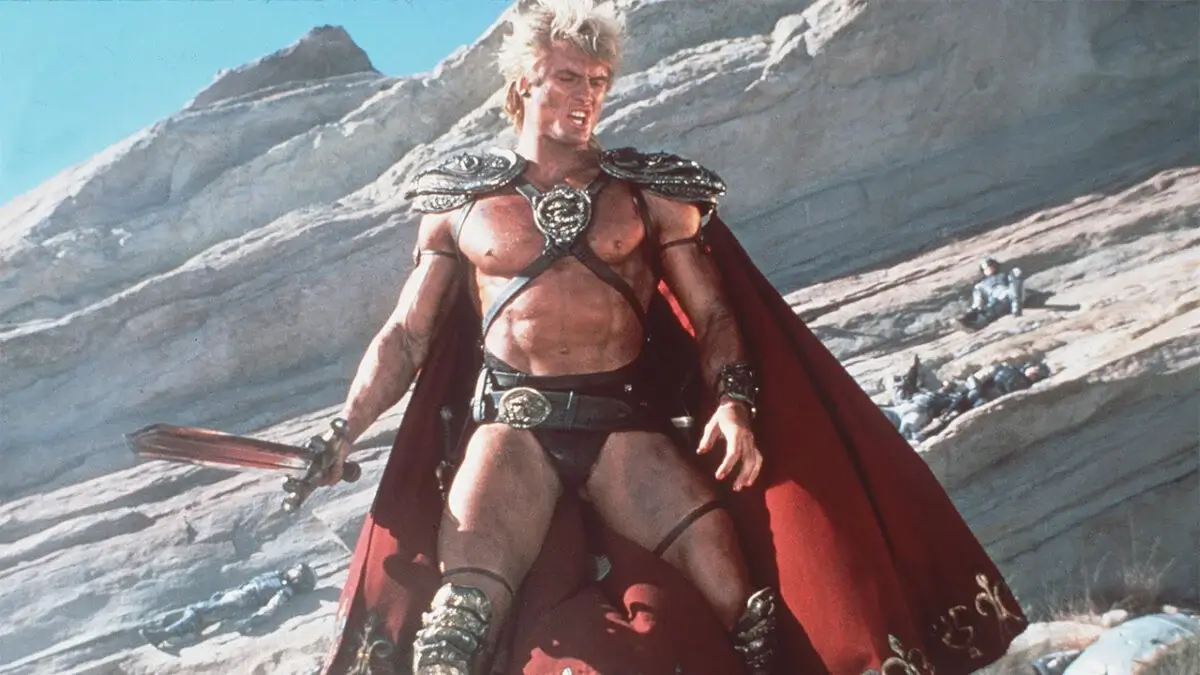
The only actor who was seriously considered to portray He-Man was Lundgren, largely because he had the physical mass to play the character, standing at 6’5 and 225 lbs of sculpted muscle at the time of filming, and because he was fresh off the success of portraying Ivan Drago in 1985’s Rocky IV, a movie that grossed $300.5 million worldwide and became the highest-grossing film of the franchise. Lundgren would land the role while on the promotional tour for Rocky IV, but despite his physical prowess, Lundgren had to convince Goddard that he could not only walk the walk, but talk the talk.
Lundren is Swedish, and in his contract, he stipulated that he was allowed three takes to determine if he could be understood through his accent, but if a fourth take was required, Goddard would be allowed to dub over his dialogue with a replacement during post-production. When rough cuts were viewed, Mattel marketing executive Paul Cleveland grew very concerned about Lundgren’s accent, fearing the audience wouldn’t be able to understand him. Even though both Goddard and Cleveland wanted to dub him over with another actor, the decision was ultimately made to have Lundgren re-record and dub over the original footage shot until he got it just right.
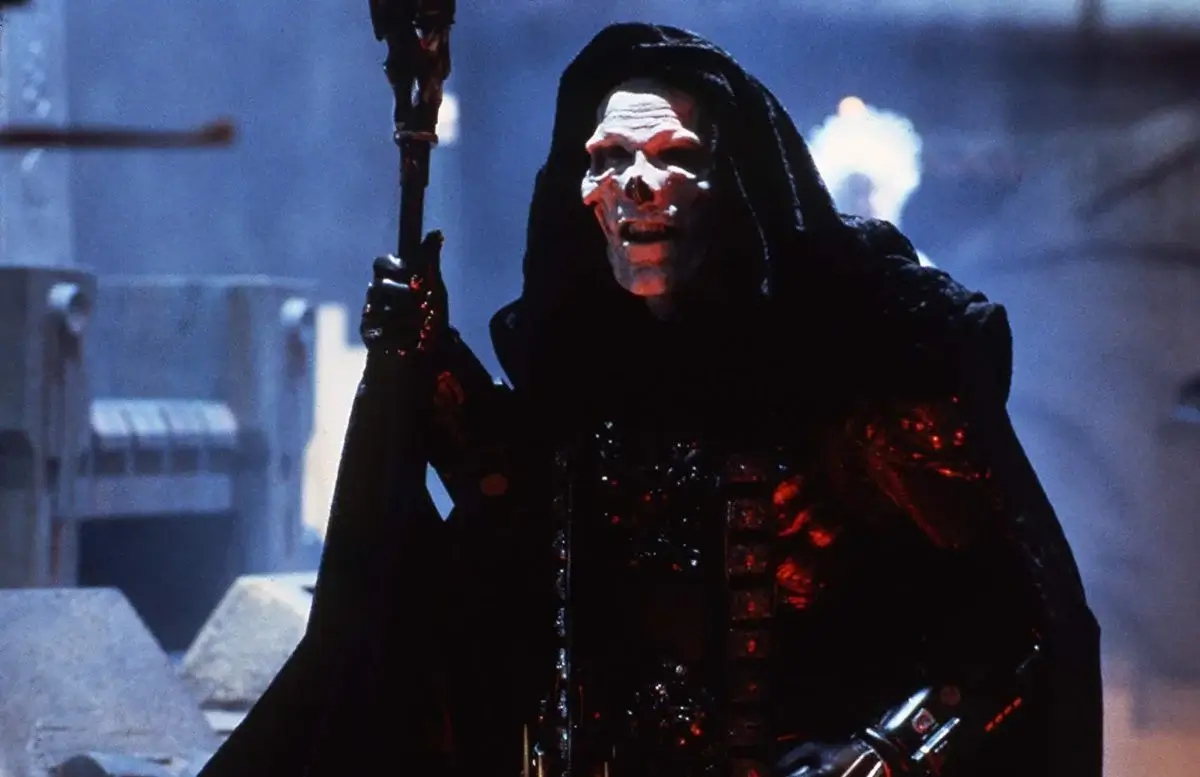
What would turn into a major casting coup was Langella as Skeletor, who remains one of the best aspects of the film and a signature villain of the ’80s. Langella was a Tony Award-winning actor at the time who may have turned his nose up to the project if not for the input of his kids. In the end, Langella accepted the role after his children gave him a proper tutorial about the character, with the actor saying, “I asked them to tell me about the Masters characters. Since they played with the toys and watched the cartoon show, they were able to tell me a great deal about how Skeletor should be played. My portrayal of Skeletor is a present to my children.”
Other casting additions of significance included Billy Barty as Gwildor, who was created as the film’s inventor because the floating wizard Orko from the cartoon, who would’ve served in this capacity, would be hard to recreate in live-action at the time, and Gwildor became a more cost-effective alternative. Meg Foster would go on to be cast as Skeletor’s right-hand, Evil Lyn, while the film’s two human characters would be portrayed by McNeill and a pre-Friends Courteney Cox, best known at the time for appearing in Bruce Springsteen’s “Dancing in the Dark” music video. Other roles were filled out by James Tolkan as Detective Lubic, John Cypher as Man-at-Arms, and Chelsea Field as Teela.
Production Woes And A Studio Running Out of Money
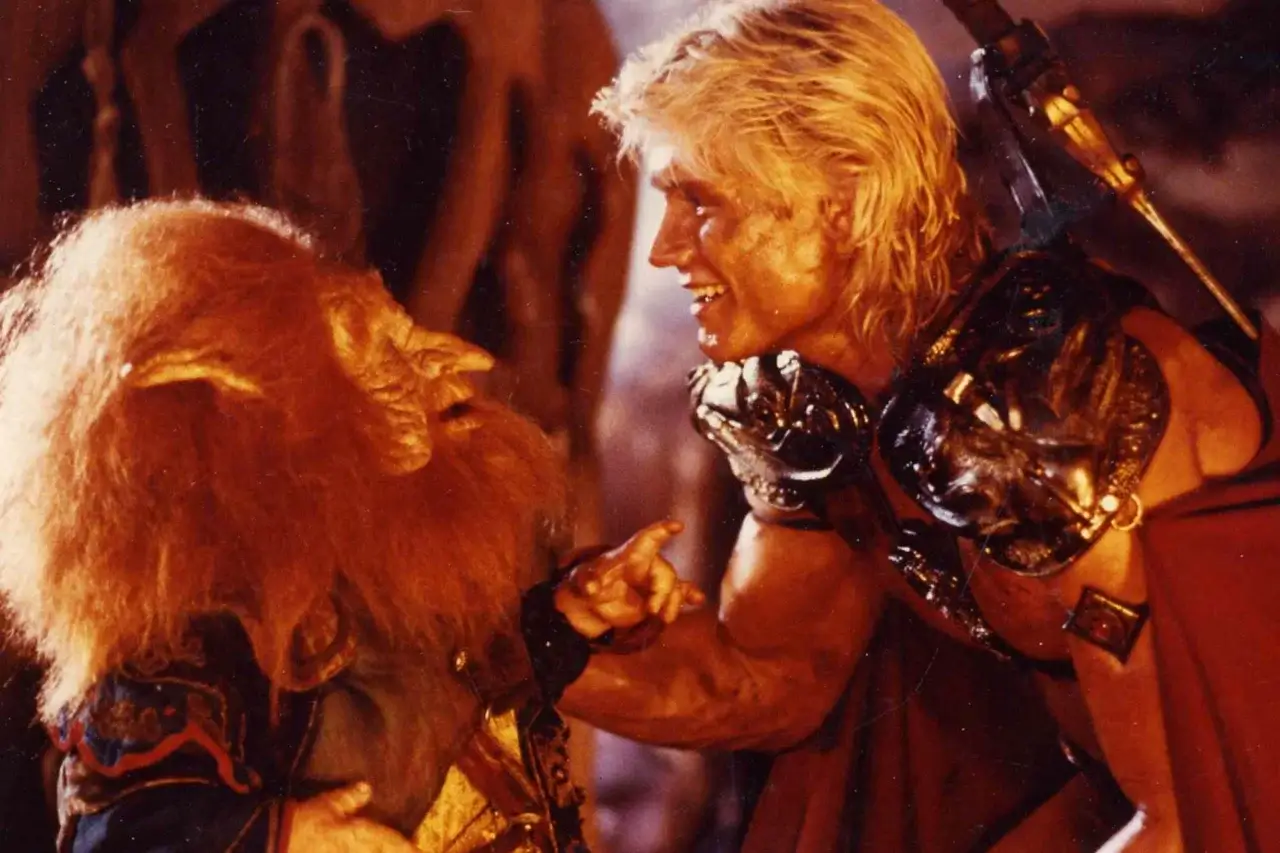
On a budget of $22 million, Masters of the Universe was not an easy movie to make on that money, even with plot tweaks that shifted most of the action from Eternia to Earth. Other issues resurfaced from Mattel, which made things even more difficult by not paying their half of the film’s production budget and still wanting final creative input on character designs. Production designer Bill Stout has stated that every change to a character design had to be approved by Mattel because they didn’t want to deviate too far from the toys that they were making millions selling.
Mattel would ultimately reject new designs for He-Man, so, to prevent even more fighting over the look of certain characters for the film, Skeletor’s minions consisted mostly of new faces that included Blade (Anthony De Longis), Saurod (Pons Maar), and Karg (Robert Towers). Beastman (Tony Carroll) would remain from Skeletor’s rogue’s gallery, but even that led to 25 iterations being created before Mattel improved the final look.
Cannon Films ended up being the studio that picked up Masters of the Universe and they were a studio secretly running out of money. They had a strategy of selling global rights to future projects to finance current ones but that was proving to be financial suicide over time. While their films grew more expensive, the box office receipts weren’t increasing so the studio had very little money to even co-fund the film. This is why the film was hampered by constant requests to reduce costs by cutting scenes and doing whatever was necessary to reduce the film’s scale to save money. This issue came to a head when their executives walked onto the soundstage to shut down production as the film’s climax was set to be shot.
As it turns out, the film’s entire production budget had run dry, and there was literally no more money left to finish the film. Credit goes out to Goddard for shooting the climactic fight between He-Man and Skeletor with a single stage light and camera, something that he financed himself. No other actors were present on set except for Lundgren and Langella, and a skeleton crew was used since Goddard had to get this done on his own.
A Film Released To Poor Reviews And Disastrous Box Office Results
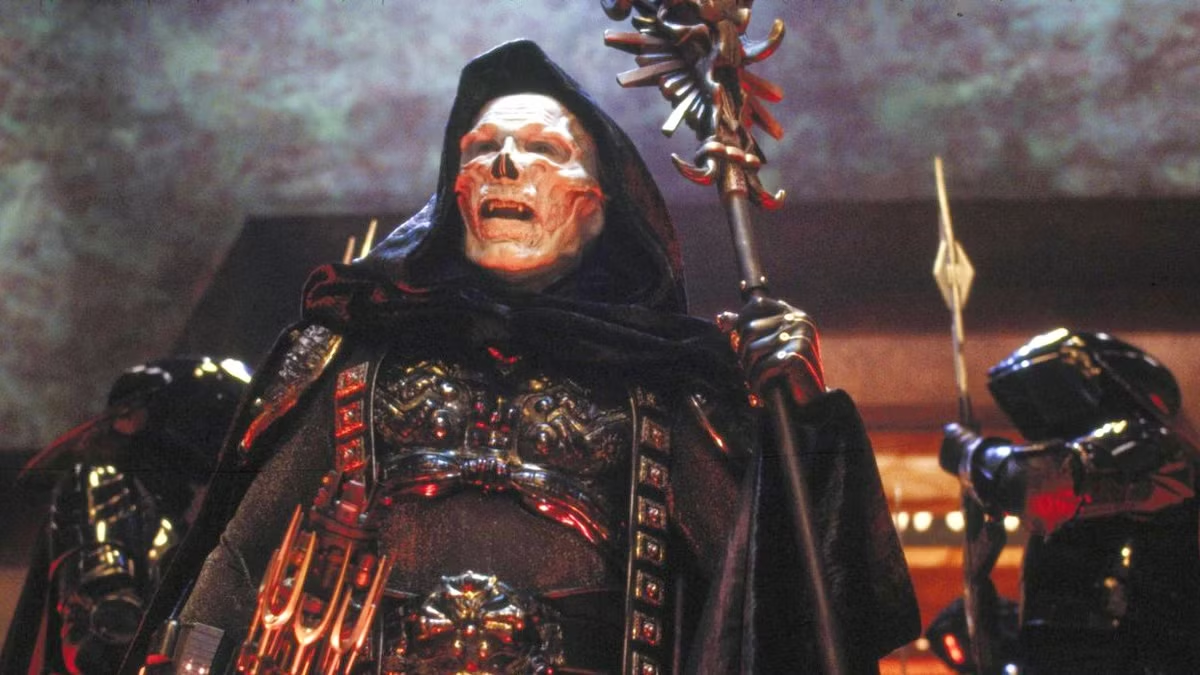
A film with this many production problems is almost certain to be released to disaster, and that was the case with Masters of the Universe. Released on August 7, 1987, the film placed third at the box office with a gross of $4.8 million and quickly became an afterthought with a final take of $17.3 million on a $22 million budget. Despite the toy line and cartoon being successful and hopes that the film would do for the ’80s what Star Wars did for the late ’70s, the treatment of the movie by Cannon Films and Mattel’s frequent interference led to a final product that simply didn’t hit at the time.
Reviews also weren’t kind to the film, with the movie currently registering a 21 percent on Rotten Tomatoes with a consensus that reads, “Master of the Universe is a slapdash adaptation of the He-Man mythos that can’t overcome its cynical lack of raison d’etre, no matter how admirably Frank Langella throws himself into the role of Skeletor.” While Langella was praised for his performance by several reviewers, the film itself was labeled a Star Wars ripoff by most, while others called it an underdone epic. Some reviewers believed that some audiences would find entertainment in it, especially if you were a fan of the toy line and animated series, but it was primarily castaway as a misfire.
Despite the film’s financial and critical performance, a sequel was announced at the 1987 Cannes Film Festival by producer Yoram Globus, although Lundgren would not be reprising the role of He-Man, opting instead to do Red Scorpion because he didn’t like how the film turned out. Surfer Laird Hamilton was cast to replace Lundgren, while director Albert Pyun was signed on to direct the film. However, in true Masters of the Universe fashion, the film fell apart due to Cannon’s financial woes that were only made worse by the performance of the first movie and Superman IV: The Quest for Peace, another film released by the studio. Despite sets being constructed, Cannon canceled the sequel because they refused to pay Mattel for licensing fees, and the sets were ultimately repurposed for the Jean-Claude Van Damme movie Cyborg.
A Cult Classic Is Born
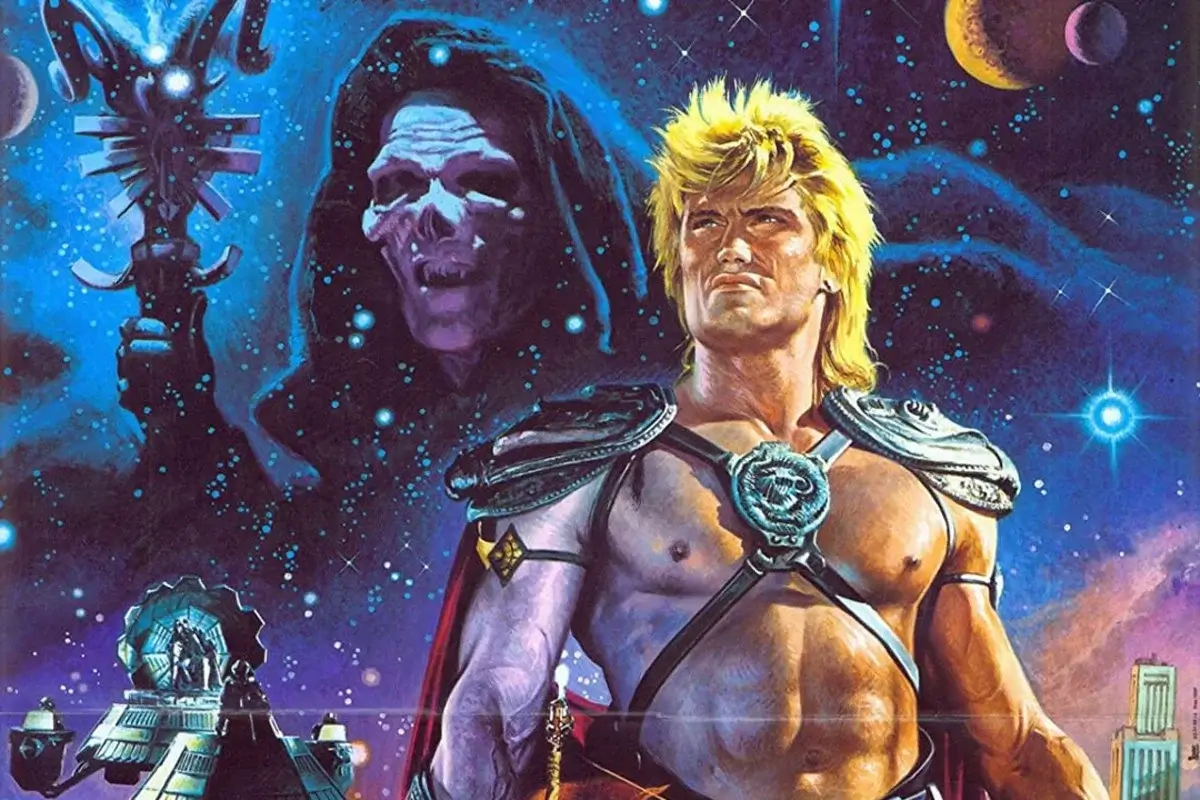
Like other films from this era that were met with a lackluster critical response and minimal fanfare, Masters of the Universe benefited from the passage of time, which has helped turn it into a true cult classic in the years since its initial release. The elements that made the film feel small in comparison to a film franchise like Star Wars would give the movie some of its charm with future audiences. It’s ’80s cheese to the fullest, but it’s made with such a sincere ambition that its detriments turn into some of its winning attributes. From its bombastic score crafted by composer Bill Conti to its embrace of full-on ’80s production design, Masters of the Universe might be a product of its time, but at least it gleefully accepts what it is at its core.
A big reason that Masters of the Universe became a cult hit was because of the VHS boom during the late ’80s. While the film wasn’t tested out by many during a crowded summer blockbuster season, kids caught onto the movie when it was released on VHS, and those kids, like myself at the time, grew up with a movie that felt fun and engaging, leading to watching the film over and over again. The film represents a pinnacle of nostalgia for everyone who grew up with it, and it has continued to entertain audiences old and new as it found a new life following its big screen beginnings.
No one will accuse Masters of the Universe of being Shakespeare, and some might even say it’s not a good film at all, but it’s certainly fun from start to finish, and despite the limitations it experienced while in production, it still turned into a finished product that no one involved should be embarrassed by. It’s a mix of grandiose excellence (the superb performance from Langella as Skeletor) and campy excess (just about everything else), but it holds a place in the hearts of many and may even be more remembered than other films from the time that arguably performed better. From Eternia to planet Earth, Masters of the Universe is a gem that many are happy to revisit.
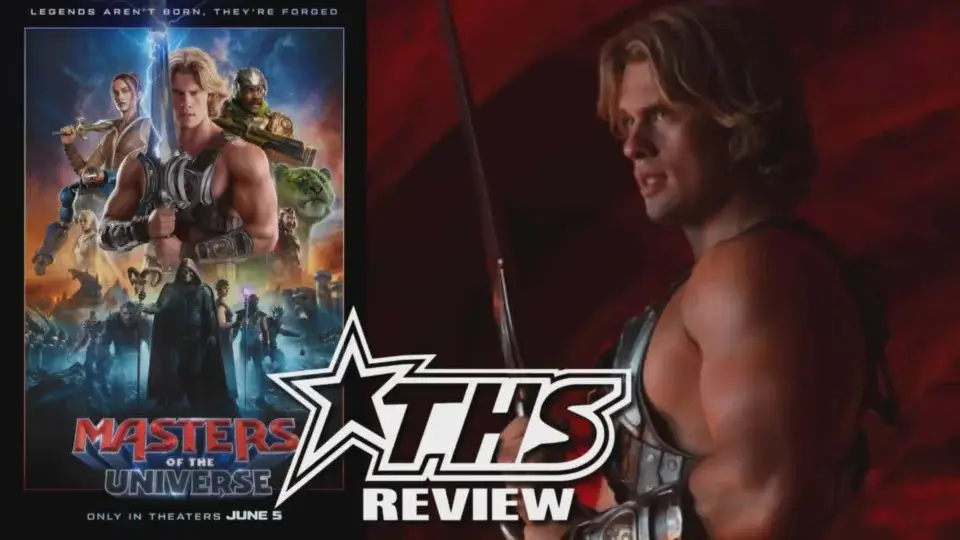
The new Masters of the Universe hits theaters nationwide this Friday.
For more on Movies, make sure to check back to That Hollywood Show.




![The “Digger” Complex: Satirical Deconstruction Through Nihilistic Cynicism and Movie Stars [Spoilers]](https://thathollywoodshow.com/wp-content/uploads/2026/07/diggers-1500x844-1-960x540.webp "diggers-1500×844")




Reviews